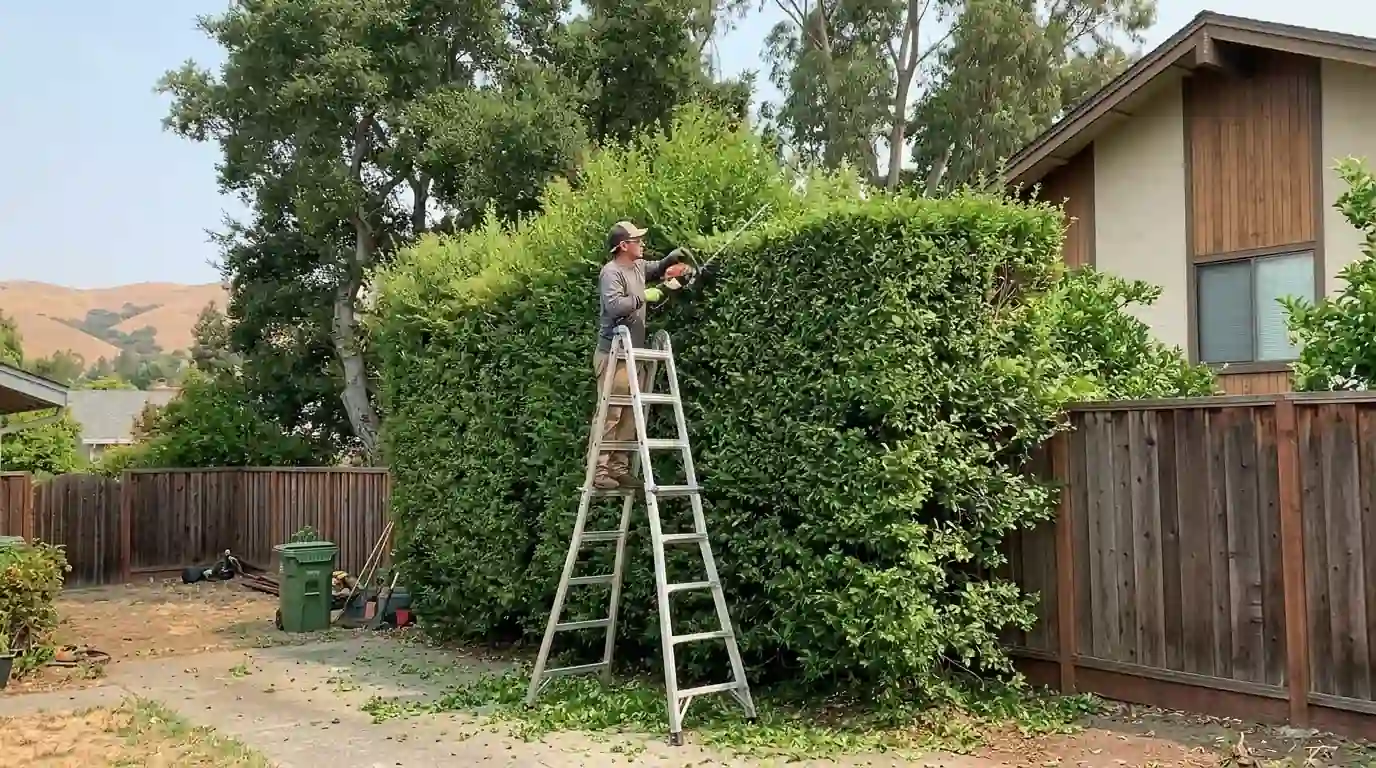
Bamboo removal in Oakland, CA
Running bamboo planted as a privacy screen in an Oakland backyard rarely stays where it was put. Within a few years it shows up under the fence, in the lawn and in the neighbor's beds.
Quick answer
Bamboo removal means cutting the canes and getting the underground rhizomes out of the soil so the grove can't regrow. You need it when running bamboo crosses property lines, lifts paving or takes over beds. We cut the canes to the ground, dig and pull the rhizome mat, sift the soil along the edges and install a root barrier where some bamboo stays.
What bamboo removal involves in Oakland
Bamboo comes in two basic habits, and which one you have decides the whole job. Clumping bamboo grows in a tight cluster and widens slowly, a few inches a year. Running bamboo sends rhizomes sideways just under the soil, sometimes many feet in a season, and pushes up new canes wherever it likes. Most of the trouble calls we get in the East Bay are about running types planted for a quick screen.
Cutting the canes doesn't kill bamboo. The rhizome network underground holds the energy, and it answers a cut with a flush of new shoots. Mowing or cutting new shoots for years can starve a small patch, but on an established grove the only reliable fix is digging the rhizomes out. That's heavy, careful shovel work, and it's most of what you're paying for in time.
We like this work in late fall and winter, when the soil is soft from rain and the rhizomes lift out more cleanly. Spring is when new shoots appear, so getting the digging done before then saves a season of regrowth. If the bamboo has grown around a tree or into a stump, we may also grind the old stumps or handle tangled roots in the same visit.
How do you know bamboo has gotten out of hand?
- Shoots popping up past the fenceNew canes in your lawn, your neighbor's yard or a planting bed several feet from the grove mean running rhizomes are on the move.
- Lifted pavers and cracked edgingRhizomes push under paths and patios, lifting pavers and finding their way through gaps in concrete.
- A dead, crowded centerOld groves fill with dead, gray canes and leaf litter in the middle, which looks shabby and holds dry fuel.
- Bamboo against the houseCanes leaning on siding or gutters drop leaves on the roof and trap moisture against walls.
- Taking over planting bedsIf shrubs and perennials near the bamboo are dying back, the rhizome mat is taking their water.
- A neighbor complaintBamboo crossing a property line is a common source of disputes, and dealing with it early is far easier than later.
What determines how big a bamboo job is
Every job is priced after we see the tree. These are the things that move the number.
- Running or clumpingClumping bamboo comes out as a few root masses. Running bamboo means chasing rhizomes across a wide area.
- Age and spread of the groveA few years of growth may cover a small bed. A grove left alone for a decade can thread through the whole yard.
- What's in the wayRhizomes under patios, fences, decks or tree roots slow the dig because we can't just tear through.
- Soil typeLoose soil lets rhizomes lift out cleanly. Heavy clay on the hillsides makes every shovelful harder work.
- Barrier lengthContaining a kept section adds trenching and barrier material along every edge that stays.
What happens when we dig out a bamboo grove
Find out what you have
We check whether the bamboo is running or clumping and probe around the grove to see how far rhizomes have traveled. That tells us how wide the dig has to go.
Cut every cane to the ground
Canes come down with saws and loppers and go to the chipper or get bundled for haul-off. Clearing the tops opens the ground so we can see what we're digging.
Dig and lift the rhizome mat
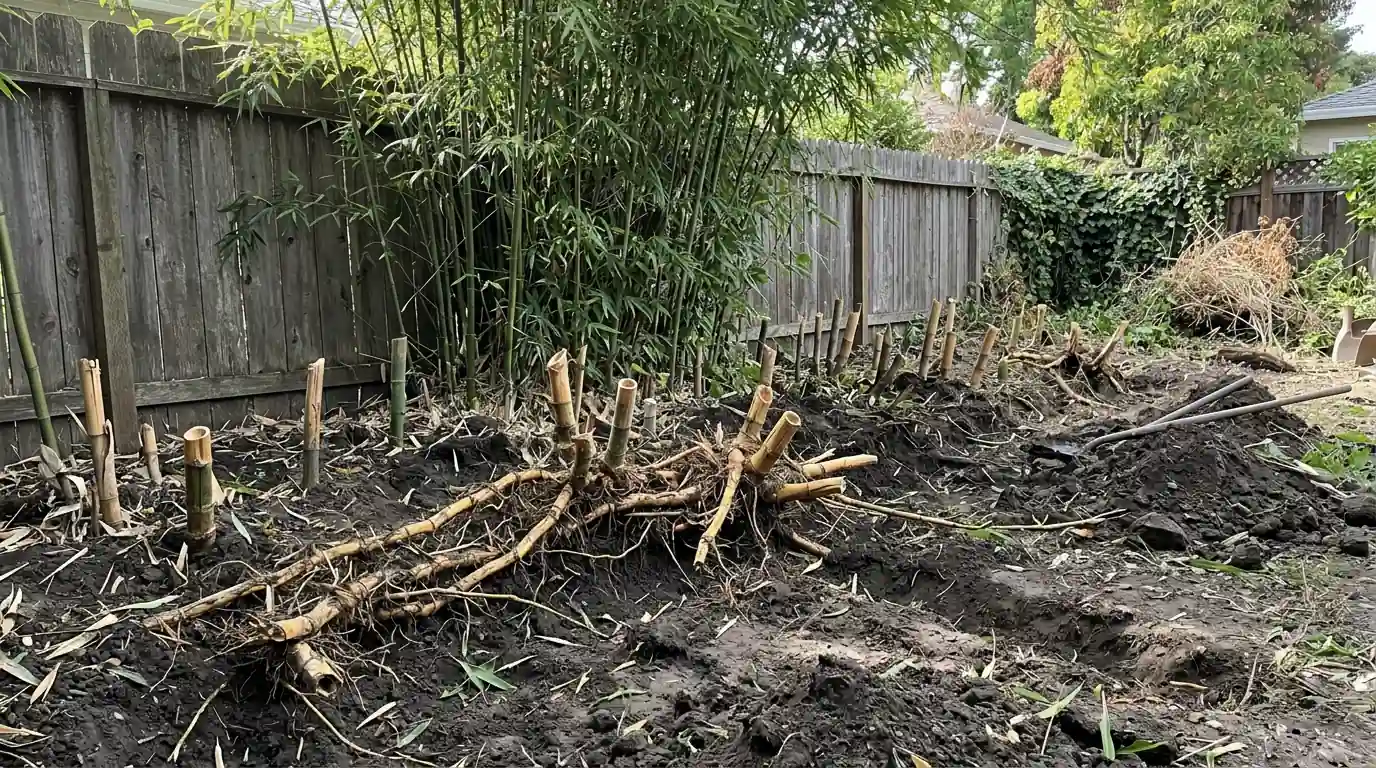
With spades, digging bars and mattocks, we cut the rhizome mat into sections and pry it out. On big groves a compact digger helps, where the yard allows it.
Chase the runners
We follow each runner out to its tip, including under fences and edging where possible. Leftover pieces as short as a few inches can regrow, so we sift soil along the edges by hand.
Set a barrier if bamboo stays
When you want to keep part of the grove, we trench along its edge and install a root barrier with the top lip left above grade.
Haul everything off
Rhizome pieces and canes leave the property, since dumped rhizomes can root wherever they land.
Bamboo in Oakland and East Bay yards
Running bamboo was a popular screen in the flatlands and older neighborhoods, where narrow lots sit close together. In Temescal, Grand Lake and much of Berkeley, a grove planted along one fence can work into two or three neighboring yards. Our mild winters and summer irrigation mean bamboo here doesn't have a hard dormant season to slow it down.
Bamboo is a grass, not a tree, so Oakland's protected tree chapter doesn't come into play the way it does for a large oak or redwood. What does come up is the neighbor side. When rhizomes have crossed the line, the cleanest outcome is both owners agreeing to dig their sides at the same time, or at least installing a barrier along the boundary. We can work both sides of a fence when both owners give the go-ahead.
Work that often goes with bamboo removal
Where we handle bamboo removal
From the office on Martin Luther King Jr Way in Temescal and the Walnut Creek office on Bonanza Street, we cover Oakland and the East Bay. The biggest communities we serve, with a main ZIP code for each:
Bamboo removal questions we hear in Oakland
What's the difference between running and clumping bamboo?
Running bamboo spreads by long rhizomes under the soil and can pop up many feet from the original planting. Clumping bamboo grows in a tight cluster that widens slowly. The difference changes the job completely. Clumping types come out as a few root masses, while running types need the whole rhizome network chased down.
Can I kill bamboo just by cutting it down?
Rarely, on an established grove. The rhizomes store enough energy to keep sending up new shoots for a long time. Cutting every new shoot for a couple of seasons can starve a small patch, but digging out the rhizomes is the dependable way to end it.
How deep does a bamboo root barrier need to go?
Most rhizomes run in the top foot or so of soil, but they dive under shallow obstacles. A properly installed barrier goes deep enough that rhizomes turn instead of diving under, with a lip left above the soil so runners can't hop over the top. Check that lip once a year.
Will bamboo come back after removal?
A few shoots usually appear the next spring from fragments left in the soil. Pulling or cutting those right away finishes the job. If new canes keep appearing in one spot, a larger rhizome piece is still there, and that spot gets dug again.
Saws, chippers, grinders and climbing gear from names like Stihl, Husqvarna and Vermeer
StihlHusqvarnaVermeerBanditMorbarkRaycoAltecPetzlSilkySherrillTeufelbergerNotchEchoToro
Need bamboo removal in Oakland or the East Bay?
Call and tell us what the tree is doing. Someone picks up any hour, and we can usually talk you through the next step on that first call.