Oak Tree Pruning
Wide oak limbs over tile roofs and driveways need careful weight reduction. We do this work during the dry season, when oaks handle cuts best.
DetailsCrocker Highland's 1920s and 1930s homes sit under some of Oakland's oldest planted trees. We prune its oaks, keep big trees off old roofs and remove trees that have reached the end of their life.
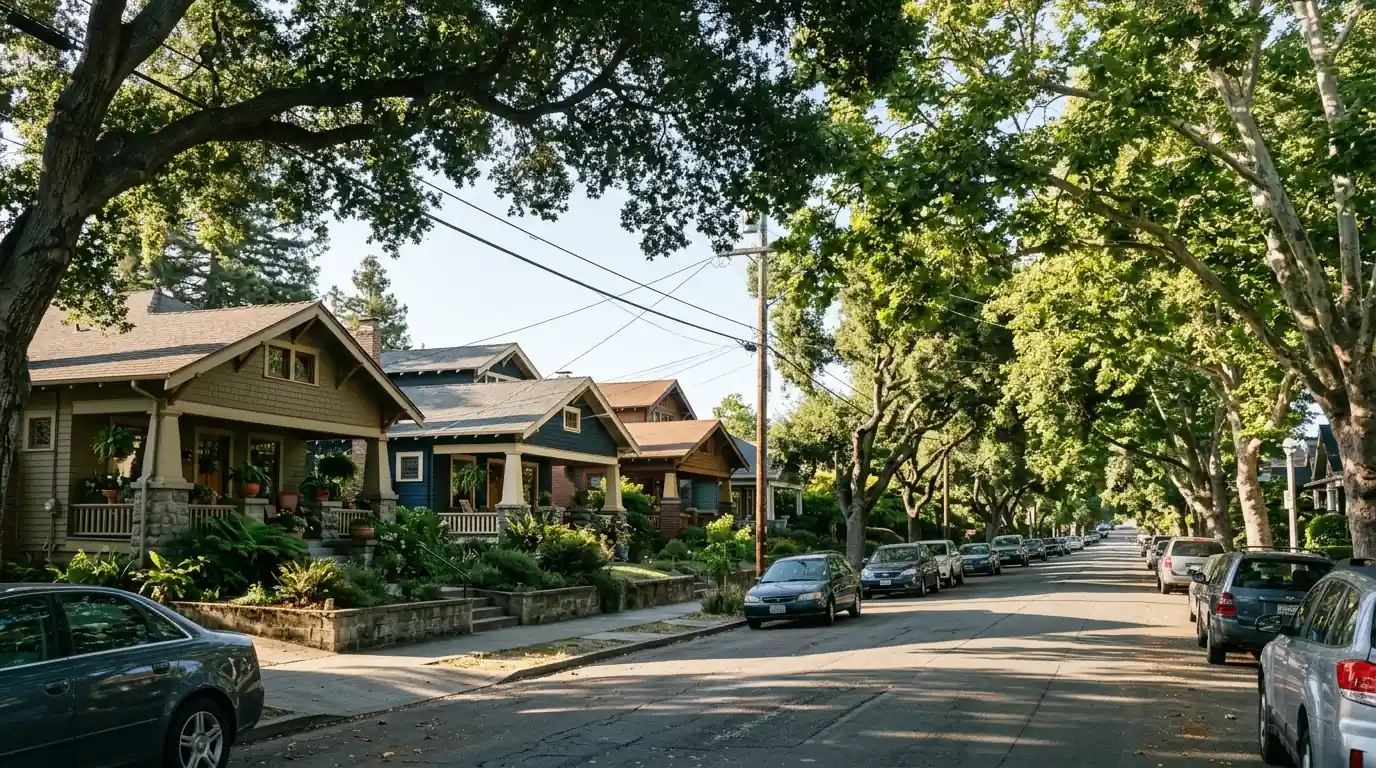
We prune oaks, thin and reduce large canopies, and remove declining trees across Crocker Highland. Homes here date mostly to the 1920s and 1930s, and the trees around them are big, mature and close to the houses. Careful pruning that keeps old oaks healthy is the core of our work, with removals reserved for trees that are failing.
Crocker Highland was built out mostly in the 1920s and 1930s, with Tudor, Mediterranean and Craftsman-style homes on rolling streets between Lakeshore Avenue and the Piedmont line. Owners planted generously, and those trees have had a hundred years to grow. Now many yards hold a coast live oak, a redwood or a sycamore that dwarfs the house.
Coast live oaks are the signature tree here. Some predate the houses, and the builders worked around them. Their limbs spread wide over driveways, garden walls and tile roofs. Old oaks carry heavy horizontal limbs that need weight reduction from time to time, and deadwood builds up inside the canopy where it's hard to see from the ground.
Street trees add a second layer to the canopy. London planes and liquidambars line many blocks. Liquidambars drop spiky seed balls on walks every fall, and their surface roots lift the older concrete slabs. Next door, Trestle Glen shares the same era and the same oak-heavy yards, and the City of Piedmont borders the neighborhood to the north.
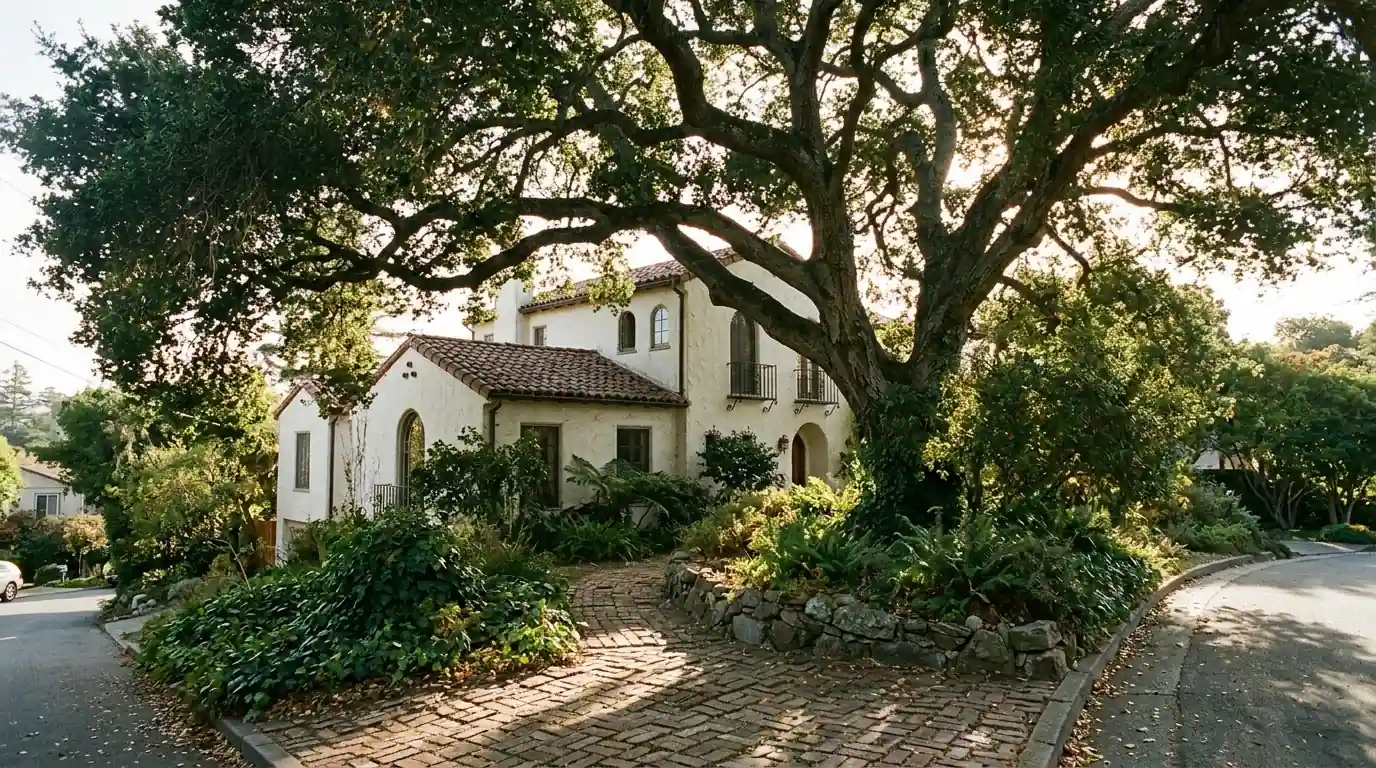
Wide oak limbs over tile roofs and driveways need careful weight reduction. We do this work during the dry season, when oaks handle cuts best.
DetailsOld canopies collect dead limbs that fall in winter wind. We climb in and clear them before storm season.
DetailsWhen a big tree has outgrown its space, we shorten the longest limbs back to strong side branches instead of topping it.
DetailsBig oaks and sycamores with weak forks can be supported with steel cables, which lets owners keep trees they love.
DetailsOld trees near homes and sidewalks deserve a careful look at the trunk, root flare and major limbs before deciding on any cut.
DetailsNearly every mature tree here is protected. Coast live oaks count at 4 inches DBH and most other trees at 9 inches DBH, and the big oaks and redwoods of Crocker Highland are well past both. A permit is needed to remove any of them. The code also treats topping as removal, which is one reason we reduce canopies rather than cut tops off.
Garden and hardscape projects deserve a check too. Regrading around a protected tree's roots counts as removal under the code, so new patios, driveways and retaining walls near an old oak can create a permit issue. Before construction starts, we can set up tree protection fencing around the root zone and work with your contractor on where to dig.
Many homes here have tile or slate roofs, brick walks and formal gardens. We lower limbs on ropes so nothing drops onto roofs, and we lay plywood over walks and lawns where the wood will land. Garden beds get covered, and we brief owners on which plants we'll need to step near. Wood from a big oak is heavy, so we cut it into short rounds before it crosses a lawn. If owners want firewood, we stack the rounds where they ask and chip only the brush.
Streets are wider here than in the hills, but curb parking fills quickly on weekday mornings. We confirm the curb space with owners a day ahead. The chipper goes at the curb, and we keep the sidewalk clear for walkers and strollers while we work.
ZIP codes for Crocker Highland: 94610.
Yes. We cut long limbs back to healthy side branches and take weight off the ends so they stop resting near the roof. This is crown reduction, not topping, so the oak keeps its form and health. Oakland's code treats topping a protected tree as removal, so reduction is also the cleaner route on the permit side.
The dry months, roughly May to October in the East Bay. Oaks pruned in wet weather are more exposed to disease, and summer cuts dry quickly. A light cleanup every few years keeps big cuts from piling up all at once. For deadwood that could fall in winter storms, we like to finish before the rains start in November.
It can if the work cuts roots or changes the grade over the root zone. Oakland treats regrading around a protected tree as removal, so the project could need a permit. We can mark the root zone, set up protection fencing and advise your contractor on where digging is safer. We check the job again once the heavy work is done.
Call any hour. Tell us the street, the tree and what changed, and we will plan the visit around your access.