Tree Removal
Big trees planted with mid-century homes now crowd foundations, roofs and fences and need to come out.
DetailsHayward runs from flat neighborhoods near the bay up into steep hills with oaks and dry grass. We remove, trim and clear trees on both ends of the city.
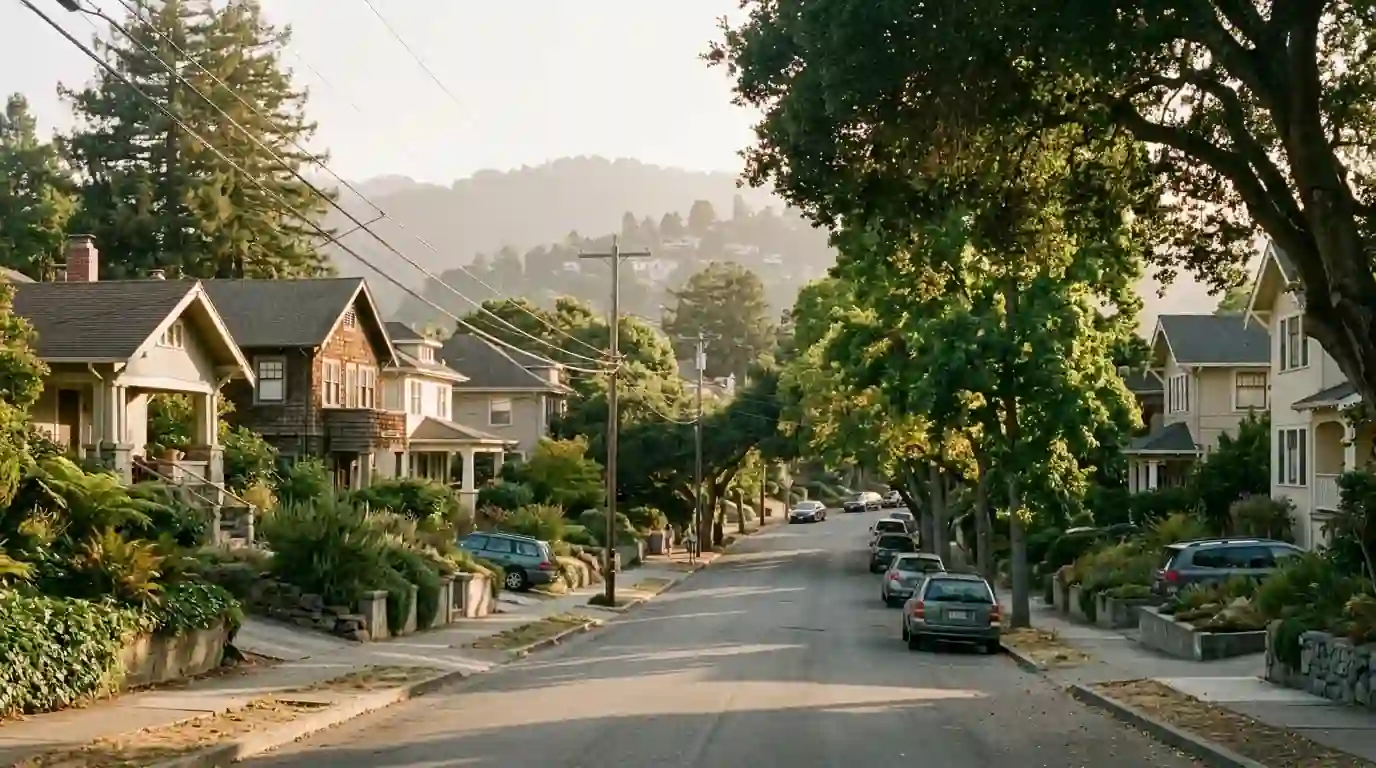
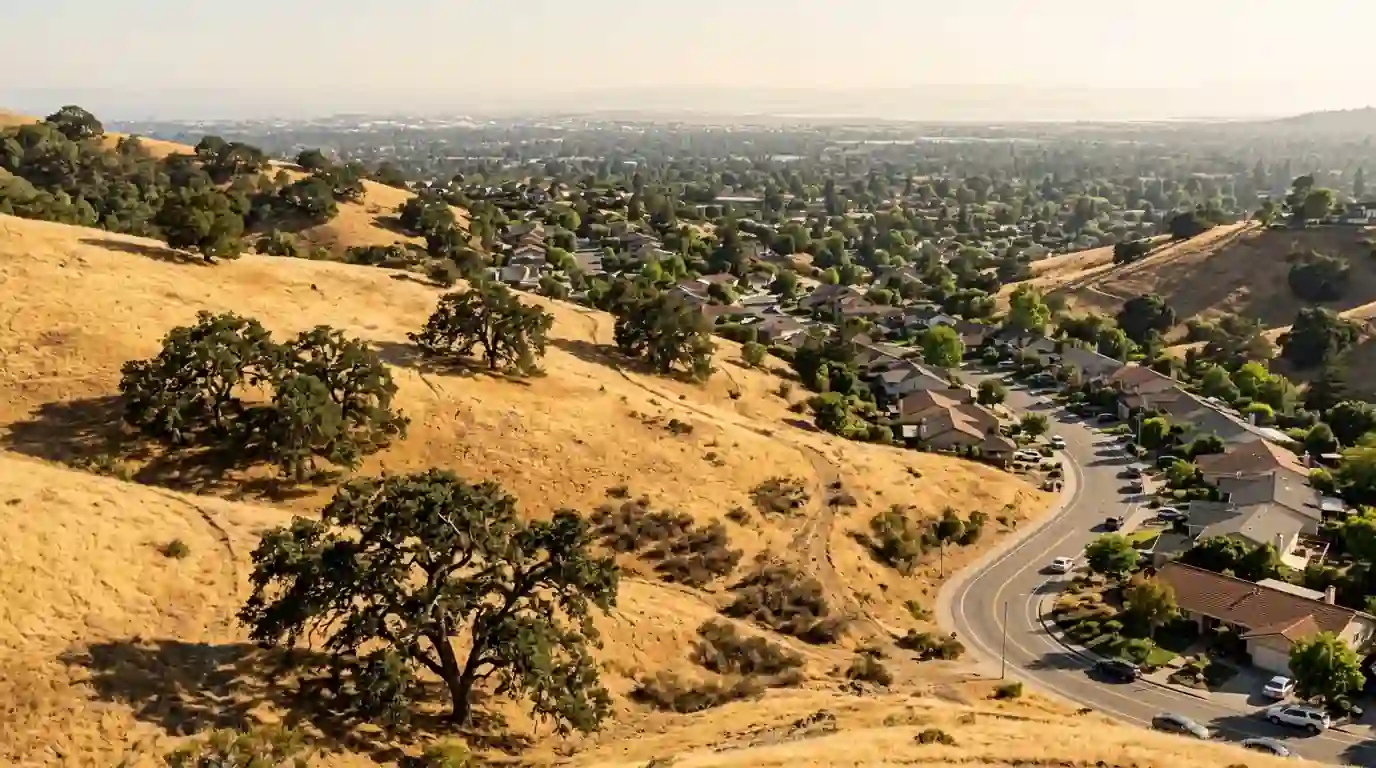
We remove and trim trees throughout Hayward. In the flatlands, that's mostly mature backyard and street-facing trees on mid-century lots. Up in the Hayward hills, it's oaks, eucalyptus and fire clearing on slopes. Many jobs involve trees planted decades ago that now crowd homes or lines. Hayward has its own tree rules, and we check them before removing anything.
Hayward is a big city spread across very different ground. The west side is flat and close to the bay, with tract homes, apartment complexes and commercial parcels. Trees there were planted with the houses: ash, liquidambar, pine, ornamental pear and Chinese elm. Many are now tall and heavy, with roots pushing up driveways. Few were pruned when young, so we often find codominant trunks and crossing limbs that should have been corrected decades ago.
The east side climbs into the Hayward hills. Streets wind up the slopes, lots get larger and steeper, and the trees shift to coast live oak, bay laurel and eucalyptus. Grassy hillsides turn gold by early summer. Hill homes often back onto open space, so brush and dry grass come right up to the fence line.
Clay soils are common across much of Hayward. They swell in winter and crack in summer, which stresses roots and can loosen big trees on slopes. After a hard winter, we often find trees with new leans or soil heaving at the base. Watching for those signs is part of every hillside visit. In the flatlands, the same clay heaves sidewalks and driveway slabs around big street-facing trees, so root issues come up on both sides of town.
Big trees planted with mid-century homes now crowd foundations, roofs and fences and need to come out.
DetailsHill homes backing onto open space need brush and low limbs cleared before the dry season.
DetailsMature backyard and front trees need regular trims to stay off roofs and the service drop.
DetailsApartment complexes and business parks along the flatlands keep a steady list of pruning and removal work.
DetailsTrees that develop new leans after wet winters on hillside clay come down before they fail.
DetailsHayward has its own tree rules, and they differ from Oakland's and from the county's. Some trees need a permit to remove, and the details depend on the tree and the property. We look up what Hayward requires for each job before we cut and tell you whether approval is needed. When it is, our permit assistance helps you get it done.
For commercial and multifamily properties, there can be added conditions tied to landscaping plans. We review those with the property manager before planning removals, so replacements and work dates line up with what the city expects.
Flatland streets are wide and level, and we can usually park the truck and chipper right in front of the house. Backyards are reached through side gates or across driveways. For commercial jobs, we work early or late around parking lot traffic and block only the spaces we need. Tenants get notice through the manager, and we tape off the work zone before the first cut.
In the Hayward hills, streets are narrow, curving and steep. We scout parking, work from the uphill side and lower wood by rope. On lots that back onto open space, we often carry brush up to the street in loads. Some hill streets have no shoulder at all, so we set cones and flaggers before the truck stops. Runs that continue to Castro Valley or Fremont are planned the same way.
ZIP codes for Hayward: 94541, 94542, 94544, 94545.
Cut back dry grass and brush along the fence line, remove dead limbs from oaks and eucalyptus, and limb trees up so fire can't climb from the ground. Clear leaves and needles from roofs and gutters too. We do this in spring, before the grass browns and the dry season sets in.
Clay soil swells when it's soaked and loses grip around roots. A tree with a heavy crown, especially on a slope, can shift when the ground is saturated. Cracked or heaving soil at the base is a warning sign. We can look at the tree and judge whether it can stay.
Yes. We prune, remove and grind stumps for apartment complexes and business properties. We plan around parking and residents, work in sections and leave walkways clean. We also review any landscaping conditions with the manager before cutting, so the work matches what the city expects.
Sometimes. If the tree is healthy and the roots aren't damaging the house, crown reduction and thinning can keep it a good size for years. If roots are lifting the foundation, or the trunk shows decay, removal usually makes more sense. We look at the trunk, roots and canopy before giving you a straight answer.
Call any hour. Tell us the street, the tree and what changed, and we will plan the visit around your access.