Tree Trimming
Trees over small yards reach roofs, garages and neighbors' fences quickly, so regular trimming keeps them in bounds.
DetailsThe Laurel is a flat grid of bungalows and small cottages off MacArthur Boulevard, where backyard trees outgrew small lots decades ago. We trim them back, take out the ones that have to go and grind the stumps.
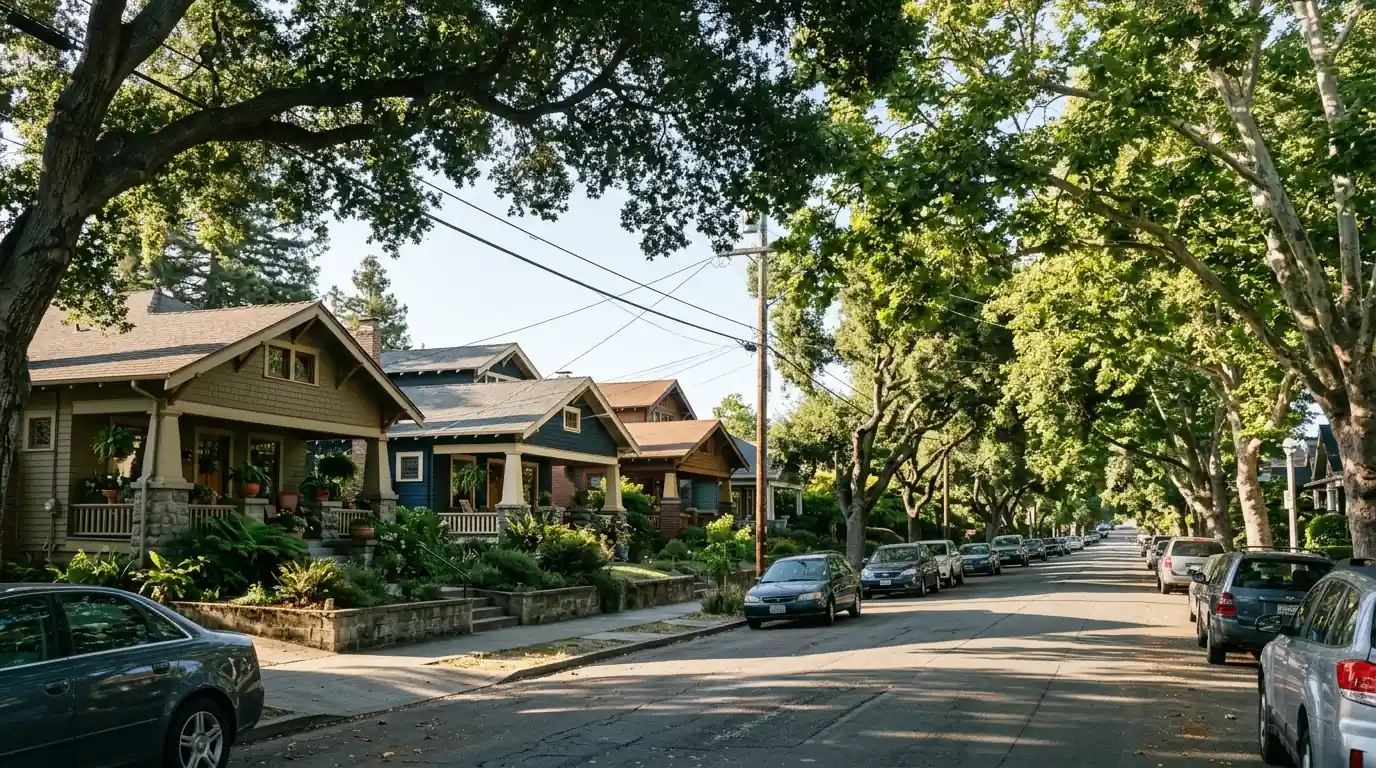
We trim and remove trees in the Laurel's bungalow yards, then grind stumps so the space can be replanted or paved. Lots are small and fairly flat, so the work centers on keeping limbs off roofs, garages and service drops, clearing overgrown fruit and ornamental trees, and checking each tree's size against Oakland's protection rules first.
Most of the Laurel was built between the 1910s and the 1940s, with modest houses on narrow lots and detached garages at the back. Owners planted what was popular then and later, much like the yards over in Maxwell Park: acacias, Chinese elms, liquidambar, ornamental pears and a lot of fruit trees. Few of those choices were sized for a yard thirty feet wide, and many now shade the whole lot.
The ground here is gentle compared with the hills above Highway 13. That makes access easier, but it also means trees sit close together, with one yard's canopy spreading over two or three neighbors. Acacias and pears in particular grow fast, split at weak forks, and drop limbs in wind. Older Monterey pines and a few redwoods stand out above the rooflines on some blocks.
Roots are a steady theme. Liquidambar and elm roots lift driveways and garage slabs, and old clay sewer laterals attract roots from almost any tree nearby. Plenty of Laurel owners call us after a plumber pulls roots out of a line and asks which tree is to blame.
Trees over small yards reach roofs, garages and neighbors' fences quickly, so regular trimming keeps them in bounds.
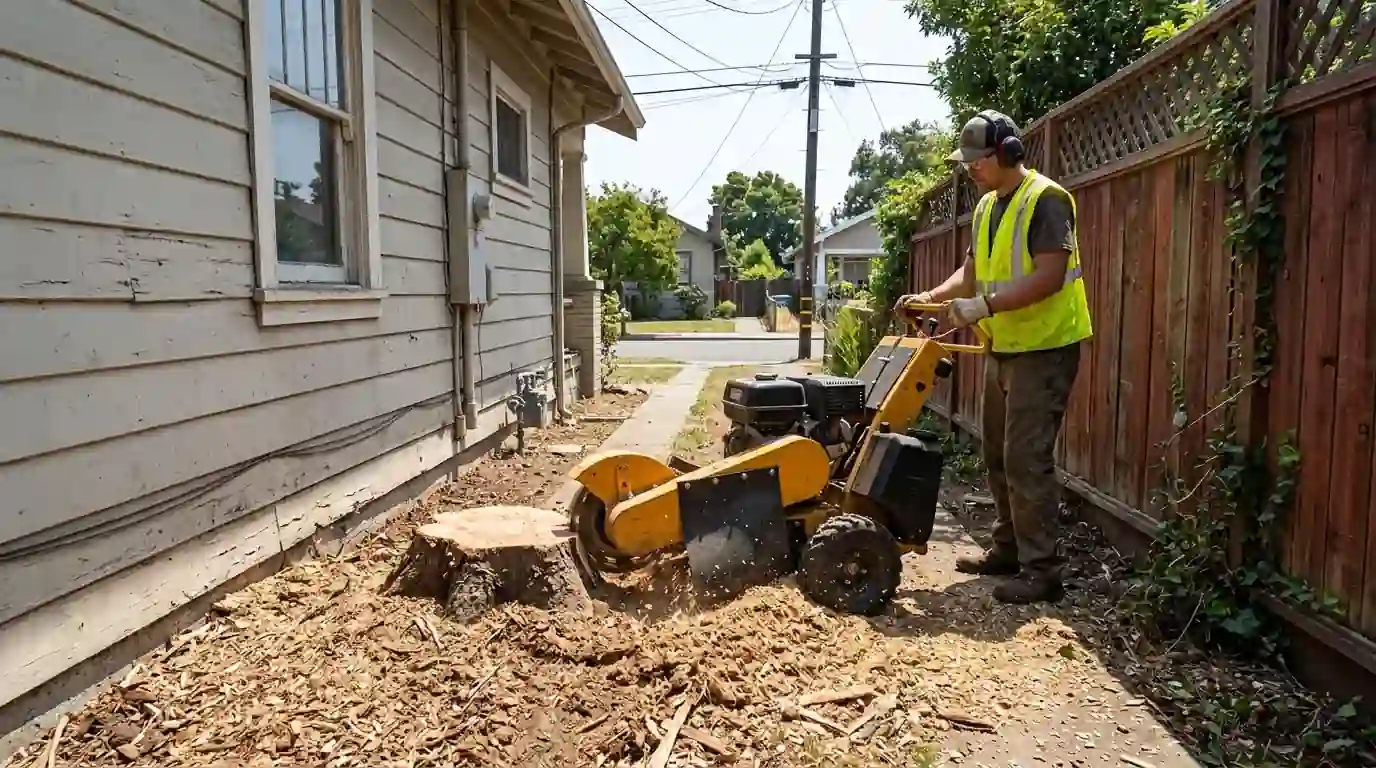
DetailsMany Laurel yards carry stumps from old removals, and a narrow grinder fits through a standard side gate to clear them.
DetailsShort-lived acacias and stressed pines die out on these lots and need to come down before they drop on a roof or car.
DetailsOld plum, apple and citrus trees in back corners need structural pruning to stay productive and avoid breakage.
DetailsEnglish ivy climbs trunks and fences along shared property lines here, and stripping it reveals hidden decay.
DetailsStart with trunk size. Oakland protects most trees at 9 inches in diameter, measured 4.5 feet above the ground, and coast live oaks from 4 inches. A protected tree needs a city permit before removal. Eucalyptus and Monterey pine are left out of the protected-tree chapter, though a Monterey pine on private land still requires posting and written notice to Parks and Recreation before it comes down.
Shared trees deserve a conversation too. Under California law, a tree whose trunk stands partly on two properties belongs to both owners, and cutting someone else's tree without permission can lead to double or triple damages. Trimming overhanging branches back to the line is generally allowed when it doesn't harm the tree. We help sort out where the trunk sits before cutting starts, and our tree assessment gives both neighbors the same facts.
The chipper stays at the curb in front of the house, and brush comes down the driveway or through a side gate. Gates in the Laurel are often three feet wide or less, so we bring a compact grinder and carry wood out in short rounds. Detached garages at the back of the lot are a common target, and we rope limbs down instead of dropping them on the roof.
Streets near MacArthur Boulevard see more traffic and tighter parking than the inner blocks. We set cones early, keep the sidewalk open with a clear walkway, and sweep the street before leaving. Most Laurel jobs finish in a day, with stumps ground the same visit when the gate allows it.
ZIP codes for Laurel: 94619.
Most likely. We use a compact grinder that fits through gates about three feet wide, which covers most bungalow yards here. If the gate is narrower, we can sometimes remove a fence panel for the day and set it back. We'll ask about the gate width when you call.
Acacias grow fast and tend to split at narrow forks, especially in wind or after rain. Signs to watch are cracks where big limbs meet, dead branches high in the crown, and a lean that's getting worse. We can look at it and tell you whether trimming will help or whether it's time to remove it.
Usually the closest large tree with moisture-seeking roots, often liquidambar, elm, willow or a big fruit tree. We look at where the line runs and which trees sit within reach of it. Root pruning can slow the problem, but a tree right on top of an old clay lateral may need to go.
Generally yes, back to the property line, as long as the cuts don't harm the tree's health. Cutting deep into the canopy or into the trunk can expose you to damages under California law. We make clean cuts at the line, avoid stripping one side bare, and suggest talking with the neighbor before we start.
Call any hour. Tell us the street, the tree and what changed, and we will plan the visit around your access.