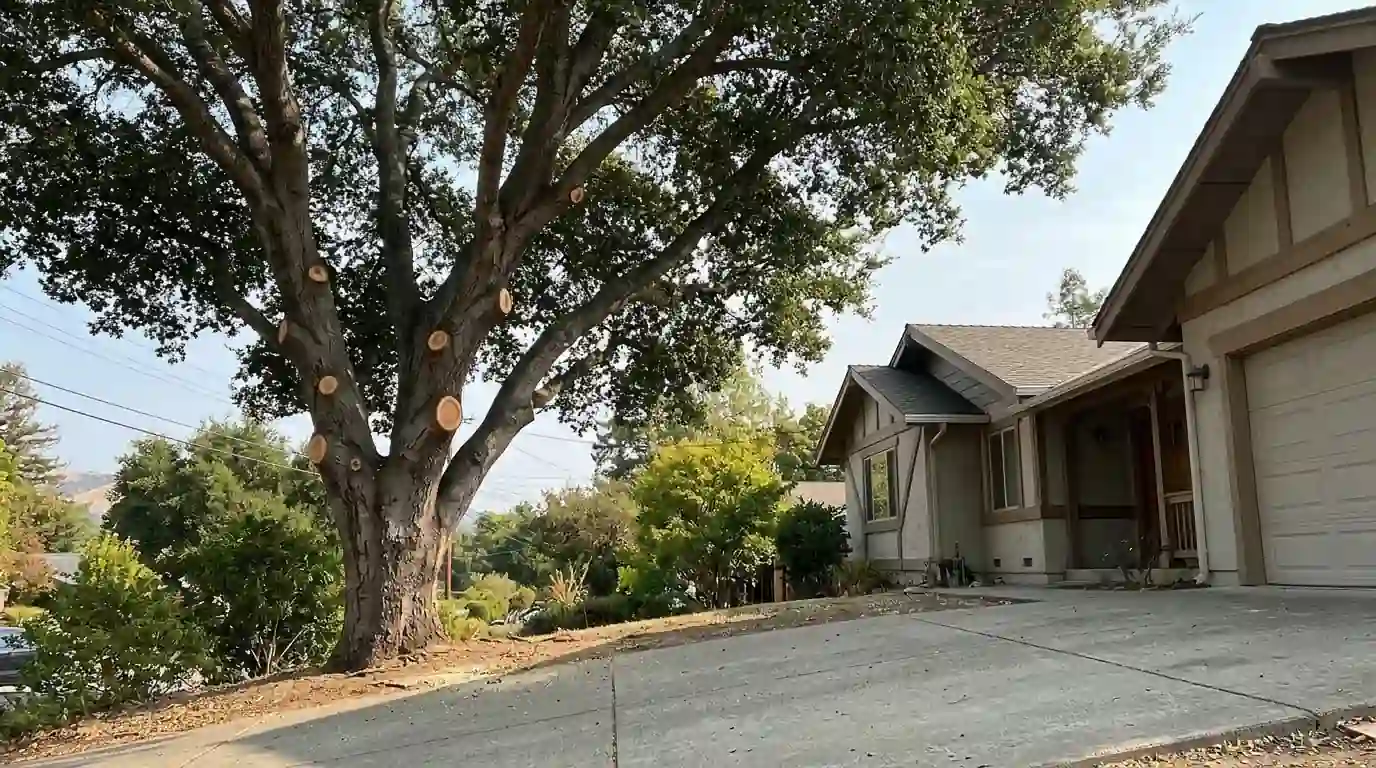
Deadwood removal in Oakland, CA
Dead limbs hanging over a patio, a roof or a parked car in Oakland don't announce when they'll drop. We climb in, find them and lower them out before wind or rain does it for you.
Quick answer
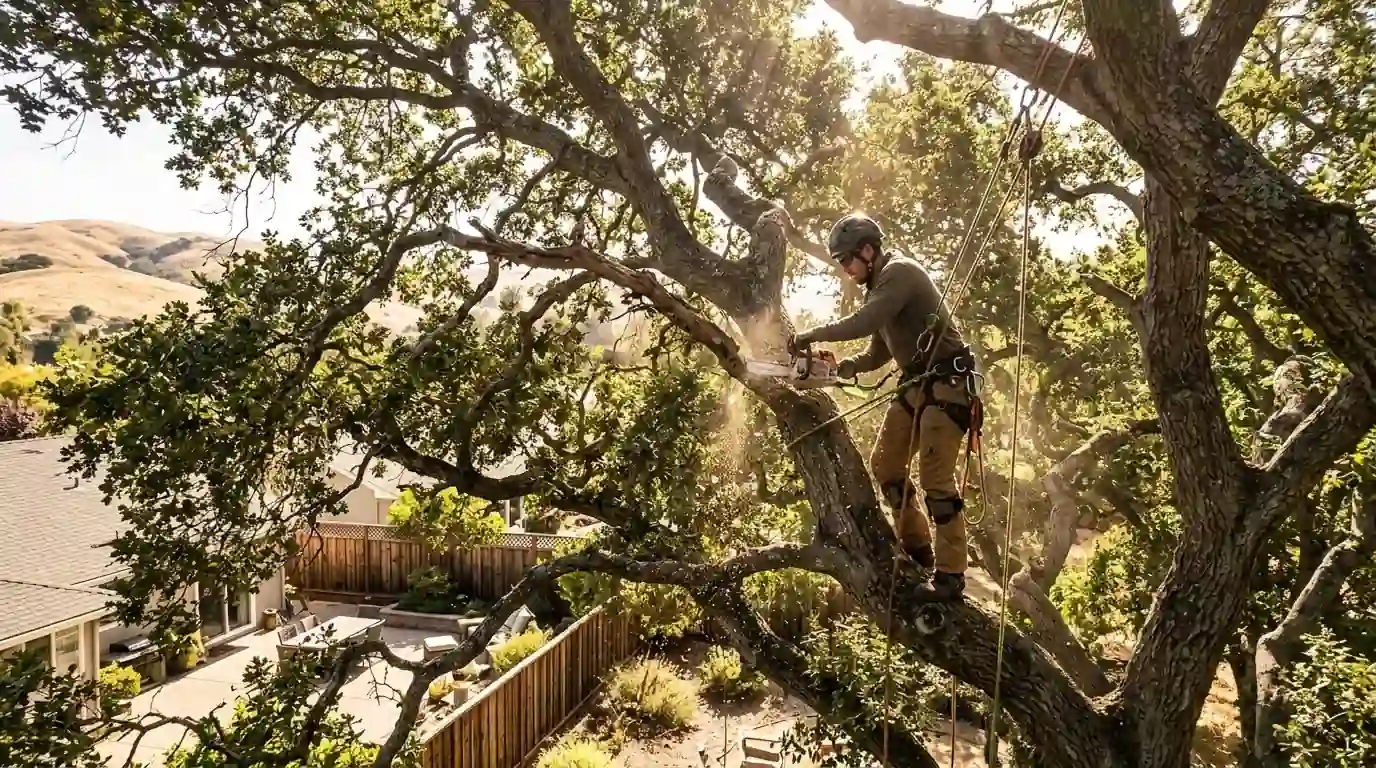
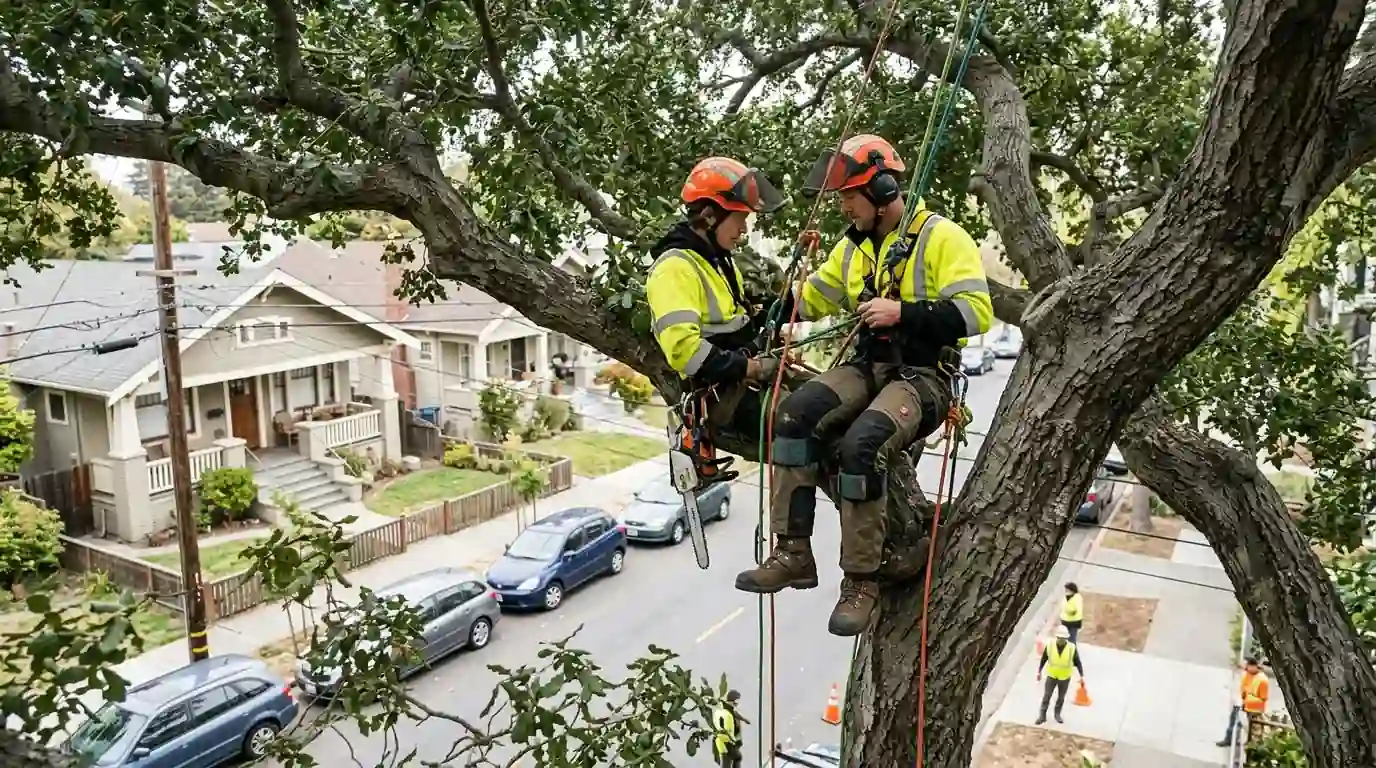
Deadwood removal means cutting out the dead, dying and broken branches inside a tree's canopy while leaving the live wood alone. You need it when gray, leafless limbs hang over places people sit, park or sleep, or when dry wood near the house adds fire fuel. Our climber works through the crown by rope, cuts each dead limb back to live tissue and lowers the heavy pieces on a line.
What deadwood removal involves in Oakland
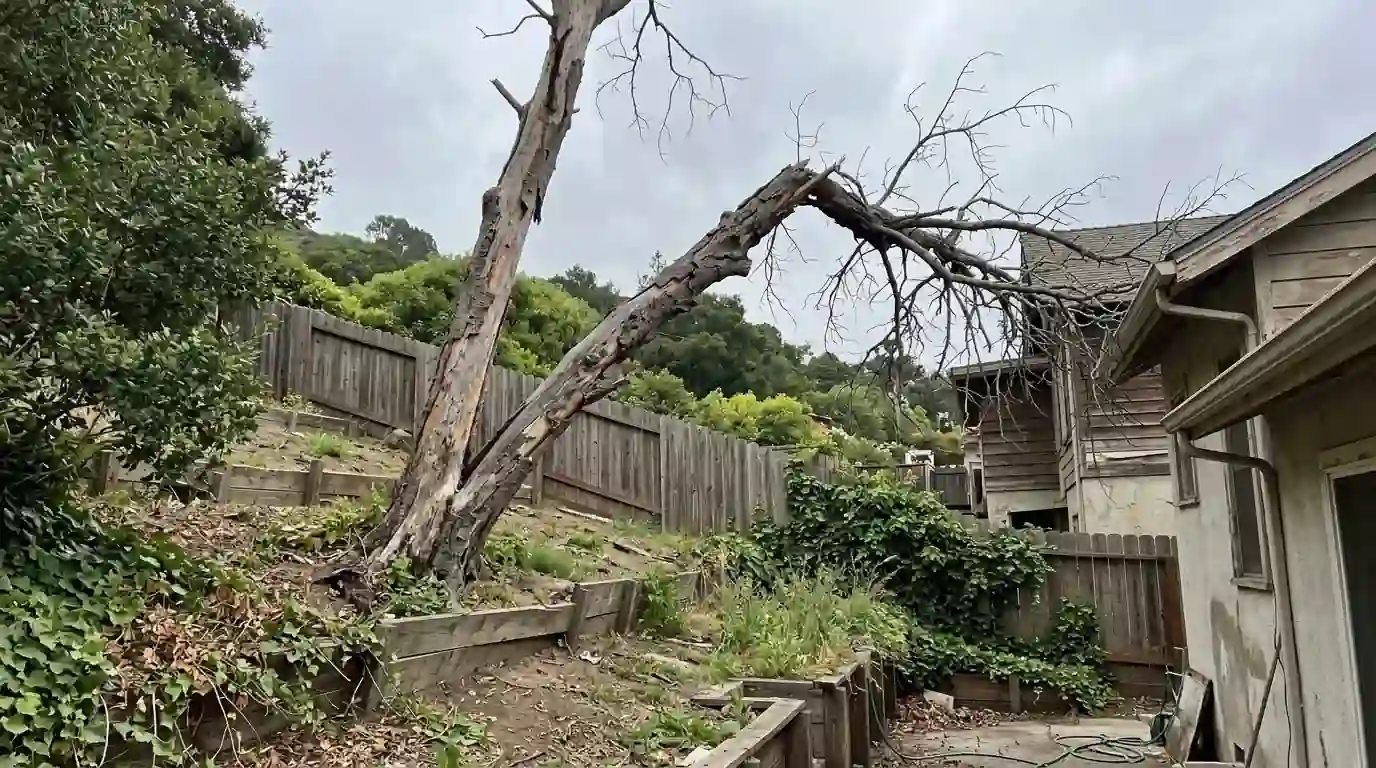
Most mature trees in Oakland carry some dead wood. Shaded interior limbs die off as the canopy thickens above them, storms snap tips that hang on for months, and drought years leave whole branches brittle. On a lawn far from the house that's mostly a tidy-up job. Over a patio table, a bedroom roof or the spot where the kids park bikes, it's a different story, because dead limbs fall without warning and often on calm days.
Dead branches also behave differently under a saw. The wood is dry and light in some species, heavy and punky in others, and it can shatter instead of bending when a rope takes the load. Our climber reads each limb before cutting: what's holding it, where it will swing, and whether it needs a lowering line tied off to a sturdier fork. Small dry twigs get dropped to a clear landing zone. Anything over a roof or glass comes down on a rope.
In the hills, deadwood is also fuel. A canopy full of dry twigs over a shake roof or wooden deck is exactly what fire crews have worried about since the 1991 Oakland Hills fire. We often pair this work with lifting the lower limbs and a broader defensible space cleanup, so one visit handles both the falling-limb risk and the fuel load next to the house.
How can you tell a tree is carrying dangerous deadwood?
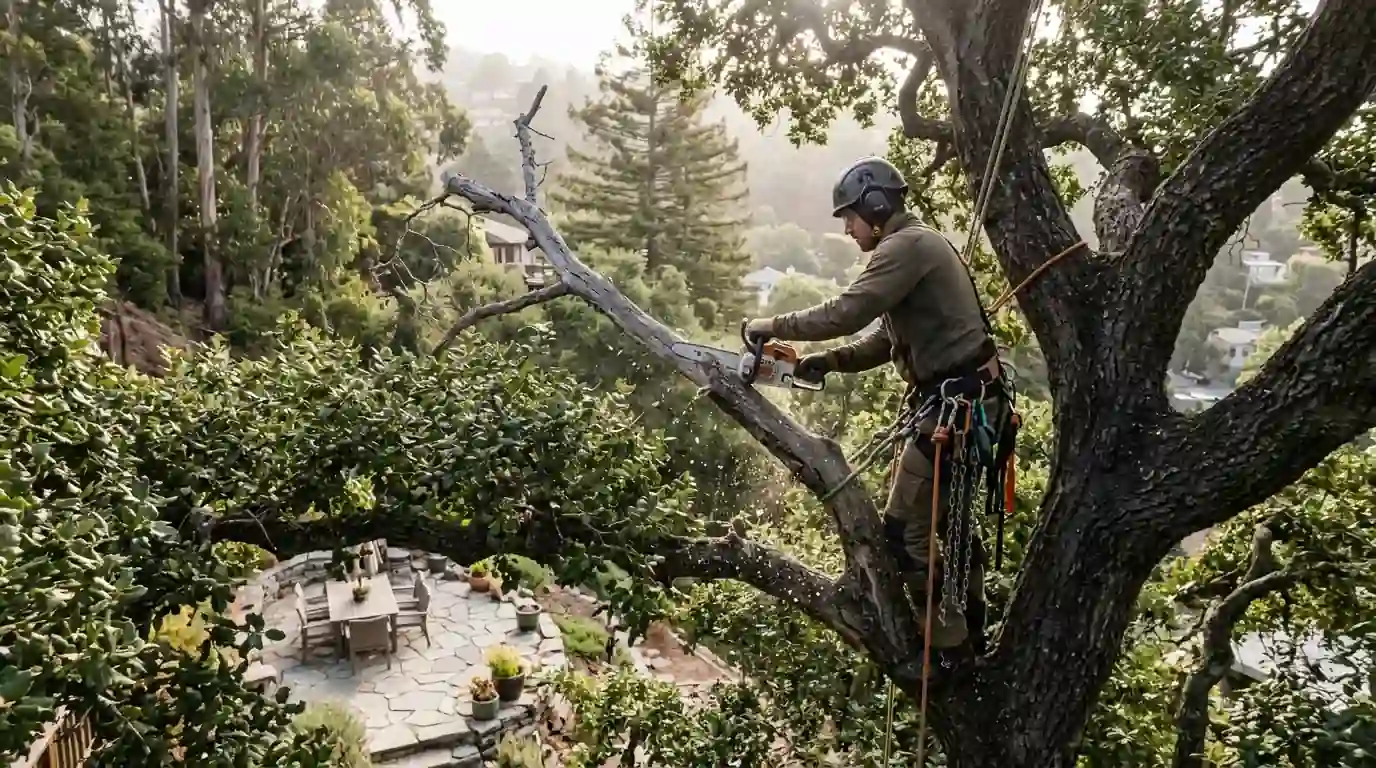
- Bare gray limbs in a green crownWhen one section stays leafless through spring while the rest of the tree leafs out, that wood is dead and drying.
- Bark sloughing off in platesLoose or missing bark on a branch, with smooth pale wood showing underneath, usually means the limb died a season or more ago.
- Hangers left from the last stormBroken branches caught in the canopy after a winter storm can stay lodged for months and then drop on a breezy afternoon.
- Sticks piling up on the roofA steady shower of dry twigs into gutters and onto the patio tells you the interior canopy is dying back.
- Fungus at a branch unionShelf fungi or soft, crumbly wood where a limb meets the trunk means decay is already working inside it.
- Woodpecker holes or beetle frassBirds and boring insects go where the wood is dead or dying, so fresh holes and fine sawdust are a good tip-off.
What happens when our climber cleans dead limbs out of a canopy?
Walk the drop zone first
We look at what sits under the tree, from skylights and solar panels to a greenhouse or hot tub. Then we decide which limbs must be roped down and which can free-fall.
Tie in high and work outward
Our climber sets a rope in solid live wood and works from the trunk toward the tips. Dead wood is never used as an anchor or a foothold.
Cut back to the branch collar
Each dead limb is cut just outside the collar where it meets live wood. That clean cut lets the tree seal the wound instead of leaving a stub that rots.
Lower the heavy pieces on a line
Larger dead limbs over roofs, fences or garden beds get tied off and lowered by a groundworker on a friction device, so nothing hits the house.
Note anything worse than deadwood
If a cut shows decay running into the trunk, a crack at a union or a canker on an oak, we point it out and explain what it likely means for the tree.
Chip, haul and blow off
We chip the brush at the street, haul the wood, then clear sticks and debris off the roof, gutters, deck and lawn before leaving.
Why dead branches near the house matter more in the Oakland hills
Oakland's wildfire district gets yearly fire department inspections, and the rules are built around fuel close to the house. In Zone 1, 5 to 30 feet out, tree limbs need to be at least 6 feet above the ground and 10 feet from any structure or chimney, with leaves and needles cleared from roofs and gutters. Zone 2, out to 100 feet or the property line, calls for clearing dead plants, leaves and needles. Dead wood overhead is the kind of fuel that matters in Montclair and along the ridge.
The state's proposed Zone 0 rules, covering the first 5 feet around the house, go further: no dead branches, no branches within 10 feet of the roof, walls or chimney, and lower branches 6 feet up. Those rules aren't final yet. Oakland plans outreach in 2026, mock inspections in 2027, non-enforced checks in 2028 and citations starting in 2029. Clearing deadwood now puts a house ahead of that timeline instead of scrambling to catch up later.
What changes the price of a deadwood cleanup?
Every job is priced after we see the tree. These are the things that move the number.
- How much dead wood is in the crownA few hangers take far less climbing time than a canopy where many interior limbs have died back.
- What sits underneathLimbs over open lawn can drop free. Limbs over a roof, greenhouse or service drop need rigging, which takes more hands and time.
- Tree height and spreadA tall eucalyptus or redwood means more rope work than a mid-size street tree.
- Getting to the treeBackyards up long stairs or down a steep slope mean hand-carrying brush, which adds hours compared with a flat front yard.
- Combining it with other pruningAdding crown raising or thinning on the same visit usually beats separate trips, since the climber is already tied in.
- Cleanup and wood haulKeeping the firewood, leaving chips for mulch or hauling everything away changes the scope of the job.
Work that often goes with deadwood removal
Where we handle deadwood removal
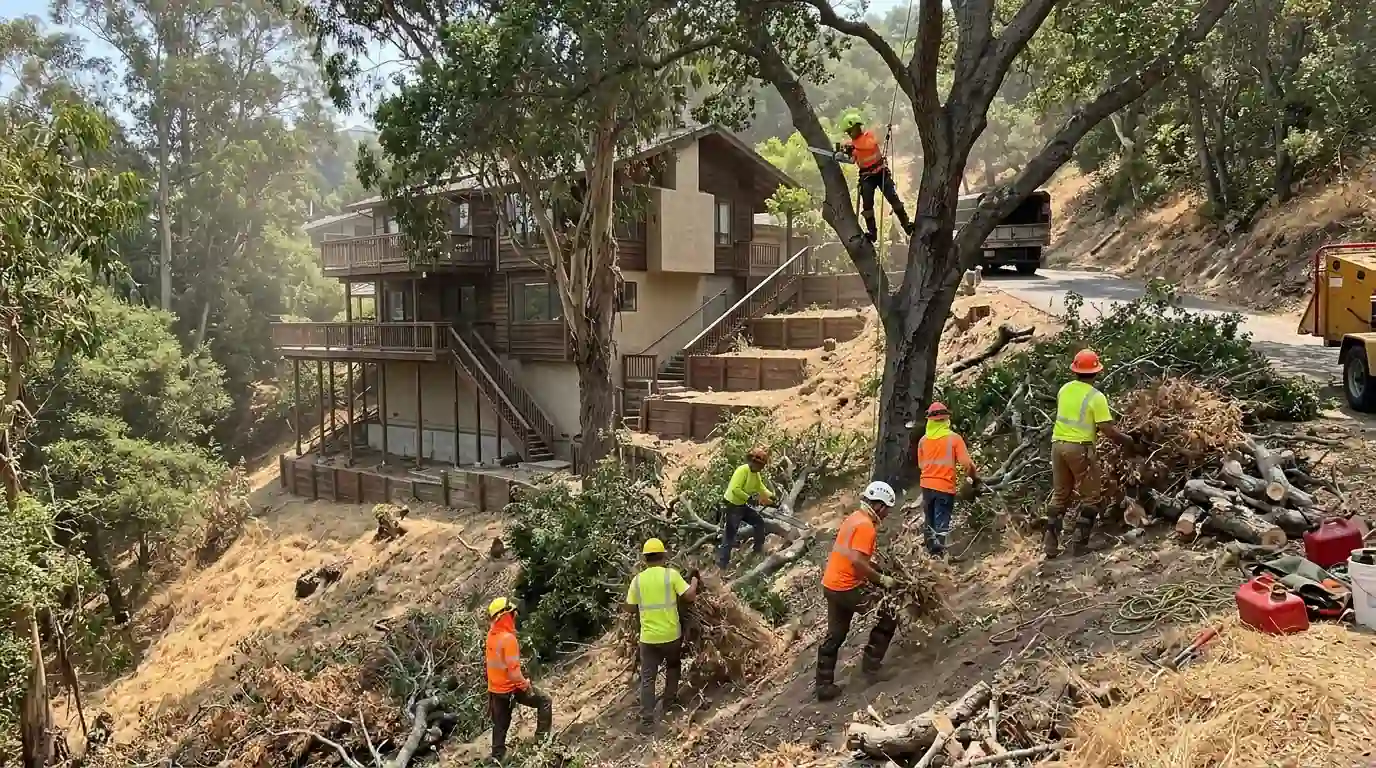
From the office on Martin Luther King Jr Way in Temescal and the Walnut Creek office on Bonanza Street, we cover Oakland and the East Bay. The biggest communities we serve, with a main ZIP code for each:
Deadwood removal questions we hear in Oakland
Is deadwood removal the same as a full tree trimming?
No. Deadwood removal targets only dead, dying and broken branches, and the live wood stays. A full trim may also thin, raise or reduce live limbs to change the tree's shape or weight. Many owners start with a deadwood pass because it removes the main falling-limb risk without changing how the tree looks from the street.
Can I wait until a dead limb falls on its own?
You can, but you don't get to choose when or where it lands. Dead limbs often drop on dry, calm days, not just in storms, and they fall straight onto whatever is below. Cutting them on a planned day, roped down away from the roof and patio, is far safer than waiting.
Does cutting deadwood out of an oak need an Oakland permit?
Routine deadwood cleanup is pruning, not removal, so it generally doesn't need a tree removal permit. Oakland's code treats topping and other serious damage to a protected tree as removal, so we keep our cuts to the dead wood and never top an oak. If a job looks like more than routine pruning, we check the rules first.
Will removing dead limbs help a struggling tree recover?
It stops the tree from wasting effort and lowers the chance of decay spreading from a dead stub, but it won't fix the cause. If large sections are dying back, something else is going on, such as root damage, drought stress or disease. We'll tell you what we see so you can decide on next steps.
How often should deadwood come out of a big tree?
For most mature trees near a house, a check every two to three years keeps dead wood from building up. Eucalyptus, pines and trees that took a beating in a winter storm can need it more often. Trees over play areas and decks deserve a closer look after each wet season.
Saws, chippers, grinders and climbing gear from names like Stihl, Husqvarna and Vermeer
StihlHusqvarnaVermeerBanditMorbarkRaycoAltecPetzlSilkySherrillTeufelbergerNotchEchoToro
Need deadwood removal in Oakland or the East Bay?
Call and tell us what the tree is doing. Someone picks up any hour, and we can usually talk you through the next step on that first call.