Oak Tree Pruning
Valley oaks in Livermore yards drop dead limbs in the heat and need light, careful cuts that keep their leaf area through the long dry season.
DetailsLivermore trees live through the hottest summers we work in, from big valley oaks on the edge of wine country to old shade trees along downtown streets. We prune them, take down the ones that fail and grind out what's left.
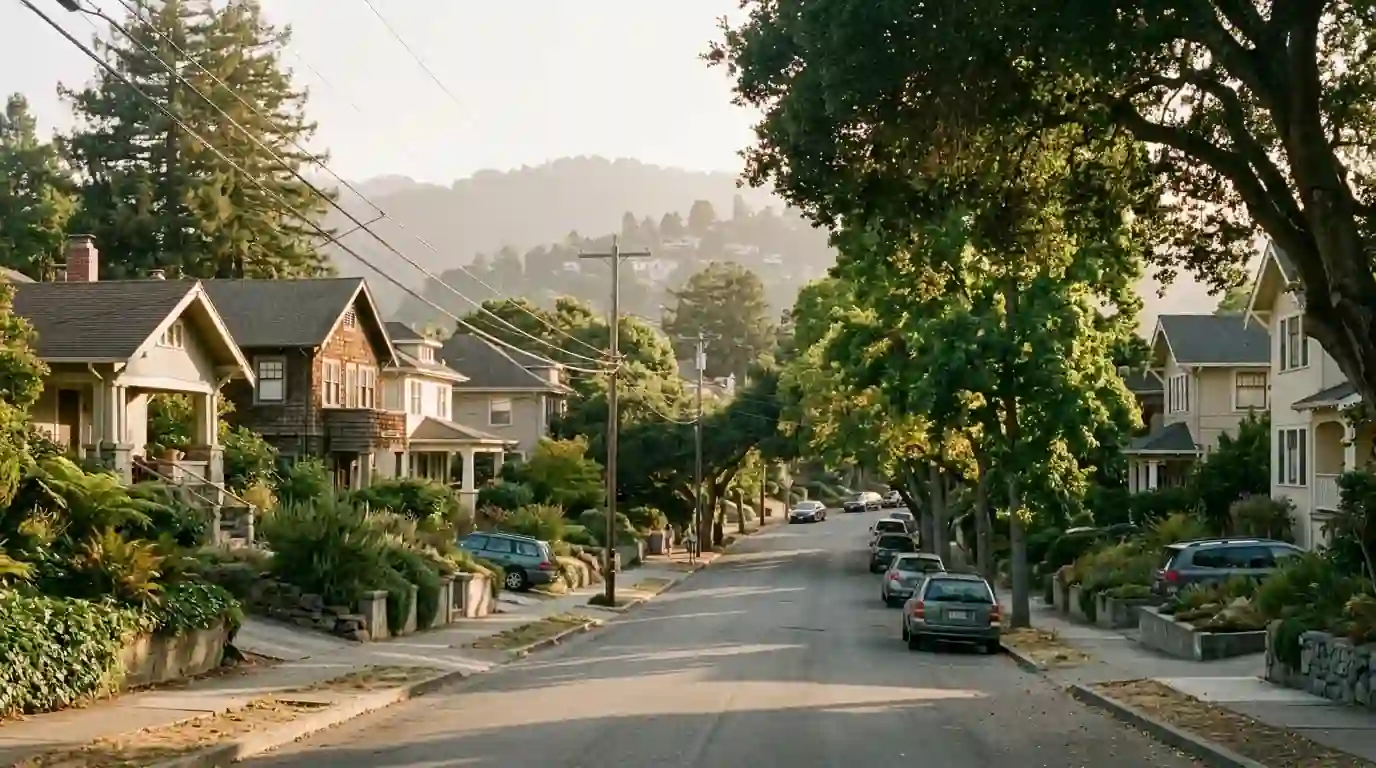
In Livermore we prune valley oaks, remove drought-killed and storm-split trees, thin shade trees that catch the valley wind and grind stumps on wide suburban lots. Summer heat here runs far past anything in Oakland, so stress, dieback and sudden limb drop shape most calls. Lots are roomy and streets are wide, which makes truck access easy, and we start early to beat the afternoon heat.
Drive east on Interstate 580 past Pleasanton and the fog drops away. Livermore sits at the far end of the Tri-Valley, where July afternoons bake and the ground goes hard by early summer. Valley oaks are the native giants here, standing in old pasture, along the arroyos and in yards that were carved out around them. Sycamores line the creek corridors, and you can see both at Sycamore Grove Park on the south side of town.
The edges of the city run into vineyards, especially out along Tesla Road, and homes near that country often have mature oaks, windbreak pines and old fruit trees on the same lot. Closer in, the tract neighborhoods from the 1960s onward have wide front lawns, backyards with pools and a mix of Chinese elm, liquidambar, ornamental pear and Mexican fan palm. Those trees are now forty to sixty feet tall in many yards.
Downtown around First Street holds the oldest planted trees in the city: broad street trees, big backyard walnuts and elms behind older homes, and a few palms that tower over the rooflines. Wind matters here too. Afternoon gusts pull through the valley from the Altamont Pass side, and heavy crowns on brittle species like ornamental pear tend to split in those blows, especially after a dry year has weakened the wood.
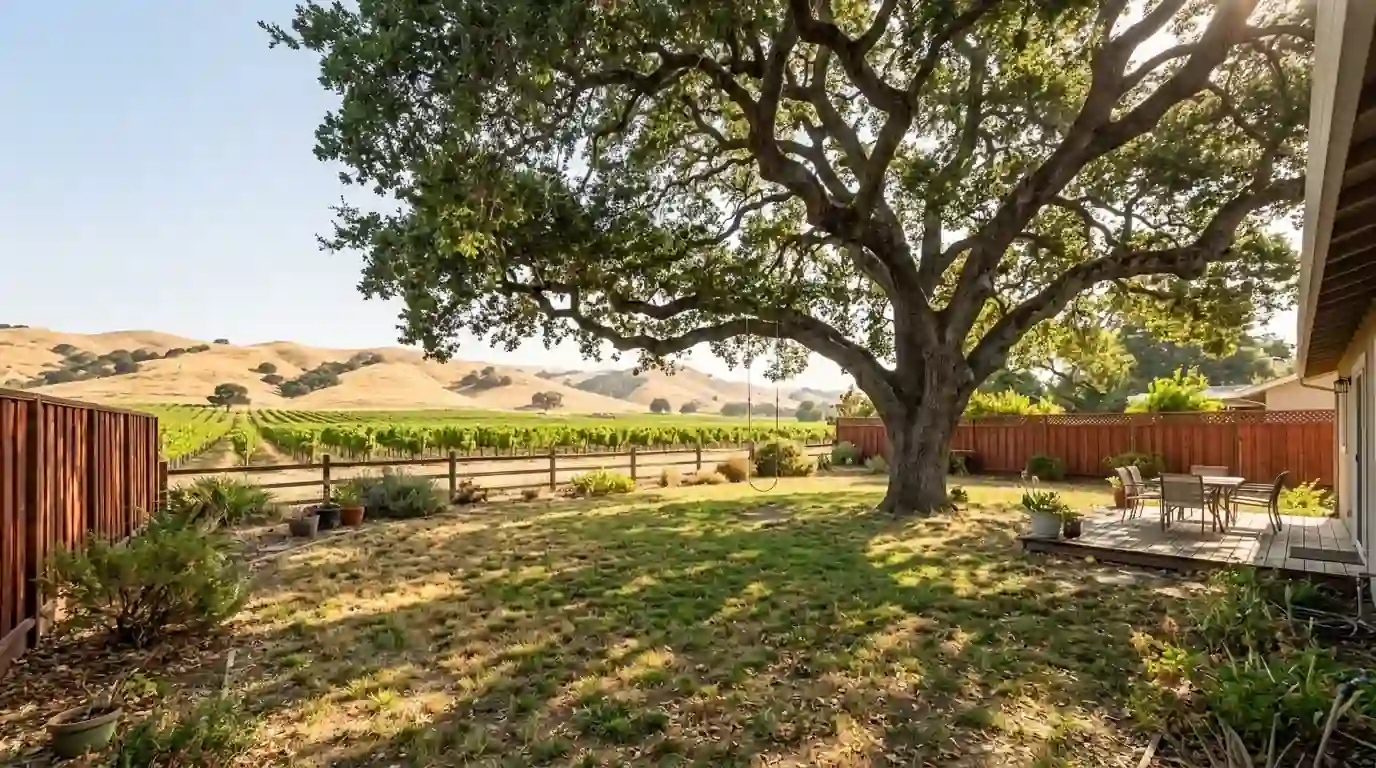
Valley oaks in Livermore yards drop dead limbs in the heat and need light, careful cuts that keep their leaf area through the long dry season.
DetailsDrought years leave pines, birches and some older elms dead on their feet, and those trees get brittle fast in the Tri-Valley sun.
DetailsDense crowns on pears, elms and liquidambar catch the afternoon valley wind, so thinning them cuts down on split leaders and broken limbs.
DetailsWide lots mean lots of old stumps, and owners want them gone before laying new lawn, pavers or a pool deck.
DetailsHeat stress and compacted tract soil leave many mature yard trees thin and pale, and feeding the root zone helps the ones still worth keeping.
DetailsIt does. Livermore has its own tree rules, and native oaks and street trees are the ones most likely to need city sign-off. We check what applies to your tree before cutting anything of size, then tell you plainly whether paperwork comes first. When it does, our permit support covers the trunk measurements and photos the city asks for, so the application matches the tree in your yard.
Fence-line trees are common on suburban lots, and state law treats a tree whose trunk crosses the line as owned by both neighbors. Cutting someone else's tree without consent can lead to double or triple damages, so we sort out ownership before the saw starts. You can generally trim branches back to your line if the cuts don't harm the tree, and we keep those cuts modest on oaks.
Access is rarely the hard part here. Most streets are wide, driveways are long and many homes have a side gate or RV pad that fits a compact stump grinder or a tracked lift. The chipper usually sits at the curb in front of the house. Backyards with pools take more planning, so we rig limbs down by rope and lay tarps across the deck to keep debris out of the water.
Heat is the real limit. We start at first light from late spring through early fall and plan the heaviest climbing and grinding for the cool hours. Dry grass on lots near the vineyards and open space can catch from a spark, so we keep water on the truck and avoid grinding in the windiest part of the afternoon. For jobs on the west side of the valley, see our work in Pleasanton.
ZIP codes for Livermore: 94550, 94551.
Long stretches of heat with no rain push many yard trees past what their roots can supply. Leaves brown at the edges, interior twigs die back and some trees drop leaves early to survive. A tree that greens up again in spring is usually fine. One that keeps thinning year after year needs a closer look at its roots, water and soil.
Yes. We thin dense crowns so wind passes through rather than pushing against a solid sail of leaves. We also shorten long, heavy limbs and remove weak forks on brittle species like ornamental pear. The goal is a tree that flexes in a gust instead of splitting at a narrow crotch over the roof or driveway.
Yes. We lower cut limbs by rope instead of dropping them, lay tarps over the deck and along the waterline, and rake and blow the area clean before we leave. Small leaves and twigs can still drift in on a breezy day, so most owners run the pool skimmer that evening as a final pass.
It depends on whether the city or the owner holds that planting strip. We check with Livermore before pruning or removing a tree in the parkway, since the city has its own rules for street trees. If the tree belongs to you and needs work, we handle the pruning and keep the sidewalk open while we do it.
Call any hour. Tell us the street, the tree and what changed, and we will plan the visit around your access.