Tree Trimming
Mulberries and ash trees planted beside houses need regular cutting to keep limbs off roofs, gutters and the service line to the home.
DetailsPleasant Hill is mostly flat suburban lots with big shade trees planted generations ago. We prune ash, liquidambar, mulberry and pine there, and remove the ones that have become a problem.
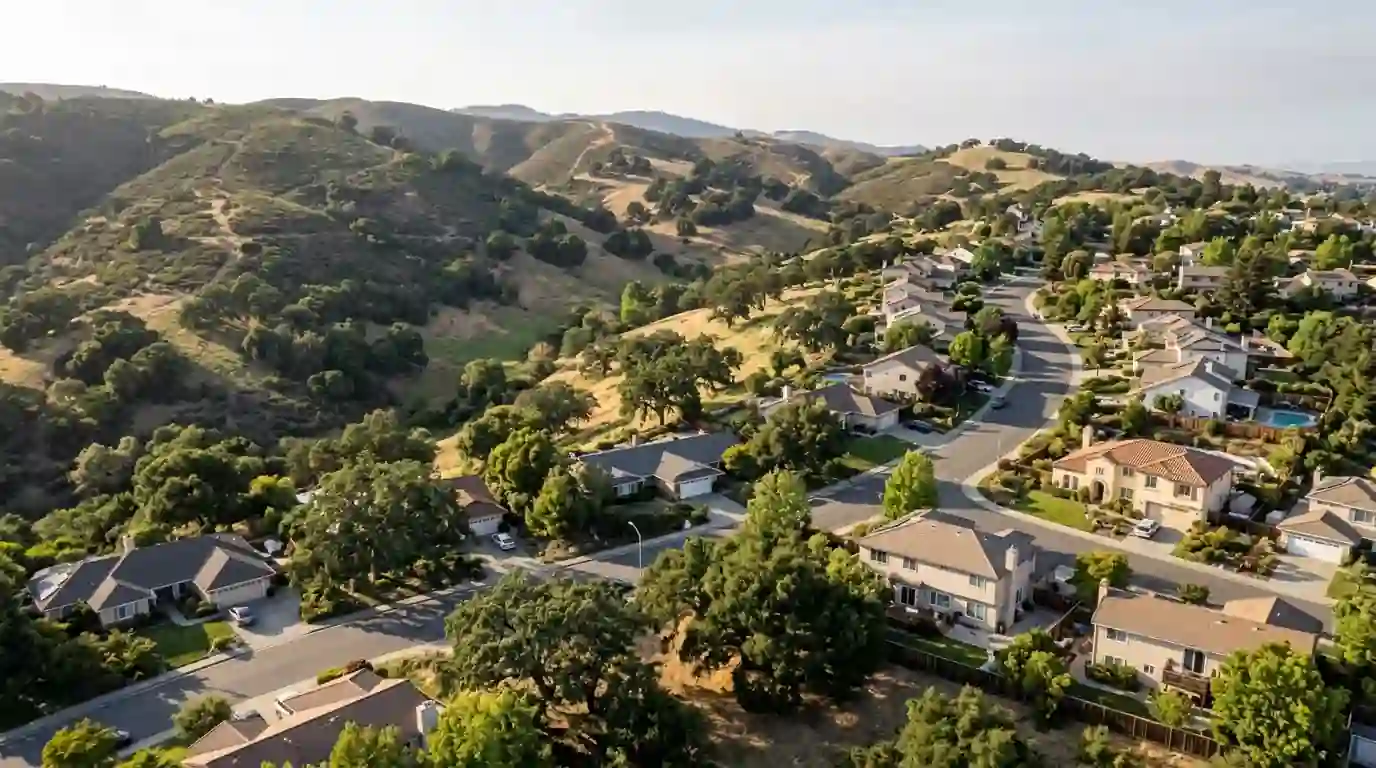
Our Pleasant Hill jobs are mostly on flat or gently sloped yards with mature planted trees: fruitless mulberries that need regular cutting, liquidambars lifting patios, ash trees with weak forks and old pines leaning over fences. Access is usually easy, so most work comes down to tree condition, nearby wires and roofs. The city has its own tree rules, which we look up before cutting.
Pleasant Hill grew up as a postwar suburb, and its trees tell that story. Ranch houses on quarter-acre lots got the shade trees that were popular at the time: fruitless mulberry, Modesto and Arizona ash, liquidambar and Monterey pine. Generations later, many of those trees are huge for their lots and reaching the age when limbs start to fail.
The terrain is gentler than the towns to the south and west. Most neighborhoods sit on flat valley floor or soft rolling ground near Diablo Valley College and Contra Costa Boulevard. A few streets on the western edge climb toward the ridge, where oaks take over and yards get steeper. Creeks thread through the city, lined with willow, bay laurel and the occasional big valley oak.
Hot summers and clay soil are hard on these planted trees. Ash and liquidambar both drop limbs when stressed, mulberry regrows fast after pruning, and older pines thin out and attract bark beetles in drought. The flat ground also means many trees grew right beside houses and the service wire, so pruning often has as much to do with clearance as with tree health.
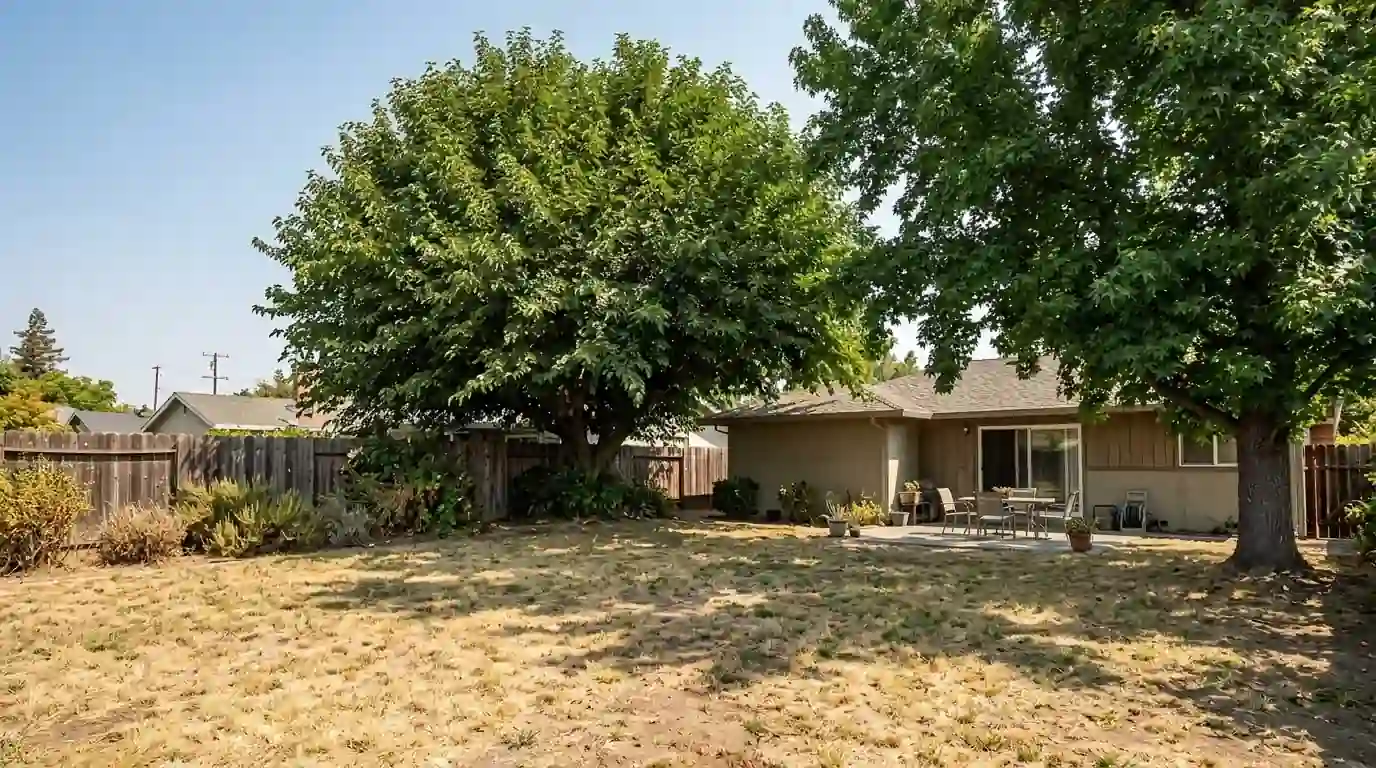
Mulberries and ash trees planted beside houses need regular cutting to keep limbs off roofs, gutters and the service line to the home.
DetailsDense liquidambar and ash crowns catch wind like a sail, so thinning lets air through and lightens long limbs over patios.
DetailsAging Monterey pines in backyards and along fences thin out, attract beetles and lean, and they often have to come down in sections.
DetailsAfter a big shade tree is removed, owners want the stump ground so they can replant, lay sod or extend a patio.
DetailsOnce an oversized tree is gone, many families replace it with a better-sized tree suited to the heat and clay.
DetailsPleasant Hill has its own tree rules, and we check them before any removal or heavy pruning. Size, species and location can all matter, so we look at those on site and tell you if the city needs to be involved. If it does, our permit assistance gathers what the application asks for. We'd rather confirm the rules first than guess.
Wires matter just as much as rules on these lots. PG&E keeps the top primary lines on the pole clear, but the service drop running to your house and any phone or cable lines are yours to keep clear. Before we prune near a service drop, we ask you to call PG&E, since they can disconnect it for the work. We never work on or near primary lines.
Most Pleasant Hill jobs start with good news: a driveway, a side gate wide enough for gear and a level backyard. That lets us move wood quickly and keep the chipper on the driveway rather than the street. The tight spots are side yards narrowed by air conditioners and fences, and backyard trees wedged between a pool, a shed and a neighbor's garage.
In those yards we take the tree down in small pieces by rope so nothing lands on the roof or fence, and we protect pool decks and patios with plywood. Stumps get ground with a compact grinder that fits through a standard gate. For the busier streets and condo complexes toward Walnut Creek and Concord, we plan around parking and traffic.
ZIP codes for Pleasant Hill: 94523.
Every year or two keeps it manageable. Mulberries push out long, fast shoots after cutting, and skipping a few years lets them get heavy over roofs and patios. The tree tolerates regular pruning well. We aim for a structure that sheds weight and keeps clearance, rather than cutting every limb back to stubs, which weakens the regrowth.
Stressed ash trees can shed limbs without wind, especially in hot weather. Weak forks with bark pinched between the stems are common in planted ash, and they split under the weight of long limbs. One failure often points to others. We check the remaining forks and either reduce the weight, add cable support where it fits or recommend removal.
It depends on space and what it's damaging. Liquidambars get large, drop spiky seed balls and lift paving with surface roots. In a roomy yard, pruning and thinning keep one reasonable. If it's cracking a walkway or crowding the house, removal and a better-sized replacement often make more sense over the long run.
Pick something that will fit the spot at its mature size and copes with summer heat and clay. A native oak, a smaller ornamental or a fruit tree all work in the right place. Keep new trees well away from the house, sewer line and overhead wires. If the old stump was ground, we clear the chips so the new tree goes into real soil.
Call any hour. Tell us the street, the tree and what changed, and we will plan the visit around your access.