Hazardous tree removal in Oakland, CA
Some trees look fine from the street and are hollow at the base. Others look alarming and will stand for decades. We judge the actual risk to your Oakland home before recommending that anything come down.
Quick answer
Hazardous tree removal is taking down a tree with a defect likely to fail and hit something that matters, like a roof, a bedroom or a busy sidewalk. You need it when decay, cracks, a shifting lean or root damage can't be fixed by pruning or cabling. We assess the defect and the target, then dismantle the tree with extra rigging and caution.
What hazardous tree removal involves in Oakland
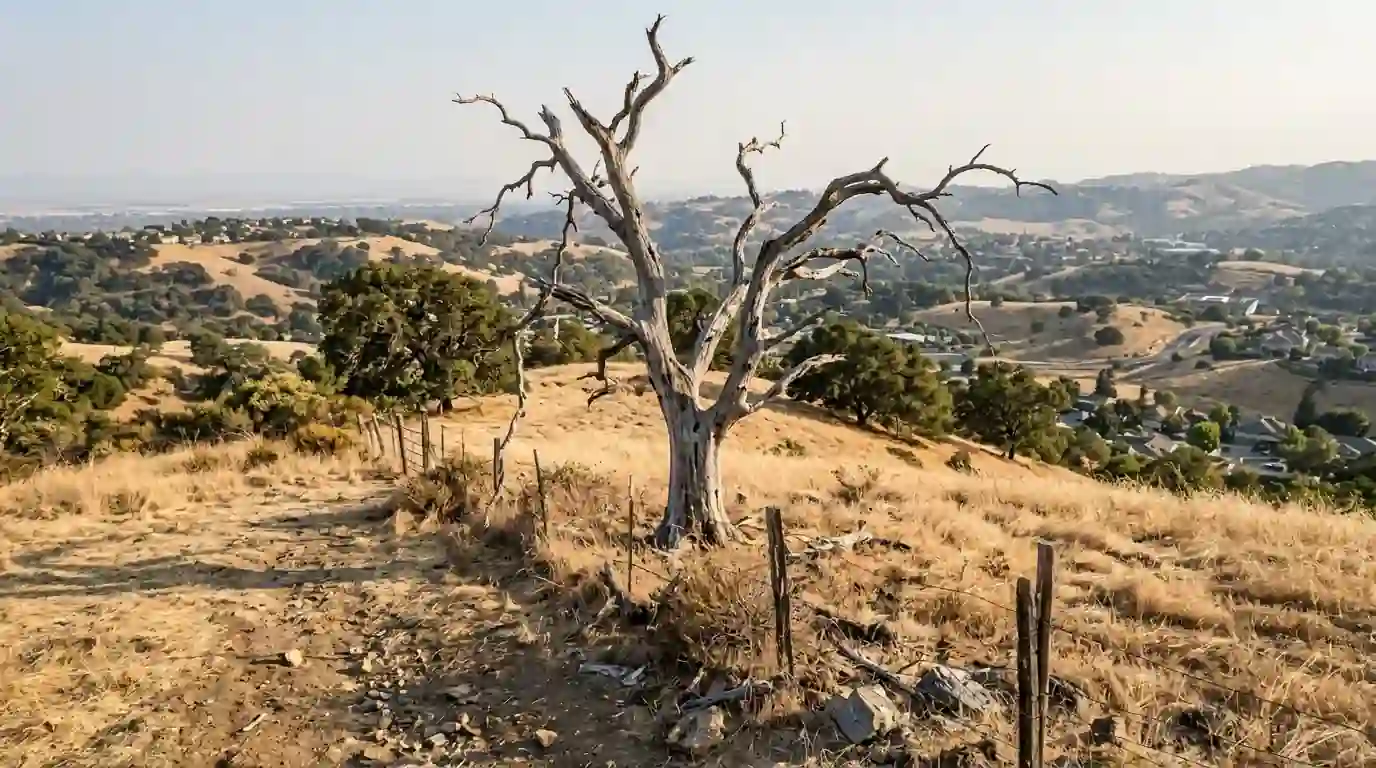
A hazard is never just a bad tree. It's a weak tree plus something underneath it that can be hurt. A dead acacia leaning over an empty back slope is a low concern. The same acacia leaning over a child's bedroom is urgent. So when we look at a tree for a hazard call, we score two things: how likely a part is to fail, and what it would land on if it did.
Defects hide well. Decay can hollow a trunk behind sound-looking bark, and a crack between two stems can run deeper than it looks from the ground. Our climber often goes up for a closer look before we commit to a plan, because a rotten limb that won't hold a rope changes how the tree has to come apart. When the defect is limited, pruning or a cable between the leaders may buy years, and we'll say so plainly.
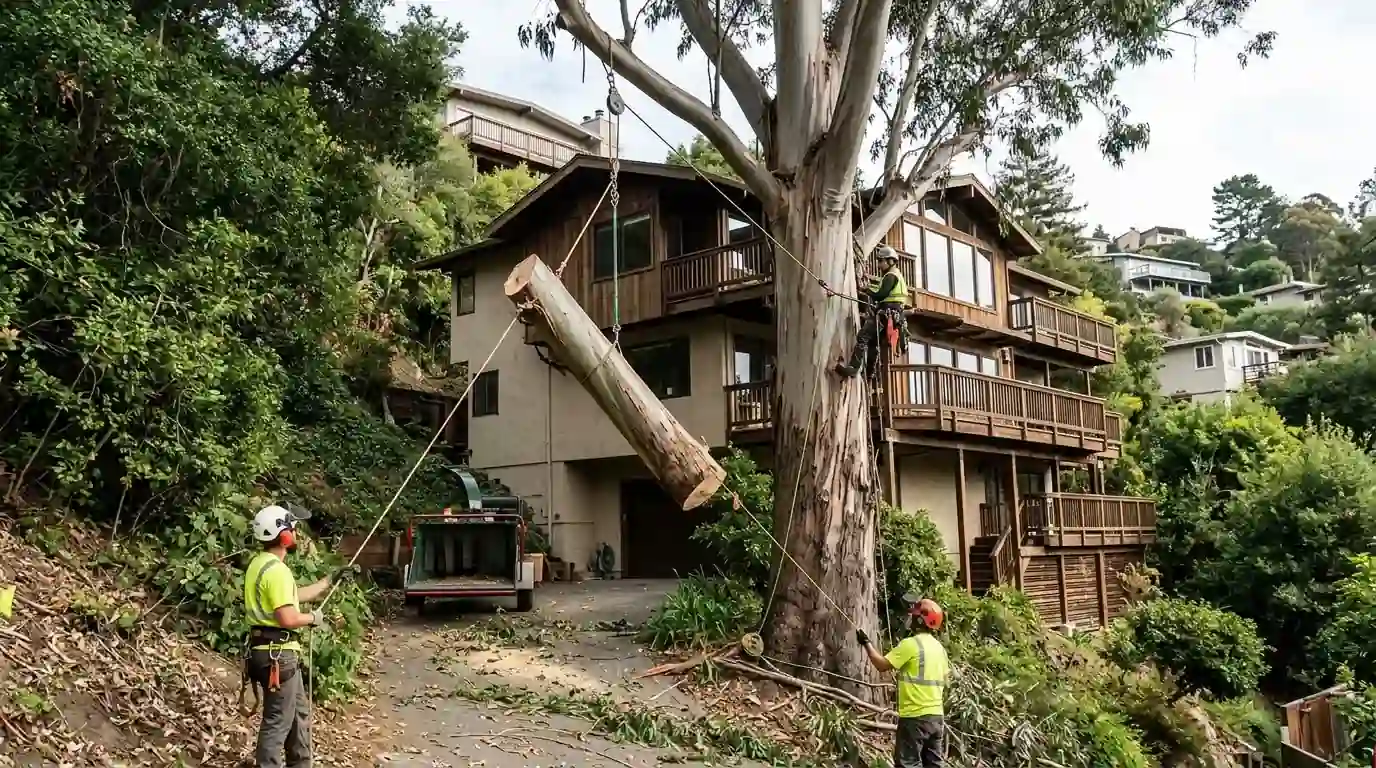
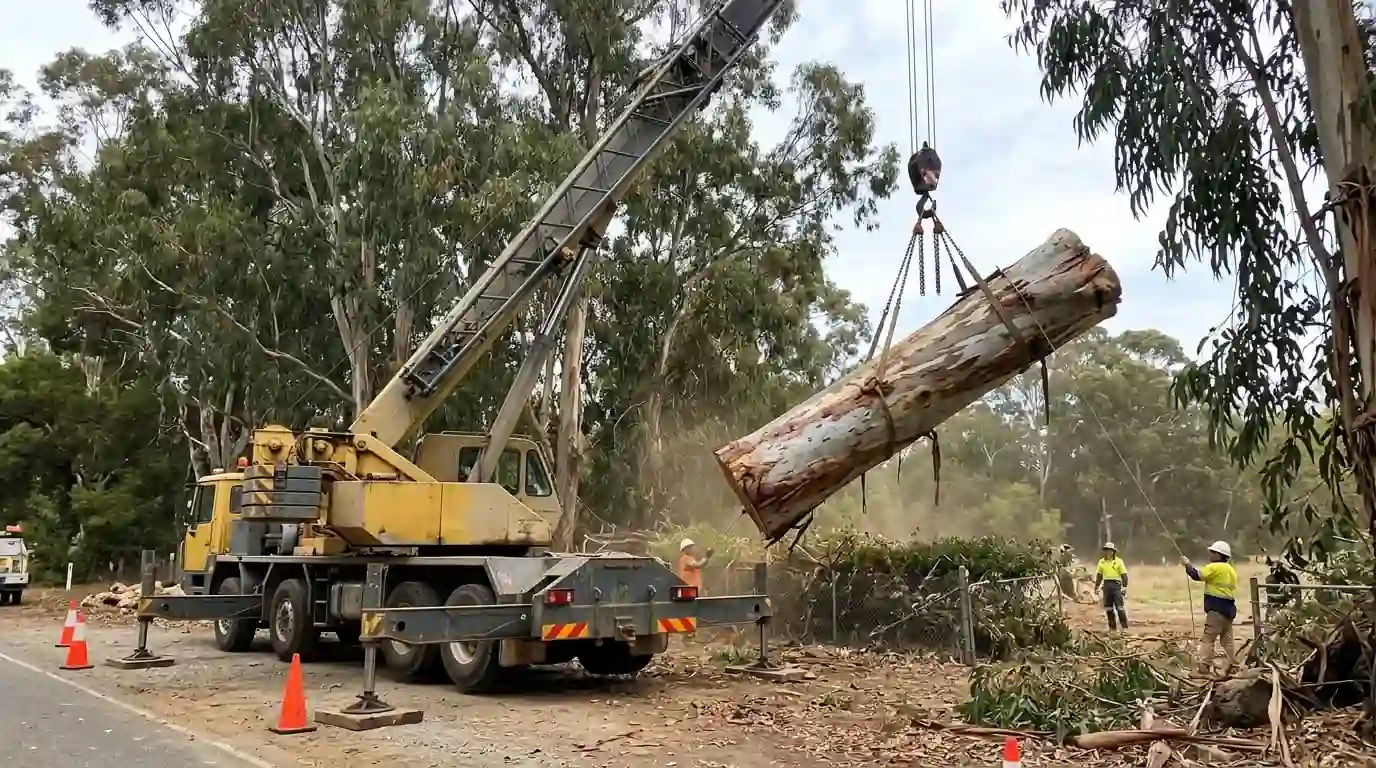
When removal is the right call, hazardous trees get handled differently from healthy ones. We don't trust weak wood to carry rigging loads, so we anchor the climber in a separate sound tree or use a lift or crane instead. Pieces are cut smaller. The ground crew keeps a wider clear zone. Taking a cracked tree down is slower, but that care is the whole point of the job.
How can you tell a tree has become dangerous?
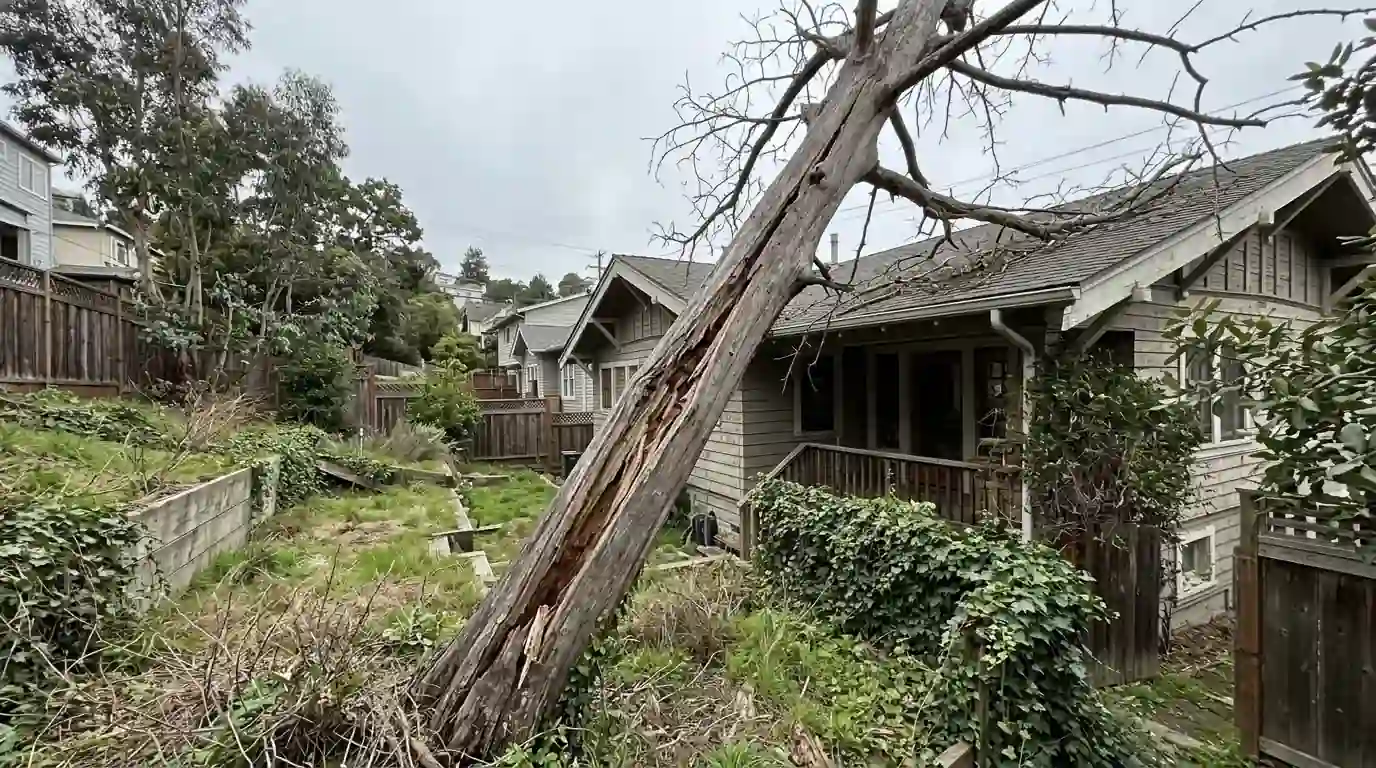
- A crack runs down from a forkTwo stems pushing apart with bark trapped between them, called included bark, can split in a storm and drop half the tree.
- Fungus is growing at the baseConks or mushrooms on the trunk or root flare usually mean decay is already working inside the wood that carries the load.
- Soil has lifted on one sideA mound or crack opposite the lean tells you the roots are pulling out of the ground.
- Large dead limbs hang over the houseDeadwood thicker than your arm can fall on a calm day, and dead branches over a roof or patio are a real hazard.
- Roots were cut for a trench or drivewaySevered structural roots on one side can tip a tree years after the digging, especially once winter rain softens the soil.
- A bleeding canker has appeared on an oakDark reddish sap on the lower trunk of a coast live oak is a sign of sudden oak death, which weakens the wood as the tree dies.
- The canopy has thinned from the top downDieback at the crown points to root trouble or disease, and the dead top becomes brittle fast.
What affects the cost of removing a hazardous tree?
Every job is priced after we see the tree. These are the things that move the number.
- How weak the wood isDecayed or cracked trees need extra anchors, smaller cuts and slower lowering than sound trees of the same size.
- What sits beneath the canopyA tree over a roof or a busy sidewalk calls for full rigging, while one over an open slope may allow some limbs to drop.
- Need for a lift or craneWhen the tree can't hold a climber, equipment does the reaching, and setup time goes into the job.
- Access on the lotA steep backyard behind a hillside house means carrying wood up stairs or rigging it to the street.
- Permit or emergency reportingA protected species may need a permit, or an emergency report if the danger is immediate.
How we judge the risk and take a failing tree apart
We look at the defect from the ground and from above
We sound the trunk with a mallet, probe soft spots and study the lean and root plate. If needed, our climber inspects forks and limb unions up close.
We map what the tree could hit
Roof, bedrooms, a play area, the street, the service drop and the neighbor's yard all get noted. The higher the stakes below, the more control the removal needs.
We choose an anchor we can trust
A dead or decayed tree may not safely hold a climber. We tie into a healthy neighboring tree, use an aerial lift, or bring in a crane.
We cut smaller and lower everything
Pieces are kept light so the rigging never shock-loads weak wood. Nothing drops free near the house.
We clean up and leave a record
After hauling the wood, we give you notes and photos of the defect, which help with permits, insurers or a dispute over a shared tree.
How Oakland's rules treat a tree that has become a hazard
Oakland's protected tree chapter still applies to a dangerous tree. A coast live oak at 4 inches DBH or another species at 9 inches needs a removal permit, and our written description of the defect is useful evidence for it. When the danger is immediate, the city can waive the permit, but the removal must be reported on the first business day after. We tell you which case you're in rather than guessing. For the full paperwork side, our permit help covers the application.
Sudden oak death is a local driver of hazard calls. Alameda and Contra Costa counties sit inside California's regulated area for the disease, and infected coast live oaks often stand near California bay laurels whose leaves spread the spores. A tree killed by it dries out fast and turns brittle. Hazard trees are also common on cut slopes in the hills, where years of grading and retaining walls have trimmed roots on one side. We see that pattern often around Oakmore and the Glenview hillsides.
Work that often goes with hazardous tree removal
Where we handle hazardous tree removal
From the office on Martin Luther King Jr Way in Temescal and the Walnut Creek office on Bonanza Street, we cover Oakland and the East Bay. The biggest communities we serve, with a main ZIP code for each:
Hazardous tree removal questions we hear in Oakland
Who decides whether a tree is actually hazardous?
We judge it on site by looking at the defect, how far it has progressed and what lies beneath the tree. For a protected tree, the City of Oakland makes the permit decision, and our written notes and photos give its staff what they need. For a formal report, see our tree risk assessment service.
Can a hazardous tree be saved instead of removed?
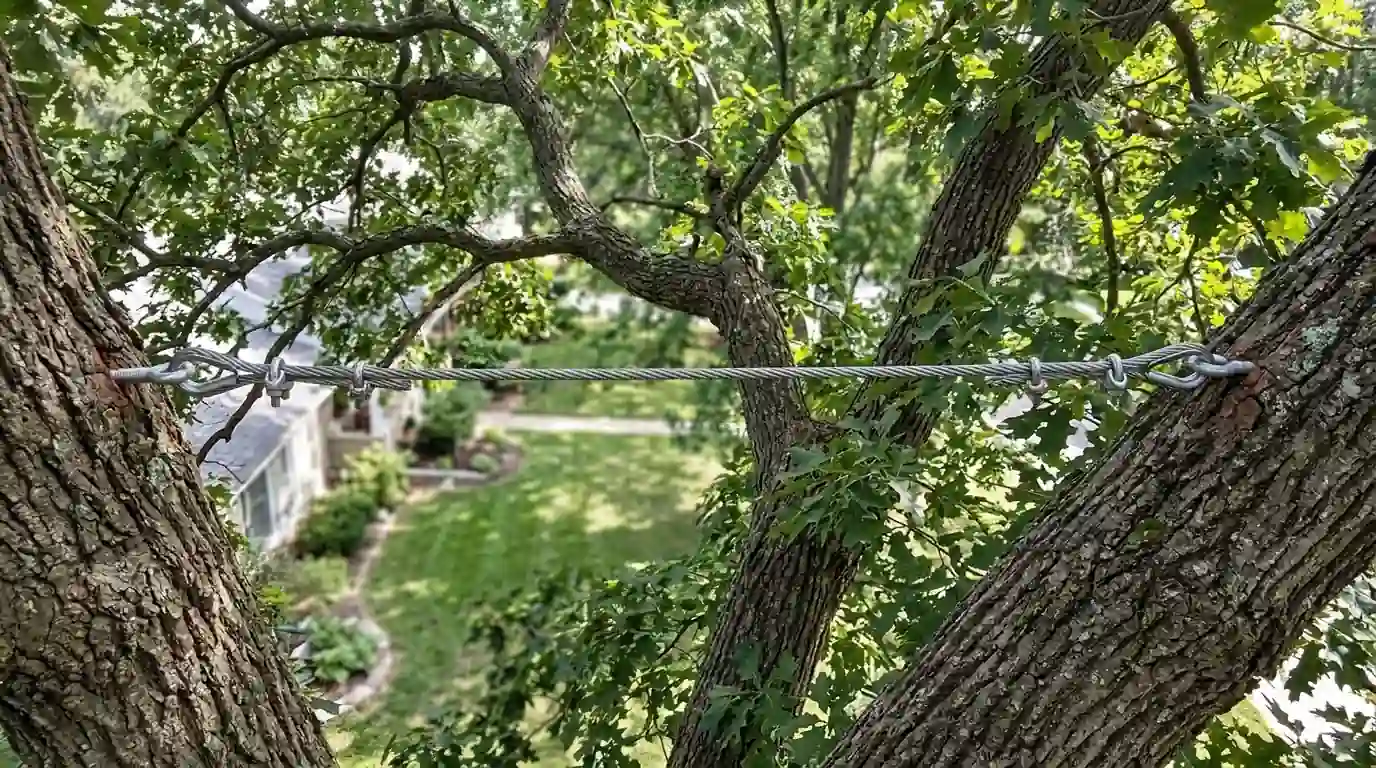
Sometimes. A single bad limb can be pruned off, a weak fork can be cabled, and a heavy canopy can be reduced to cut wind load. When decay has reached the base or roots have failed on one side, removal is usually the only safe answer, and we'll say which case you have.
My neighbor's tree looks dangerous. What can I do?
Start with a conversation, and share photos of the defect. You can generally trim branches over your side back to the property line if it doesn't harm the tree's health. Cutting the trunk or the rest of the tree needs the owner's consent, since California law allows double or triple damages for harming someone else's tree.
Why won't your climber go up a dead tree?
Dead and decayed wood can't be trusted to hold a person or a rope load. We tie the climber into a healthy tree nearby, work from a lift, or bring in a crane so nobody hangs their weight on a limb that might snap.
Saws, chippers, grinders and climbing gear from names like Stihl, Husqvarna and Vermeer
StihlHusqvarnaVermeerBanditMorbarkRaycoAltecPetzlSilkySherrillTeufelbergerNotchEchoToro
Need hazardous tree removal in Oakland or the East Bay?
Call and tell us what the tree is doing. Someone picks up any hour, and we can usually talk you through the next step on that first call.