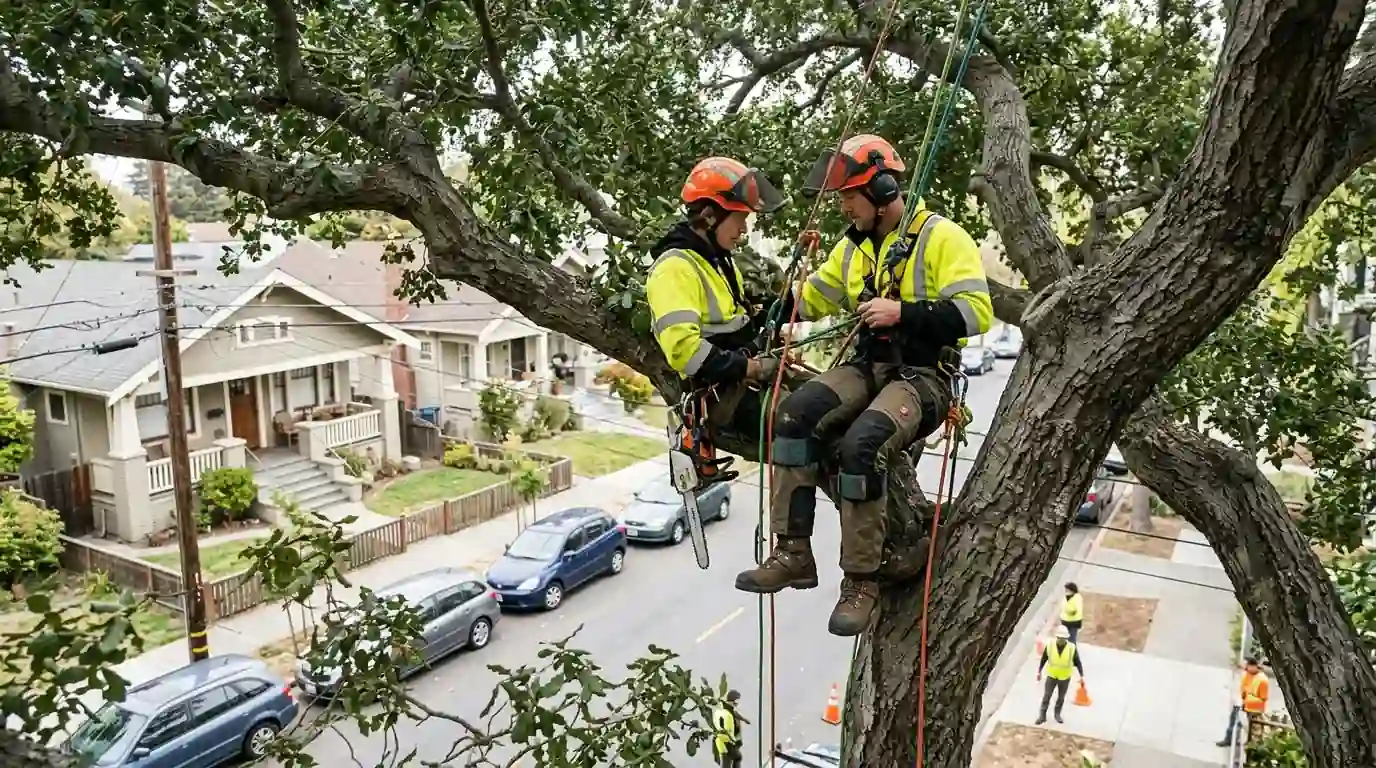
Fruit tree pruning in Oakland, CA
Backyard plums, apples and apricots in Oakland grow tall, crowded and hard to pick when nobody prunes them. We cut each one at the right season so it fruits better and stays in reach.
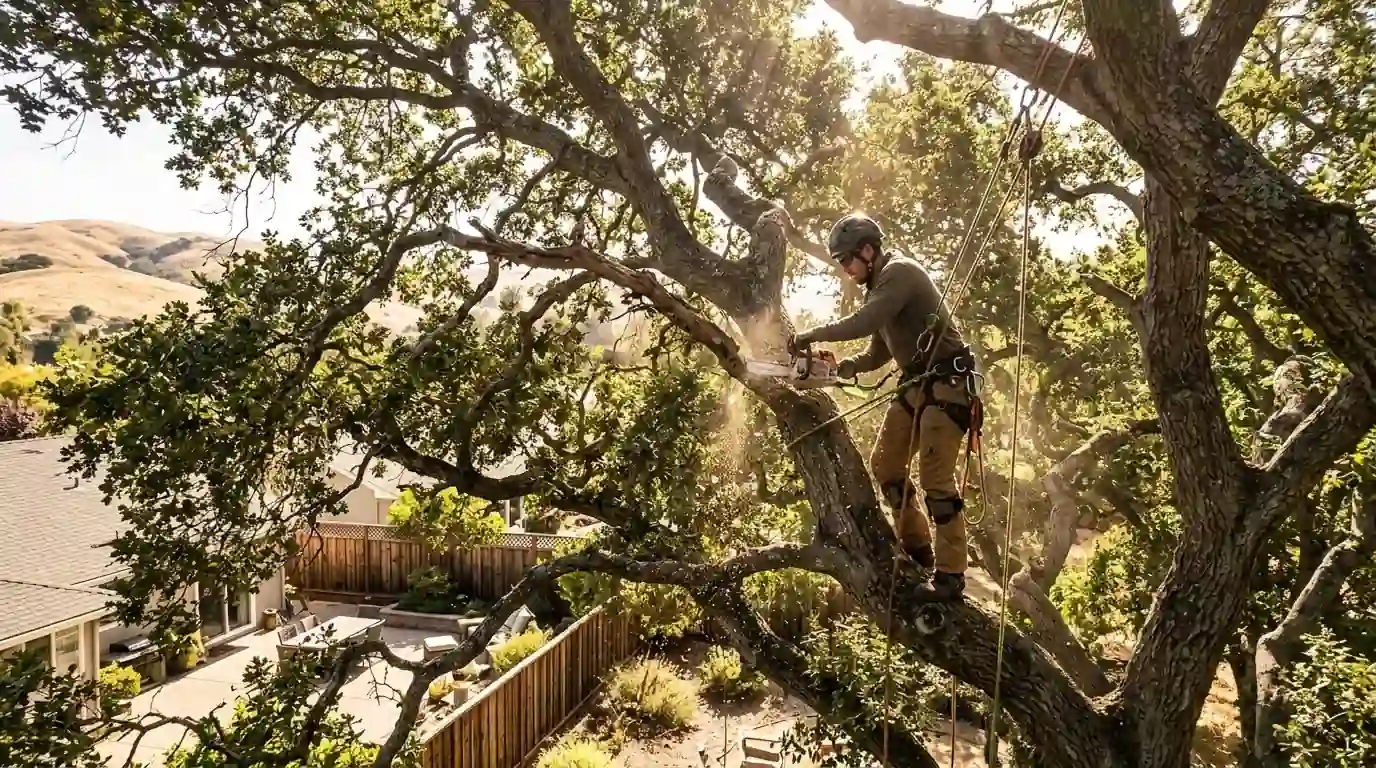
Quick answer
Fruit tree pruning shapes backyard plums, apples, pears, apricots, cherries, figs and citrus for better fruit, stronger limbs and easier picking. Plums, apples and pears are pruned in winter while dormant. Apricots and cherries are cut in late summer after harvest to limit disease. Citrus gets light pruning only. We thin crowded wood, lower tall leaders and open the center to light.
What fruit tree pruning involves in Oakland
Many Oakland yards still have a plum, apple or apricot planted by an earlier owner, and a lot of them have been left to grow on their own. The result is familiar: fruit at the top where only birds can reach it, a tangle of upright water sprouts, branches snapping under a heavy crop and a crown so dense that the inside never sees sun. A few seasons of steady pruning turns that around, and the tree usually rewards it with bigger fruit set lower on the branches, where you can pick from the ground or a short step ladder.
The right timing depends on the tree. Plums, apples and pears respond best to winter pruning while they're dormant, when the bare structure is easy to read and cuts don't push out a flush of soft growth in the wrong season. Apricots and cherries are another matter. They're prone to fungal infections that enter fresh cuts during rain, so we prune them in the dry months after harvest. Citrus and figs fall somewhere in between.
Fruit trees are small compared with the oaks and redwoods we spend most days in, but they need just as much thought per cut. We often handle the fruit trees on the same visit as hedge and shrub work or a bigger tree trim, so a whole backyard gets sorted in one trip. Older trees that are hollow or failing may be better replaced with something new, and we'll say so plainly rather than prune a tree that can't hold a crop.
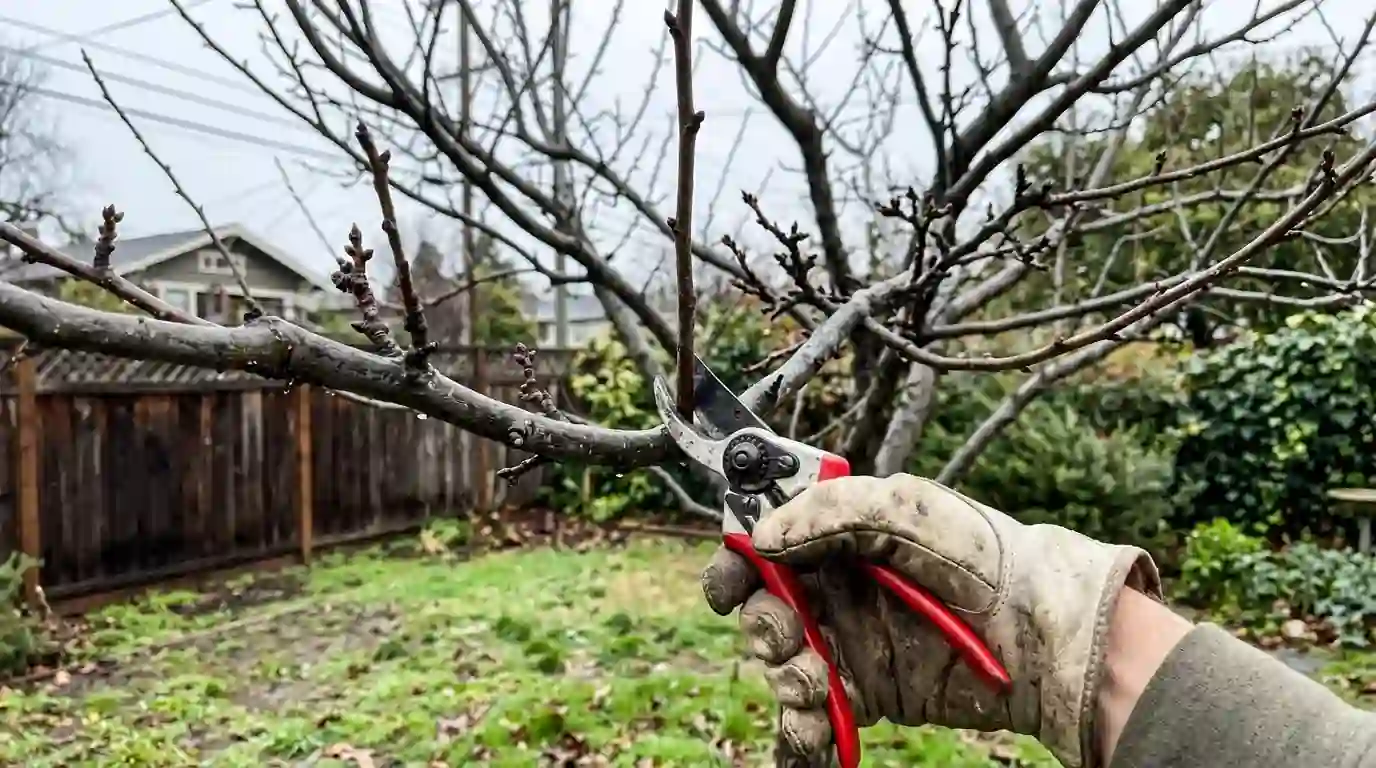
Is your fruit tree asking to be pruned?
- Fruit only at the very topWhen the crop sits out of reach, the tree has grown taller than it needs to and the lower wood is shaded out.
- A thicket of upright water sproutsStraight vertical shoots crowd the center, rarely fruit well and steal energy from productive branches.
- Limbs breaking under the cropLong, thin branches loaded with plums or apples crack in summer when the fruit gets heavy.
- Small, spotty or sparse fruitCrowded, shaded canopies make smaller fruit and hold moisture that encourages leaf and fruit diseases.
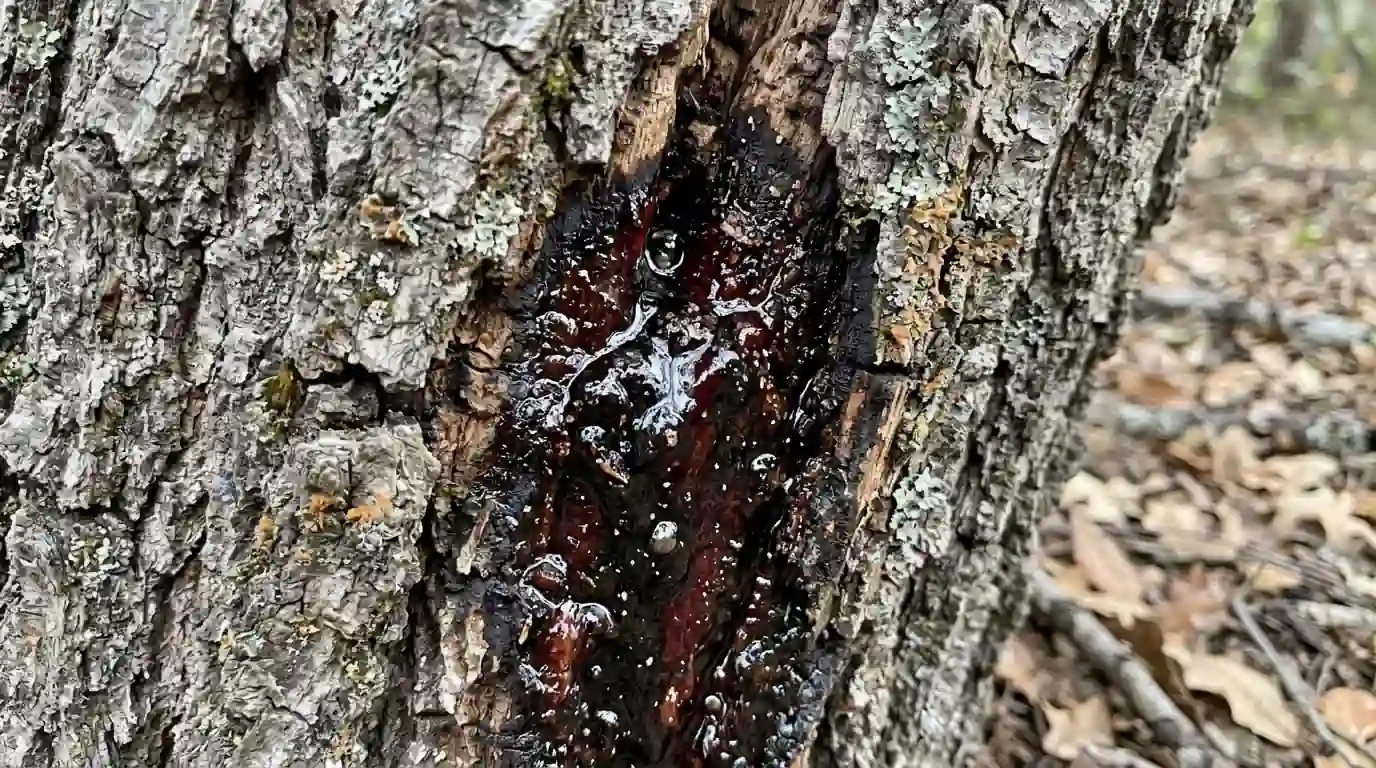
- Dead or cankered branchesSunken, oozing patches on stone fruit wood or dead tips on apples should be cut out to clean wood.
- Branches crossing and rubbingRubbing limbs tear bark and give disease an easy way in.
What does a fruit tree pruning visit look like?
Identify the tree and pick the season
We confirm the species and plan around its best window. That means winter for pome fruit and plums, and late summer for apricots and cherries.
Take out the dead, damaged and diseased wood
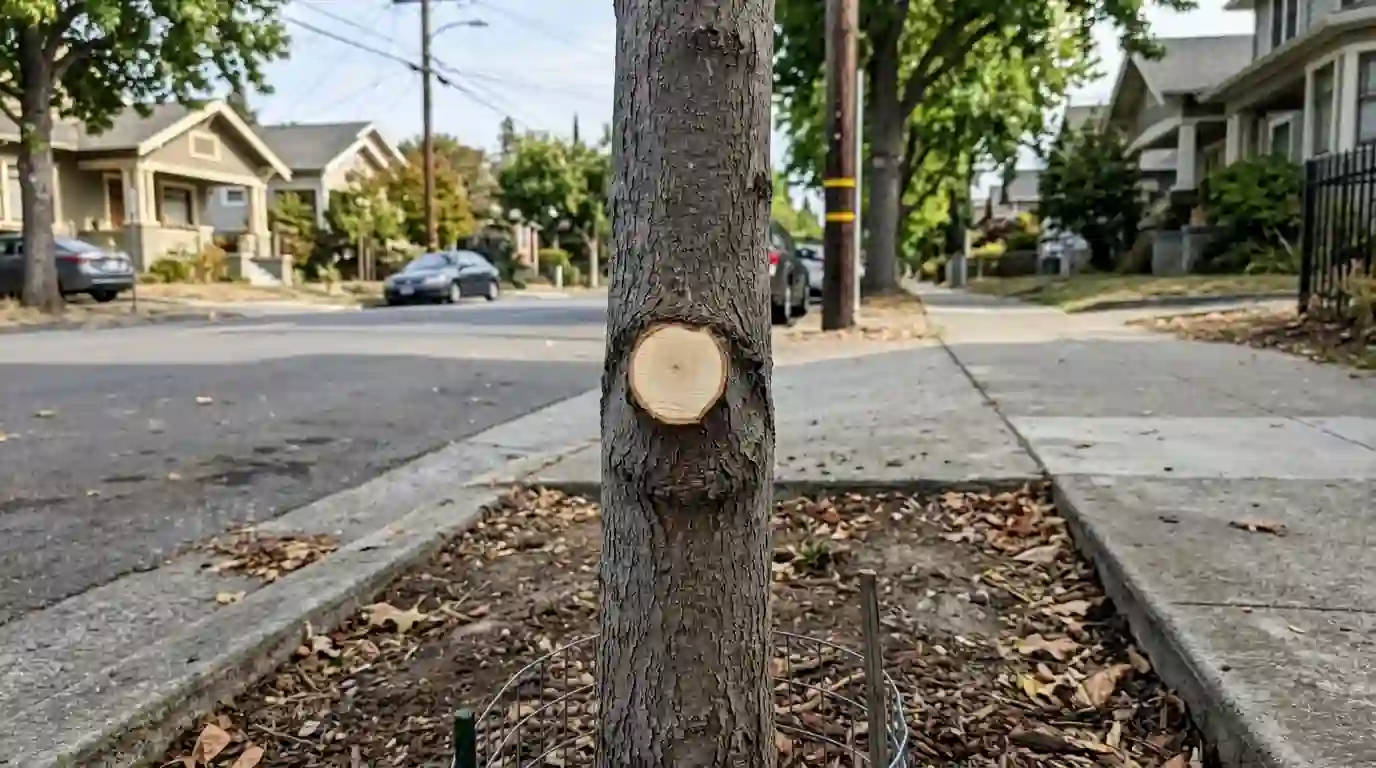
Every pruning starts by cutting broken, dead and cankered branches back to healthy wood, with tools cleaned between trees.
Open the center
On plums, apricots and other stone fruit we aim for an open vase shape. Apples and pears often do better with a central leader and tiers of side branches.
Bring the height down gradually
Tall leaders are cut back to an outward-facing side branch. On a neglected tree, we spread the height reduction over two or three seasons instead of one big cut.
Thin the water sprouts and crowded spurs
We remove most vertical sprouts and thin crowded fruiting wood so the remaining fruit has room to size up.
Clear the prunings
Diseased wood is bagged and hauled rather than chipped into your garden beds. Clean brush can be chipped for mulch.
How Oakland's weather shapes fruit tree pruning
Oakland's rain mostly falls between November and March, and the dry season runs roughly May to October. That pattern is why stone fruit like apricots and cherries get pruned in late summer, after harvest and before the first storms, when spores spread on wet wood. Plums, apples and pears tolerate winter cuts well because they're dormant, and a dry stretch between storms is the best day to do them.
Citrus thrives in warm pockets of the flats and in gardens around Temescal and Dimond. Lemons, limes and oranges don't need the hard annual pruning that deciduous fruit trees get. We take out dead wood, suckers from below the graft and any branch blocking a path, and keep cuts light so the tree doesn't lose fruiting wood or get sunburned. Figs and persimmons get similar restraint, with a little thinning and height control.
What affects the cost of pruning fruit trees?
Every job is priced after we see the tree. These are the things that move the number.
- How many trees you haveSeveral trees in one yard share setup and cleanup, so each tree takes less time.
- How overgrown each tree isA tree pruned every year takes a fraction of the time of one left alone for a decade.
- Tree heightOld apples and plums that reach the roofline need ladders or a climber instead of work from the ground.
- Disease cleanupTrees with cankers or heavy dead wood need extra cuts and careful disposal of the infected wood.
- Season and timingDoing winter and summer trees on separate visits, when that's what they need, changes the overall plan.
- Access to the backyardNarrow side yards or hillside stairs slow the haul out to the truck.
Work that often goes with fruit tree pruning
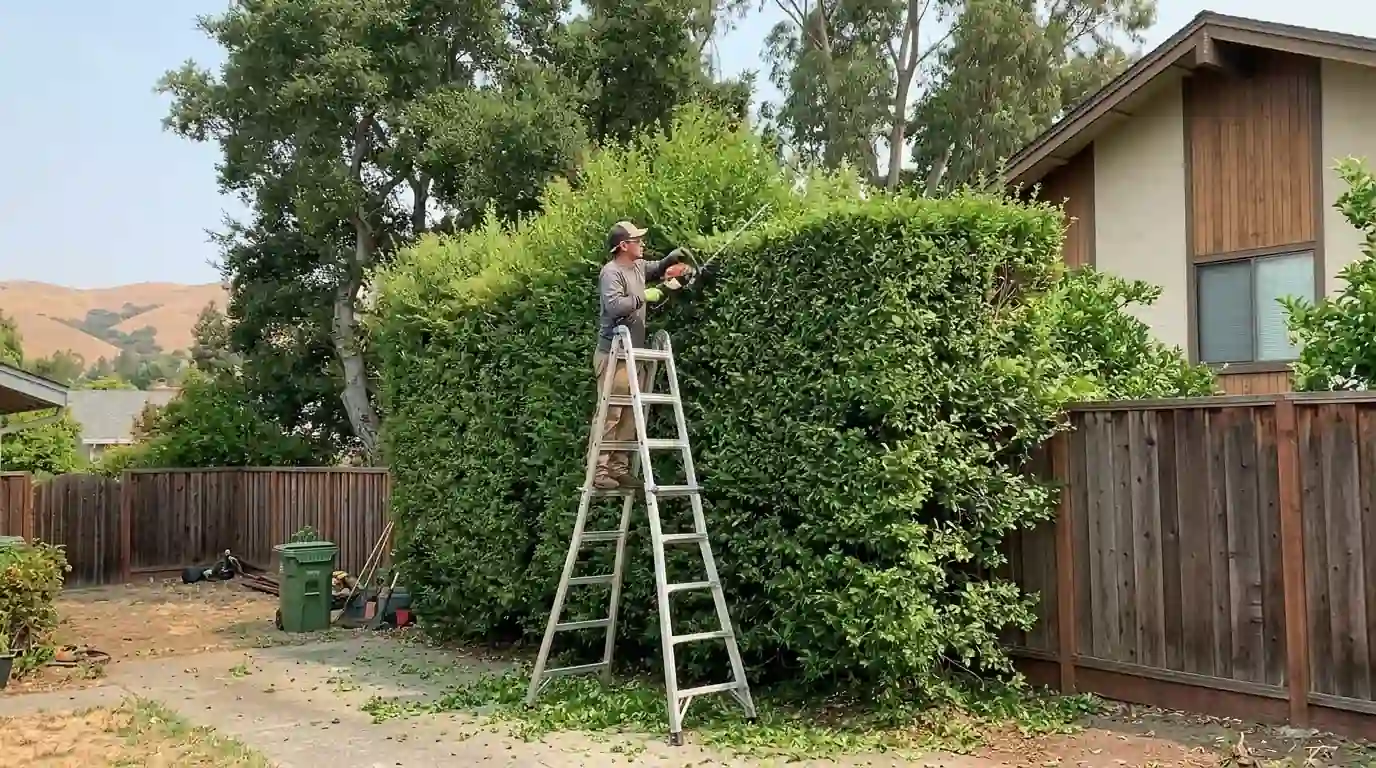
Where we handle fruit tree pruning
From the office on Martin Luther King Jr Way in Temescal and the Walnut Creek office on Bonanza Street, we cover Oakland and the East Bay. The biggest communities we serve, with a main ZIP code for each:
Fruit tree pruning questions we hear in Oakland
Why prune apricots and cherries in summer instead of winter?
Apricots and cherries are prone to fungal diseases that enter fresh cuts during wet weather. Pruning them in the dry months after harvest gives wounds time to close before winter rain. Plums, apples and pears tolerate winter dormant pruning much better, so they get done in the cool season.
How much should a lemon or orange tree be pruned?
Not much. Citrus fruits on wood throughout the canopy, so heavy cuts remove next year's crop and can expose bark to sunburn. We take out dead wood, root suckers from below the graft and branches in the way, then thin lightly if the center is very dense.
Can an old, overgrown apple tree be brought back?
Often, yes. We spread the work over two or three winters: first removing dead and crossing wood, then lowering the height in stages and thinning sprouts. Cutting it all at once triggers a flood of water sprouts. If the trunk is hollow or badly decayed, replanting may be the better choice.
What is an open vase shape?
It's a fruit tree form with no central leader, just three to five main limbs spreading outward from a short trunk like a bowl. The open center lets sun reach the inner branches, which improves fruit color and cuts down on disease. It suits plums, apricots, peaches and cherries.
Saws, chippers, grinders and climbing gear from names like Stihl, Husqvarna and Vermeer
StihlHusqvarnaVermeerBanditMorbarkRaycoAltecPetzlSilkySherrillTeufelbergerNotchEchoToro
Need fruit tree pruning in Oakland or the East Bay?
Call and tell us what the tree is doing. Someone picks up any hour, and we can usually talk you through the next step on that first call.