Redwood tree trimming in Oakland, CA
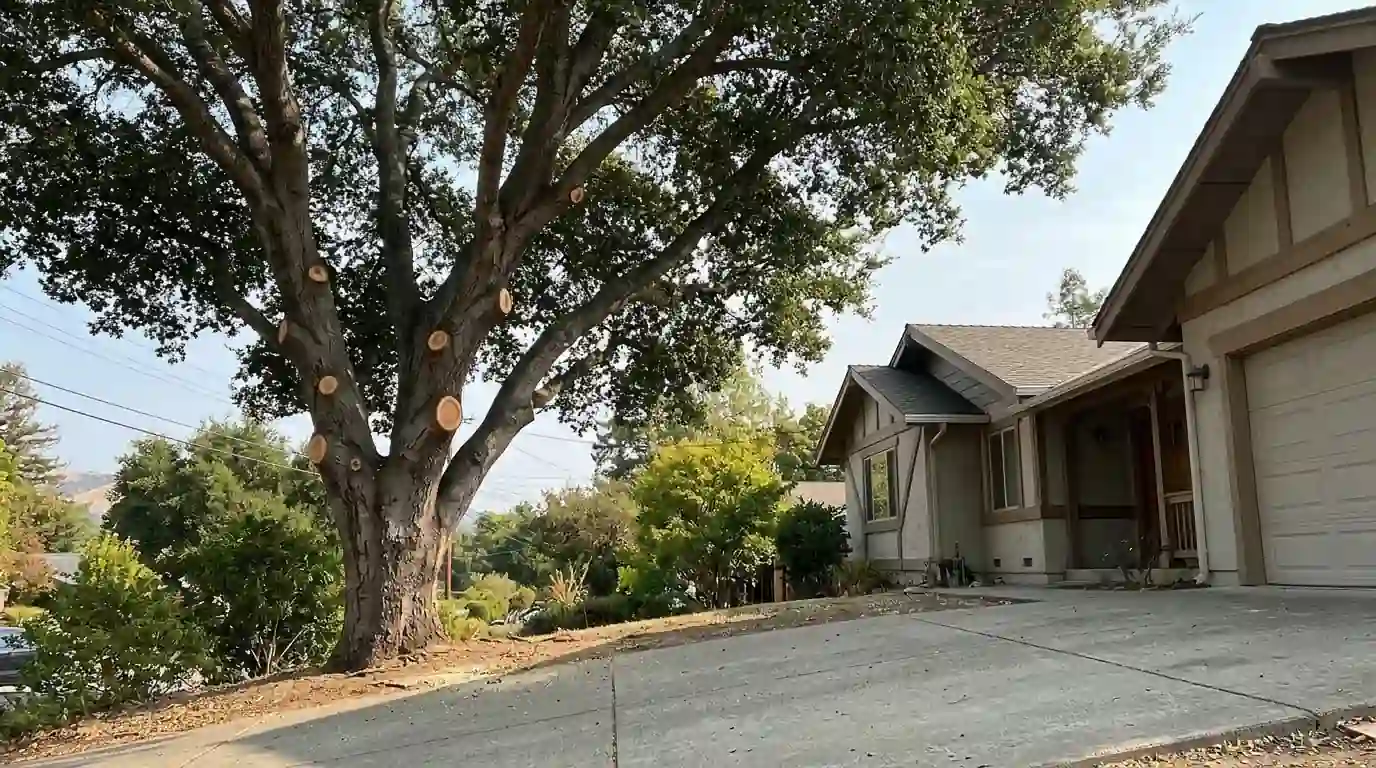
Coast redwoods planted as small yard trees long ago now tower over Oakland roofs, shed needles into every gutter and shade whole gardens. We trim them the right way, from the bottom up, without ever topping them.
Quick answer
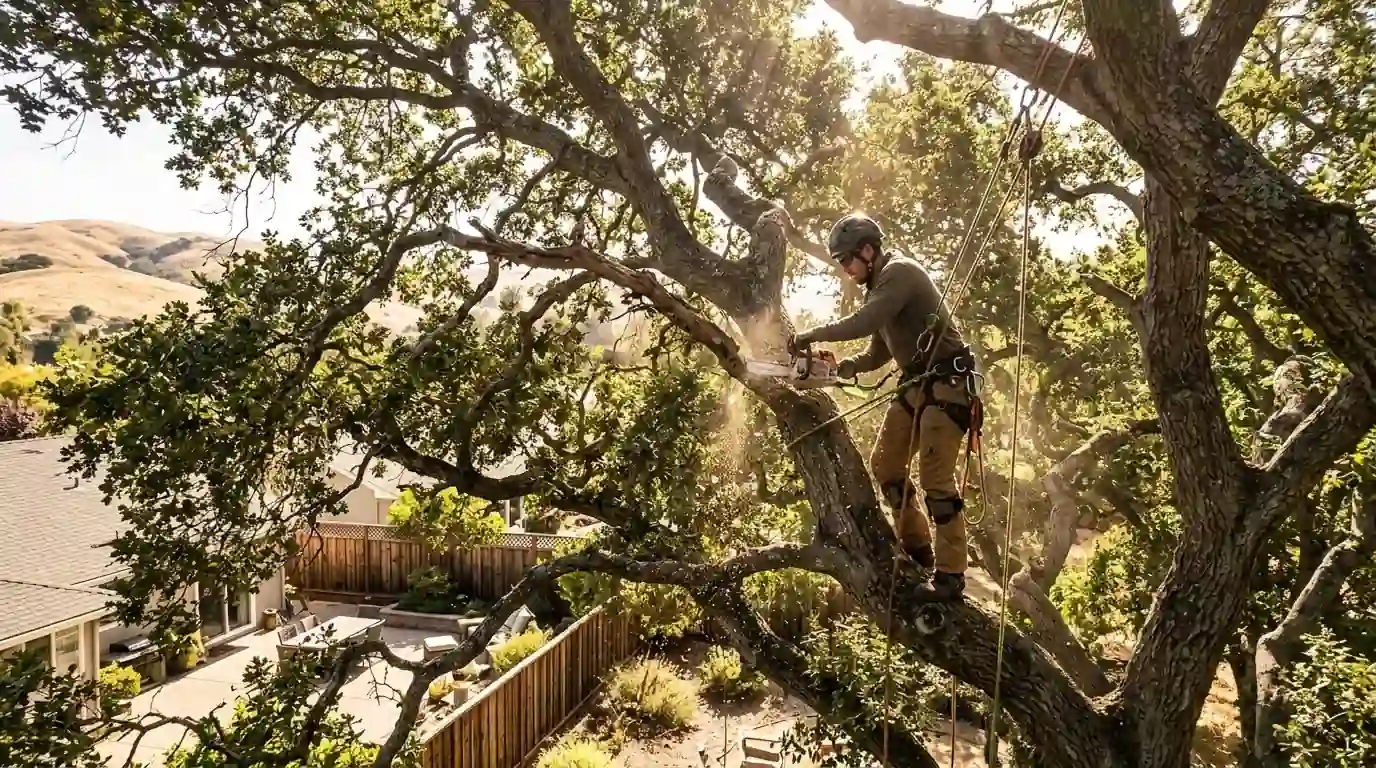
Redwood tree trimming means raising lower limbs, clearing branches off roofs and lines, and removing dead or broken wood from coast redwoods, while leaving the central leader intact. You need it when needles clog gutters, low limbs block light or driveways, or branches rest on the house. We climb on rope without spikes, cut at the trunk collar and never top the tree.
What redwood tree trimming involves in Oakland
Redwoods were a popular yard tree in the East Bay for generations, and many that went in as nursery saplings are now among the tallest things on the block. They grow fast, keep a straight single trunk and carry a dense skirt of branches all the way down when they have room. That's lovely in a park. On a narrow city lot, it means a tree that shades out the garden, rubs the eaves and fills gutters year round.
Topping a redwood is the shortcut some people ask for, and it backfires. A topped redwood throws up several new leaders around the cut, each weakly attached, and in a few seasons you have a taller, bushier and less stable tree. In Oakland, topping a protected tree also counts as removal under the code. We control a redwood's impact by working from the bottom and sides instead: raising, cleaning and clearing.
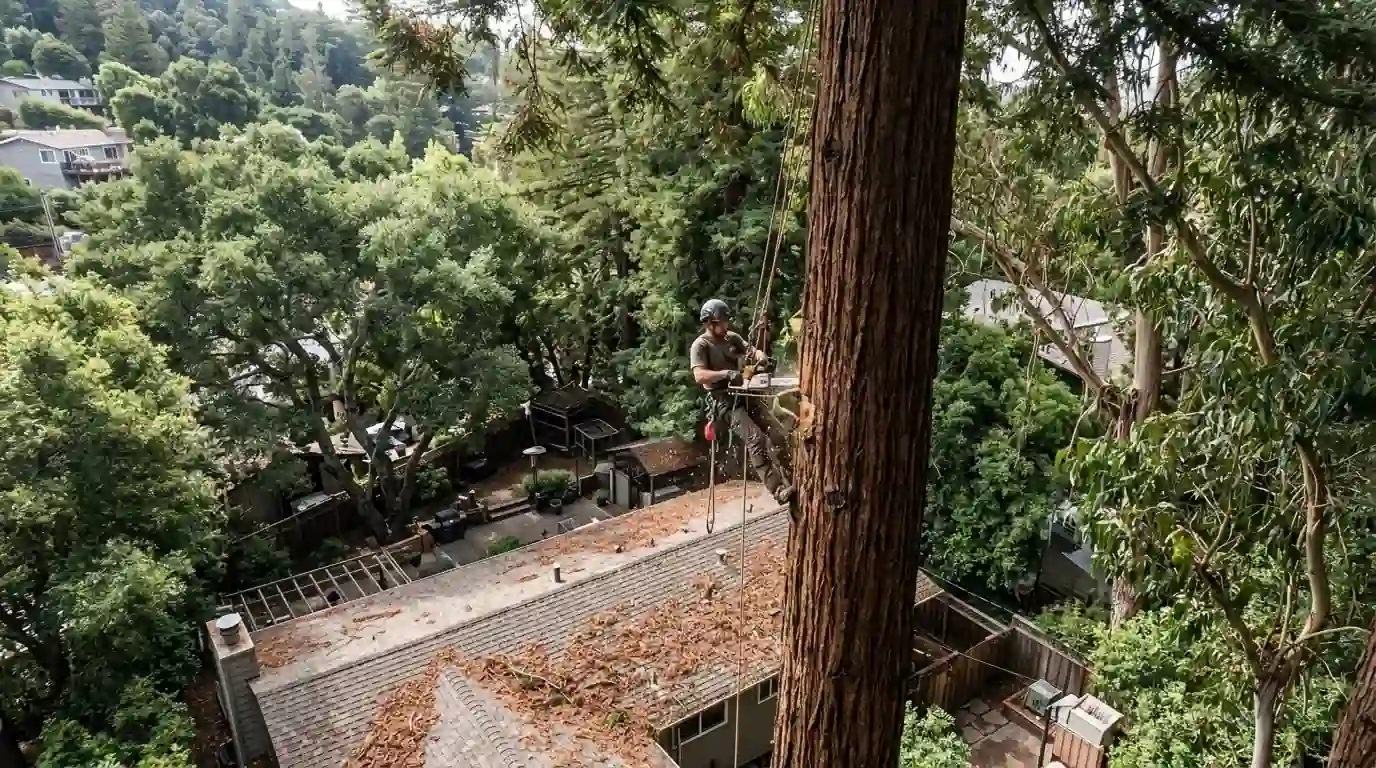
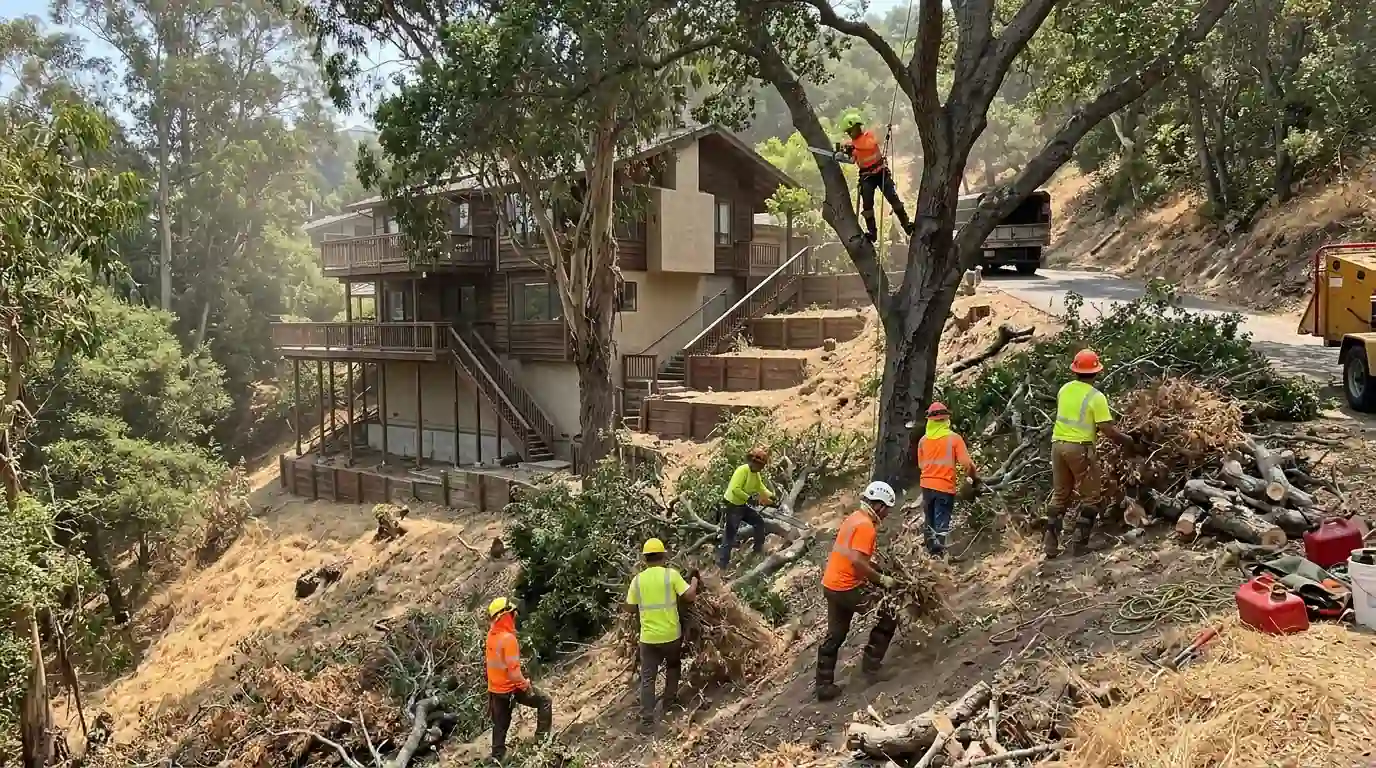
Most of our redwood work in Redwood Heights and the canyons along Highway 13 is crown raising and roof clearance. We lift the lowest whorls to give headroom and light, clear branches back from the house and chimney, take out dead and broken limbs, and blow the needle mats out of the gutters on the way down. If roots are lifting a walkway, we look at careful root pruning as a separate step.
What tells you a redwood is due for trimming?
- Gutters packed with needles and conesRedwoods drop old foliage sprays all year, and the mats hold water and fuel on the roof.
- Lower branches sweeping the groundA full skirt blocks light, hides the base of the tree and gives fire a ladder up into the crown.
- Limbs rubbing the eaves or sidingBranches pushed against the house by wind wear paint and shingles and let moisture in.
- Dead limbs partway up the trunkShaded lower branches die back and hang on the trunk long after they stop growing.
- Several tops from past toppingA redwood topped years ago grows competing leaders that may need thinning down to the strongest ones.
- Branches reaching toward the service dropThe line from the pole to your house is the owner's responsibility to keep clear.
How do we trim a tall redwood safely?
Plan the raise height
We agree on how high to lift the lower limbs. Usually that's enough for light, a clear walkway and the fire clearance the site needs, without stripping the trunk bare.
Climb without spikes
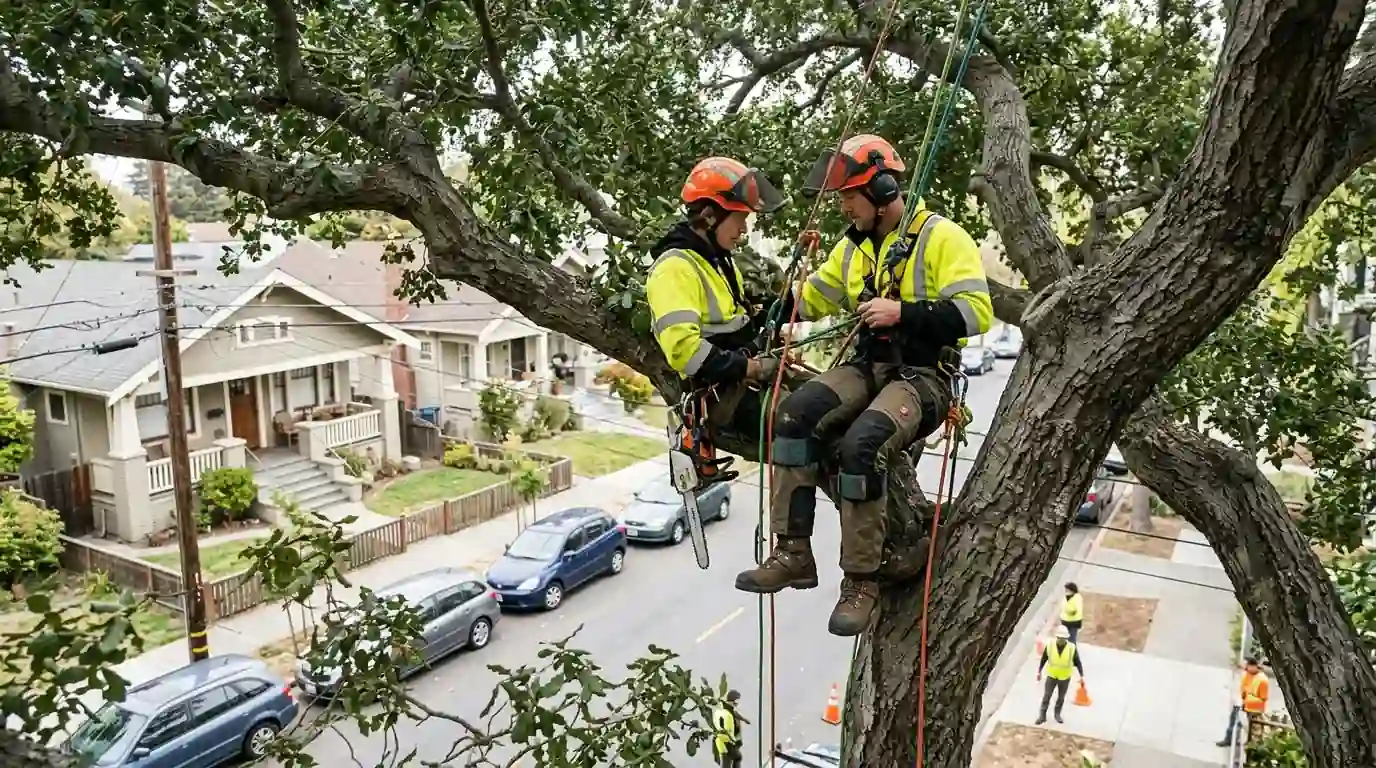
Our climber goes up on rope with no spurs, since spikes punch holes in a living trunk. Redwood's whorled limbs make good tie-in points high in the tree.
Cut limbs back to the collar
Lower limbs come off cleanly at the trunk. We don't leave stubs or strip the trunk into a bare pole, which can trigger heavy sprouting.
Clear the roof line
Branches near the house are shortened or removed to open space between the canopy and the roof, chimney and siding.
Clean needle litter off the roof
Before we leave, the roof valleys and gutters under the tree get cleared of needle mats and cones.
Chip on site or haul away
Redwood brush chips into a soft, long-lasting mulch. We can leave some for garden beds or take it all with us.
How do redwoods fit Oakland's fire rules and small lots?
Inside Oakland's wildfire district, Zone 1 rules call for tree limbs at least 6 feet off the ground and 10 feet from any structure or chimney, plus leaves and needles cleared from roofs and gutters. Redwoods break all three by default: their lowest branches sit near the ground, they grow tight to houses on small lots, and they rain needles onto roofs. A careful raise and roof clearance usually brings a redwood in line without hurting it.
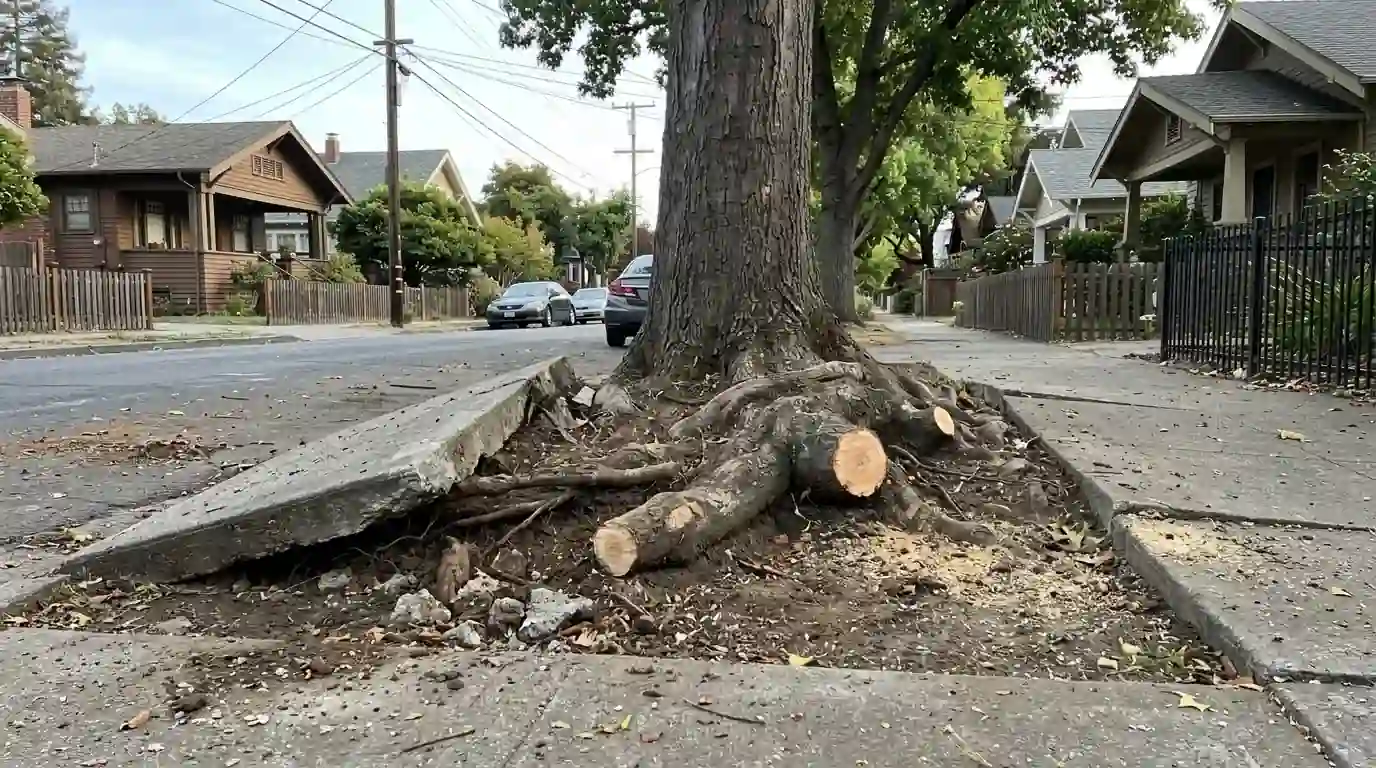
Their roots matter too. Redwoods spread a wide, shallow root mat rather than a deep taproot, and those roots reach well past the drip line looking for water. That's why they lift patios and crowd foundations, and why we keep trucks off the root zone. Oakland protects most non-oak trees at 9 inches DBH, so any trimming or root work on a mature redwood stays light enough that it can't be called removal.
What drives the cost of redwood trimming?
Every job is priced after we see the tree. These are the things that move the number.
- Tree height and number of treesA single tall redwood is a different job from a row of them planted as a screen along the back fence.
- How high the limbs are raisedLifting the canopy higher means more limbs off and more brush to handle.
- Branches over the roofLimbs that hang over shingles or skylights have to be roped down, not dropped.
- Competing leaders from old toppingSorting out a cluster of tops takes careful climbing and more decisions in the canopy.
- Gutter and roof cleanupNeedle mats across a large roof add time, but clearing them is part of doing the job properly.
- Access for the chipperA long walk from the tree to the street, or stairs on a hillside lot, slows down every load of brush.
Work that often goes with redwood tree trimming
Where we handle redwood tree trimming
From the office on Martin Luther King Jr Way in Temescal and the Walnut Creek office on Bonanza Street, we cover Oakland and the East Bay. The biggest communities we serve, with a main ZIP code for each:
Redwood tree trimming questions we hear in Oakland
Why shouldn't a redwood be topped to make it shorter?
Topping cuts the single leader, and the tree answers by growing several new tops around the wound. Those sprouts are weakly attached and can break out in storms. The tree regains height quickly, so the problem returns worse. In Oakland, topping a protected tree also counts as removal and needs a permit.
How high should redwood limbs be raised?
High enough to solve the problem without turning the trunk into a bare pole. For most yards that means headroom over paths, lifting the canopy to meet the 6-foot fire rule and keeping branches 10 feet back from the house. Over-raising can stress the tree and lead to bushy sprouting along the trunk.
Do redwood needles on the roof really matter?
Yes. Needle mats hold water against shingles, block gutters and downspouts, and in the hills they count as fuel. Oakland's wildfire district asks owners to keep roofs and gutters clear of leaves and needles. We clear the roof and gutters under the tree as part of every redwood trim.
Are redwood roots a risk to my foundation?
Redwood roots are shallow and spread wide, so they can lift paving and press against footings near the trunk. Cutting big roots can destabilize the tree, though. We look at where the roots run and how close the tree stands before suggesting anything, and we'll tell you if removal makes more sense than root cuts.
Saws, chippers, grinders and climbing gear from names like Stihl, Husqvarna and Vermeer
StihlHusqvarnaVermeerBanditMorbarkRaycoAltecPetzlSilkySherrillTeufelbergerNotchEchoToro
Need redwood tree trimming in Oakland or the East Bay?
Call and tell us what the tree is doing. Someone picks up any hour, and we can usually talk you through the next step on that first call.