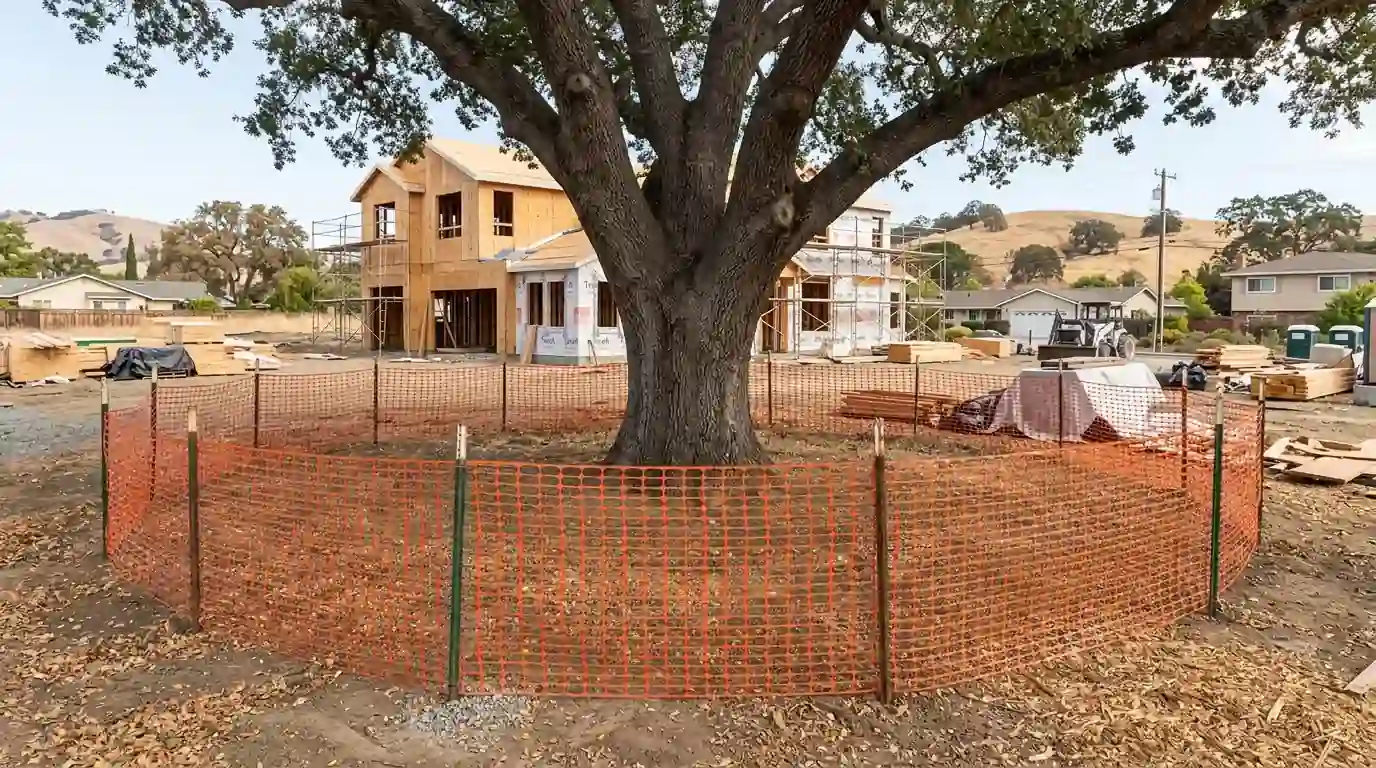
Root pruning in Oakland, CA
A street tree heaving the sidewalk or a backyard oak cracking the driveway is a common Oakland problem. Root pruning cuts back the offending roots without cutting so much that the tree becomes unstable.
Quick answer
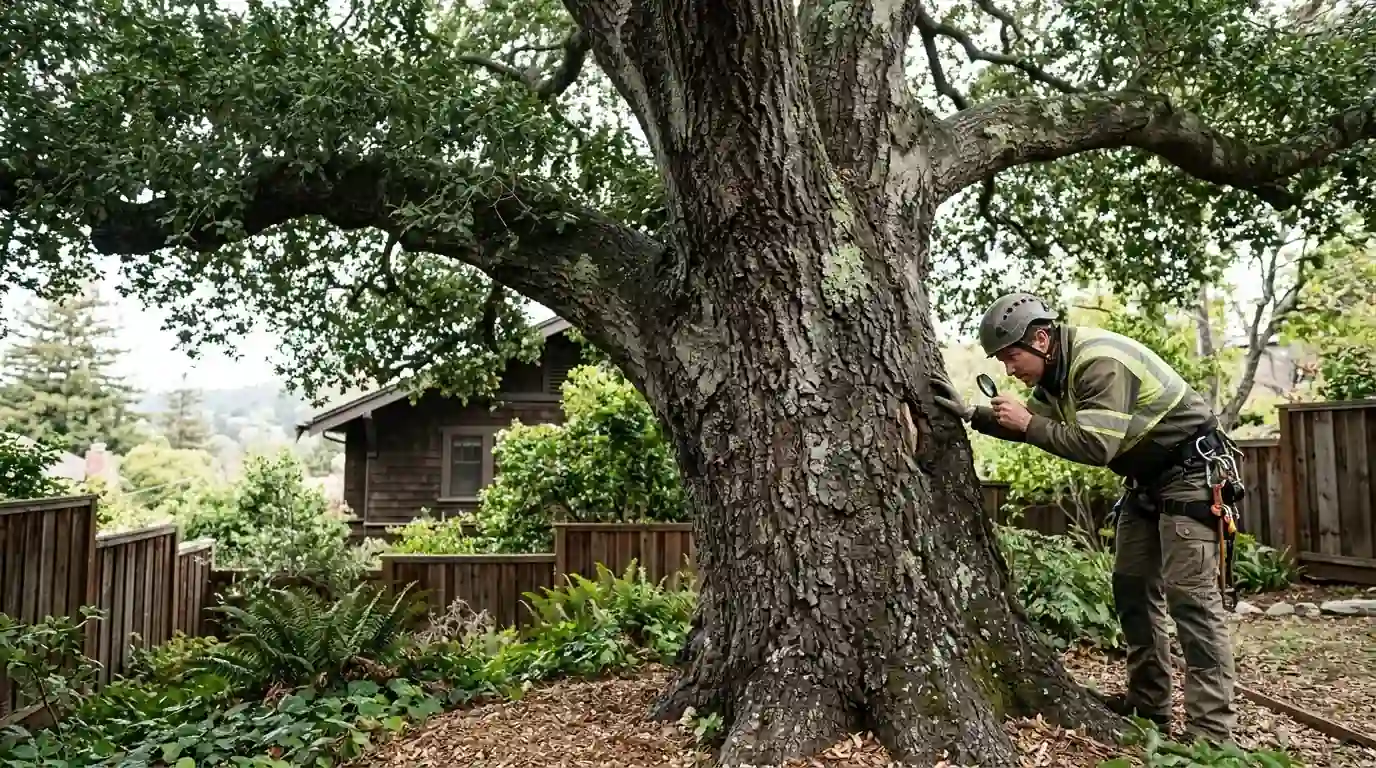
Root pruning is the careful cutting of selected roots to relieve damage to sidewalks, driveways, foundations or pipes, or to prepare a tree for nearby digging. You need it when roots lift paving or block planned work. We expose the roots, measure distance from the trunk, make clean cuts within safe limits and often install a root barrier to steer new growth down.
What root pruning involves in Oakland
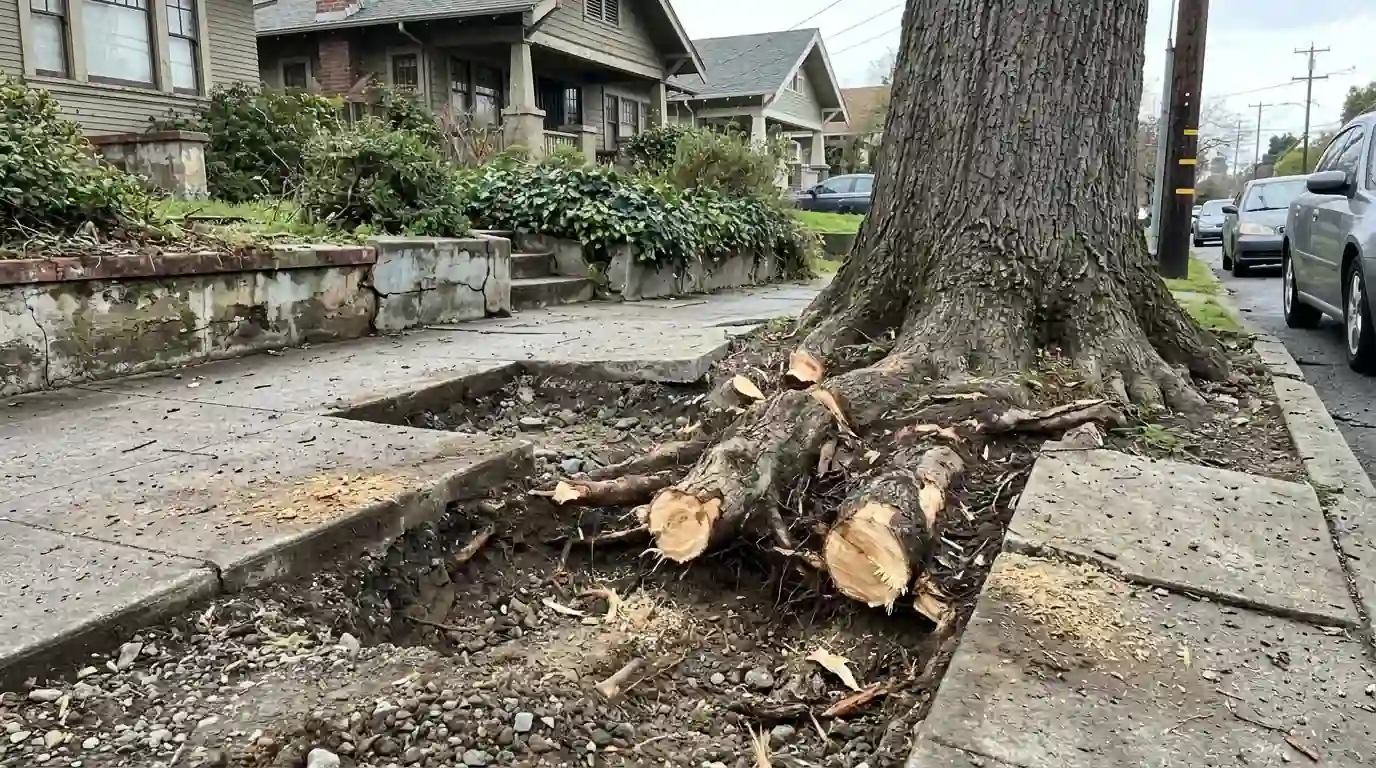
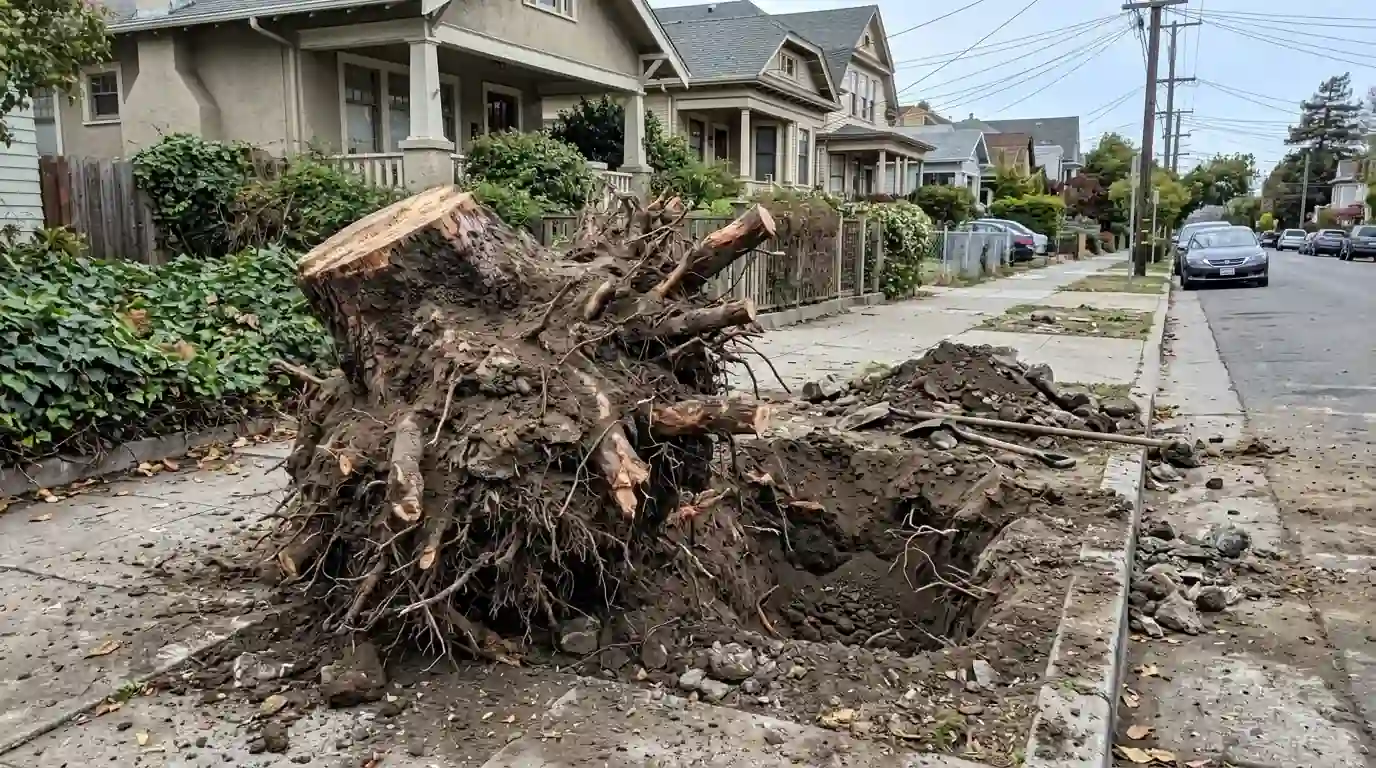
Older Oakland neighborhoods are full of mature trees planted in narrow strips between the curb and the sidewalk. Decades on, the roots have grown thick right under the concrete, where water collects and the soil stays loose. A sweetgum, a London plane or a big Chinese elm can lift a slab two or three inches, enough to trip someone walking past at night.
Here's the part many owners don't expect. In Oakland, the owner of the property next to the sidewalk is generally responsible for repairing it, even when the tree belongs to the city. So when a concrete contractor comes to replace a heaved panel, the roots underneath have to be dealt with first, or the new slab will lift again within a few years. That's where we come in, working just ahead of the concrete crew.
Every root we cut costs the tree something. Roots anchor it and pull in water, and a tree that loses too many on one side can lean or blow over in a winter storm. Our job is to cut what has to go and leave enough to keep the tree standing. If the roots doing the damage are too big and too close to the trunk, we'll say so and talk through options like removing the tree or rerouting the paving.
When do roots need to be cut back?
- A sidewalk panel is liftingRaised or tilted concrete near a street tree usually has a thick root growing directly beneath it.
- The driveway is cracking in a lineA crack running toward a nearby trunk often follows a root that keeps thickening under the slab.
- Repaving or new concrete is plannedRoots should be addressed before new paving goes in, or the new slab will heave the same way.
- Roots are girdling the trunkA root wrapping around the base of the tree slowly chokes it and should be cut before it does more damage.
- Roots are near a foundation or wallLarge roots pressing against a low garden wall or foundation edge may need to be cut and blocked.
- Digging is coming near the treePruning roots cleanly ahead of a trench is far better than letting an excavator tear them apart.
What drives the cost of root pruning?
Every job is priced after we see the tree. These are the things that move the number.
- Root size and numberA few small roots take little time, while thick structural roots need more digging and careful cutting.
- How the roots are exposedAir excavation around roots is slower than open digging but keeps the roots you're saving intact.
- Paving over the rootsConcrete or asphalt has to come up first, either by us or by the paving contractor before we arrive.
- Length of root barrierBarrier is set by the linear foot, so a long driveway edge costs more than a single sidewalk panel.
- Coordination with other tradesTiming our work with a concrete or plumbing contractor can mean a separate trip to the site.
How we cut roots without destabilizing the tree
Expose the roots carefully
We remove the lifted slab or dig by hand, or use an air tool that blows soil away without cutting roots. Seeing the root layout tells us what can safely go.
Measure from the trunk
As a working rule, we stay back from the trunk by at least three times its diameter for cuts on one side. Roots closer in carry much of the tree's anchoring, so cutting there is risky.
Limit how much comes off
We cut on one side only where we can, and never take out more of the root system than the tree can handle. If damage spans more than one side, we stage the work across seasons.
Make clean cuts
Roots are cut with a sharp saw or root cutter at a clean right angle. Torn or crushed roots from a backhoe decay faster and regrow poorly.
Install a root barrier
Along sidewalks and driveways, we often set a vertical plastic barrier in the trench. It turns new roots downward so they don't come back to the surface under the concrete.
Backfill and watch the tree
We fill the trench with soil, water it in and tell you what to look for over the next season. Some trees need a light crown thinning to reduce wind load after root work.
Oakland street trees, sidewalks and the city's rules
Many trees in older neighborhoods stand in the city's planting strip, and Oakland only prunes its street trees in hazardous or emergency situations. Owners who want to prune a city street tree apply through the city's hold-harmless form, and we check what applies before cutting its roots. For a protected tree on private property, Oakland's code counts serious root damage as part of removal, alongside topping and regrading around the trunk. So heavy root cutting on a protected tree can need a permit, and we check before we cut.
Timing also matters. We prefer root pruning in the cooler, wetter months when the tree is using less water and can grow new roots before summer. Cutting roots in late August, when soil in Maxwell Park or Lakeshore is bone dry, stresses the tree when it can least afford it. In Berkeley, removing more than a quarter of the root system of a covered oak in 24 months needs city approval, so plans in Berkeley account for that.
Work that often goes with root pruning
Where we handle root pruning
From the office on Martin Luther King Jr Way in Temescal and the Walnut Creek office on Bonanza Street, we cover Oakland and the East Bay. The biggest communities we serve, with a main ZIP code for each:
Root pruning questions we hear in Oakland
Who pays to fix a sidewalk lifted by a street tree in Oakland?
In Oakland, the owner of the property next to the sidewalk is generally responsible for repairing it, even when a city street tree caused the damage. That's why root work and the concrete repair are usually planned together. We cut the roots so the new slab has a fair chance of staying flat.
How close to the trunk can roots be cut safely?
As a general guide, we stay at least three times the trunk diameter away for cuts on one side. A 20-inch trunk means staying back about 5 feet. Closer cuts remove the roots that anchor the tree, and a tree cut too close can lean or fall in a storm.
Does a root barrier really stop roots from coming back?
It works well when installed correctly. The barrier sits vertically in the soil and steers roots downward, away from the surface layer under the concrete. It doesn't kill roots and won't stop all growth, but it greatly slows the return of surface roots under new paving.
Will root pruning kill my tree?
Done within safe limits, no. Healthy trees replace cut roots over a season or two. The risk rises when too much is cut at once, cuts are made close to the trunk, or the tree is already stressed. We stage larger jobs and may advise extra summer watering afterward.
Can roots under my driveway be cut before repaving?
Yes, and that's the best time. With the old slab removed, we can see every root, cut the ones in the way cleanly and set a barrier along the edge before the new base goes down. Doing it after the new concrete is poured is far harder.
Saws, chippers, grinders and climbing gear from names like Stihl, Husqvarna and Vermeer
StihlHusqvarnaVermeerBanditMorbarkRaycoAltecPetzlSilkySherrillTeufelbergerNotchEchoToro
Need root pruning in Oakland or the East Bay?
Call and tell us what the tree is doing. Someone picks up any hour, and we can usually talk you through the next step on that first call.