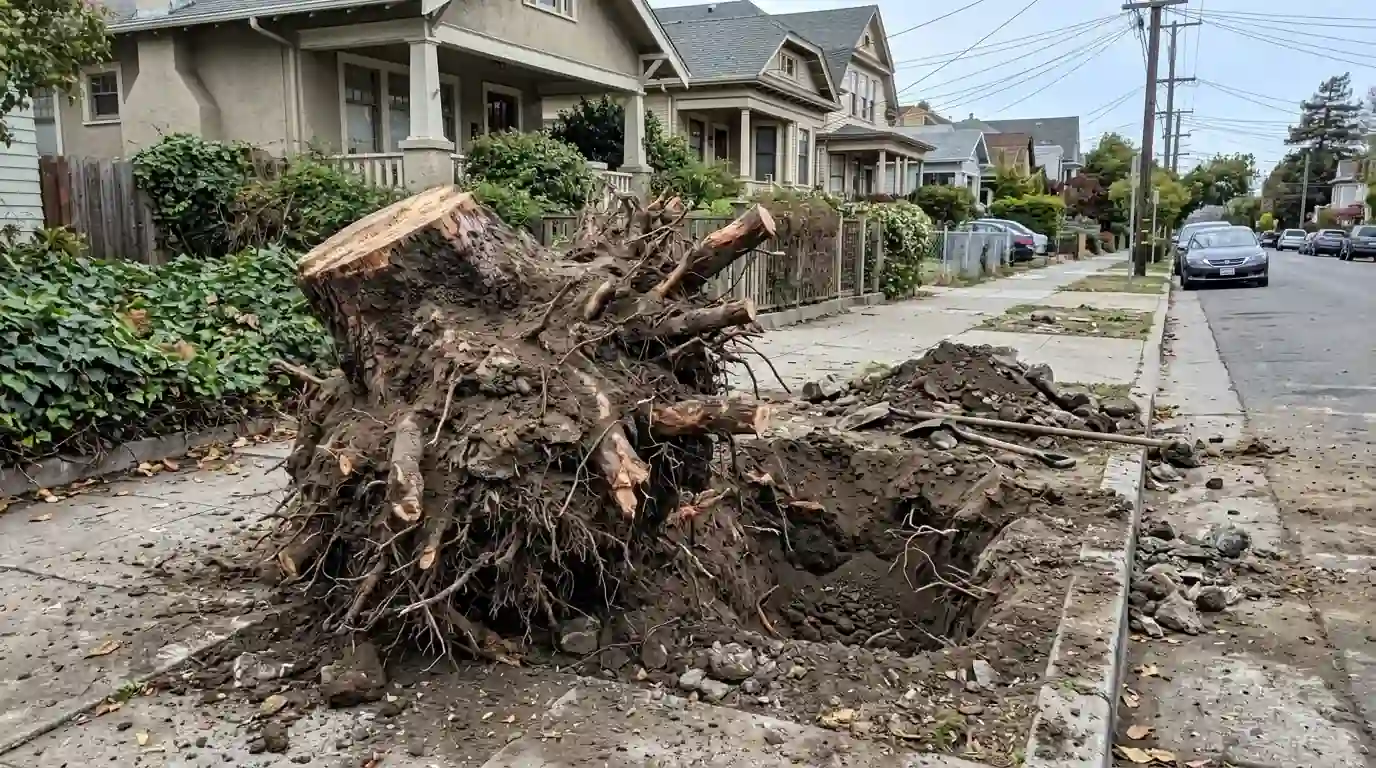
Stump grinding in Oakland, CA
A stump left after a removal trips mowers, sprouts suckers and takes up the spot you wanted for something else. We grind Oakland stumps down below the soil line with machines sized for narrow side yards.
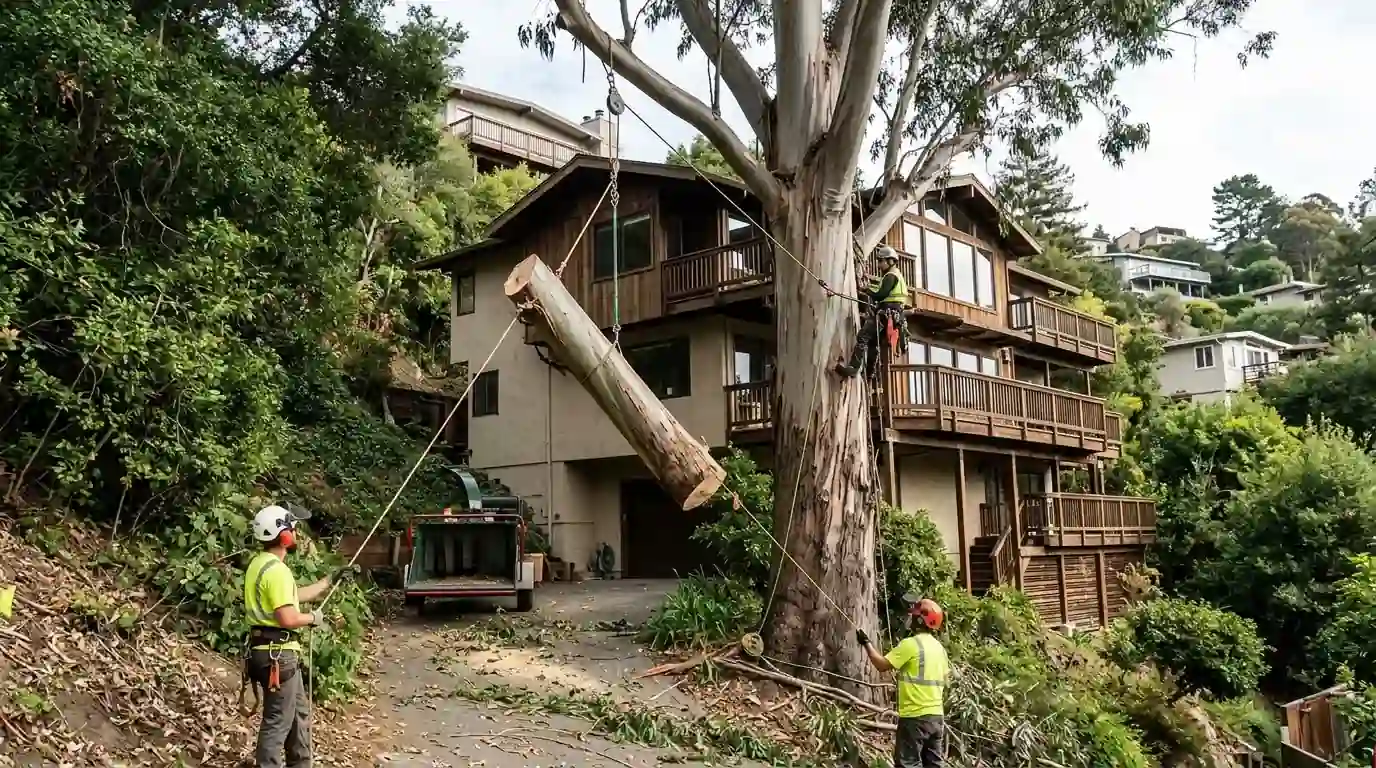
Quick answer
Stump grinding uses a spinning cutter wheel to chew a tree stump into chips below ground level. You need it after a removal when you want the space back for lawn, plants or a path. We get utilities located, grind to the depth the next use needs, follow the major surface roots, and then leave or haul the chips.
What stump grinding involves in Oakland
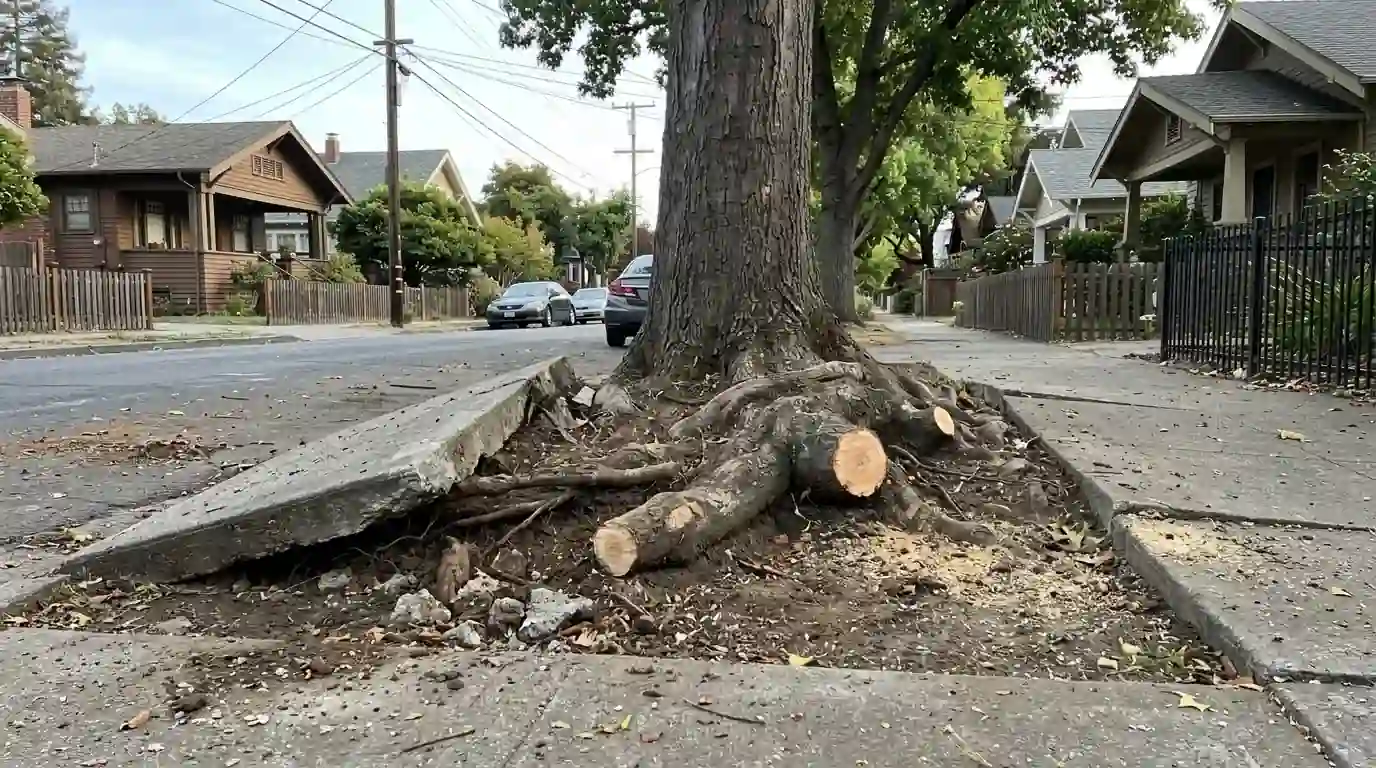
Grinding doesn't pull the stump out. The machine's carbide teeth sweep back and forth across the wood, shaving it down a little at a time until the top of the stump sits below grade. What stays underground, the deeper root crown and the root system, breaks down slowly over the years. For most yards that's all you need: the stump is gone from sight, and the spot fills with soil and grows over. If you need the whole root ball out, that's full stump removal, which is a different job.
Depth is the question to settle first. For new lawn or ground cover, 4 to 6 inches below grade is typical. For a shrub or flower bed, deeper helps, because new plants need loose soil and not a mat of wood. Most grinders can go further down where the stump allows, but rocks and buried concrete set limits. We ask what's going in next, then grind to suit that instead of to a default number.
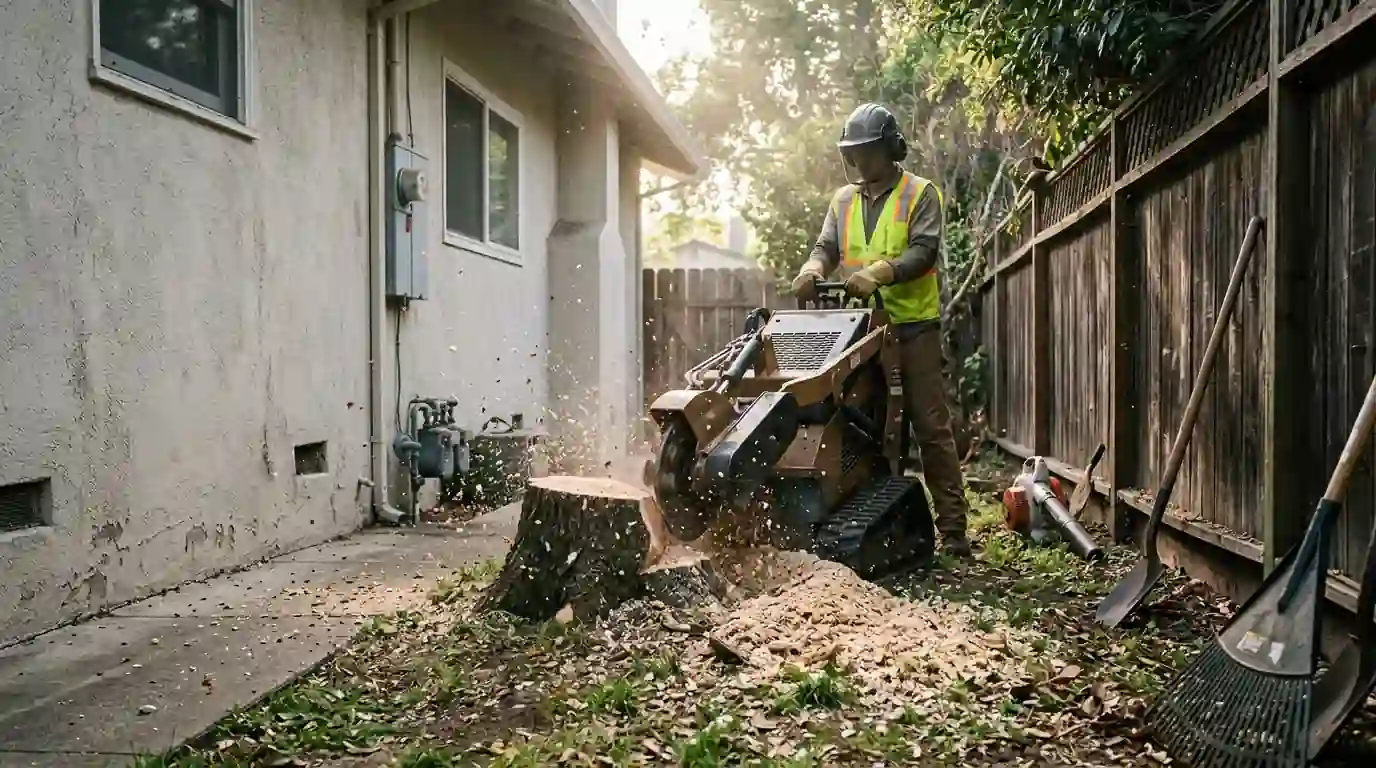
Chips are the other half of the job. A large stump turns into a surprising mound of mixed wood and soil. Most people keep some to backfill the hole and spread the rest as mulch under shrubs. In the wildfire district, keep that mulch away from the walls, since the proposed state Zone 0 rules would bar combustible mulch in the first 5 feet around a house. Anything you don't want, we load and haul. Many lots in Temescal and the flats have tight side gates, so we bring compact grinders that fit through narrow openings.
When is it time to grind a stump?
- Suckers keep sproutingPlum, liquidambar and Chinese elm send shoots up from the stump and roots for years after the tree is cut.
- It sits in the mower's pathA stump hidden in grass takes out blades and ankles, especially on sloped lawns.
- You want to plant nearbyA new tree or bed can go in beside the old spot once the stump and top roots are ground out.
- Insects and fungi are moving inRotting stumps draw termites and carpenter ants, and they host fungi in the soil around them.
- Roots are lifting a walkBig surface roots near the stump can keep pushing hardscape even after the tree is gone.
- The yard is being redoneNew lawn, a patio expansion or a garden bed starts with a clean, level grade.
What affects the scope of grinding a stump?
Every job is priced after we see the tree. These are the things that move the number.
- Diameter at the cutWider stumps take more passes, and the widest need the machine repositioned several times.
- Species and wood hardnessOak and eucalyptus grind slower than pine or soft fruit wood.
- Depth and root chasingGrinding deeper or following roots far out adds machine time.
- Access to the stumpStairs, narrow gates and steep slopes decide which grinder we can bring and how long setup takes.
- Rocks and buried debrisOld concrete, brick and stone around older Oakland homes slow the work and wear the teeth.
- Chip handlingLeaving chips on site is simpler than hauling them, and you choose which you want.
What happens when we grind a stump?
Get utilities marked through 811
Grinding goes below the surface, so 811, the call-before-you-dig line, is called a couple of working days ahead to mark gas, water, power and communication lines. Private lines such as irrigation and yard lighting don't get marked, so we ask you where they run.
Cut low and clear the area
We trim the stump close to the ground with a saw, rake away rocks, and check for nails or old fence wire that would chip a tooth.
Grind across and down
The cutter wheel sweeps side to side in passes, dropping a little deeper each time until it reaches the depth we agreed on.
Chase the surface roots
Large roots running out from the stump get ground along their length to the same depth, so they don't leave ridges under the new lawn.
Backfill and tidy up
We pull chips back into the hole, mound them slightly to allow for settling, and rake the rest into a pile or load it for hauling.
What do Oakland lots and rules mean for stump grinding?
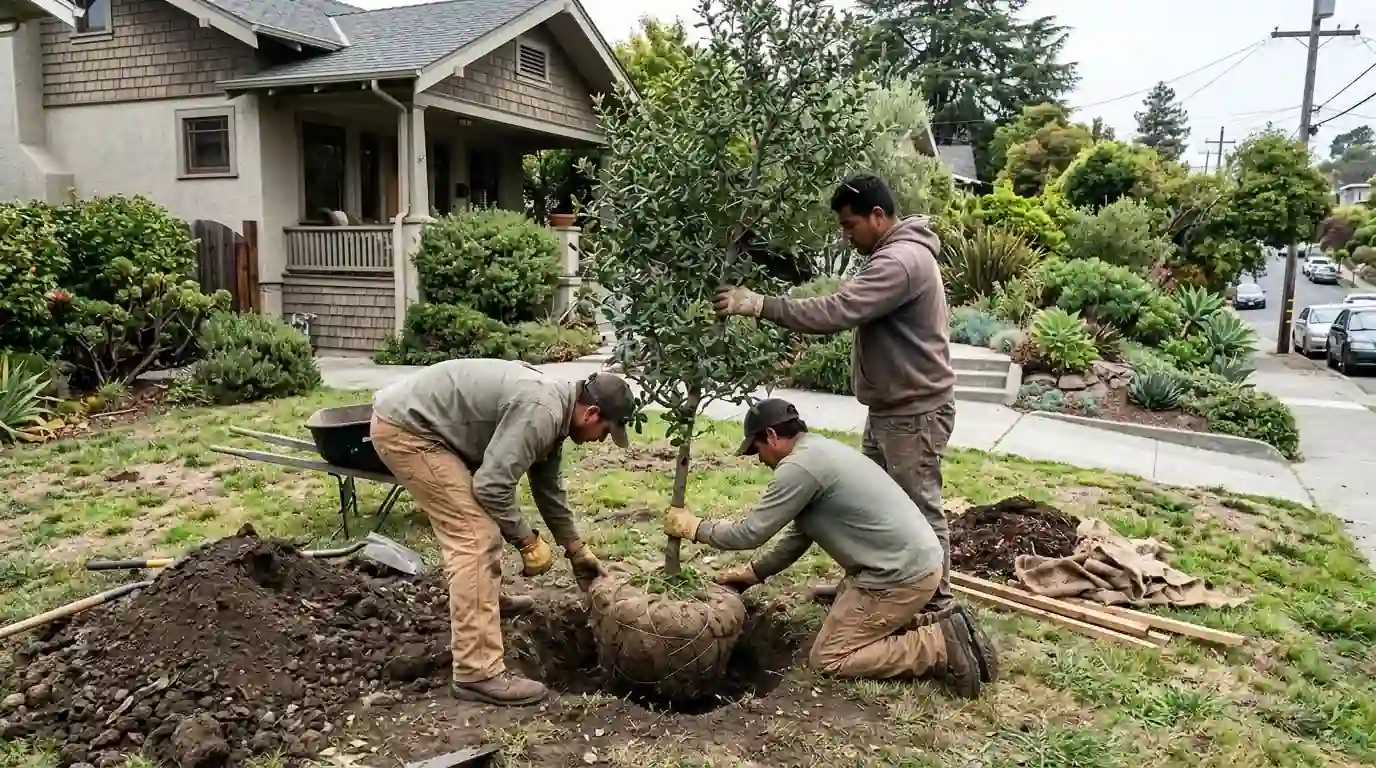
In Oakland, the permit question belongs to the removal, not the stump. If a coast live oak 4 inches DBH or larger, or most other trees at 9 inches DBH or larger, came down under a permit, the code names replacement trees such as coast live oak, coast redwood and madrone in 24-inch box size. A deep, wide grind clears room so the replacement can go in near the old spot. When the stump sits in a sidewalk planting strip, we check with the city whether it was a street tree before we start.
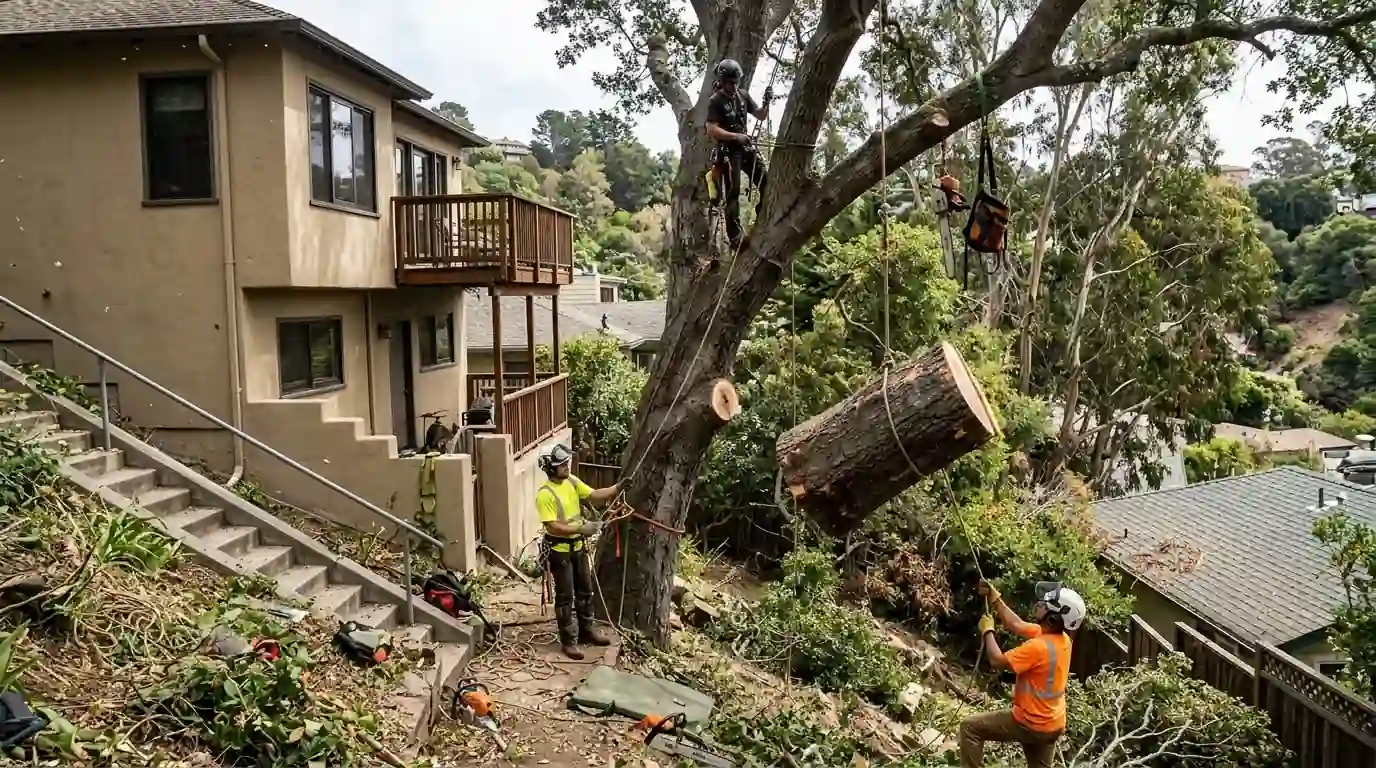
Terrain sets the rest. In the hills, stumps often sit on slopes or near retaining walls, where pulling a full root ball could loosen the soil, so grinding is the gentler choice. In flatland neighborhoods, stumps sit in narrow strips between sidewalk and curb, with water and gas lines close by. Grinding keeps the disturbance shallow in both cases. For whole-lot projects, we often pair grinding with tree removal on the same visit, so the yard is finished in one go.
Work that often goes with stump grinding
Where we handle stump grinding
From the office on Martin Luther King Jr Way in Temescal and the Walnut Creek office on Bonanza Street, we cover Oakland and the East Bay. The biggest communities we serve, with a main ZIP code for each:
Stump grinding questions we hear in Oakland
How deep do you grind a stump below the ground?
Deep enough for what goes in next. For sod or ground cover, 4 to 6 inches below grade usually works. For a new shrub or tree planted nearby, we go deeper and wider so roots find soil instead of wood. Rocks and buried concrete can limit depth, and we tell you on site if that happens.
Will the roots keep sprouting after grinding?
Most species stop once the stump is ground below the root collar, and the remaining roots rot in place. A few, such as plum, liquidambar and some elms, may push suckers from the roots for a season or two. Pulling or clipping those shoots as they appear usually ends it.
Can you grind a stump right next to a fence or foundation?
Usually, yes. The cutter wheel can work close to a fence or wall, though the last few inches against a foundation are often finished with a saw and hand tools. If roots run under a slab or footing, we grind only what's safe to reach and leave the rest in place.
What should I do with the hole after grinding?
Backfill with the chips plus some topsoil, then let it settle for a few weeks before laying sod. Chips break down and sink, so extra soil on top keeps the spot level. If you're planting right away, swap most of the chips for soil instead.
Why does a stump job need an 811 call?
Grinding goes below the surface, and gas, water and electric lines in older Oakland yards don't always run where you'd expect. Calling 811 gets public utility lines marked before the wheel goes down. Private lines, like sprinklers or yard lighting, still need you to show us where they are.
Saws, chippers, grinders and climbing gear from names like Stihl, Husqvarna and Vermeer
StihlHusqvarnaVermeerBanditMorbarkRaycoAltecPetzlSilkySherrillTeufelbergerNotchEchoToro
Need stump grinding in Oakland or the East Bay?
Call and tell us what the tree is doing. Someone picks up any hour, and we can usually talk you through the next step on that first call.