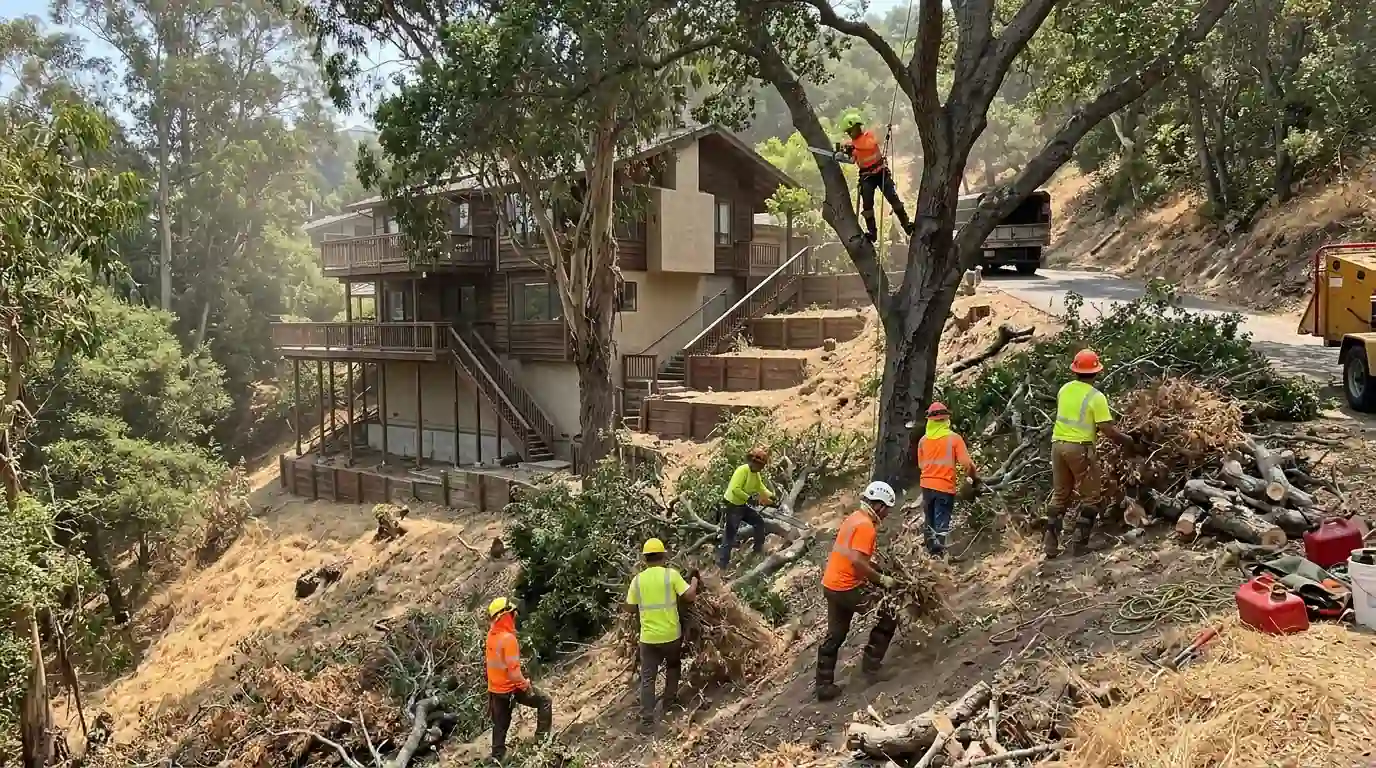
Juniper and shrub removal in Oakland, CA
Spreading junipers and overgrown shrubs hugging the walls of Oakland homes look harmless until you count how much dry, resinous material sits right under the eaves.
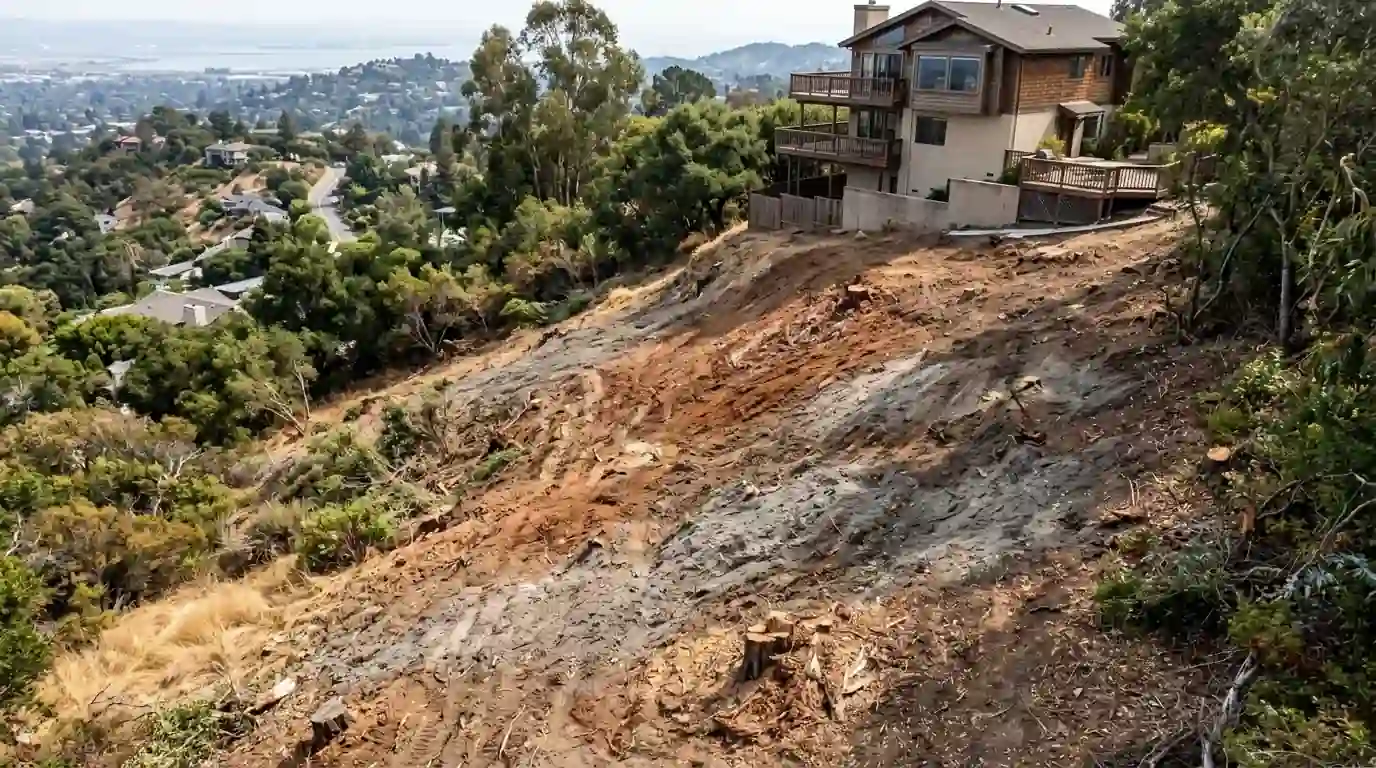
Quick answer
Juniper and shrub removal means cutting out woody plants that grow against a house, deck or fence and dealing with their root crowns. You need it when shrubs crowd the walls, hide dead wood inside, or sit in the first 5 feet where proposed Zone 0 rules would bar them. We cut, dig or grind the roots, haul everything and leave bare, clean ground.
What juniper and shrub removal involves in Oakland
Juniper is one of the most common foundation plantings in the East Bay, and on hill lots it's one of the worst. The foliage holds oils and resins, and the inside of an older plant fills with dead needles and twigs that never see light. From the street a juniper looks green. Pull back the outer layer and you find a dry core that will take an ember and carry it up the siding.
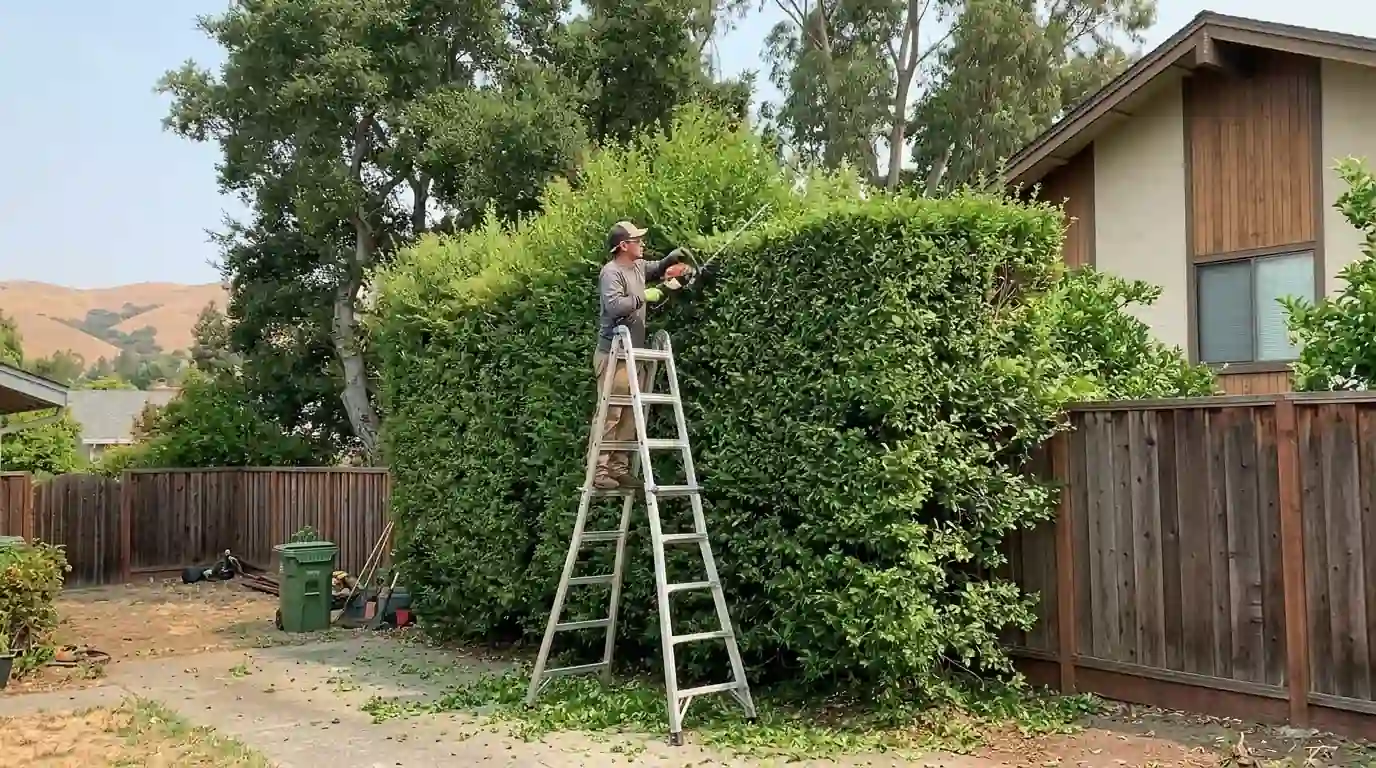
Other dense shrubs cause the same trouble in different ways. Overgrown rosemary, privet and old hedges planted tight to the wall trap leaves, block vents and keep siding damp all winter. Shrubs under windows bridge fire from the ground to the glass. Keeping woody plants off the walls is one of the simplest fire steps a hill homeowner can take, and it costs nothing in shade or privacy that matters.
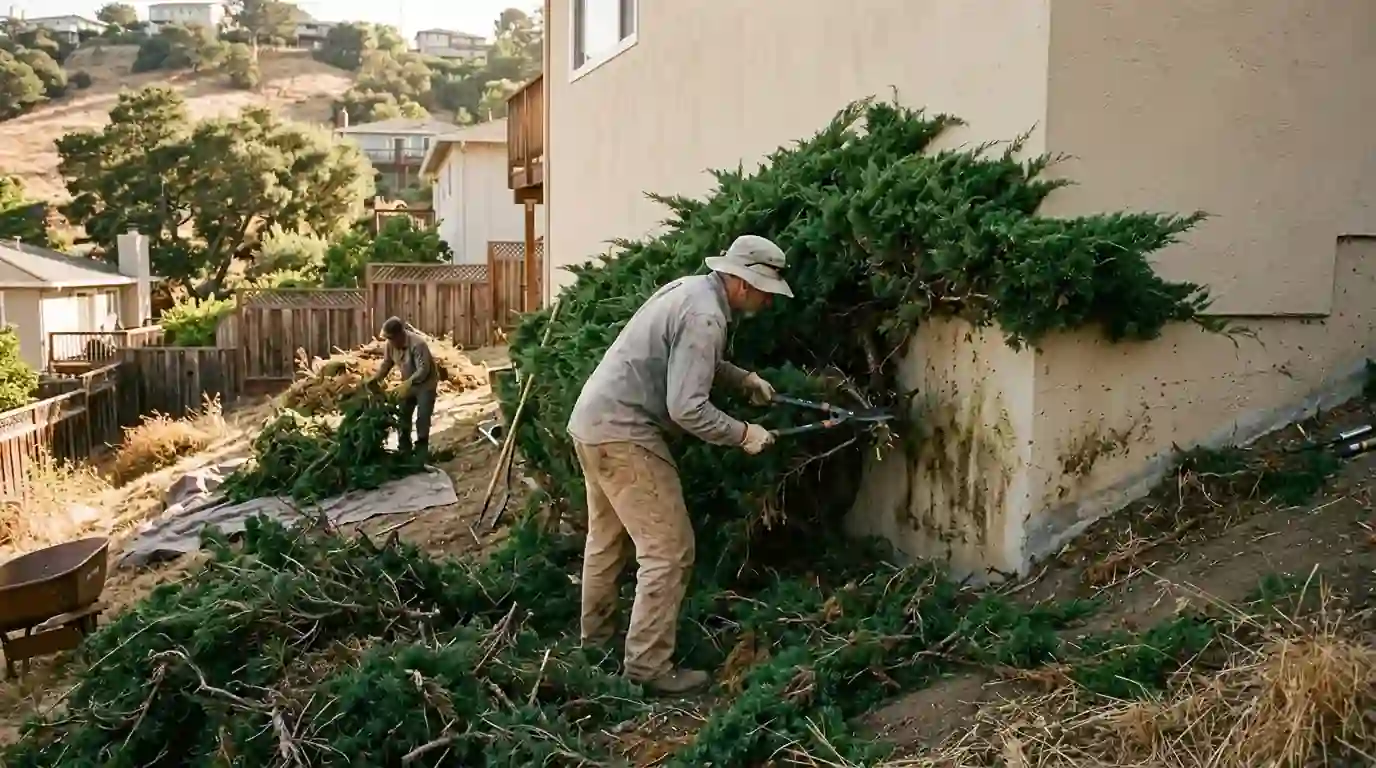
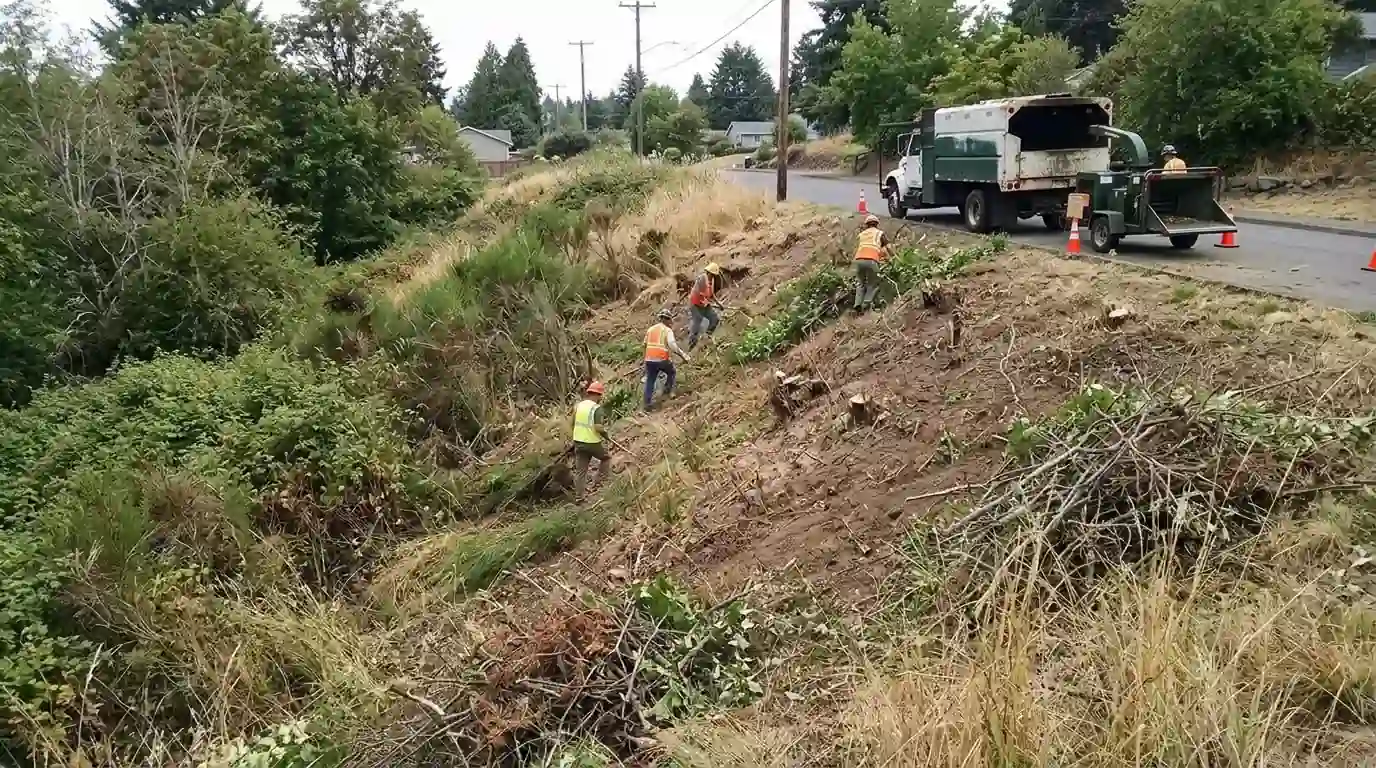
We remove these plants rather than giving them a cosmetic trim. A sheared juniper grows back only from the outside and stays dead inside, so cutting it back rarely fixes anything. We cut the plant to the base, handle the root crown, rake out the mat of dead needles left underneath and haul the lot. If you want to keep some greenery, we can trim the hedges that stay farther from the house.
Which shrubs around your Oakland house should go?
- Junipers touching siding or decksA juniper growing against the walls, under the eaves or beneath an attached deck is fuel stacked exactly where a house is most exposed.
- Brown, dead centersIf you can push a hand into the shrub and pull out dry twigs and needles, the plant is mostly fuel wrapped in a thin green shell.
- Shrubs under windows and ventsPlants pressed against windows, attic vents or crawlspace vents give embers a direct path to the openings in a house.
- Hedges grown into tree canopiesA tall hedge that reaches the lower limbs of an oak or pine works as a ladder from the ground into the crown.
- Woody plants inside the first 5 feetProposed Zone 0 rules would bar shrubs in the first 5 feet around the house, including under attached decks and stairs.
- Roots lifting paths near the wallsOld shrubs can heave walkways and hold moisture against concrete and framing at the base of a wall.
What a juniper removal looks like from start to finish
Mark what stays and what goes
We walk the house perimeter with you and mark each plant, paying closest attention to the first 5 feet and anything growing under decks or stairs.
Cut the top growth down
Branches come off in sections and go straight to the chipper. Older junipers are prickly with brittle inner wood, so we work in heavy sleeves and cut from the outside in.
Pull or grind the root crown
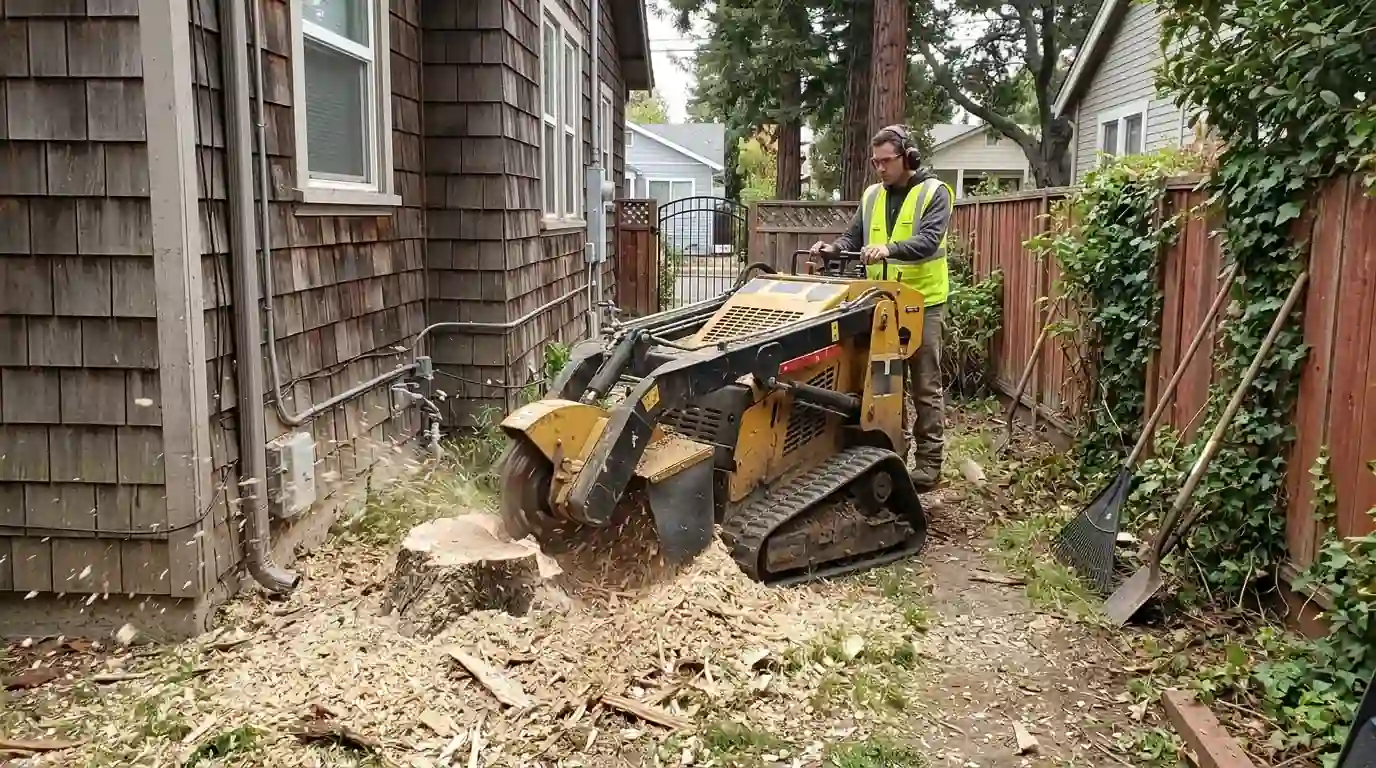
Small shrubs come out with a mattock and digging bar. Larger root crowns get ground below grade with a compact grinder that fits through most side gates.
Rake out the needle mat
Years of dropped needles sit under an old juniper. We rake down to soil so the cleared strip isn't still covered in dry fuel.
Check the wall and haul it all
With the plant gone, the siding, vents and foundation are visible again, and we point out any rot or gaps we notice. Every branch and root piece leaves the property, and we blow off paths and the driveway before going.
Shrubs, Zone 0 and the Oakland wildfire district
Inside Oakland's wildfire district, the yearly inspection already looks at spacing and dead material. Zone 1 asks for plants to be spaced, and dense junipers along the house are among the easiest corrections to make. The bigger change is coming in the first 5 feet. The state Board of Forestry has proposed Zone 0 rules, not yet final, that would bar shrubs, combustible mulch and firewood in that strip, including under attached decks and stairs.
Oakland's phase-in gives owners room to plan: outreach in 2026, mock inspections in 2027, non-enforced inspections in 2028 and citations from 2029. Shrub removal around a house in Upper Rockridge or Sequoyah is short work next to the tree jobs on the same lot, so it pairs well with zone-by-zone clearing of the bigger trees. A shrub-form juniper is nowhere near Oakland's 9-inch trunk threshold for protected trees, though an old tree-form juniper can be, and we measure before cutting one.
What affects the size of a shrub removal job
Every job is priced after we see the tree. These are the things that move the number.
- Number and age of plantsA row of old junipers along a long wall takes far more cutting and root work than two young shrubs by the front steps.
- Root crown sizeBig, old root crowns need a grinder or plenty of digging. Shallow-rooted shrubs pull out quickly.
- Working under decks and stairsShrubs growing beneath attached decks mean crawling and hand cutting in tight space, which slows the work.
- Slope and carry distanceOn a downhill lot, every armload goes up stairs or a slope to reach the chipper at the street.
- What you want afterwardLeaving clean soil is one scope. Grinding crowns well below grade so you can replant or lay hardscape is another.
Work that often goes with juniper and shrub removal
Where we handle juniper and shrub removal
From the office on Martin Luther King Jr Way in Temescal and the Walnut Creek office on Bonanza Street, we cover Oakland and the East Bay. The biggest communities we serve, with a main ZIP code for each:
Juniper and shrub removal questions we hear in Oakland
Why is juniper such a fire hazard right next to a house?
Juniper foliage carries oils and resins, and older plants hold a core of dead needles and twigs. That mix catches embers easily and burns hot right against the wall. On Oakland hill lots, a juniper under the eaves is one of the most direct fire paths into a home.
Can I cut my junipers back instead of removing them?
Cutting back rarely helps. Juniper doesn't regrow well from bare inner wood, so a hard trim leaves a brown, dry shell that still holds fuel. Removing the plant and replanting lower, well-spaced plants farther from the walls is the practical fix.
Will pulling shrubs next to the foundation damage it?
Not when the roots are handled with care. We cut root crowns out with hand tools or grind them in place, rather than ripping them out with a machine that pries against the wall. If roots have already cracked a path or footing, you'll see it once the plant is gone.
What should go in the strip where the junipers were?
Many owners keep the first 5 feet bare or switch to gravel and hard surfaces, since the Zone 0 proposals would bar shrubs and combustible mulch there. Farther out, low plants with space between them work better than dense woody shrubs. We leave the ground clean and ready for whatever you choose.
Saws, chippers, grinders and climbing gear from names like Stihl, Husqvarna and Vermeer
StihlHusqvarnaVermeerBanditMorbarkRaycoAltecPetzlSilkySherrillTeufelbergerNotchEchoToro
Need juniper and shrub removal in Oakland or the East Bay?
Call and tell us what the tree is doing. Someone picks up any hour, and we can usually talk you through the next step on that first call.