
Tree disease treatment in Oakland, CA
Oaks in Oakland face sudden oak death, root rot and a long list of smaller problems. We figure out which one you're dealing with and give you a straight answer about whether the tree can be helped.
Quick answer
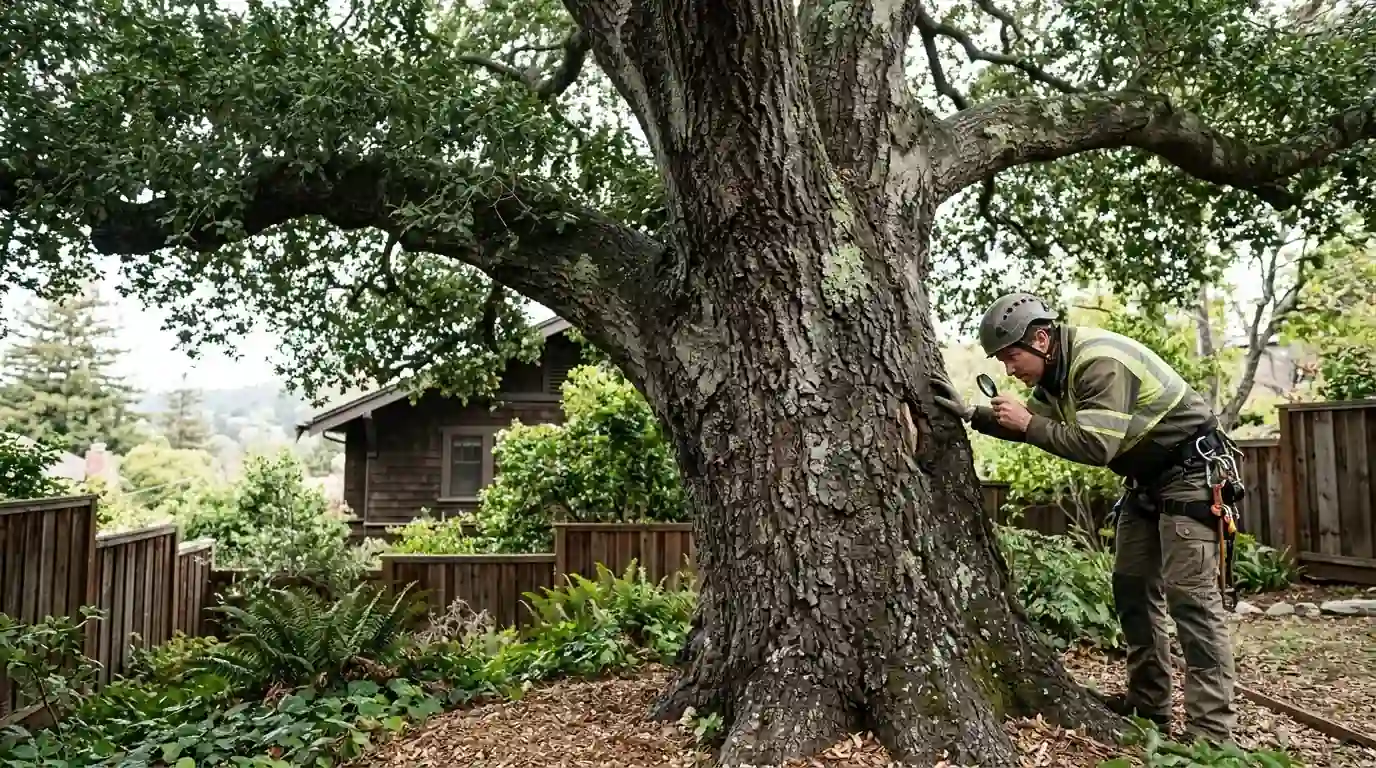
Tree disease treatment starts with an honest diagnosis: finding out what's causing cankers, dieback or decay and whether the tree can recover. You need it when a tree shows oozing bark, thinning foliage, fungus at the base or sudden browning. We inspect the tree, change the conditions feeding the disease, prune infected wood and recommend removal when a tree is beyond help.
What tree disease treatment involves in Oakland
Diseases in trees rarely announce themselves early. By the time a coast live oak shows thinning leaves, the problem has usually been working in the bark or roots for a while. The first job is figuring out what we're looking at, because a sap stain from a bark wound, a bleeding canker from sudden oak death and a crown thinned by drought need completely different responses.
We'll be straight about one thing from the start: many tree diseases can't be cured. What we can do is slow some of them, remove infected wood, fix the watering or soil conditions that feed root diseases, and protect nearby trees that aren't sick yet. Sometimes the right call is taking a dying tree down before it becomes a hazard, and we'll tell you when that's where things stand.
Treatment also depends on the whole yard, not just one trunk. A sick oak may sit next to a bay laurel spreading spores, under a lawn sprinkler soaking its roots, or beside a new patio that buried its root flare. Changing those conditions can matter more than anything applied to the tree. When pests are part of the story, such as beetles in a stressed pine, pest treatment often runs alongside disease work.
What symptoms suggest a tree is diseased?
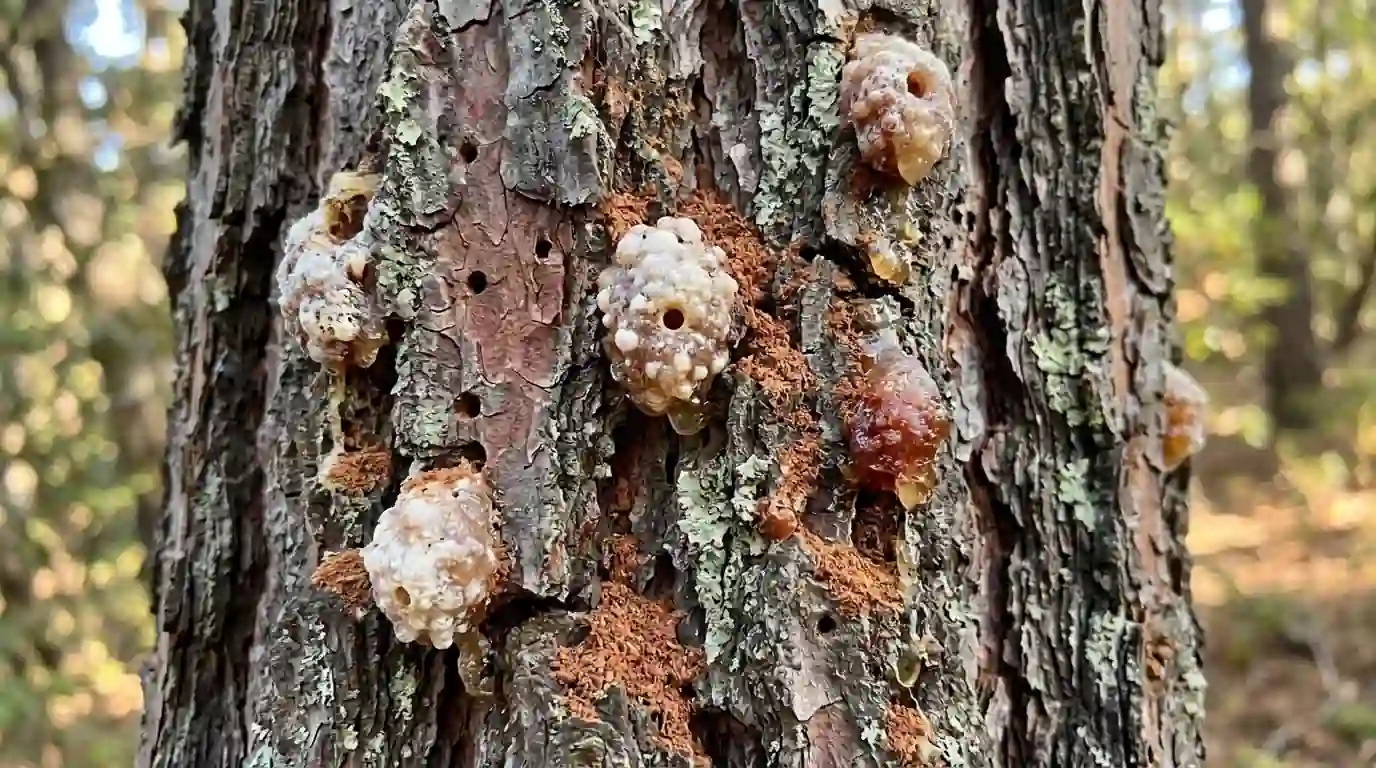
- Dark, oozing sap on the lower trunkBleeding cankers with dark reddish sap on an oak or tanoak trunk are the classic sign of sudden oak death.
- A crown browning all at onceOaks killed by sudden oak death often turn brown quickly, with the whole canopy fading in a short span.
- Mushrooms at the root flareFungal growth at the base of a tree, especially with soft or peeling bark, can point to root or butt rot.
- Thinning foliage over several seasonsA crown that gets sparser year after year can come from root disease, poor drainage or long drought stress.
- Wilting despite regular waterLeaves that wilt even though the soil stays wet suggest roots are rotting and can't move water.
- Bark cracking or sloughing offDead bark that peels away from the trunk reveals cankers, decay or damage underneath.
What shapes a disease treatment plan
Every job is priced after we see the tree. These are the things that move the number.
- How far the disease has goneEarly problems may need only pruning and a change in watering. Advanced decay often means removal.
- Number of trees affectedOne sick oak is a small job. A cluster of oaks and bays sharing the same problem takes more time and follow-up.
- Need for lab testingSome diseases can't be confirmed by eye, and sending a sample adds a step before treatment.
- Changes to the yardMoving irrigation, regrading soil off a root flare or fixing drainage can be a bigger part of the work than the tree itself.
- Debris handlingInfected wood and leaves need careful handling and disposal instead of being chipped and spread around the yard.
- Follow-up visitsDisease treatment often means checking the tree again over a season or two to see how it responds.
How we approach a sick tree
Inspect the tree and its setting
We look at the trunk, root flare, crown and soil, along with nearby trees, sprinklers, grading and drainage. Patterns across several trees often tell us more than one trunk does.
Narrow down the cause
Bleeding cankers, rot fungus, drought scorch and pest damage each leave different marks. When a sample needs lab confirmation, we tell you that rather than guessing.
Change the conditions
For root rot, that usually means pulling irrigation away from an oak's trunk and root zone, clearing soil or mulch off the root flare and improving drainage.
Prune out infected wood
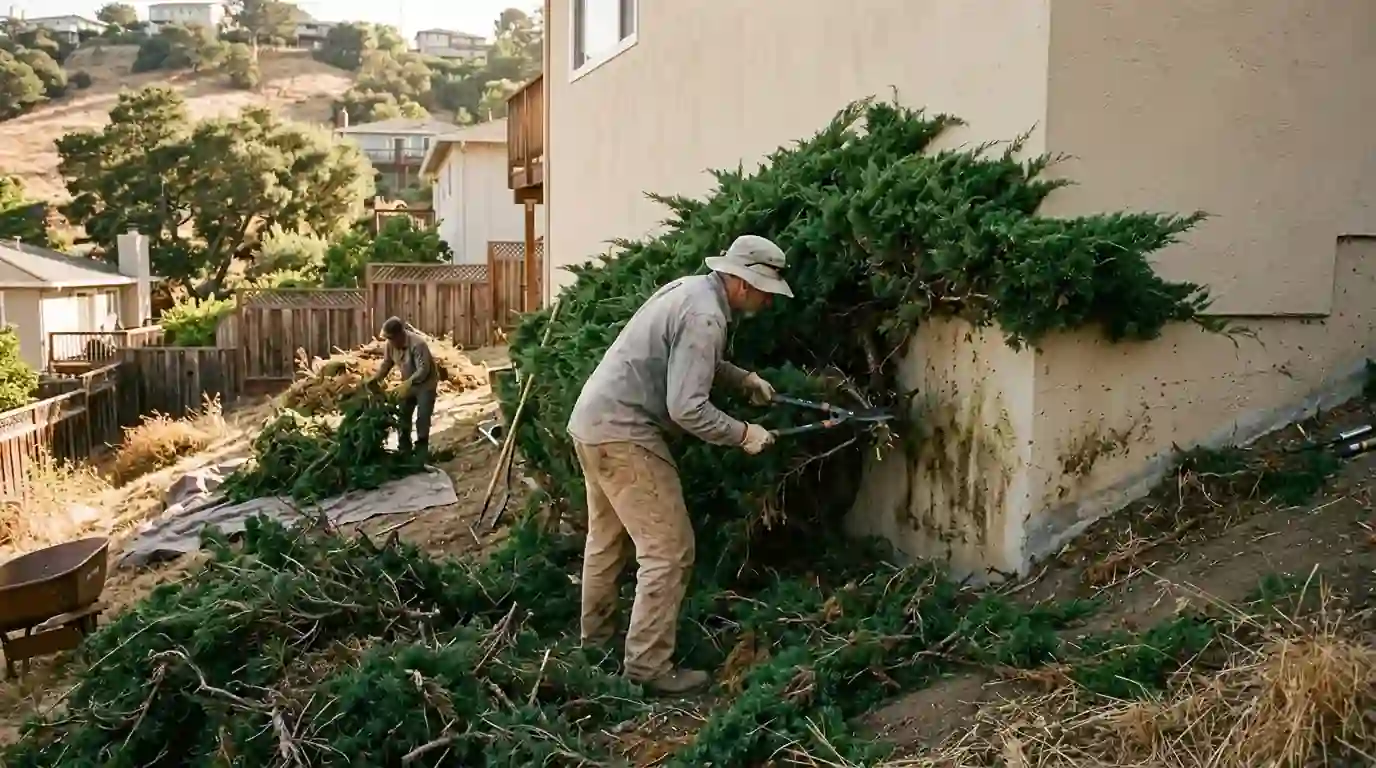
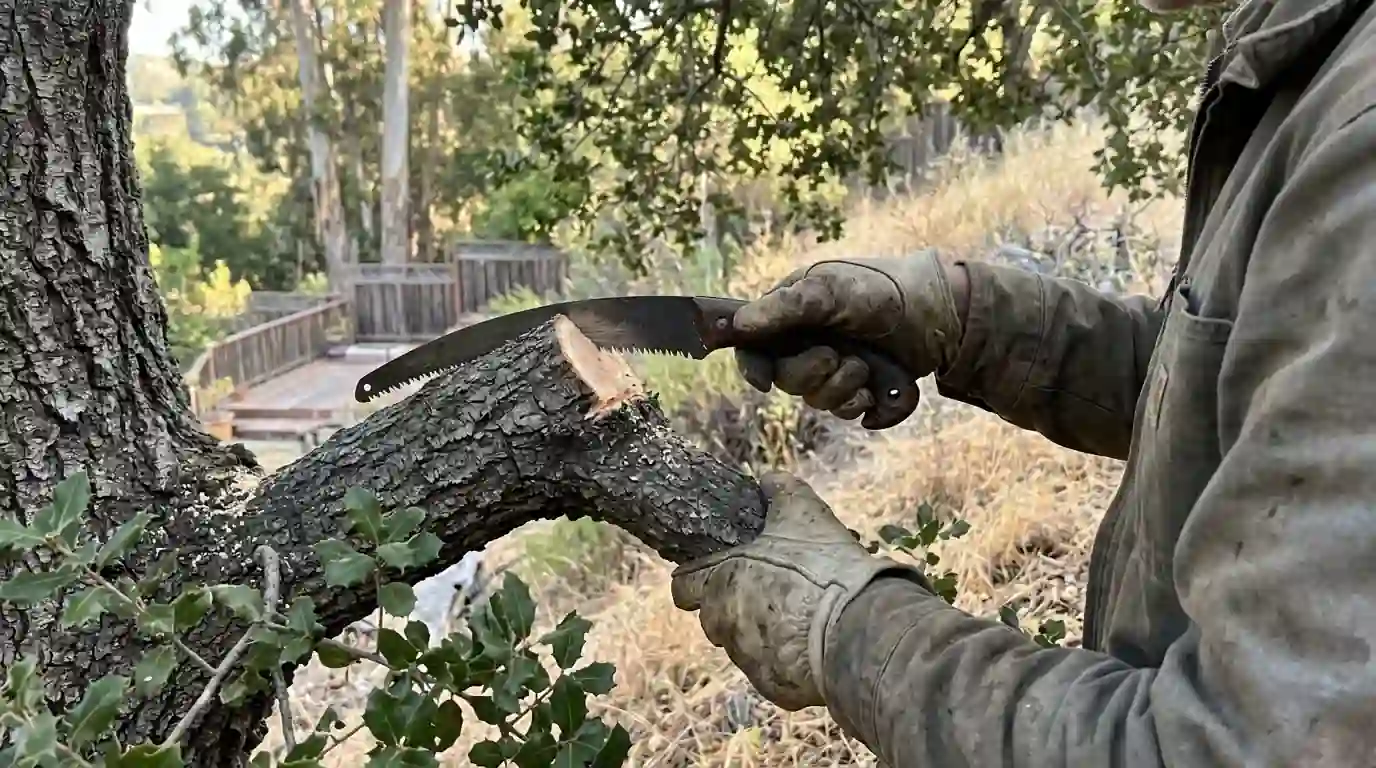
Dead and dying limbs come out with clean cuts, and tools get cleaned between trees to avoid spreading disease. Infected material is handled so it doesn't move spores around the yard.
Protect nearby trees
Around oaks at risk from sudden oak death, we look at bay laurels close by and talk through removing or thinning them to cut spore spread.
Decide on removal honestly
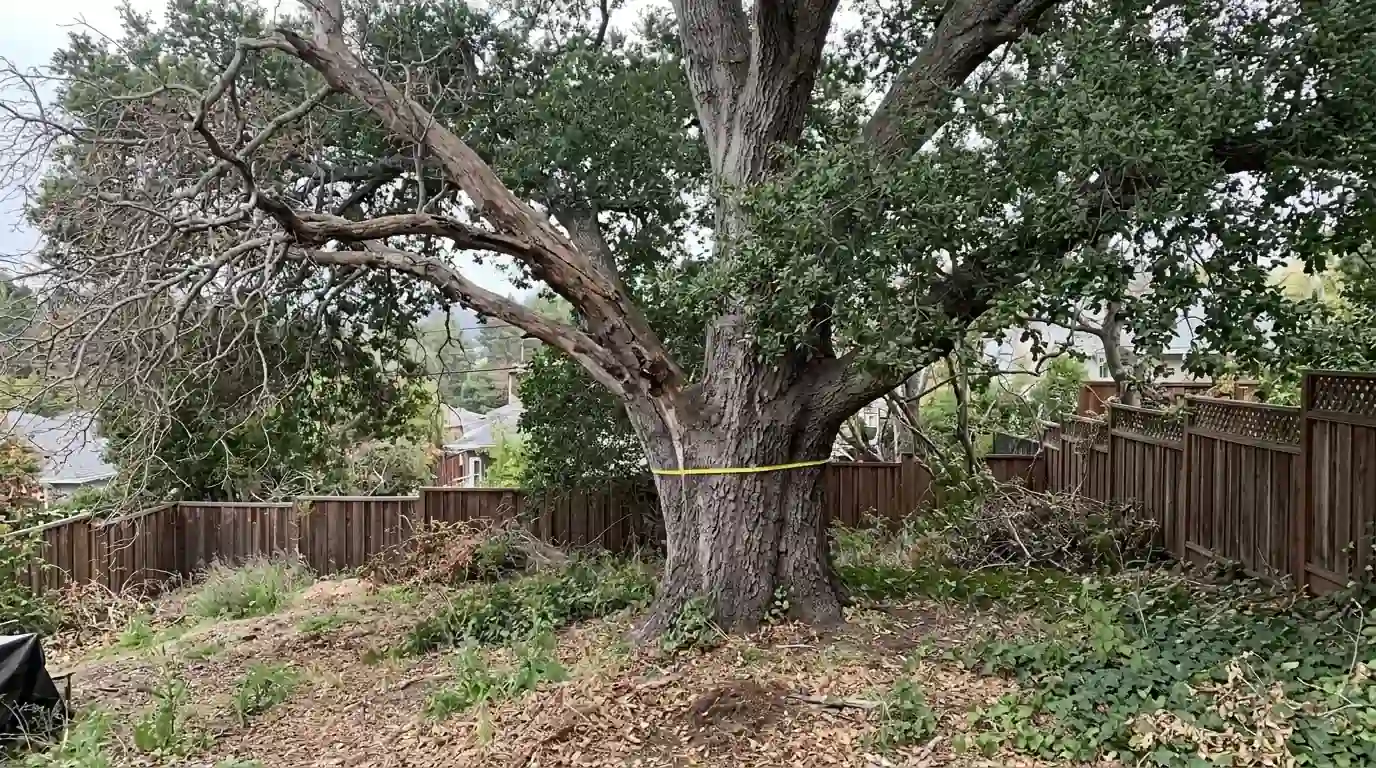
If a tree is dead or dying and over a target, we recommend removal and explain why. Infected wood is handled under the rules that apply in the regulated area.
Sudden oak death and root rot in the East Bay
Sudden oak death is caused by Phytophthora ramorum, and both Alameda and Contra Costa counties sit inside California's regulated area for it. Coast live oaks and tanoaks die from it, while California bay laurel leaves carry and spread the spores without dying. That makes bays the main concern next to valuable oaks in canyons like those around Redwood Heights and the slopes below Joaquin Miller Park. The wettest springs drive the most spread, so a rainy year often shows up as new cankers the following season.
Root rot is the other common oak killer we see, and much of it is self-inflicted. Native oaks evolved with dry summers. Lawns, drip lines and planting beds watered all summer right against the trunk keep the root flare wet and invite rot. Pulling irrigation back from the trunk and keeping the root flare uncovered helps more than any product. Diseased protected oaks in Oakland still need a permit to remove unless they're an immediate threat, so oak removal may involve paperwork too.
Work that often goes with tree disease treatment
Where we handle tree disease treatment
From the office on Martin Luther King Jr Way in Temescal and the Walnut Creek office on Bonanza Street, we cover Oakland and the East Bay. The biggest communities we serve, with a main ZIP code for each:
Tree disease treatment questions we hear in Oakland
Can a tree with sudden oak death be saved?
Usually not once bleeding cankers have spread around much of the trunk. We don't promise cures. What we can do is remove nearby bay laurels that spread spores, keep the tree's growing conditions good and protect oaks that aren't infected yet. When a dying oak sits over a house or path, removal is the safer choice.
Why do bay laurel trees matter for oak health?
Bay laurel leaves host the pathogen behind sudden oak death and release spores during wet weather, especially in rainy springs. The bay itself doesn't die from it, but it can infect oaks nearby. Removing or thinning bays close to valuable oaks is one of the most practical steps available.
Is my sprinkler system hurting my oak tree?
It can be. Coast live oaks are adapted to dry summers, and regular watering near the trunk keeps roots wet and invites rot. Move sprinkler heads and drip lines away from the trunk and keep the root flare uncovered. Many oaks recover once summer water stops.
Can diseased wood be chipped and left in my yard?
We don't spread wood from diseased trees around a yard, because some pathogens survive in it. Since Alameda and Contra Costa counties are inside the sudden oak death regulated area, infected material is handled under those rules rather than chipped for garden beds.
Saws, chippers, grinders and climbing gear from names like Stihl, Husqvarna and Vermeer
StihlHusqvarnaVermeerBanditMorbarkRaycoAltecPetzlSilkySherrillTeufelbergerNotchEchoToro
Need tree disease treatment in Oakland or the East Bay?
Call and tell us what the tree is doing. Someone picks up any hour, and we can usually talk you through the next step on that first call.