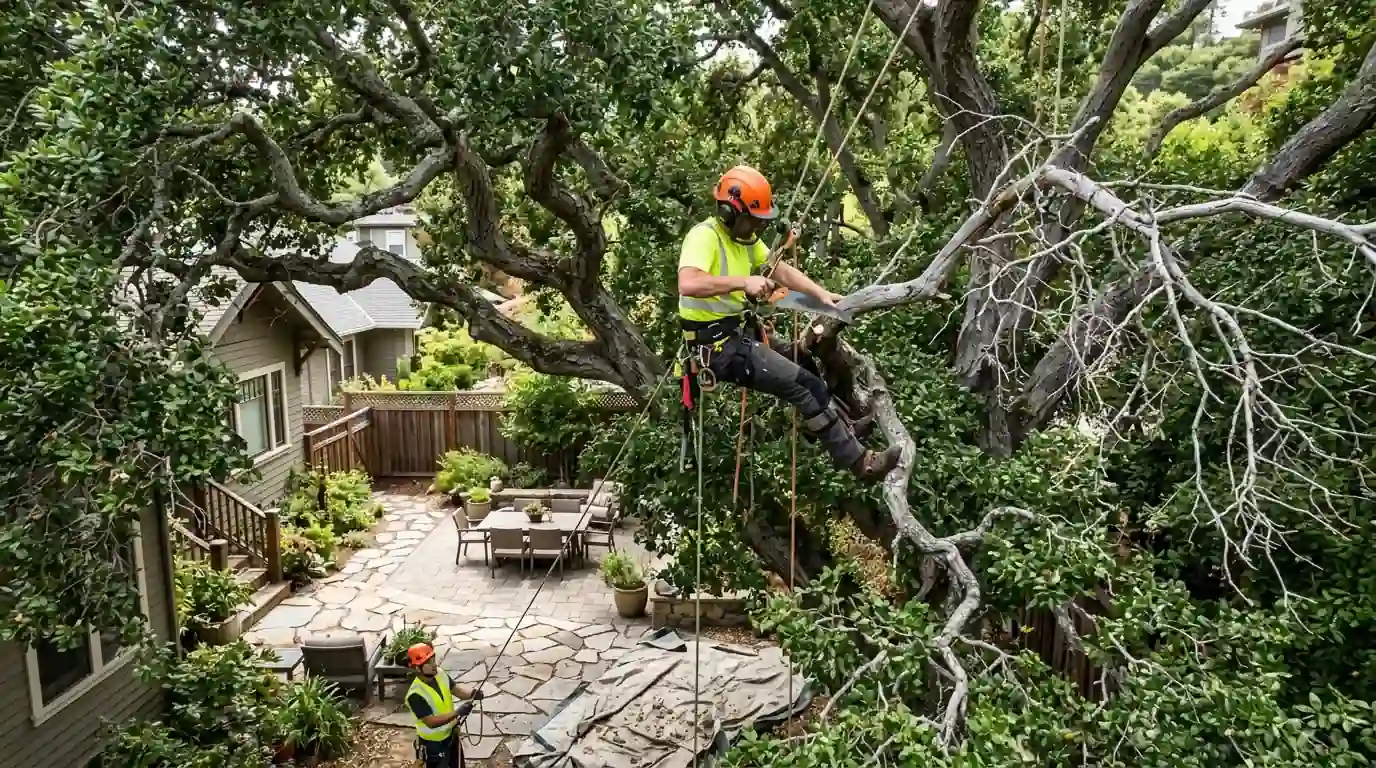
Oak tree pruning in Oakland, CA
Coast live oaks are the backbone of Oakland's canopy, and they respond badly to the wrong cut at the wrong time. We prune them lightly, in the dry months, and within the city's protected tree rules.
Quick answer
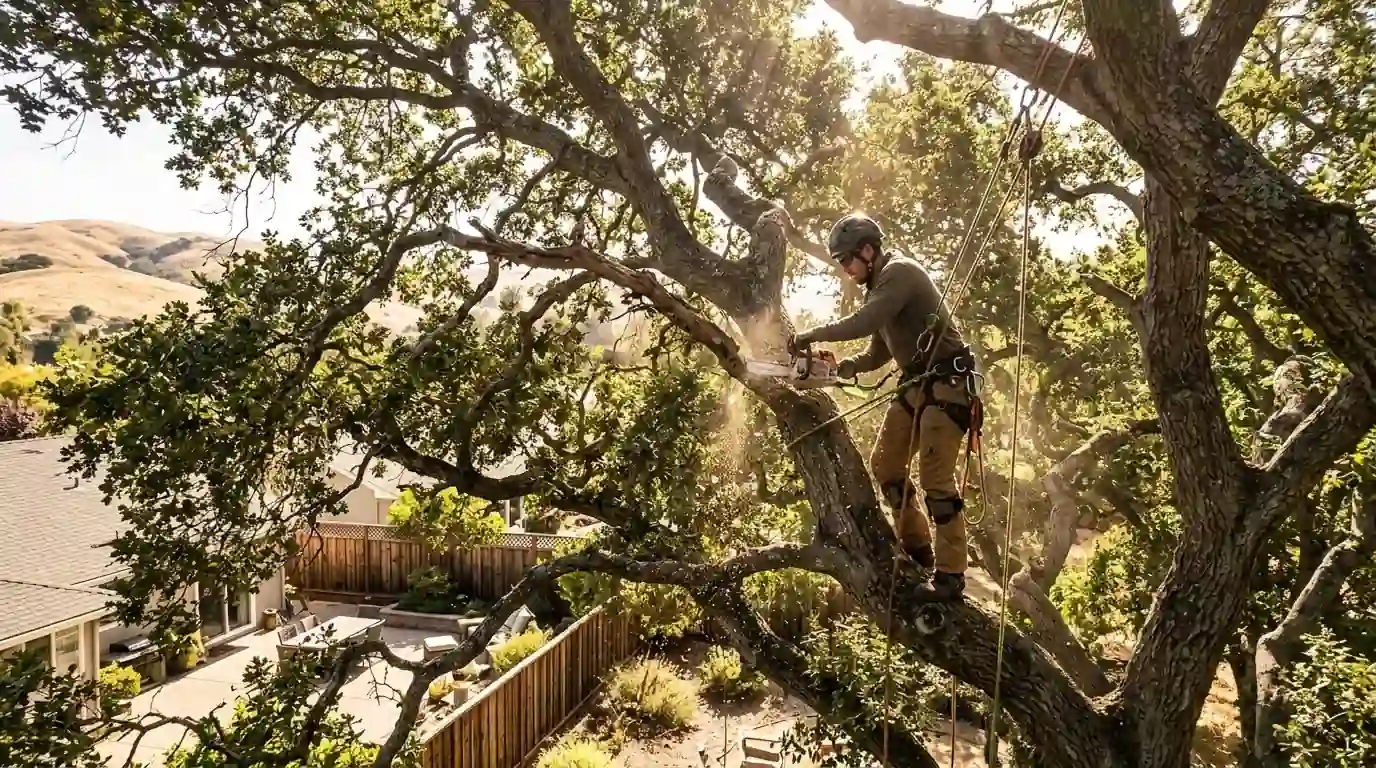
Oak tree pruning is selective cutting of a coast live oak or valley oak to remove dead wood, clear structures and balance heavy limbs, without stripping the canopy. It's best done in the dry season, roughly June to September, when disease spores and beetles are less active. We make small cuts at branch unions, take only what's needed and clean our tools between trees.
What oak tree pruning involves in Oakland
An oak is not a hedge. Coast live oaks grow slowly, hold a dense evergreen crown and handle cuts by walling them off, not by regrowing. Every large wound is a door for decay, and every heavy round of cutting pushes the tree to throw out weak sprouts. Good oak pruning is mostly restraint: a handful of well-placed cuts that fix a real problem, done at a time of year when the tree is least exposed.
Timing matters because of what's in the air. Fresh cuts on oaks attract boring beetles and can pick up fungal spores, and the wettest springs are when sudden oak death spreads fastest. Pruning in the dry part of summer, roughly June through September, means fresh wounds face drier conditions and fewer active pests. Emergency cuts after storm damage can't wait, of course, but planned work on a healthy oak should land in that window.
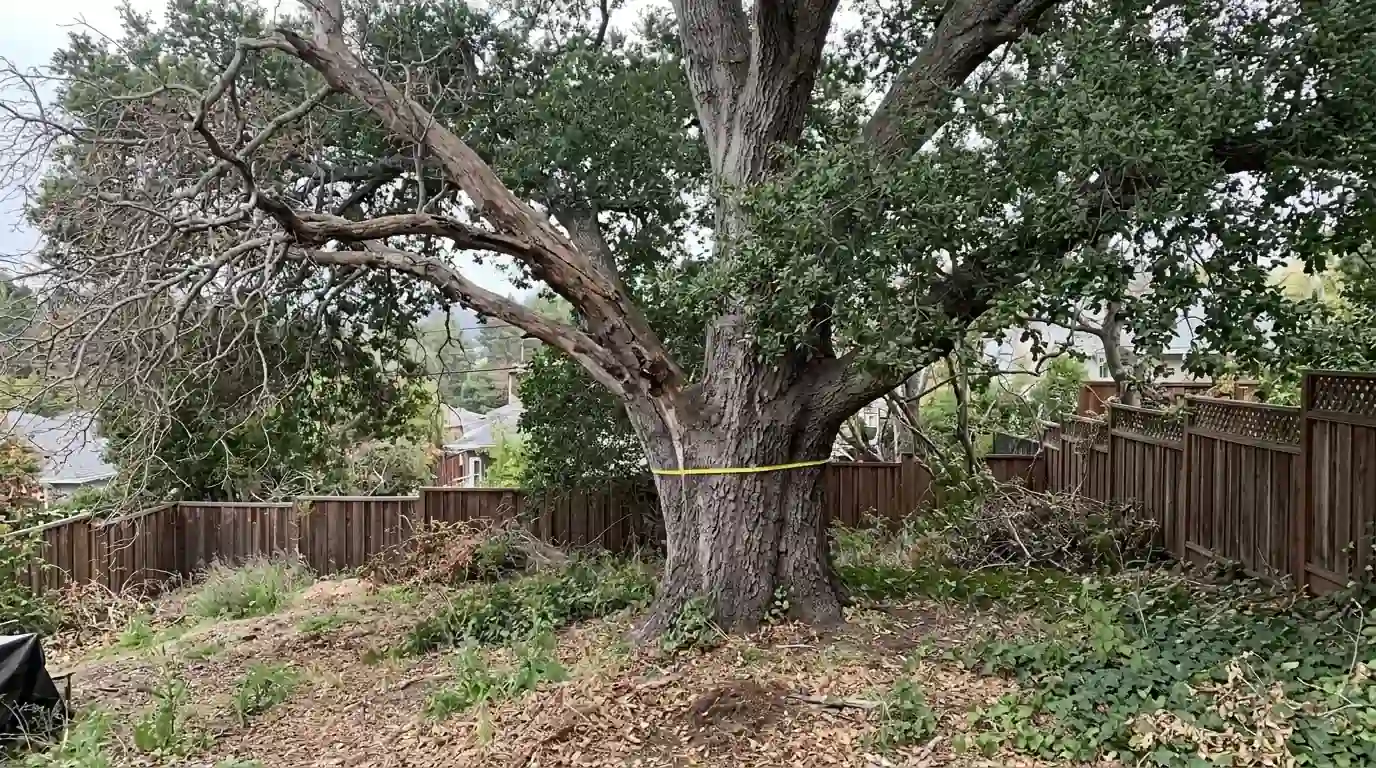
Most oak jobs we see in Crocker Highland and the hills come down to a few aims: lift limbs off a roof, take out deadwood, shorten a long lateral that's sagging toward a driveway, or let in light without thinning the crown hard. When an oak has a split, a canker or a heavy lean, we may suggest cabling the weak union or a closer look rather than more cutting.
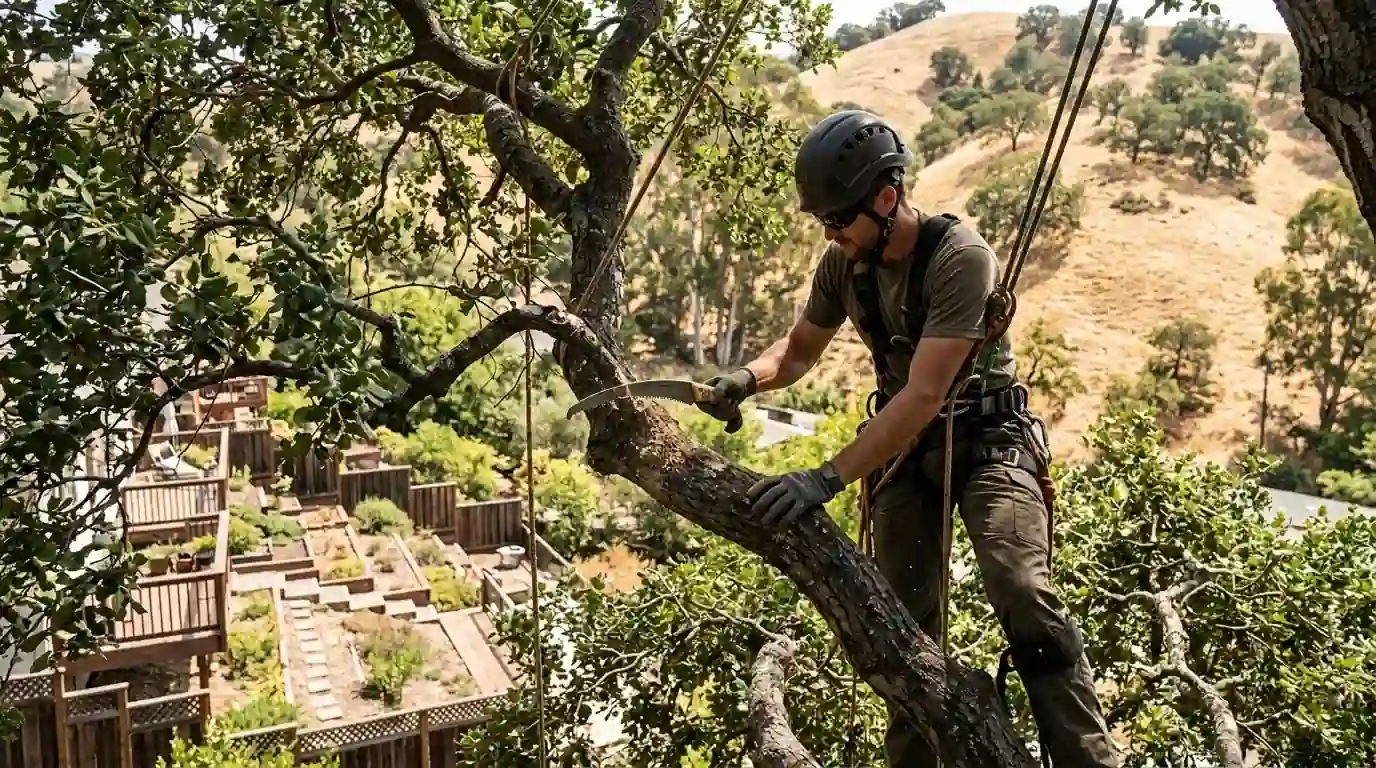
When does a coast live oak in your yard need pruning?
- Limbs resting on the roof or guttersBranches that touch the house rub shingles, drop leaves into gutters and give rodents a bridge onto the roof.
- Long laterals sagging toward a drivewayOaks grow heavy horizontal limbs that keep lengthening. When one starts to dip, shortening it back to a side branch takes weight off the end.
- Dead wood inside the crownShaded interior branches die off over time and turn into brittle fuel that can drop in wind.
- Low limbs over a path or streetBranches that catch trucks, umbrellas or heads need lifting back to a sensible height.
- Crossed and rubbing branchesTwo limbs grinding against each other wear through the bark and open wounds for decay.
- Storm-broken tips hanging in the canopySnapped branch ends left after a winter storm should be cut back to a clean point before they fall.
How do we prune an oak without stressing it?
Measure the trunk and check the rules
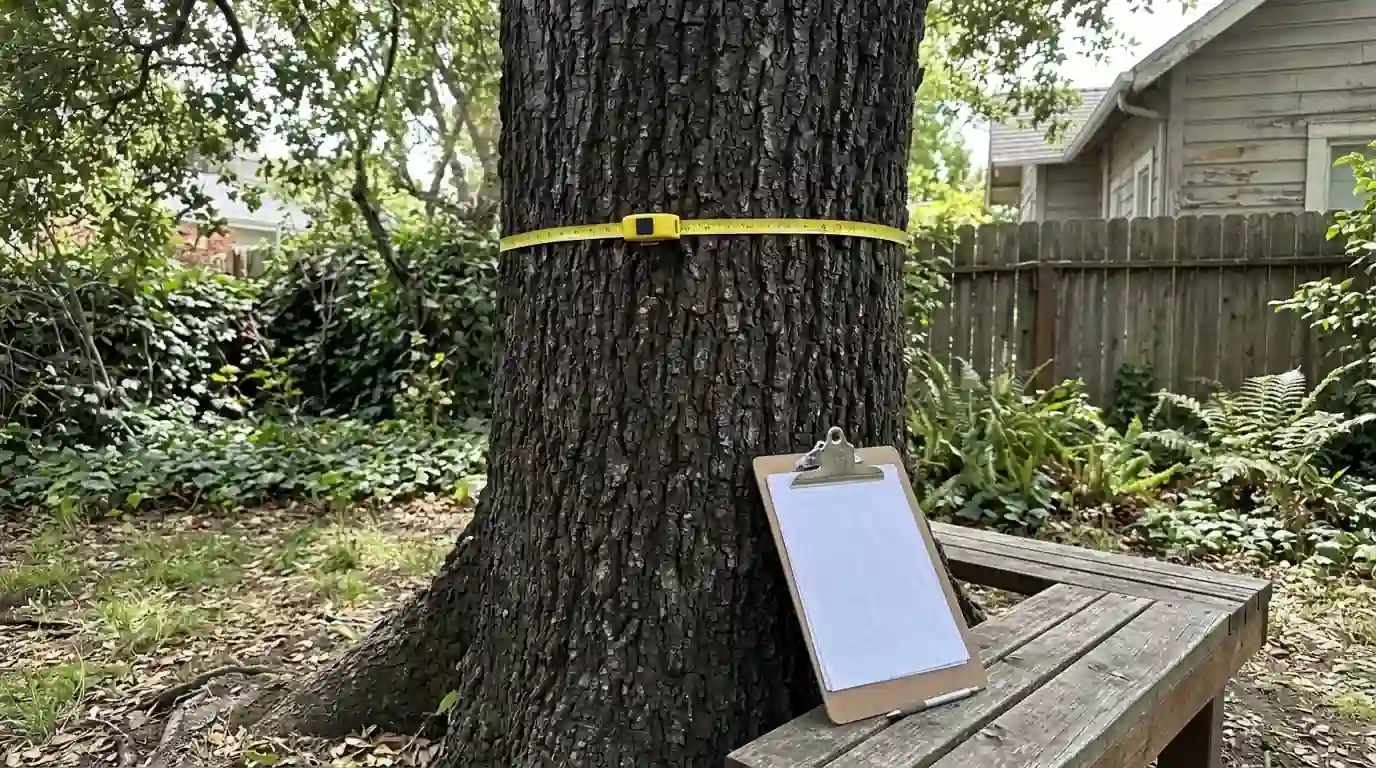
We measure diameter at 4.5 feet to see whether the oak is protected. Then we estimate how much leaf area the planned cuts will take.
Look for disease before the first cut
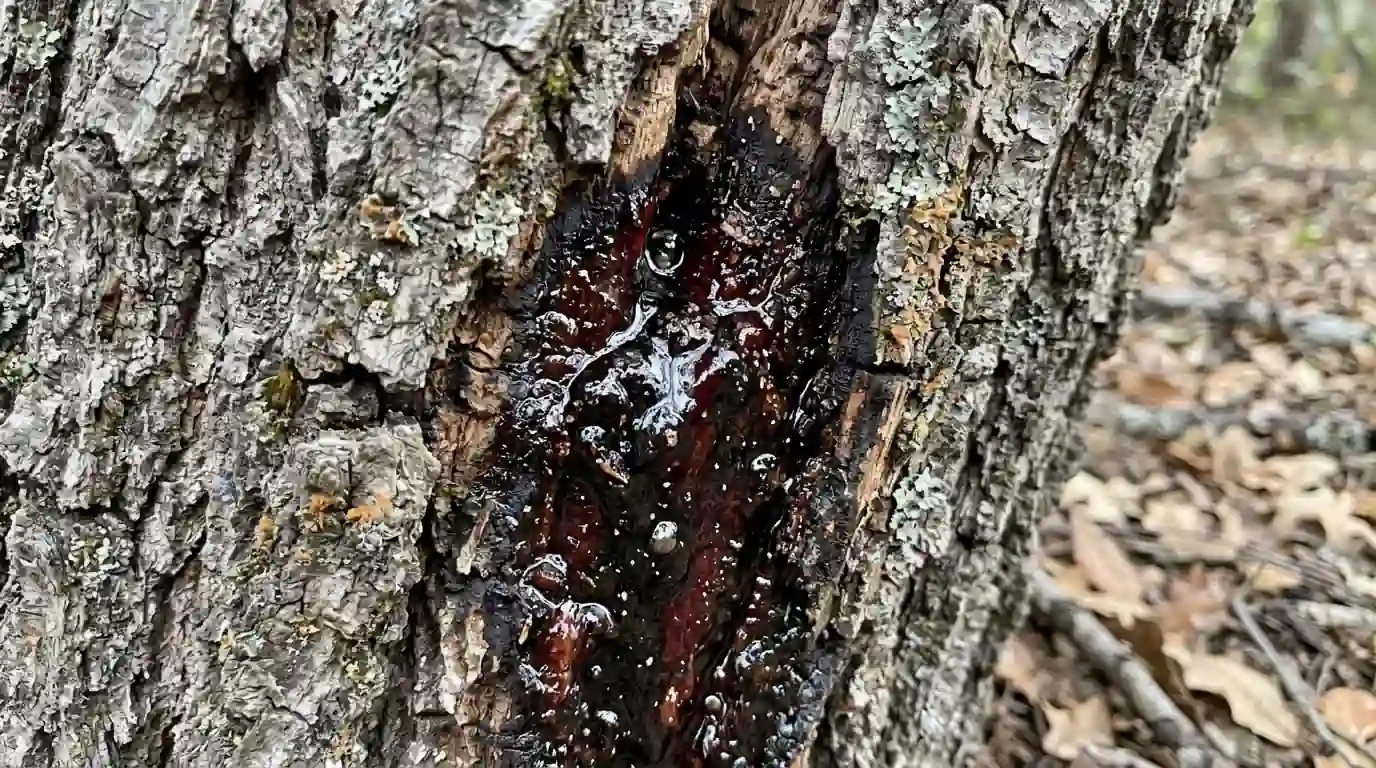
Our climber checks the lower trunk for bleeding cankers, the dark reddish sap that can signal sudden oak death. We also look for beetle holes and soft decay.
Clean tools between trees
Saws and pruners get cleaned before we move to another oak, so we don't carry spores from one tree to the next.
Make small cuts at unions
We reduce limbs back to a healthy side branch or remove them at the collar. Big flush cuts and topping are off the table.
Keep the total removal light
On most mature oaks we take well under a quarter of the live canopy, often far less, so the tree doesn't answer with a burst of weak sprouts.
Protect the root zone during cleanup
Brush is chipped and hauled, and we keep heavy equipment and piles off the soil under the drip line.
How do Oakland and Berkeley rules apply to oak pruning?
Oakland protects a coast live oak at just 4 inches in diameter at breast height, on any property, which covers almost every oak bigger than a sapling. Its code treats topping, girdling and similar damage as removal, so a heavy cut can trigger the same permit rules as taking the tree down. Normal, light pruning is fine. Hacking an oak back to stubs is not, and we won't do it.
Berkeley sets its oak line by circumference: 18 inches for a single stem or 26 inches combined for a multi-stem tree, measured 4 feet above grade. Pruning more than 25 percent of the leaf, stem or root system within 24 months counts as excessive and needs an exception request to the city. Both cities sit inside California's sudden oak death regulated area, along with the rest of Alameda and Contra Costa counties, which is one more reason to prune in the dry months.
What affects the cost of oak pruning?
Every job is priced after we see the tree. These are the things that move the number.
- Canopy size and spreadWide-spreading oaks can cover a whole backyard, and more limbs to reach means more climbing time.
- Clearance over the houseLimbs that reach over roofs, decks or skylights must be roped down piece by piece.
- Slope and accessHillside lots often mean carrying brush up stairs to the street.
- Amount of interior deadwoodOaks that haven't been touched in many years tend to carry more dead wood to clean out.
- Permit or exception paperworkBerkeley work that crosses the city's pruning limit needs an exception request before we start.
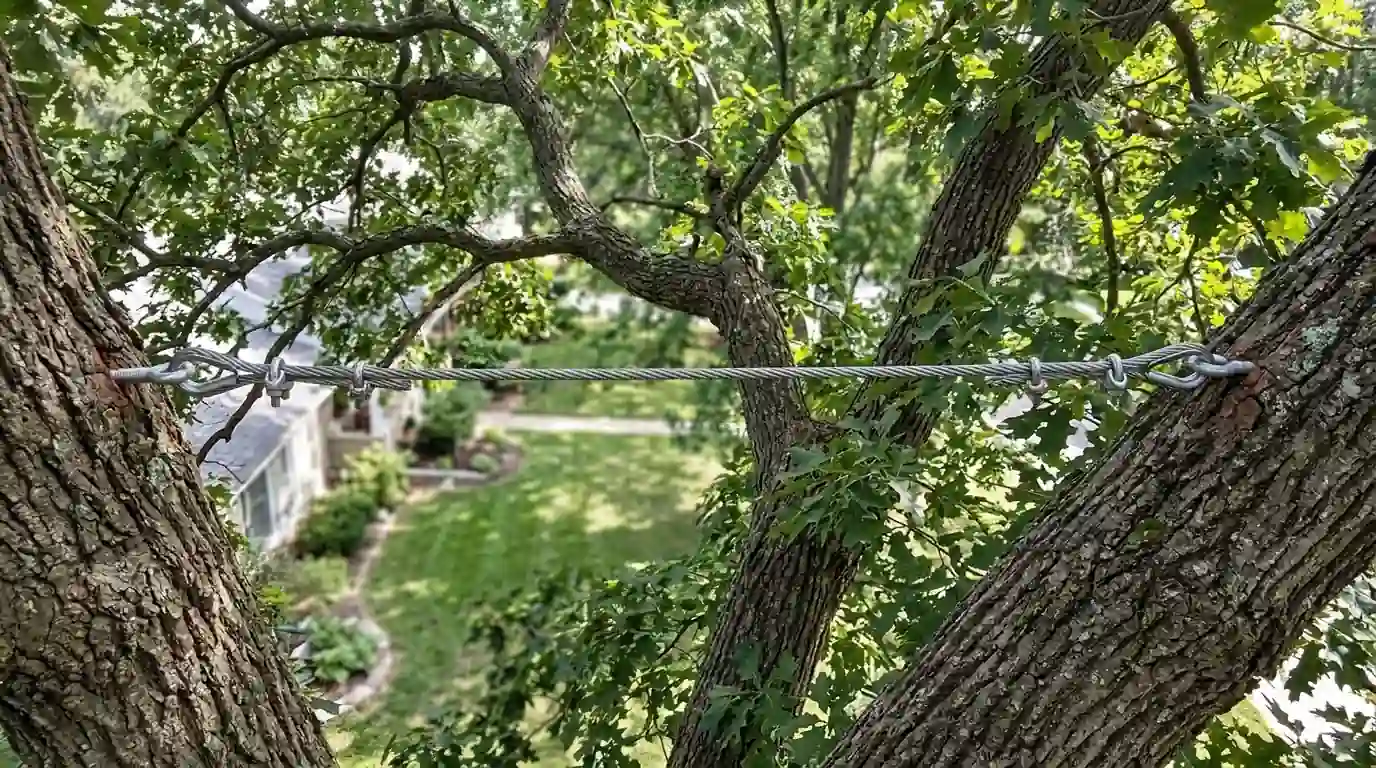
- Added support workCabling a weak fork or bracing a split adds hardware and climbing time to the visit.
Work that often goes with oak tree pruning
Where we handle oak tree pruning
From the office on Martin Luther King Jr Way in Temescal and the Walnut Creek office on Bonanza Street, we cover Oakland and the East Bay. The biggest communities we serve, with a main ZIP code for each:
Oak tree pruning questions we hear in Oakland
Why is summer the right time to prune an oak in Oakland?
Dry weather means fewer active fungal spores and less moisture on fresh cuts. Sudden oak death spreads most in the wettest springs, and beetles that target fresh wounds are drawn to stressed trees. Pruning in roughly June through September gives cuts the best conditions to close. Storm damage is the exception and gets handled right away.
Should a pruning wound on an oak be painted or sealed?
We don't use wound paint on a correct pruning cut. Oaks wall off wounds from the inside, and paint can trap moisture against the wood. What matters more is where the cut is made: at the branch collar or back to a healthy side branch, with a clean saw and no torn bark below the cut.
How much can be cut from a mature oak at once?
As little as the job needs. On most established oaks we stay well under a quarter of the live canopy, and in Berkeley going over 25 percent within 24 months needs an exception. Taking too much at once pushes the tree to sprout weak shoots and leaves it more open to pests.
What does a bleeding canker on my oak trunk mean?
Dark reddish sap oozing from the lower trunk is the classic sign of sudden oak death, caused by Phytophthora ramorum. Other problems can look similar, so it needs a closer look. We'll avoid pruning that tree heavily, keep our tools clean and talk through disease treatment options with you.
Is California bay laurel near my oak a problem?
It can be. Bay laurel leaves carry and spread sudden oak death spores without the bay itself dying, and oaks close to bays face more exposure. In some yards we suggest thinning or lifting bay branches away from nearby oak trunks, especially where the two canopies touch.
Saws, chippers, grinders and climbing gear from names like Stihl, Husqvarna and Vermeer
StihlHusqvarnaVermeerBanditMorbarkRaycoAltecPetzlSilkySherrillTeufelbergerNotchEchoToro
Need oak tree pruning in Oakland or the East Bay?
Call and tell us what the tree is doing. Someone picks up any hour, and we can usually talk you through the next step on that first call.