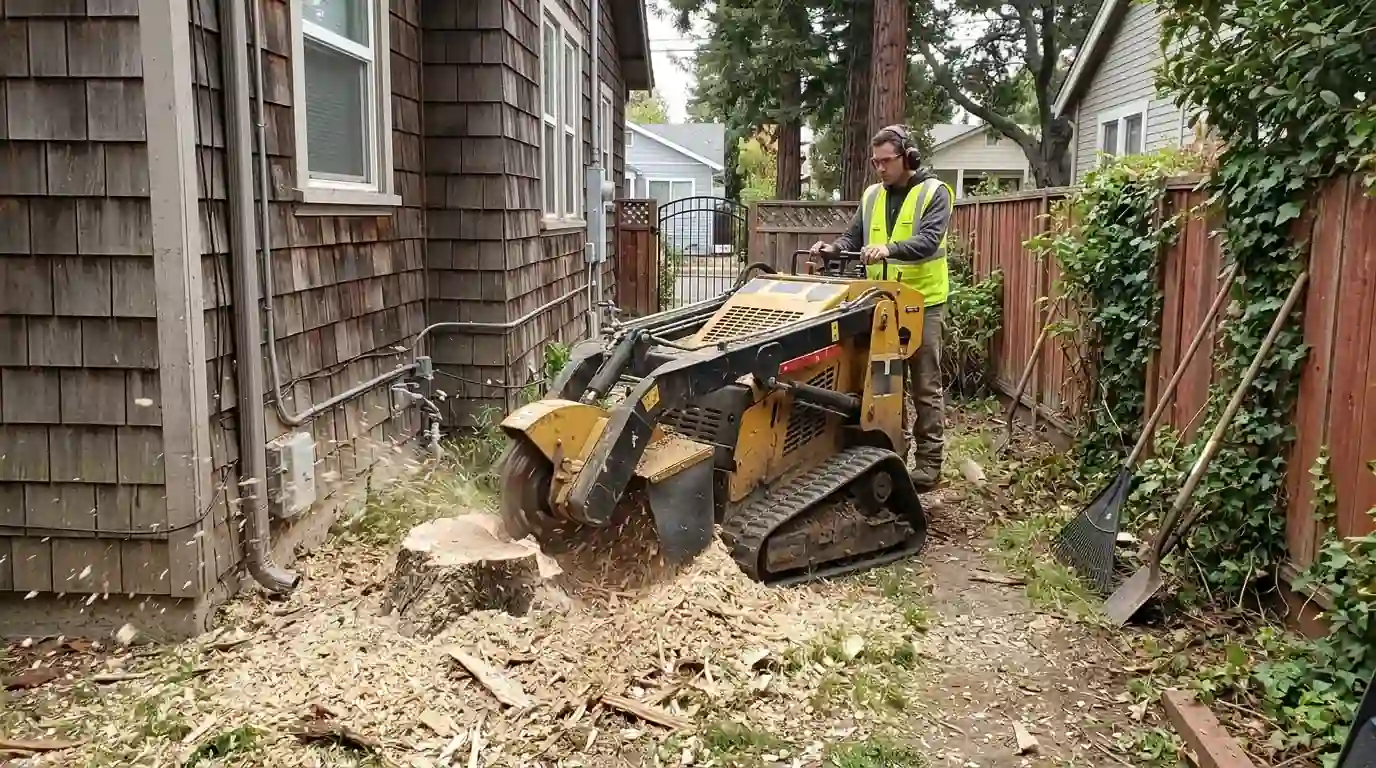
Tree removal in Oakland, CA
A tree that has died back, outgrown its spot or started crowding the house is a common problem on Oakland lots. We take it down in pieces, clear the wood and leave the yard clean.
Quick answer
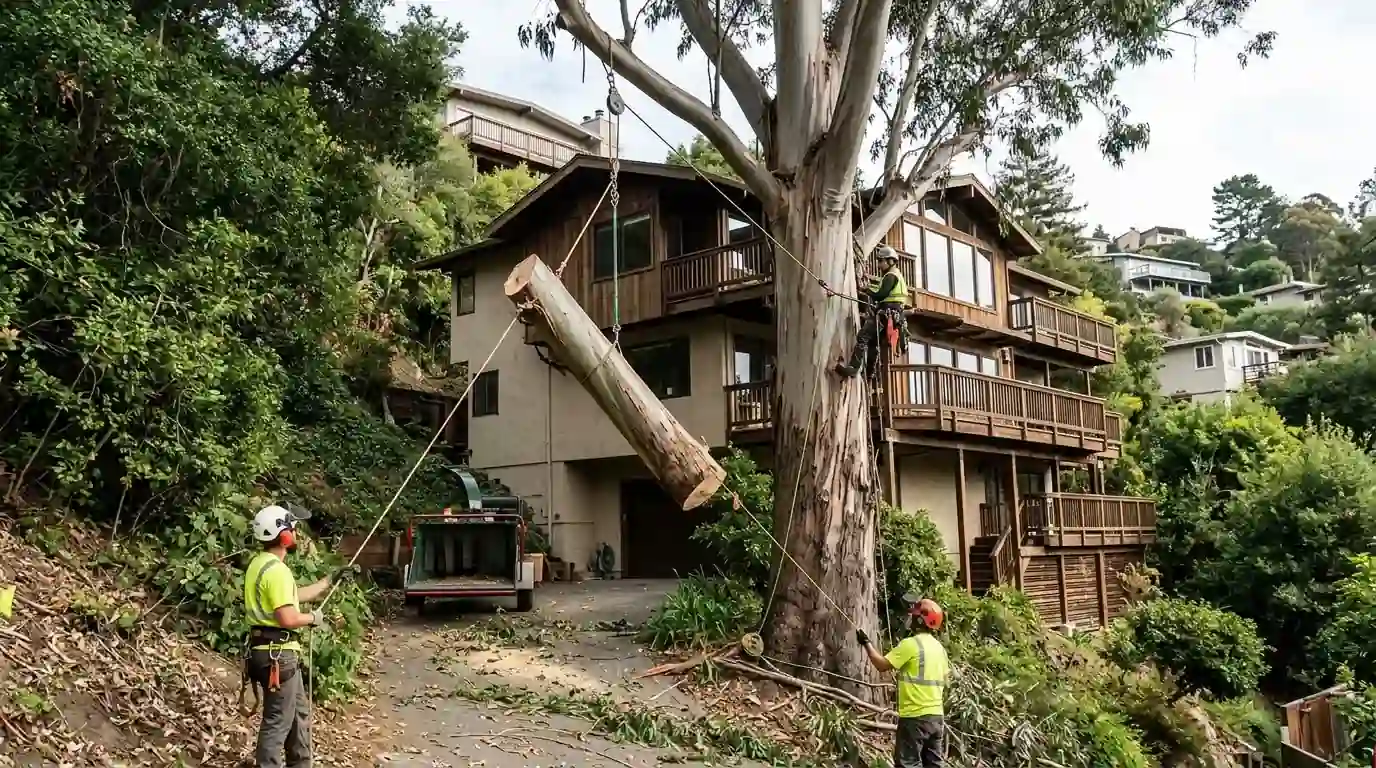
Tree removal means cutting a tree down in controlled sections, lowering the wood and hauling it away. You need it when a tree is dead, failing, diseased past saving, or standing where a house or project has to go. In Oakland, we first measure the trunk to see if a permit applies, then climb and rig the tree down piece by piece and clean up.
What tree removal involves in Oakland
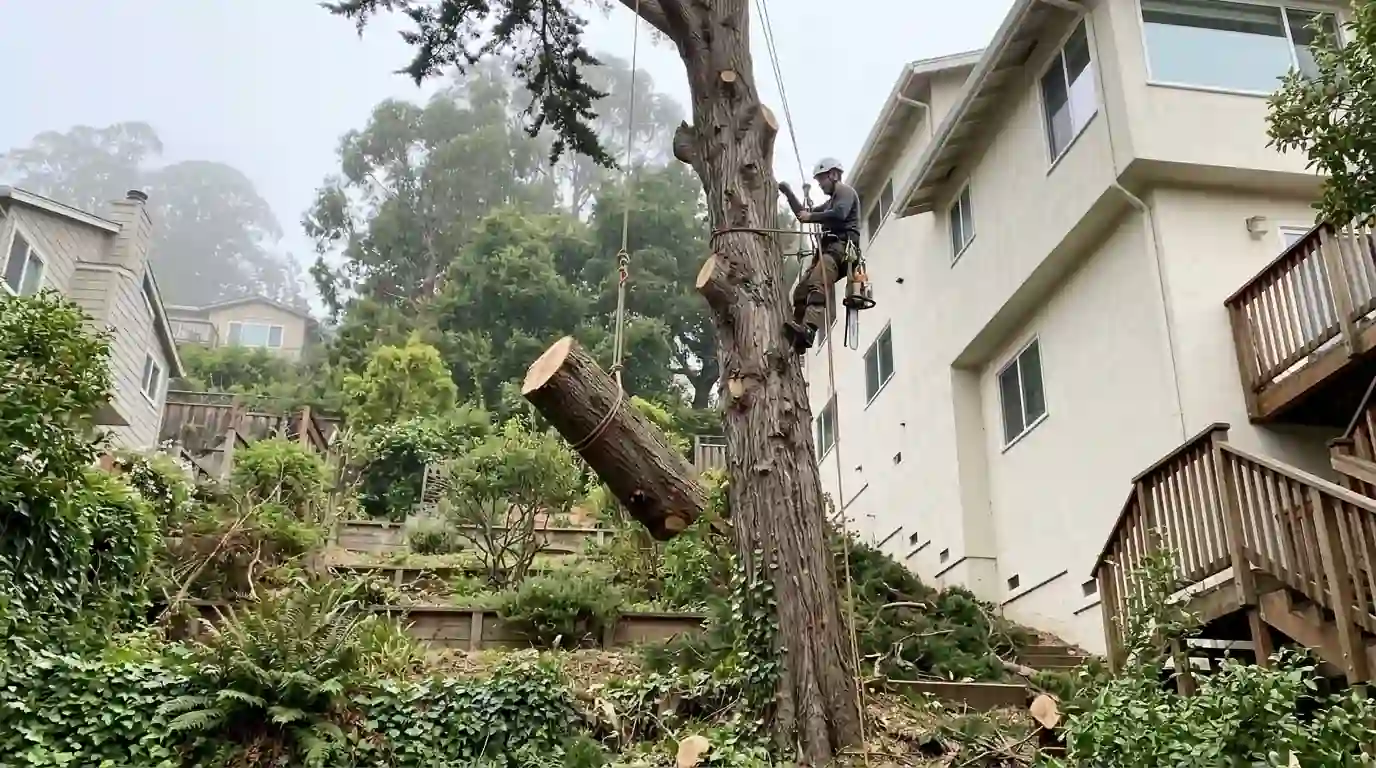
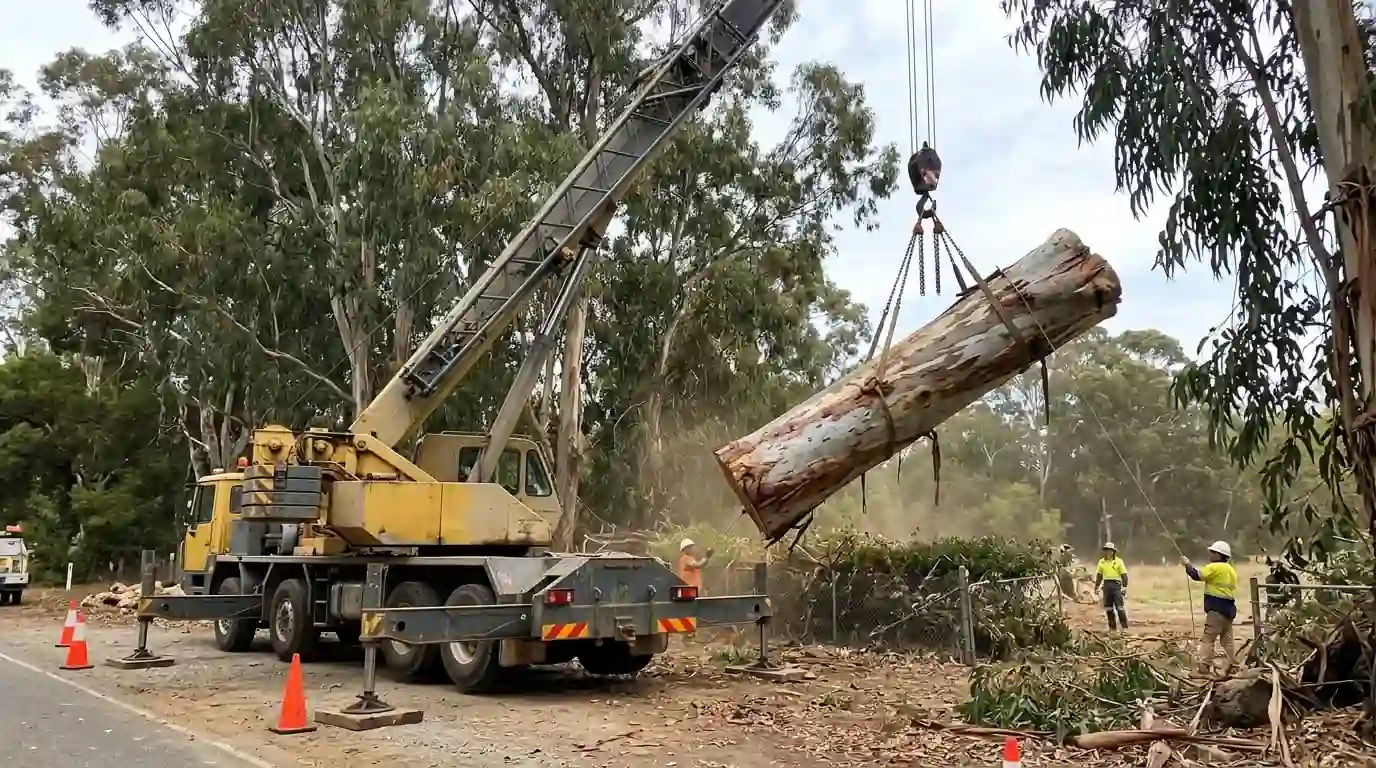
Very few Oakland removals are a straight fell. Yards are small, houses sit close together, and there is a fence, a garage or a neighbor's roof in nearly every direction. So we take trees apart from the top down. Our climber ties in, cuts limbs into pieces small enough to control, and lowers them on ropes through a block. The ground crew guides each piece to a clear landing spot, then feeds it to the chipper or bucks it into rounds.
The flats and the hills call for different setups. On a level lot in Temescal or near Lake Merritt, we can often roll the chipper up the driveway and land wood close to the street. Above Highway 13, the yard may sit well below the road, so we plan a carry route or a rope line up the slope before anyone cuts. That planning is why two trees of the same size can be very different jobs.
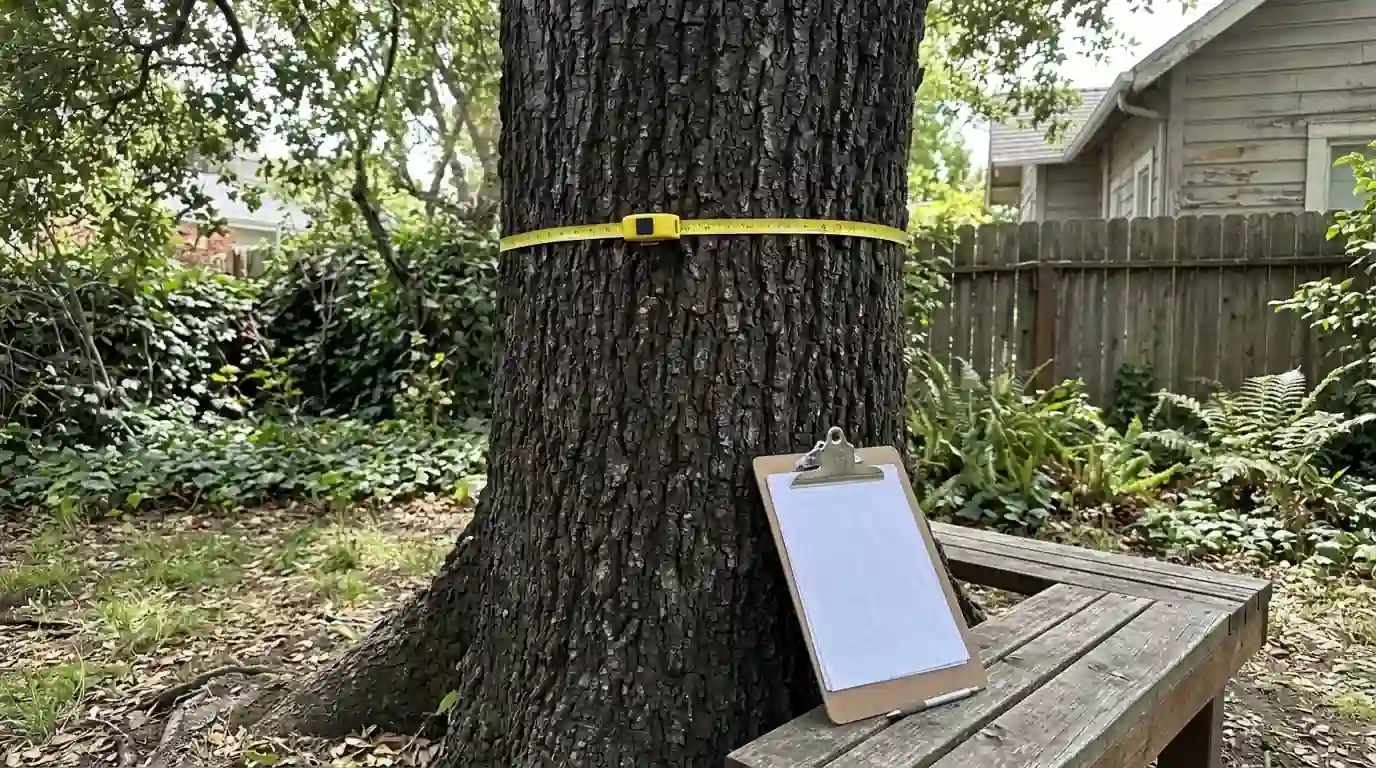
Removal is also a permit question here. Coast live oaks are protected at 4 inches DBH and most other species at 9 inches, measured 4.5 feet above the ground. Eucalyptus and Monterey pine sit outside the protected list, though a Monterey pine still needs posting and written notice to Parks and Recreation. We measure before we quote, and if the city needs an application we can help with the permit paperwork. Once the tree is down, you can have us grind the stump or leave it for later.
When does a tree in Oakland need to come down?
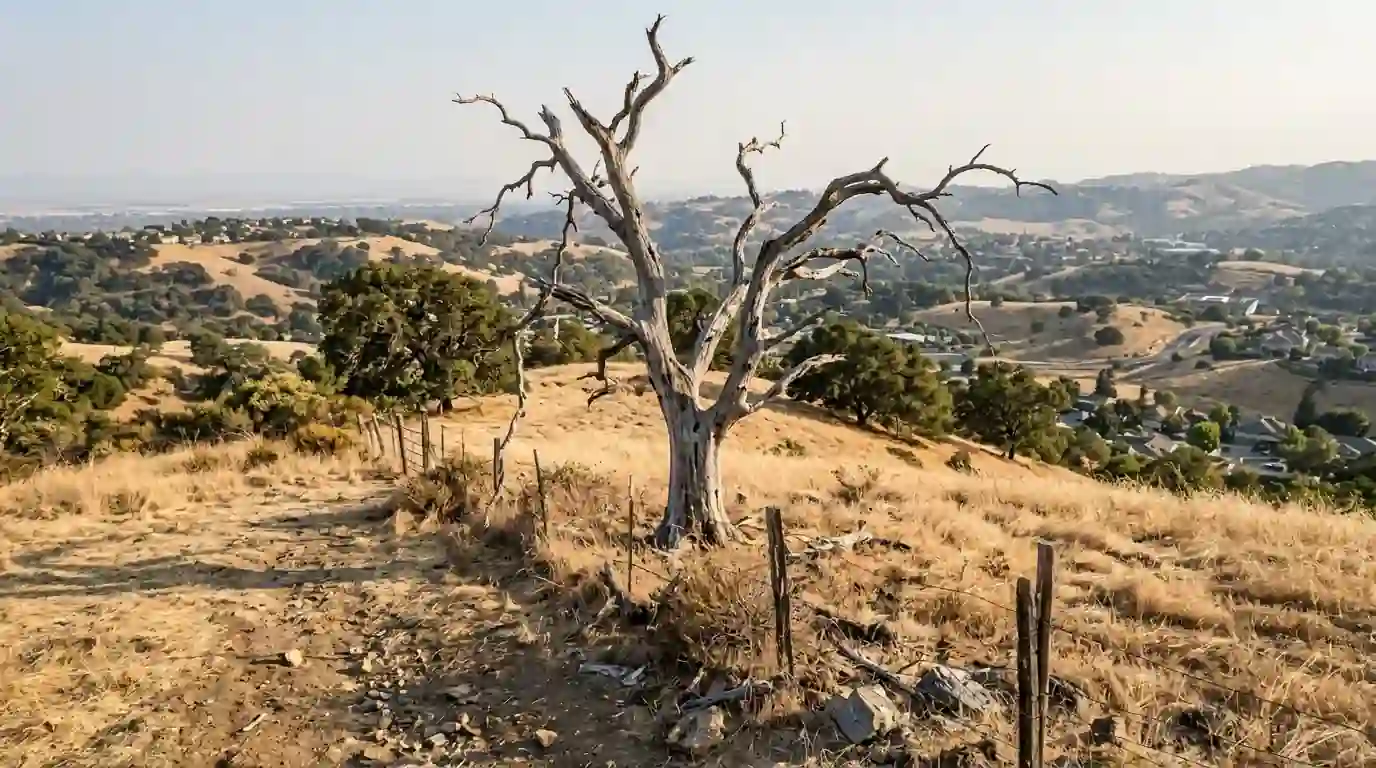
- The trunk or main limbs are deadBare, brittle limbs that snap instead of bend mean the wood is drying out and losing strength every season.
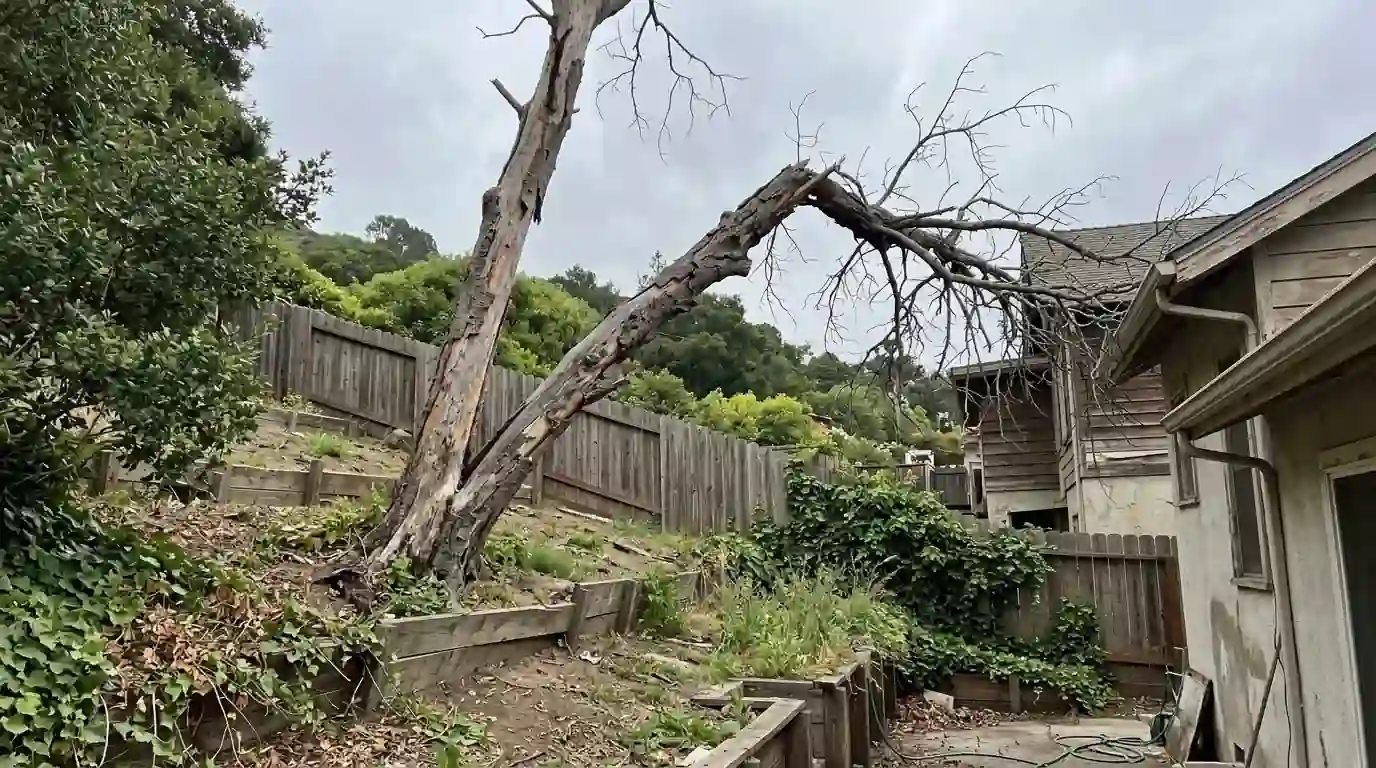
- It is pressing on the houseRoots lifting a foundation, limbs scraping the roof or a trunk crowding a wall rarely improve with pruning alone.
- Decay has reached the baseMushrooms at the root flare, crumbly wood or a hollow sound when tapped point to rot right where the tree carries its weight.
- A new lean has appearedAn old, steady lean is often fine. A lean that showed up after a storm, with cracked soil on the far side, is a different story.
- The species never fit the lotSome trees were planted beside the house decades ago and simply outgrew the space, like a blue gum next to a bungalow.
- A remodel needs the groundWhen a foundation, driveway or backyard cottage has to go where the tree stands, removal is often the only practical answer.
What decides the cost of taking a tree down?
Every job is priced after we see the tree. These are the things that move the number.
- Height and trunk sizeTaller trees with thick trunks mean more climbing, more rigging and more wood leaving the property.
- What the tree hangs overA canopy above a roof, a greenhouse or the service drop needs every piece lowered, which is slower than letting limbs fall into open lawn.
- Access to the yardA level driveway lets the chipper sit close by. A backyard reached only by a long stairway means carrying every piece out by hand.
- Permit and notice stepsA protected tree adds the city permit, and a Monterey pine adds posting and notice time before work can start.
- Wood and debris volumeHow much brush and trunk wood leaves the lot, and any firewood you keep back, changes the hauling.
- Stump workGrinding the stump, chasing surface roots or leaving the stump in place each changes the scope of the job.
What happens on removal day, from setup to cleanup
We walk the site and set the drop zone
Before any cutting, we look at the tree, the house, the wires and the landing area. Patio furniture and pots get moved, and anything fixed in place, like a hot tub, gets covered.
Our climber ties in and limbs the tree
The climber anchors in a strong part of the canopy and works outward along each limb. Light branches drop free where the ground is open, and heavier pieces get tied off and lowered.
Big wood comes down on ropes
Trunk sections are cut short and lowered through a rigging block, with a friction device at the base. That lets the ground crew control both speed and direction.
Brush is chipped and the trunk bucked into rounds
Branches feed through the chipper on the street or driveway. Trunk wood is cut into rounds, and we haul it or stack some for firewood if you ask.
The stump is cut low
We cut the stump close to grade so it can be ground the same day or later. If you'd rather keep it for now, we leave it flat and safe to walk past.
We rake, blow and walk the yard with you
Sawdust gets raked, the roof and gutters get blown off where needed, and we walk the yard together before we pack up.
Oakland permits, fire rules and hillside access we plan around
Oakland's protected tree chapter counts every trunk on a multi-stem tree, so a clump of three slender trunks can add up past the 9 inch line. We measure each one at 4.5 feet and add them together. If a protected native comes down, the city can require replacement trees such as coast live oak, coast redwood or madrone at 24-inch box size, while nonnative species carry no replacement. We explain all of that before the first cut so nothing stalls halfway through.
Inside the Oakland Wildfire District, removal often ties into the yearly fire inspection. A tree in Zone 1, 5 to 30 feet from the house, needs limbs at least 6 feet off the ground and 10 feet from the chimney, and sometimes taking it out beats pruning it every year. We also look up before we start. The primary lines on the pole are PG&E's to keep clear, but the service drop to your house is the owner's concern, so we line up a temporary disconnect when a tree has grown through it.
Work that often goes with tree removal
Where we handle tree removal
From the office on Martin Luther King Jr Way in Temescal and the Walnut Creek office on Bonanza Street, we cover Oakland and the East Bay. The biggest communities we serve, with a main ZIP code for each:
Tree removal questions we hear in Oakland
Can I cut down a tree on my Oakland property without a permit?
It depends on the species and trunk size. Coast live oaks need a permit at 4 inches DBH and most other trees at 9 inches, measured 4.5 feet up. Eucalyptus and Monterey pine aren't on the protected list, though Monterey pine still needs posting and written notice to Parks and Recreation. We measure first and tell you which case applies.
Do you take the wood away after a removal?
Yes, unless you want to keep some. Brush goes through the chipper, and trunk wood is cut into rounds and hauled off. Plenty of Oakland homeowners keep a few rounds of fruitwood or oak for a fire pit, and we stack them wherever you point, away from the house.
How do you remove a tree that stands right against the house?
We take it down from the top in small, tied pieces and lower each one on a rope so nothing swings into the wall. When the trunk leans over the roof, we cut shorter sections and may rig from a second anchor point to steer each piece away from the eaves.
What happens to the roots once the tree is gone?
They stay in the ground and slowly break down unless you want them dug out. Most people have the stump ground below grade, which takes out the main mass and leaves chips to fill the hole. Surface roots under a lawn can be ground along their length as well.
Can a tree on the property line come down without my neighbor agreeing?
No. Under California law, a tree whose trunk stands partly on both lots belongs to both owners, and harming someone else's tree can bring double or triple damages. We ask for both owners to agree before we cut a shared trunk.
Saws, chippers, grinders and climbing gear from names like Stihl, Husqvarna and Vermeer
StihlHusqvarnaVermeerBanditMorbarkRaycoAltecPetzlSilkySherrillTeufelbergerNotchEchoToro
Need tree removal in Oakland or the East Bay?
Call and tell us what the tree is doing. Someone picks up any hour, and we can usually talk you through the next step on that first call.