Stump Grinding
Removed trees in small Dublin yards leave stumps that block replanting and patios, so grinding is one of our most frequent jobs here.
DetailsDublin is one of the newer cities in the Tri-Valley, with fast-growing subdivisions and young street trees, plus older neighborhoods closer to the freeway interchange. We trim, remove and grind stumps across both.
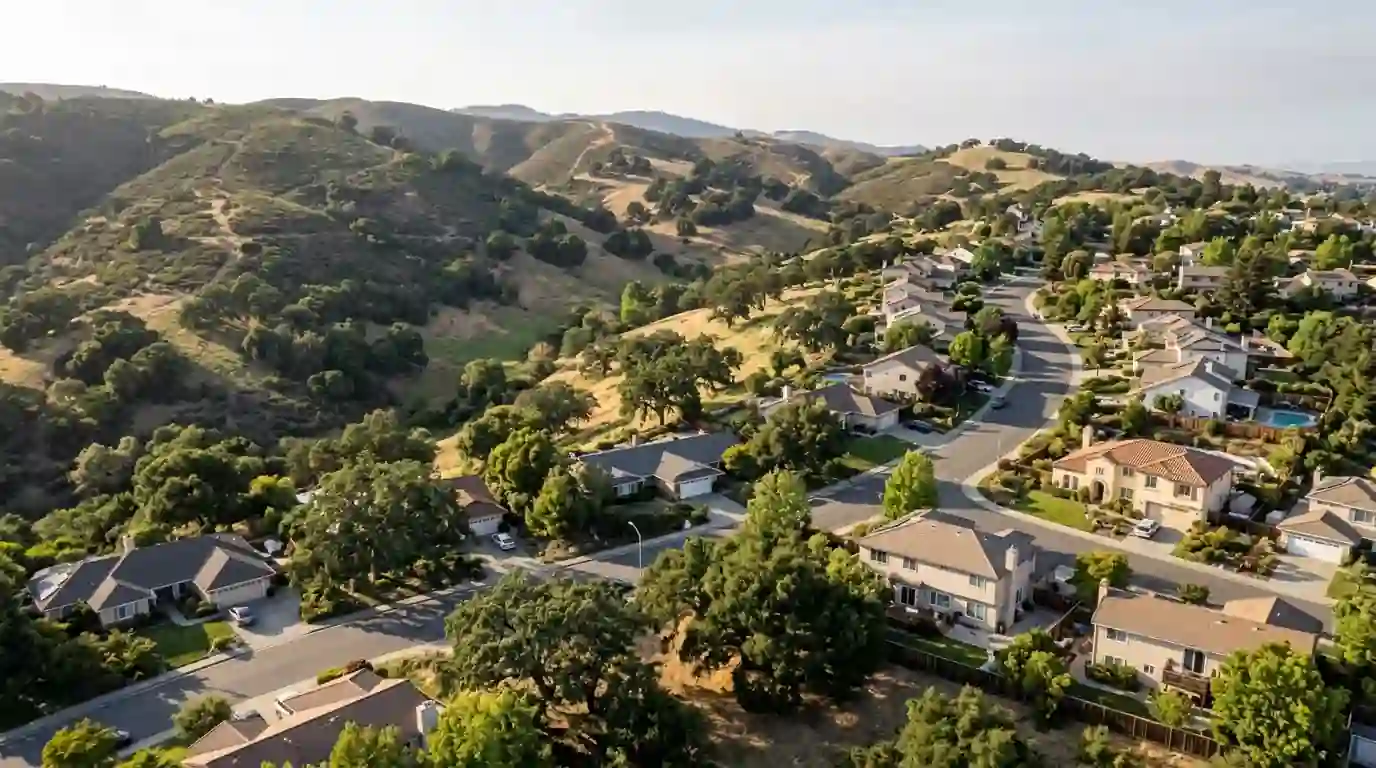
Dublin work is mostly about growth: young trees in newer neighborhoods that need structural pruning, mature trees in the older part of town that need trimming and removal, and stumps left behind when trees outgrow small yards. Tri-Valley summers are hot and dry, the soil is clay, and HOA rules apply in many tracts. Dublin also has city tree rules, which we check first.
Dublin sits at the crossroads of I-580 and I-680, and its tree cover reflects how fast it grew. The older neighborhoods near Amador Valley Boulevard and Dublin Boulevard date to the 1960s and 1970s, with mature ash, pine, liquidambar, ornamental pear and the occasional fruit tree. Those trees are reaching the size where they crowd houses and lift paving.
East Dublin and Dublin Ranch are far newer. Neighborhoods there have small lots, young street trees, planted medians and HOA-managed landscaping. Many of those trees are still young, which makes this the right time for structural pruning. The western hills above town are mostly open grassland with scattered oaks, and homes on that edge face dry summer fuel.
Tri-Valley heat is the defining factor. Summer days here regularly run well above the bayside, and wind through the valley dries soil and leaves. Heavy clay holds water in winter and bakes hard in summer, which limits root growth and makes young trees especially sensitive to irrigation mistakes. Trees planted in narrow strips struggle the most.
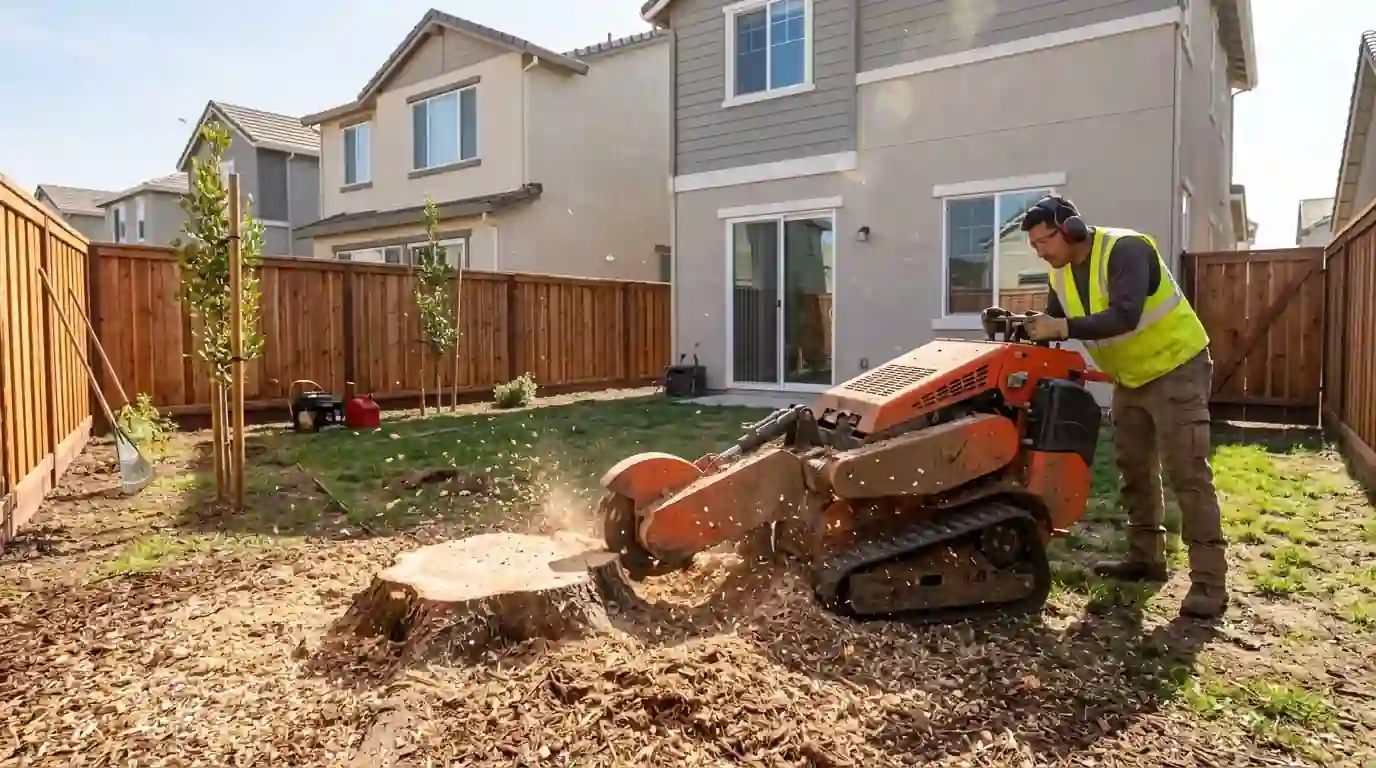
Removed trees in small Dublin yards leave stumps that block replanting and patios, so grinding is one of our most frequent jobs here.
DetailsNewer neighborhoods are full of young trees that need structural cuts now to avoid weak forks later.
DetailsMature trees in the older neighborhoods need regular clearance from roofs, driveways and the sidewalk.
DetailsPines and other planted trees in older yards that have outgrown the space or declined in the heat need to come down carefully.
DetailsTrees in narrow planting strips lift sidewalks and driveways, and careful root work can sometimes save the tree.
DetailsDublin has its own tree rules, and we look at them before any removal or heavy pruning. Which trees need city sign-off depends on those rules, so we confirm what applies to yours before work starts. If approval is needed, our permit service prepares the measurements and photos the city asks for.
Many Dublin neighborhoods have HOA landscape guidelines covering street trees, front yards and common areas. Some associations care for street trees themselves, while others leave it to owners with approval. Check your association's rules before scheduling a removal or replacement. We can supply photos and a short description of the tree to back up an HOA request.
Newer Dublin lots are small, with narrow side yards and houses set close together. We carry gear through side gates, rope every piece down and keep the chipper on the street. Compact stump grinders fit through standard gates, and we protect fences, walls and irrigation while grinding. HOA parking rules and street sweeping days can affect where the truck goes, so we check ahead.
In older Dublin, yards are roomier but the trees are bigger, so we plan rigging around roofs and fences. On the hillside edge, dry grass and steep yards make spring the time for fire clearing. For nearby work, see Pleasanton across the freeway to the south and San Ramon to the north.
ZIP codes for Dublin: 94568.
Usually right away, once the chips are cleared and fresh soil goes in. Grinding leaves a hole full of wood chips that settle and tie up nitrogen as they break down. Removing most of them and backfilling with native soil gives the new tree a better start. Shifting the planting spot a few feet also helps.
It depends on your neighborhood. Some HOAs maintain street trees, and in other areas the owner or the city handles them. Check your association's rules first, then ask the city. We can trim a street tree once responsibility is clear and any needed approval is in hand, which avoids a dispute later.
Common causes are poor irrigation, compacted clay, a narrow planting strip and heat stress. Too much water can be as harmful as too little in clay soils. Check that stake ties aren't girdling the trunk and that mulch isn't piled against the bark. We can look at the tree and suggest specific fixes.
Sometimes. Small to medium roots can often be cut cleanly without major harm, especially on a vigorous tree. Large structural roots near the trunk are riskier and can destabilize it. We look at the root's size, its distance from the trunk and the tree's condition before deciding whether to cut, bridge or leave it.
Call any hour. Tell us the street, the tree and what changed, and we will plan the visit around your access.