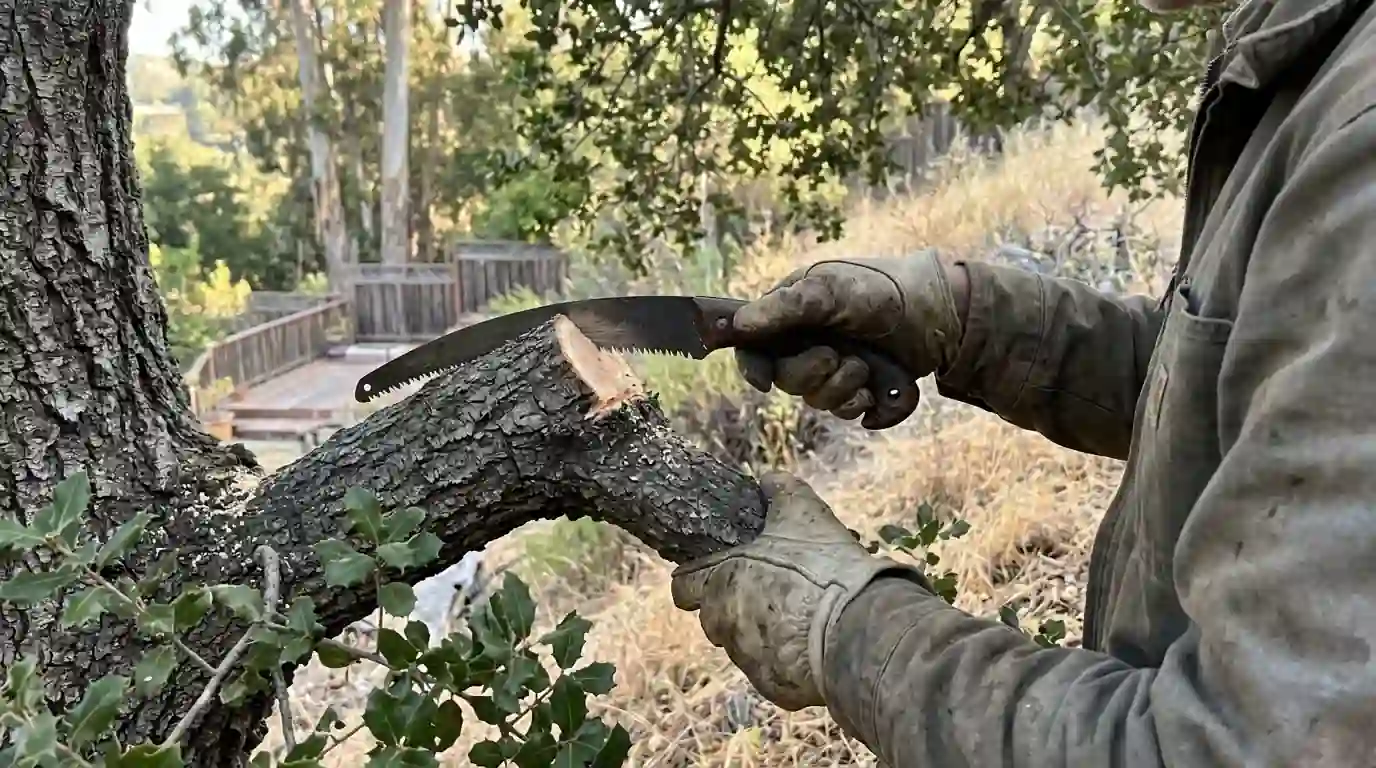
Oak tree removal in Oakland, CA
Coast live oaks are protected in Oakland at just 4 inches across. We help you decide whether an oak really has to go, handle the permit side and plan the replacement trees.
Quick answer
Oak tree removal is taking down a coast live oak or valley oak that is dead, diseased or unsafe, usually after a city permit. You need it when the tree has failed structurally, has sudden oak death or blocks necessary construction. We measure the trunk, look at alternatives like pruning or cabling first, then remove it in sections and plan replacement planting.
What oak tree removal involves in Oakland
Oaks hold a special place in Oakland, and the city's rules show it. A coast live oak is protected at 4 inches DBH, about the thickness of a small post. That means even a young volunteer oak in a side yard can need a permit before removal. The city also counts topping, girdling and regrading around a protected tree as a form of removal, so careless trenching near an oak can create a permit problem without any saw involved.
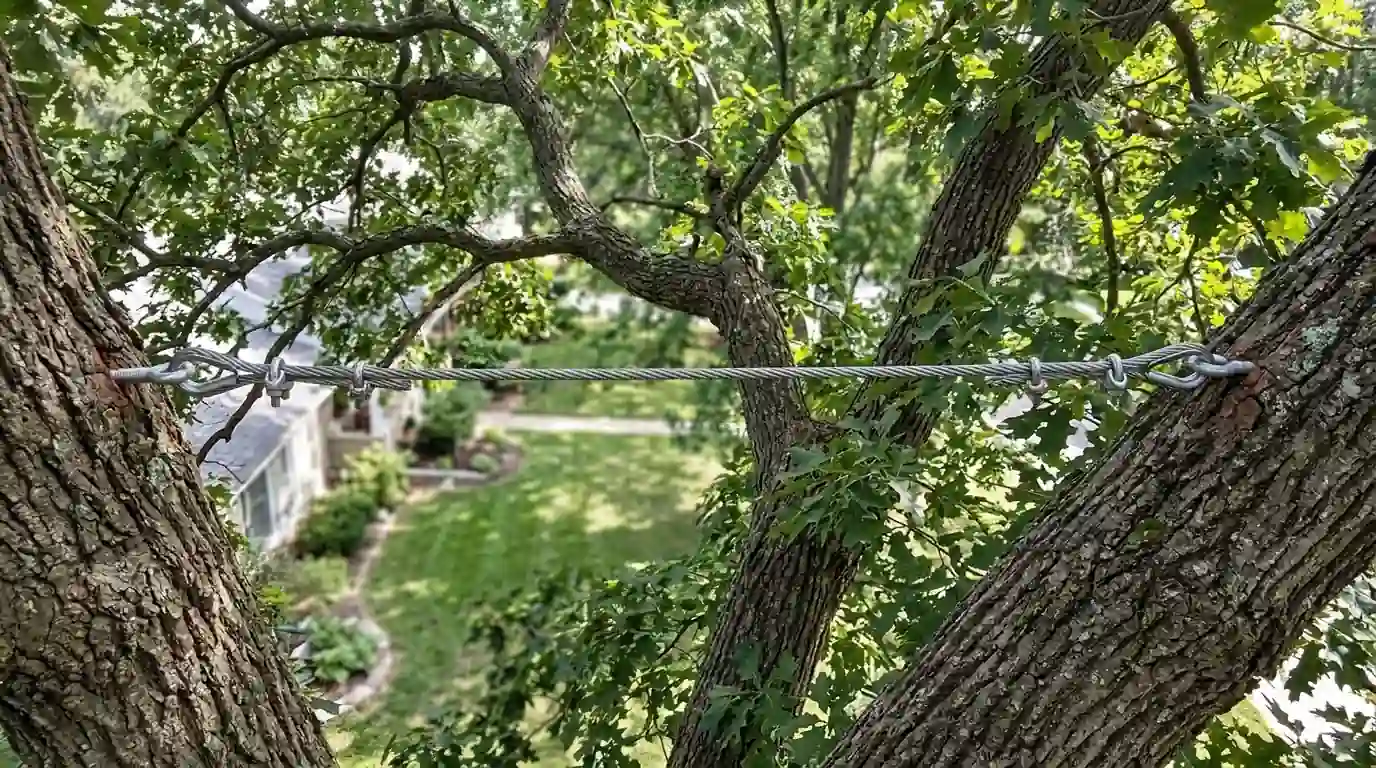
That's why we treat oak removal as a last option, not a first one. A coast live oak with a heavy limb over the roof can often be pruned in summer to reduce the load. Two weak stems can be cabled together. A crowded canopy can be thinned to let wind pass through. Our oak pruning keeps many trees safely in place that owners first assumed had to go.
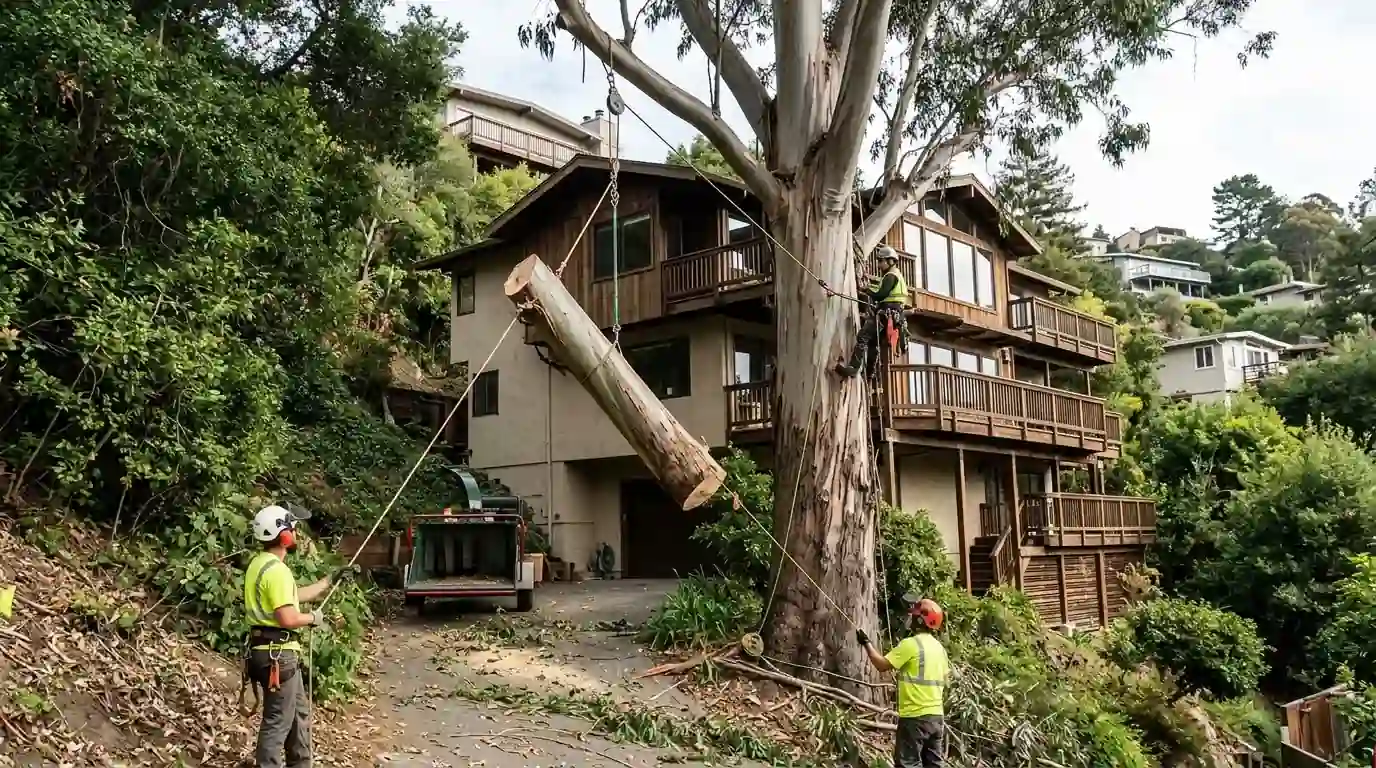
Some oaks do need to come down. Sudden oak death kills coast live oaks across Alameda and Contra Costa counties, leaving them brittle within a few seasons. Root rot, old wounds and storm splits take others. When removal is right, we document the reason clearly so the permit goes smoothly. We then take the tree down carefully, since oak wood is dense and heavy and the canopy often spreads wide over roofs and fences.
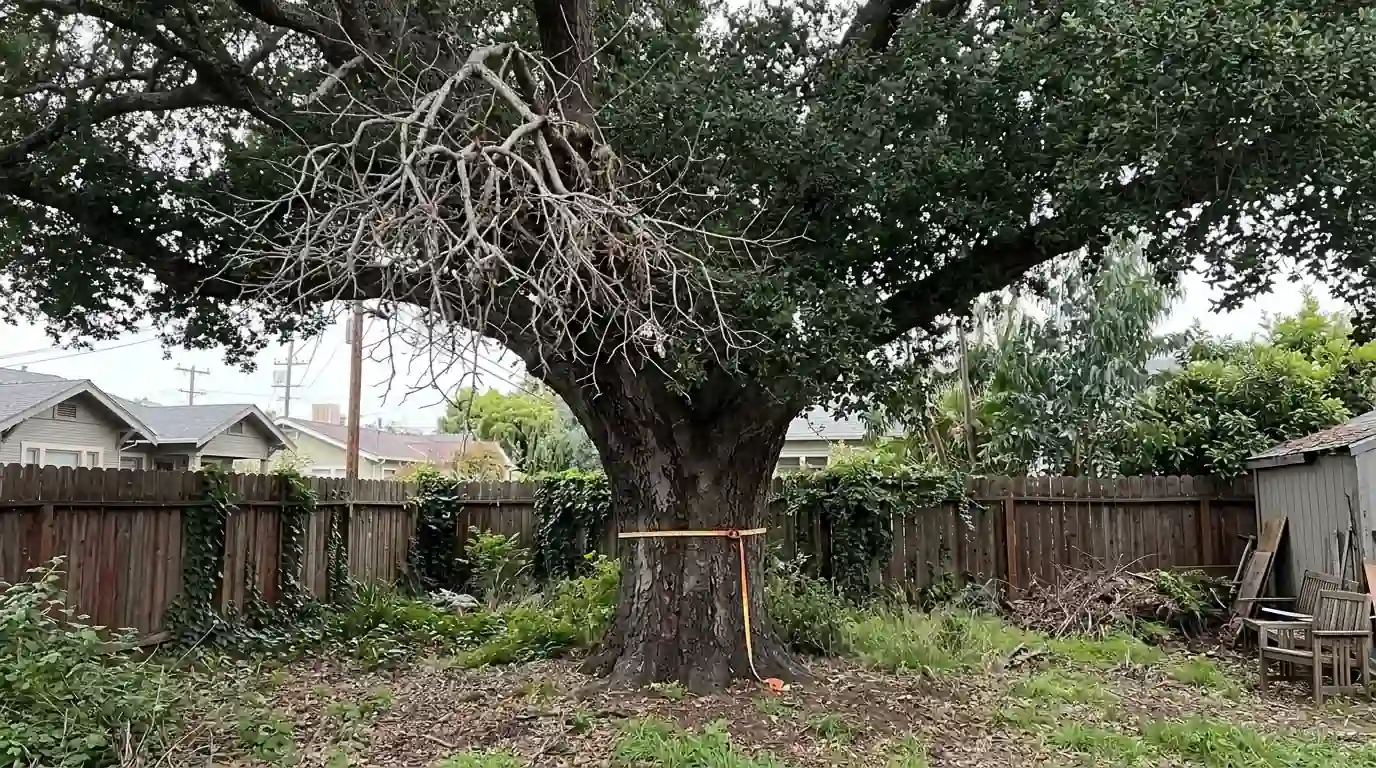
When is removing an oak the right decision?
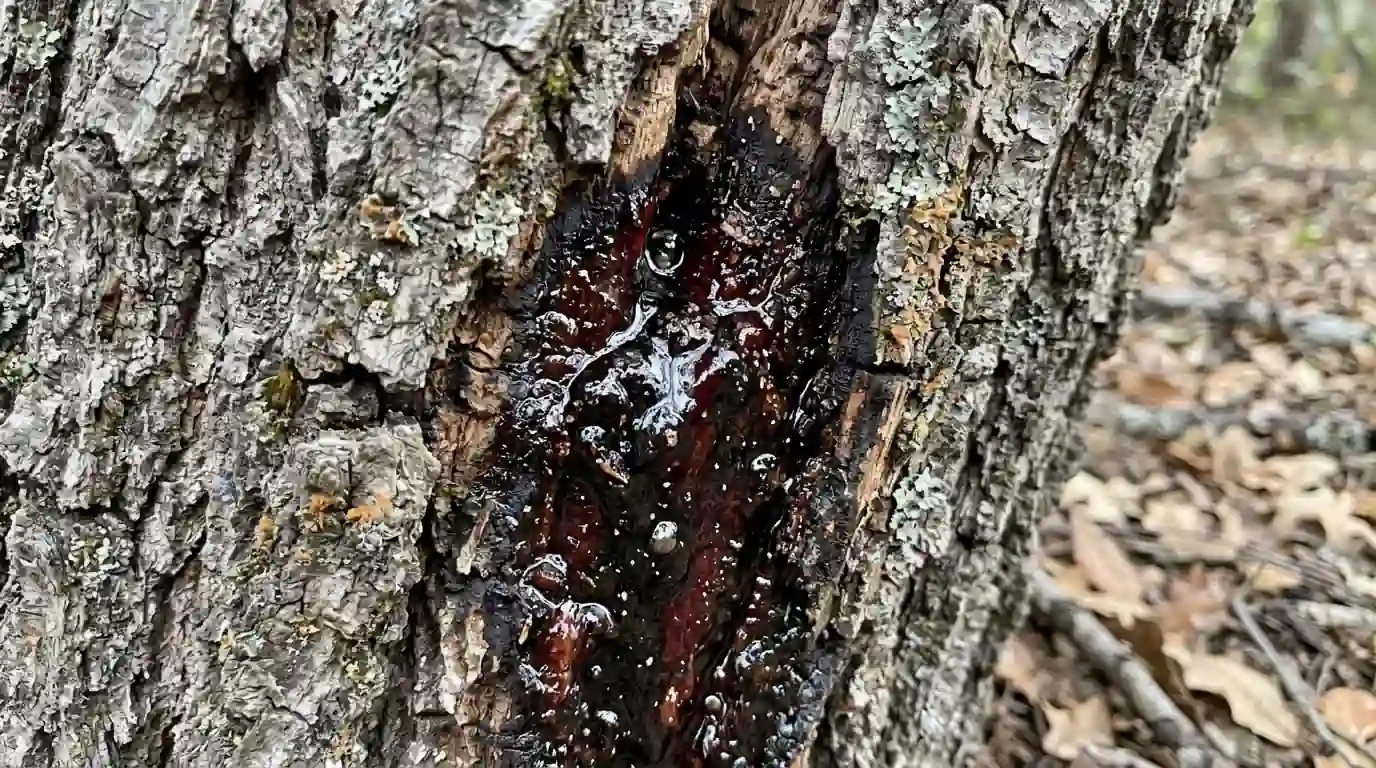
- Bleeding cankers on the lower trunkDark reddish sap oozing from the bark is the classic sign of sudden oak death, which kills coast live oaks.
- Large sections of the canopy have diedWhen the leaves turn brown across big parts of the crown and don't come back, the tree is usually in serious decline.
- Decay at the root collarSoft wood, fungus or cavities at the base of an oak affect the part that holds the whole tree up.
- A storm split through the main trunkA crack running through the trunk itself, rather than a single limb, often can't be repaired safely.
- No design option saves itWhen a needed foundation or retaining wall truly can't avoid the root zone, removal with a permit may be the only route.
What shapes the cost of an oak removal?
Every job is priced after we see the tree. These are the things that move the number.
- Canopy spread over structuresWide oak limbs over roofs need more rigging than an upright tree of the same height.
- Wood densityOak is dense and heavy, which slows rigging and means more weight to haul away.
- Permit preparationDocumenting the reason for removal and filing the application adds a step before cutting.
- Disease handlingA tree with sudden oak death needs its wood handled carefully, and we keep it on site or haul it according to local guidance.
- Replacement plantingIf the city requires replacement trees, planting them adds to the overall project.
How an oak removal moves from measuring tape to replanting
We measure and identify the tree
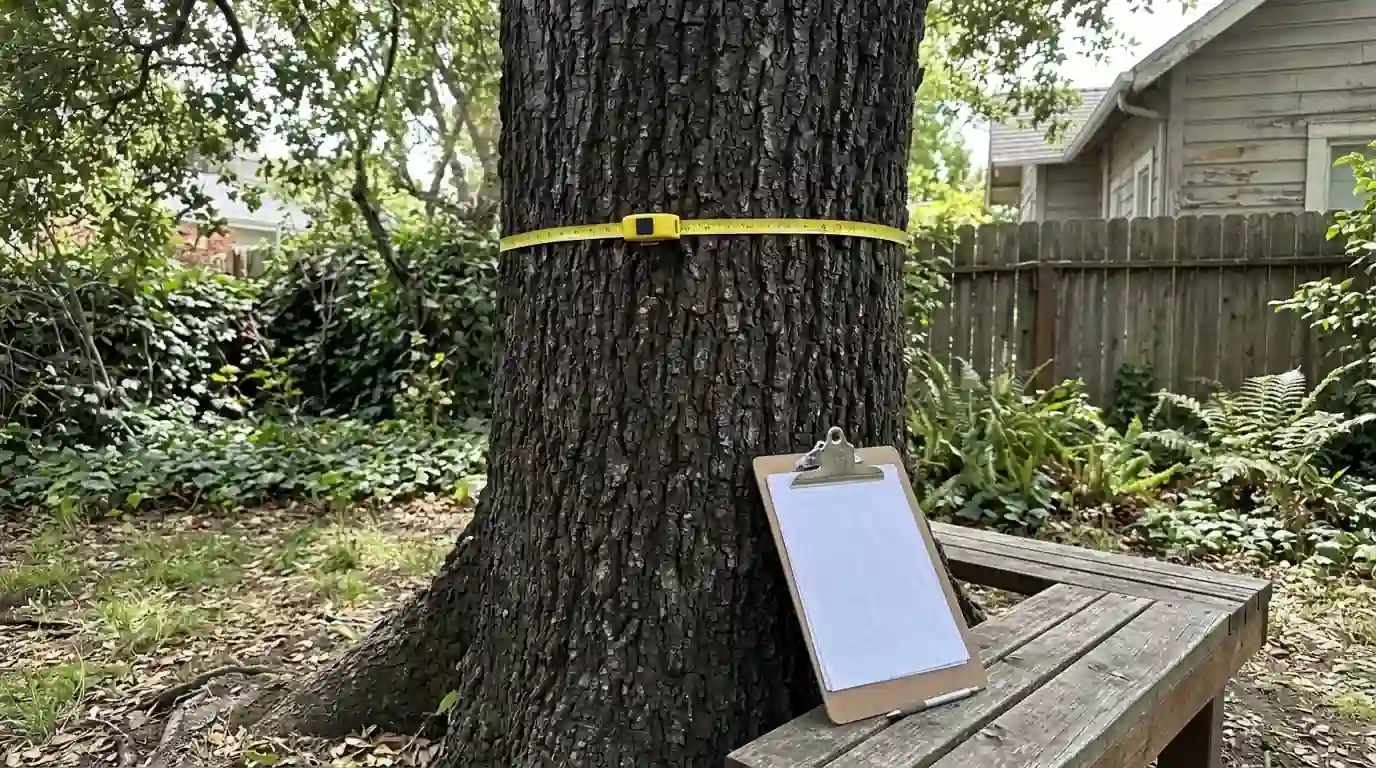
We confirm the species and measure the trunk 4.5 feet above the ground, adding all trunks together on a multi-stem tree.
We document the reason for removal
Photos and notes describe the decay, disease or structural failure, which supports the permit application.
The permit is filed and approved
Removal of a protected oak waits for the city's permit, unless the tree is an immediate threat and the emergency process applies.
Our climber takes the canopy down in sections
Oak limbs are heavy and spread wide, so pieces are tied off and lowered carefully past roofs, fences and garden beds.
We grind the stump and plan the replacement
The stump is ground to make room for planting, and we go over which replacement trees the city may require and where they could go.
Oakland's oak permit, replacement trees and neighboring cities
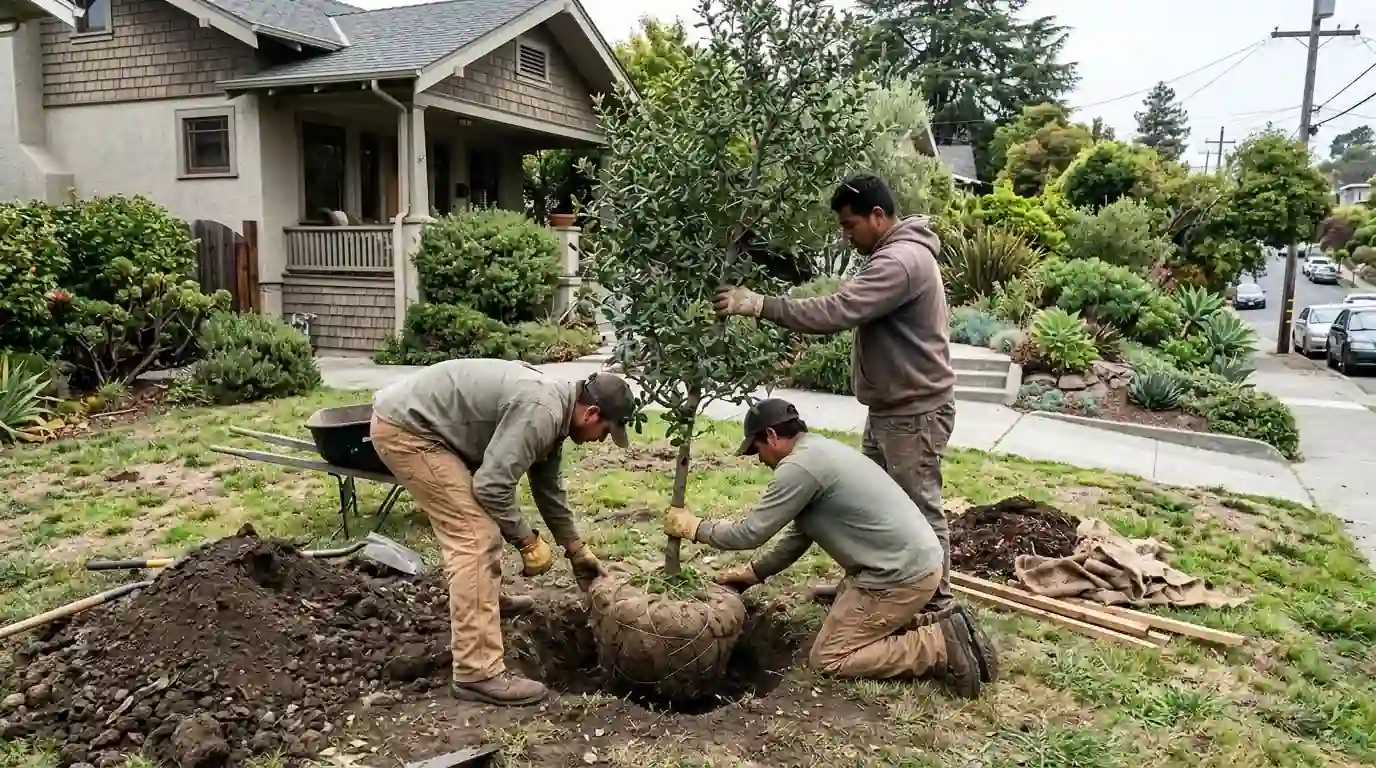
In Oakland, a coast live oak at 4 inches DBH or more on any property is protected, and removal needs a permit. Other oaks fall under the general 9 inch rule. When a protected native comes out, the city can require replacement trees, and the code names coast live oak, coast redwood, madrone, California buckeye and California bay laurel at 24-inch box size. We help you pick spots on the lot where a replacement will thrive and not crowd the house.
Nearby cities set their own oak rules. In Berkeley, coast live oaks with an 18 inch circumference on a single stem, or 26 inches combined on a multi-stem tree, measured 4 feet up, are covered, and removal needs an exception request. Walnut Creek requires a permit for any tree at 9 inches diameter, and neighbors within 300 feet are notified. For other East Bay towns, we check the local rules before any oak work begins.
Can the oak be kept instead of removed?
Before recommending removal, we look at the specific problem. A single dead or cracked limb is a pruning job. A heavy lateral limb over a house can be shortened back to a smaller branch. A V-shaped fork with a crack can sometimes be held with a cable and brace system. A thin, struggling canopy may be suffering from compacted soil or summer irrigation near the trunk, which oaks dislike.
If the problem is a construction plan, there are often other paths too. Moving a footing, bridging roots instead of cutting them, or setting up protective fencing around the root zone can let a project and an oak share a lot. When none of that works, we say so and move on to the permit and the removal plan.
Work that often goes with oak tree removal
Where we handle oak tree removal
From the office on Martin Luther King Jr Way in Temescal and the Walnut Creek office on Bonanza Street, we cover Oakland and the East Bay. The biggest communities we serve, with a main ZIP code for each:
Oak tree removal questions we hear in Oakland
How small does an oak have to be before Oakland stops protecting it?
Very small. A coast live oak is protected at 4 inches DBH, measured 4.5 feet above the ground, which is about the size of a fence post. Below that, no permit is needed. On a multi-stem oak, all trunk diameters are added together, so several thin stems can still reach the threshold.
Does Oakland require me to plant new trees after removing an oak?
It can. When a protected native tree is removed, the city may require replacement trees, and its code lists coast live oak, coast redwood, madrone, California buckeye and California bay laurel at 24-inch box size. We help you choose a good spot and can handle the planting.
Can an oak with sudden oak death be saved?
Usually not once bleeding cankers spread around the lower trunk. Early on, some trees can be helped by removing nearby bay laurels that spread spores and keeping the tree free of other stress. Once an infected oak dies, it becomes brittle quickly, and removal before it fails is the safer step.
Is cutting roots near my oak treated like removing it?
In Oakland, it can be. The protected tree chapter treats regrading around a tree and similar damage as removal, not just cutting it down. Before any digging near a protected oak, we look at where the roots run and how the work can avoid harming them.
Saws, chippers, grinders and climbing gear from names like Stihl, Husqvarna and Vermeer
StihlHusqvarnaVermeerBanditMorbarkRaycoAltecPetzlSilkySherrillTeufelbergerNotchEchoToro
Need oak tree removal in Oakland or the East Bay?
Call and tell us what the tree is doing. Someone picks up any hour, and we can usually talk you through the next step on that first call.