Tree Trimming
Large shade trees in older neighborhoods and around downtown need clearance trimming over roofs, sidewalks and streets.
DetailsPleasanton pairs a historic downtown full of large old trees with newer subdivisions planted in the last few decades. We prune, remove and care for trees in both, under Tri-Valley heat.
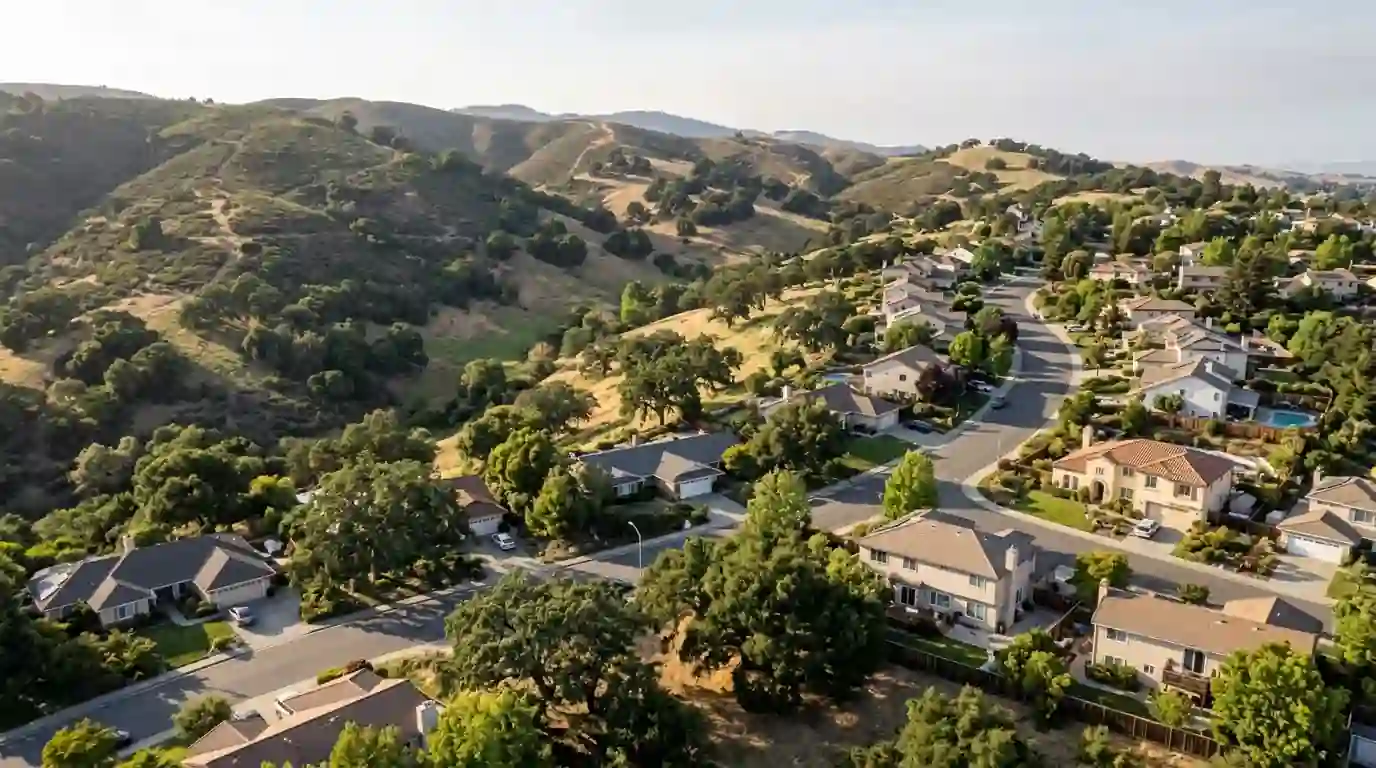
Pleasanton work ranges from mature trees around downtown Main Street and older neighborhoods to young trees in newer subdivisions and oaks on hillside lots near Pleasanton Ridge. Summers are hot and dry, the clay soil is heavy and HOA rules apply in many neighborhoods. The city maintains its own tree rules, so we confirm them before cutting.
Downtown Pleasanton around Main Street has some of the oldest planted trees in the Tri-Valley. Older homes there sit under large sycamores, oaks and other shade trees that have grown for generations. These trees give the streets their character, and they also need the most careful pruning, since big old limbs over sidewalks and roofs leave little room for error.
Outward from the center, neighborhoods built from the 1970s through the 2000s fill the valley floor. Their yards hold maturing ash, liquidambar, pine, ornamental pear and fruit trees, plus young trees in the newest tracts. Gated communities and estate lots on the edges of town have more space and more oaks, especially toward the hills.
Pleasanton Ridge rises along the western edge of the valley, with coast live oaks and valley oaks scattered across grassland. Homes near it back onto dry hills with real fire exposure in summer. Across the whole city, heat and clay soil shape tree health: roots stay shallow, summer stress builds and winter rains saturate the ground. Valley oaks left standing in newer tracts often sit inside lawns or beside patios poured over their roots, and they tend to show that stress a few years after construction ends. A thinning top or dieback on the outer branches is usually the first clue.
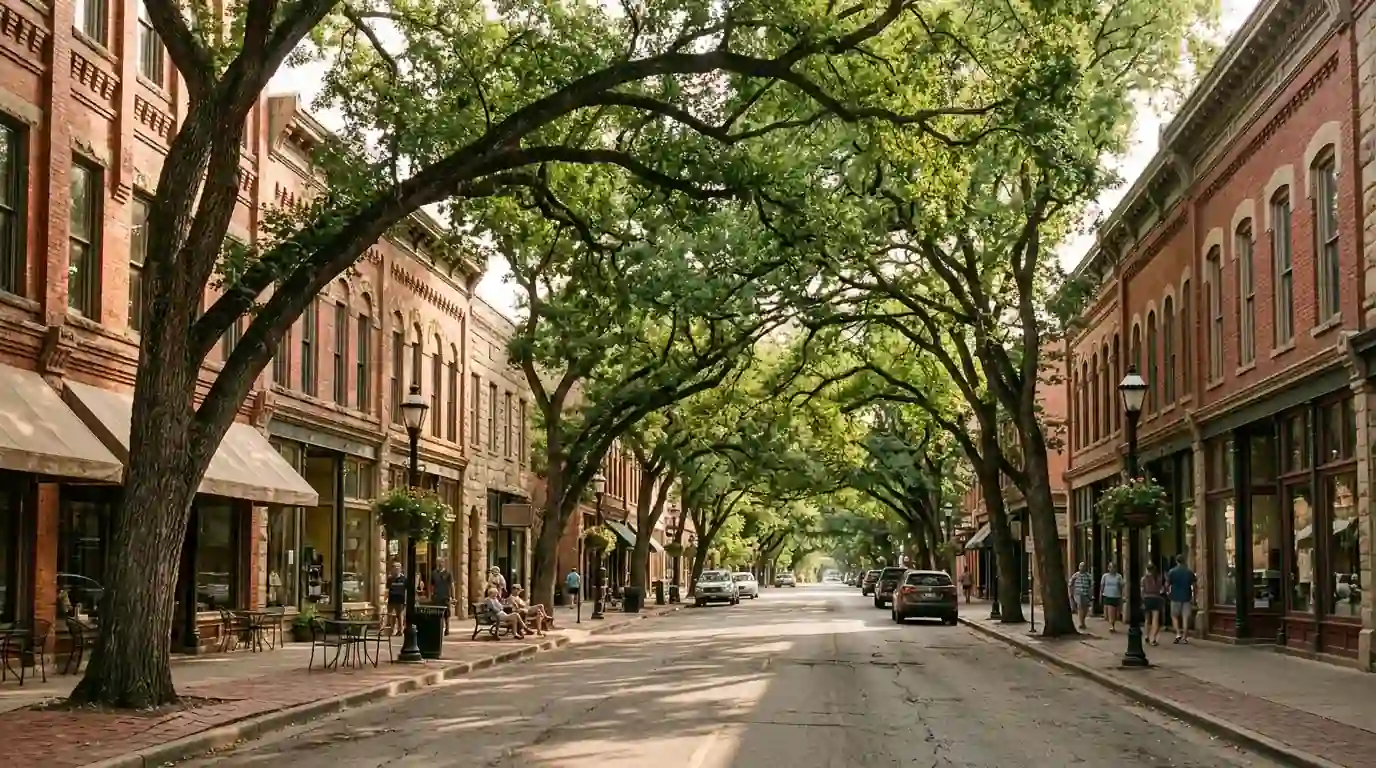
Large shade trees in older neighborhoods and around downtown need clearance trimming over roofs, sidewalks and streets.
DetailsValley oaks and coast live oaks in older yards and hillside lots need light, careful pruning rather than heavy cuts.
DetailsNewer subdivisions have young trees that benefit from structural pruning before weak forks set in.
DetailsDeclining or oversized trees in maturing yards come down in sections near homes and fences.
DetailsOlder trees stressed by heat, clay and construction sometimes benefit from root zone feeding along with better watering.
DetailsPleasanton has its own tree rules, and we check them before any removal or major pruning. With so many large, older trees in established neighborhoods, it's worth confirming what applies before anyone cuts. If approval is needed, our permit assistance helps gather what the city requests.
HOAs govern many Pleasanton neighborhoods, from gated estate communities to newer tracts. Their landscape rules can cover removals, replacements, street trees and common areas, and they sometimes require approval before work. We ask for those rules early. For property-line trees, California law shares ownership when a trunk crosses the line, so we confirm that as well.
Downtown streets near Main Street are busy, with limited parking and people on the sidewalks. We plan those jobs for quieter hours where we can, coordinate parking and set up cones to keep walkways safe. Large old trees there often need careful rigging over roofs and power service drops, and we ask you to call PG&E before we work near a service drop.
Newer subdivisions bring small yards and narrow side gates, so we hand-carry gear and lower pieces by rope. Estate lots and hillside homes near Pleasanton Ridge give us more space but steeper ground and dry grass, which calls for spring fuel clearing. For neighbors just north, see Dublin, and over the hills to the west, Castro Valley.
ZIP codes for Pleasanton: 94566, 94588.
Lightly and on a regular cycle. Old trees don't recover well from heavy cuts, so we focus on deadwood, clearance and reducing weight on long limbs. Big cuts on old wood invite decay that spreads inward. Regular light pruning keeps an old tree safer and healthier than an occasional heavy pruning ever could.
Sometimes, but it isn't a cure. If a soil test or the tree's condition points to a nutrient problem, feeding the root zone can help. More often, better watering, mulching and avoiding soil compaction do more for a stressed tree. We look at the whole picture before recommending fertilization.
Start with the ground nearest the house: short grass, no dead plants and no brush piles. Then raise tree limbs well off the ground and keep branches back from the roof. Requirements come from your local fire authority, so check any notice you've received. We do the cutting, limbing and hauling and can work from that checklist.
We wait for approval before cutting. Starting early can lead to fines or a replanting demand from the association. While the review runs, we can supply photos, the trunk measurement and a description of the tree's condition to support the request, then schedule the work once you have the go-ahead.
Call any hour. Tell us the street, the tree and what changed, and we will plan the visit around your access.