Hillside tree removal in Oakland, CA
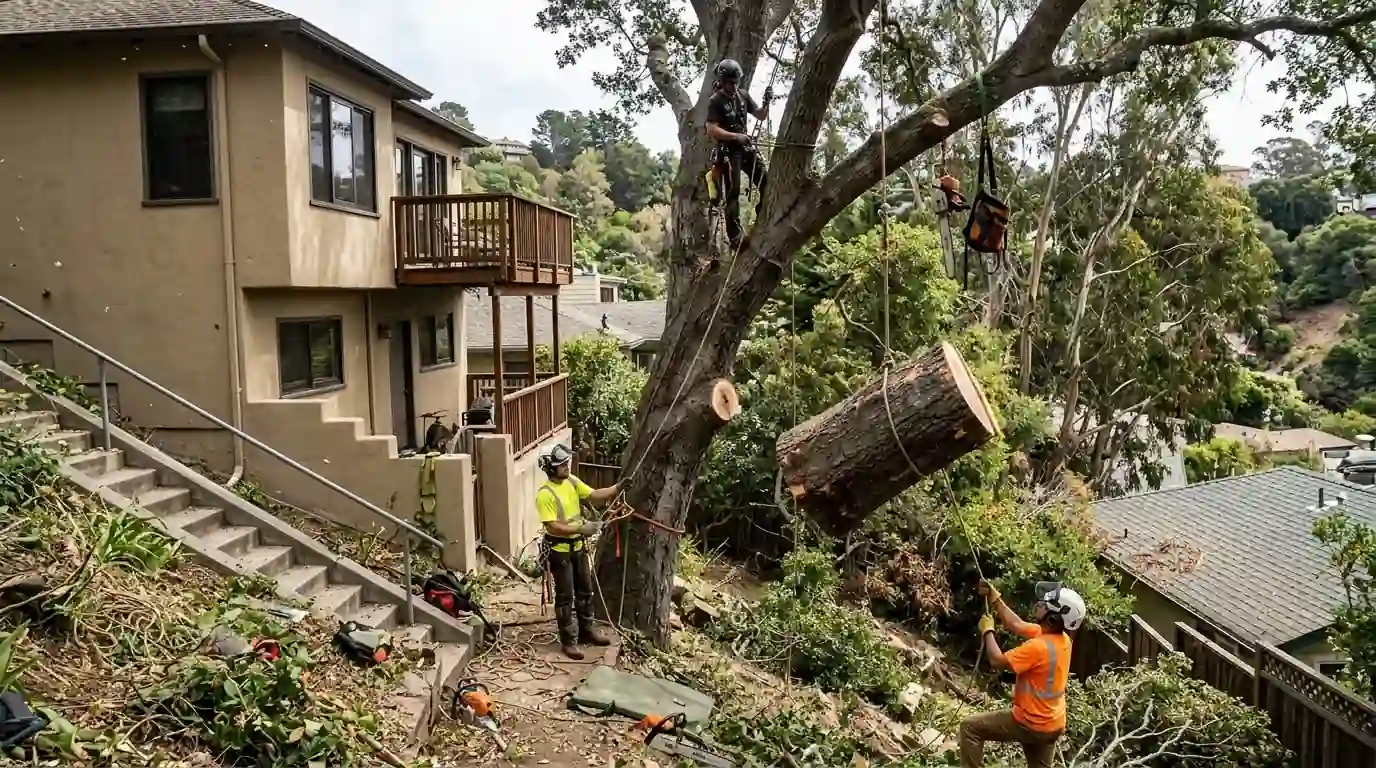
Steep Oakland lots put the tree, the house and the street at three different heights. We take hillside trees down on ropes, speed lines or a crane, and we leave the slope as steady as we found it.
Quick answer
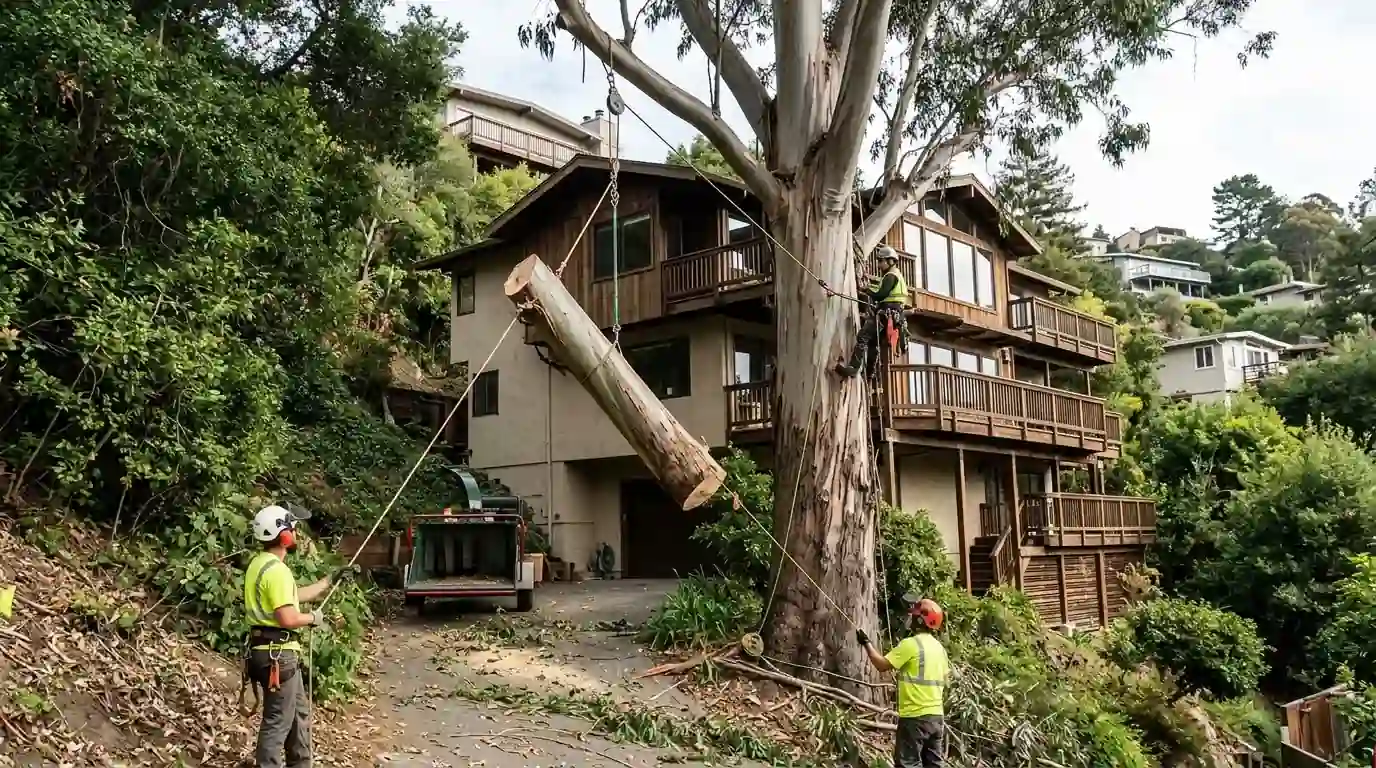
Hillside tree removal is taking a tree down on a steep lot where wood can't simply fall or roll. You need it when a tree on a slope is dead, leaning toward a house or blocking fire clearance. In the Oakland hills we lower every piece on ropes, send brush along speed lines or lift trunks with a crane, then carry out by stairs and leave roots where they hold soil.
What hillside tree removal involves in Oakland
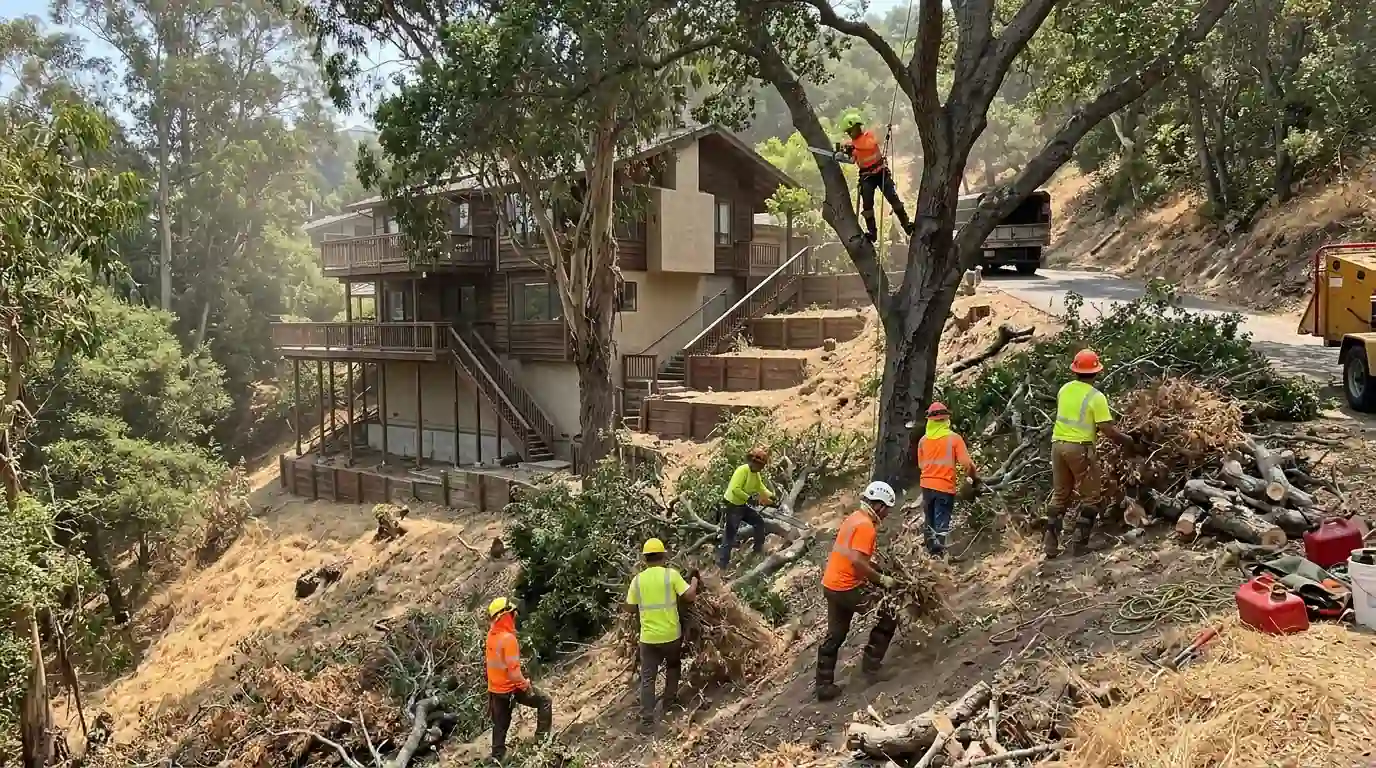
A hillside job starts with gravity working against you. On a flat lot, a cut limb lands where it's aimed and stays put. On a steep slope in Montclair or below a house in Shepherd Canyon, that same limb can tumble downhill, flatten a fence and keep going toward a neighbor's deck. So nothing drops free until we've walked the whole fall line below it. Our climber rigs each piece and lowers it to someone on level footing, like a terrace or stair landing.
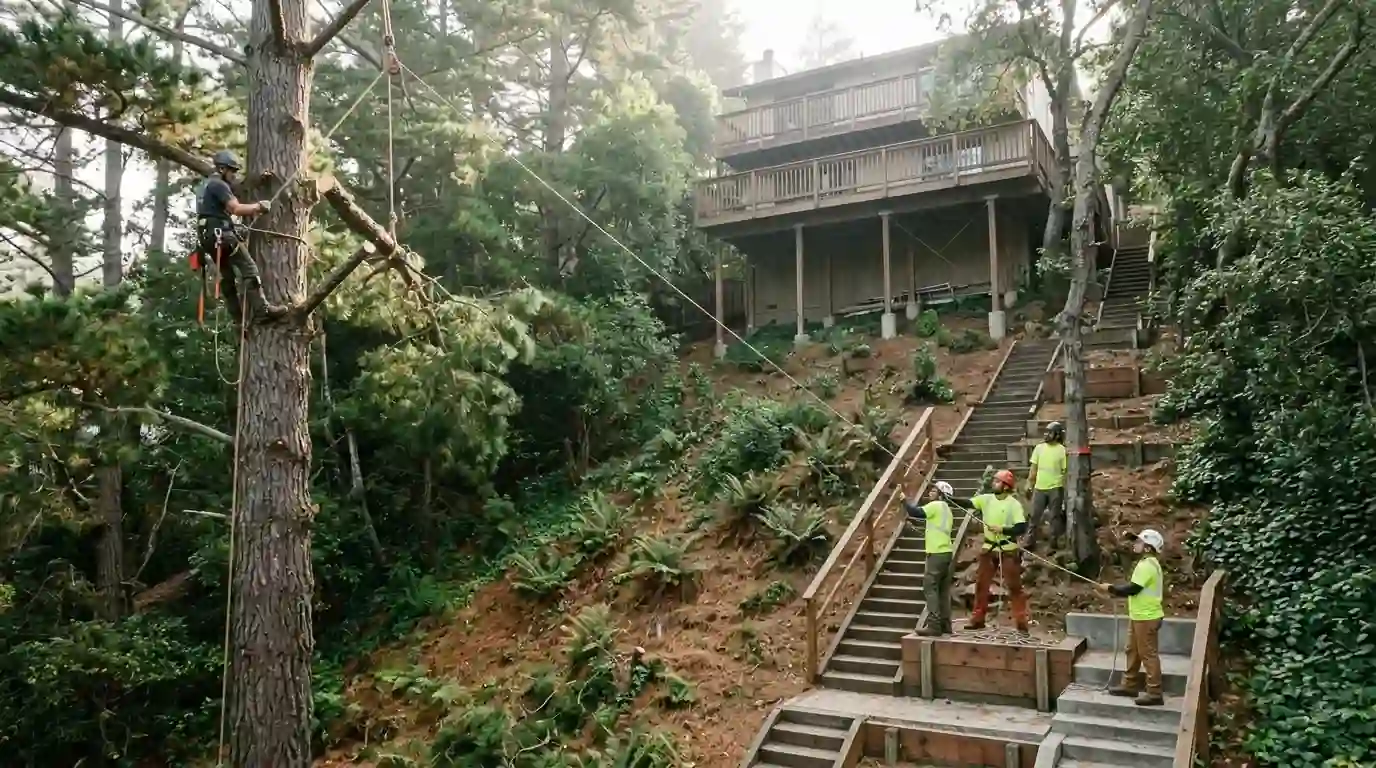
Getting the wood out is half the work. Plenty of homes off Mountain Boulevard, Skyline Boulevard and the roads above Highway 13 sit well above or below the street, with a long stairway as the only route to the yard. When the chipper can't get close, we set a speed line, a tensioned rope from the work area to the road, and brush rides along it in bundles. In the flats, a standard removal is mostly about controlling the drop. Up here it's the drop, the carry and the ground.
The slope is the part people forget. Roots from a big eucalyptus or oak hold a lot of soil, and tearing them out of a hillside leaves a loose scar. Most of our rain falls from November to March, so a root ball pulled in October has almost no time to settle before the storms. On steep ground we usually leave the stump and roots in place to rot slowly while groundcover fills in. Retaining walls get the same care. We never land wood on a wall or stack heavy rounds behind one.
When is a tree on a steep Oakland lot due to come out?
- It leans downhill over the houseTrees on a slope often reach out toward open light, and a downhill lean puts the whole crown over a roof, deck or the home below.
- The soil at the base has cracked or slumpedA crescent of split soil on the uphill side, or a bulge on the downhill side, can mean the root plate is starting to move.
- It's dead on a dry fire-district slopeA dead pine or eucalyptus on a summer hillside is standing fuel beside homes, and it gets riskier to climb every year it stays up.
- Roots are shoving a retaining wallA trunk growing tight against a wall, or roots lifting the cap, will keep pushing until the wall leans or cracks open.
- Storms have already torn off big limbsA tree that shed heavy limbs onto soaked ground during an atmospheric river has shown you where its weak wood is.
- It sits where yearly clearance never endsSome hillside trees stand 5 to 30 feet from the house, and pruning them back to fire rules every season becomes more work than removing them.
What makes a hillside removal a bigger job?
Every job is priced after we see the tree. These are the things that move the number.
- How steep the ground isSteeper slopes mean more rigging points, slower lowering and extra care with footing for everyone on the ground.
- Stairs and distance to the streetA long stairway or a path through a neighbor's side yard means every round and bundle travels that same route.
- Speed line or crane setupA speed line takes time to rig, and a crane adds street placement and lift planning, though both can shorten the carry a lot.
- What sits below the treeA house, deck, retaining wall or neighbor's roof downhill means every piece is lowered, never dropped.
- The stump and root planLeaving roots in place is the lightest option, while grinding on a slope or digging near a wall adds hours.
- Clearance added to the same visitFolding in limbing, brush clearing or extra trees for the fire inspection makes the day larger but saves a second setup.
How we take a tree apart on a steep slope
We map the fall line and the footing
Before any cut, we walk the slope below the tree and pick where each piece lands, where the ground crew stands and what lies downhill of them.
Our climber rigs from above the work
The climber anchors high in the tree, or in a sound tree beside it, and sets a lowering line through a block. Pieces are cut small, tied off and let down under control to a flat landing.
Brush rides a speed line to the street
Where the lot runs up or down to a road, we tension a line from the work area to the curb. Bundled brush slides along it to the chipper, so nobody hauls it up flights of stairs.
A crane lifts what ropes can't handle
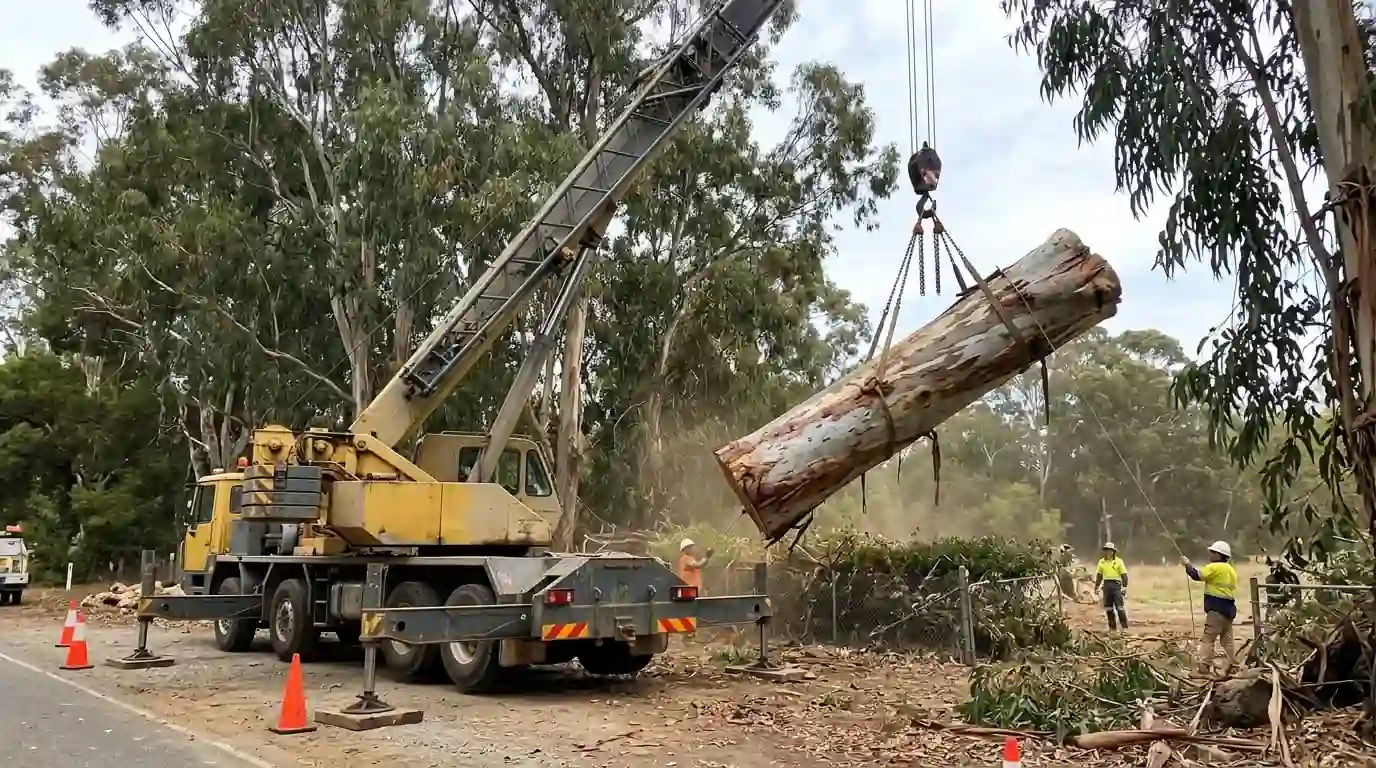
For large trunks over a house, we set a crane on the street above or below the lot and lift sections straight out.
We cut the stump and decide on the roots
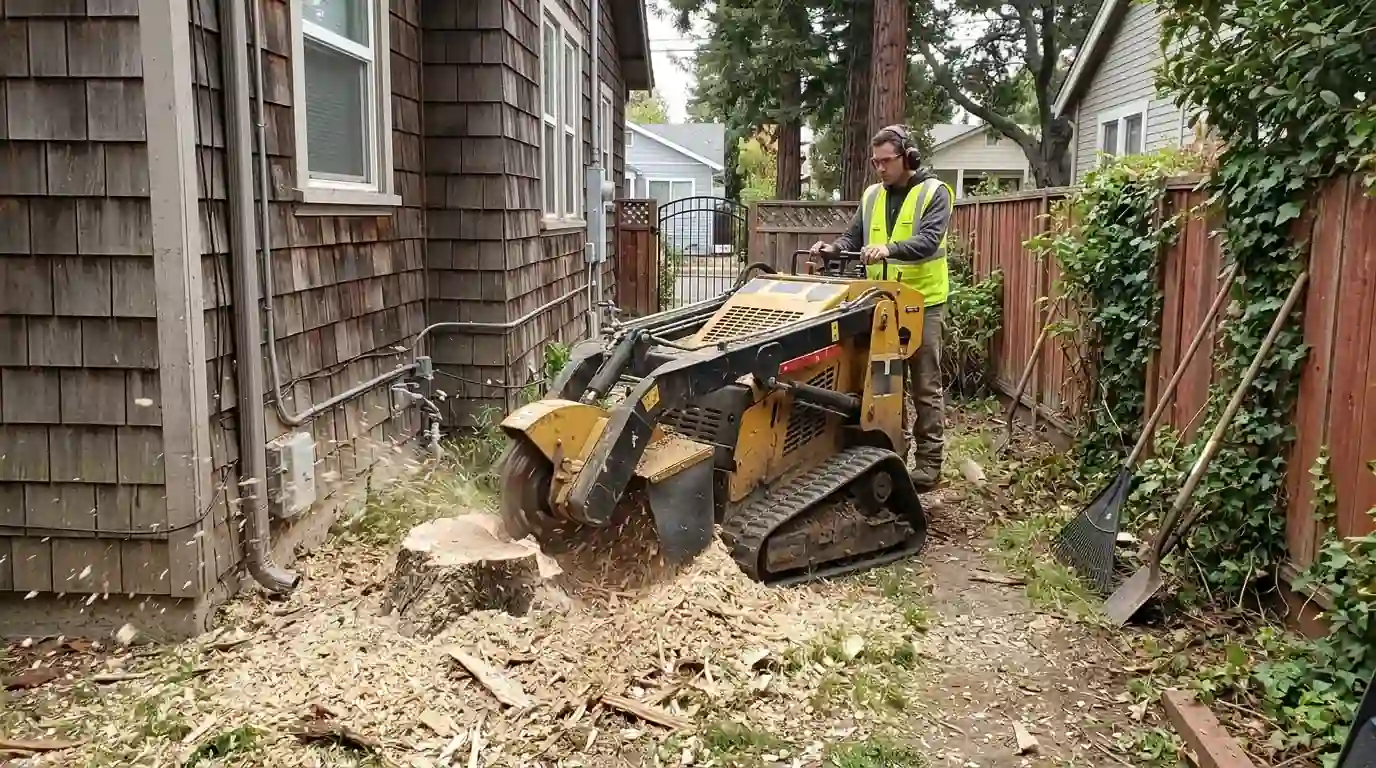
The stump is cut low and level. On steep ground we usually leave it in place to hold soil, and we only grind where the grade is gentle and you want room to plant.
We clear the stairs, paths and drains
We rake paths and steps and check drains downhill so the first rain doesn't wash debris into them.
Oakland hill rules, fire zones and slope access we plan around
A steep lot doesn't change Oakland's tree rules. A coast live oak is protected at 4 inches DBH and most other trees at 9 inches, measured 4.5 feet above the ground, with every trunk on a multi-stem tree added together. Eucalyptus and Monterey pine sit outside the protected chapter, though a Monterey pine still needs posting and written notice to Parks and Recreation. Over the ridge in Orinda, the city has its own tree rules, and we check them before cutting.
Most hill homes sit inside the Oakland Wildfire District, which the fire department inspects every year because of the 1991 Tunnel Fire. Since setup is the hardest part of a steep job, it makes sense to fold defensible space work into the same visit: limbs raised at least 6 feet and kept 10 feet from the chimney in Zone 1, and spacing between trees and shrubs out to 100 feet in Zone 2. Lots in Piedmont Pines and Shepherd Canyon often need both done on one day.
Work that often goes with hillside tree removal
Where we handle hillside tree removal
From the office on Martin Luther King Jr Way in Temescal and the Walnut Creek office on Bonanza Street, we cover Oakland and the East Bay. The biggest communities we serve, with a main ZIP code for each:
Hillside tree removal questions we hear in Oakland
Will taking a tree off my Montclair slope cause erosion?
Not if the roots stay. We cut the stump low and leave the root system in the ground, where it keeps holding soil while it slowly breaks down. Pulling the root ball is what opens a loose scar. We also try to finish slope work before the November rains.
How do you get the wood out when my yard is far below the street?
We use a speed line where the layout allows it, a tensioned rope from the work area to the road that brush slides along in bundles. Otherwise, wood is cut light enough to carry up the stairs, and a crane can lift big trunk sections out.
Can a crane work from the street below my house instead of above it?
Often, yes. On many hill lots the lower road is closer to the tree than the upper one. We compare both streets and pick the side with the shortest lift and the fewest wires and roofs in the way.
Can my fire inspection clearance be done during the same hillside removal?
Yes, and it usually saves effort. The ropes, landing spots and chipper are already in place, so raising limbs, thinning brush and spacing shrubs for Zone 1 and Zone 2 fit into the same day. Tell us what the inspector flagged and we'll plan the clearing around the removal.
Do you work on hillside trees during the rainy months?
We do, with extra care. Wet clay and leaf litter make footing slick, so we cut more steps, use more rigging and avoid rolling anything heavy on soft ground. If waiting for the dry season won't put the house at risk, we'll say so.
Saws, chippers, grinders and climbing gear from names like Stihl, Husqvarna and Vermeer
StihlHusqvarnaVermeerBanditMorbarkRaycoAltecPetzlSilkySherrillTeufelbergerNotchEchoToro
Need hillside tree removal in Oakland or the East Bay?
Call and tell us what the tree is doing. Someone picks up any hour, and we can usually talk you through the next step on that first call.