Tree pest treatment in Oakland, CA
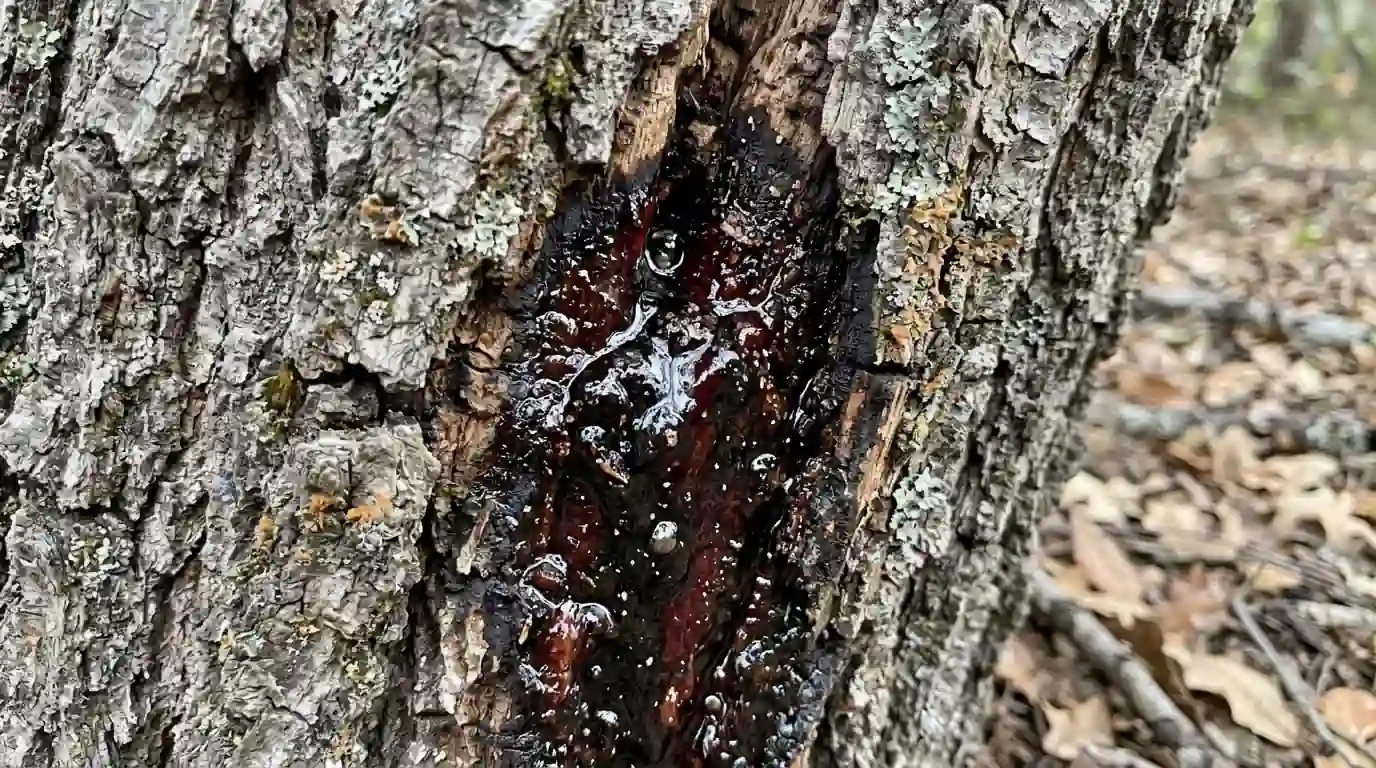
Pitch tubes on a Monterey pine, sticky sap under a street tree, small holes in an oak trunk. In Oakland these point to insects, and each one needs a clear answer: treat, wait, or take the tree down.
Quick answer
Tree pest treatment means identifying the insect, deciding whether the tree is strong enough to recover, then applying the right control at the right time. You need it when you see pitch tubes, boring dust, honeydew, sooty mold or a thinning crown. We inspect bark, foliage and soil moisture first, then use targeted sprays, soil or trunk applications, or removal of infested wood.
What tree pest treatment involves in Oakland
Most insect trouble we see in Oakland starts with a tree that was already under stress. Monterey pines planted in the hills decades ago are now old for their species, and a run of dry summers leaves them short of the resin they use to push beetles out. Once red turpentine beetles or engraver beetles settle into a weakened pine, the tree bleeds pitch and can lose the fight within a season or two if nothing changes.
Street trees in the flats deal with a different set of pests. Aphids and soft scale feed on sweetgum, Chinese elm, ornamental pear and fruit trees along sidewalks in neighborhoods like Temescal, dripping honeydew on parked cars below. That sticky film then grows black sooty mold. These insects rarely kill a healthy tree, but heavy infestations year after year thin the canopy and weaken each flush of new growth.
Oaks bring their own list. Oak pit scale causes twig dieback on valley oaks, and boring beetles move into coast live oaks already hit by drought or sudden oak death. Our first job on any pest call is honest triage. Some trees respond well to treatment. Others are too far gone, and spending on them only delays a removal that has to happen anyway.
Which signs point to insects in an Oakland tree?
- Pitch tubes on pine barkSmall crusty blobs of resin, often pink or white, mean beetles are boring in and the pine is trying to flush them out.
- Fine sawdust at the baseReddish or tan boring dust in bark cracks and around the root flare points to beetles working under the bark.
- Sticky leaves and windshieldsHoneydew dripping onto a driveway or a parked car comes from aphids or scale feeding in the canopy above.
- Black film on foliageSooty mold growing on that honeydew coats the leaves and cuts the light they need, especially on street trees.
- Needles browning from the top downA pine that turns brown from the crown downward in summer often has engraver beetles in its upper trunk.
- Small round or D-shaped holesExit holes in oak or sycamore bark show where borers emerged after feeding on the wood beneath.
- Dead twig tips scattered through an oakClusters of dead tips on a valley oak can be oak pit scale feeding on the bark of small branches.
What changes the cost of pest treatment?
Every job is priced after we see the tree. These are the things that move the number.
- Tree size and heightA tall pine or wide oak needs more product and more time, and spraying a high canopy takes a lift or a climber.
- Treatment methodSoil applications go quicker than trunk injections, and canopy sprays depend on reach and calm weather.
- Number of trees affectedBeetles rarely stop at one pine, so treating several trees in one visit costs less per tree than separate trips.
- Repeat roundsSome pests need a second application or a seasonal repeat, which adds to the total over the year.
- Infested wood to removeCutting out dead limbs or hauling beetle wood adds labor, chipping and disposal to the job.
- Where the tree standsA pine at the back of a steep hillside lot takes more hose, more carrying and more time than a tree by the curb.
How do we treat a tree for pests on site?
Identify the insect
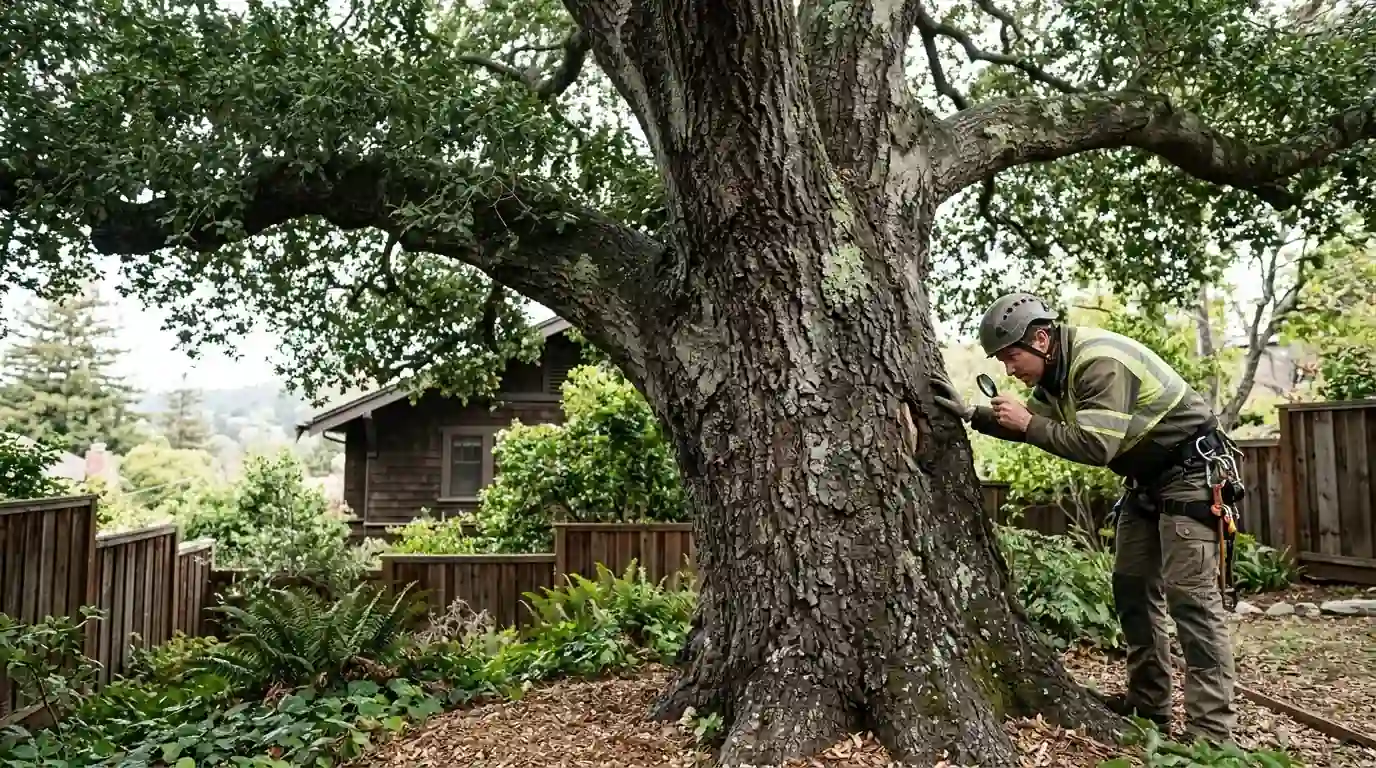
We look closely at bark, twigs and leaves, and peel loose bark where needed to see galleries or the insects themselves. Getting the species right decides everything that follows.
Judge how much tree is left
We estimate how much of the canopy is still green, check for cracks and decay, and dig a little to feel the soil. A pine with half its crown already red will not come back, and we tell you so.
Pick a targeted control
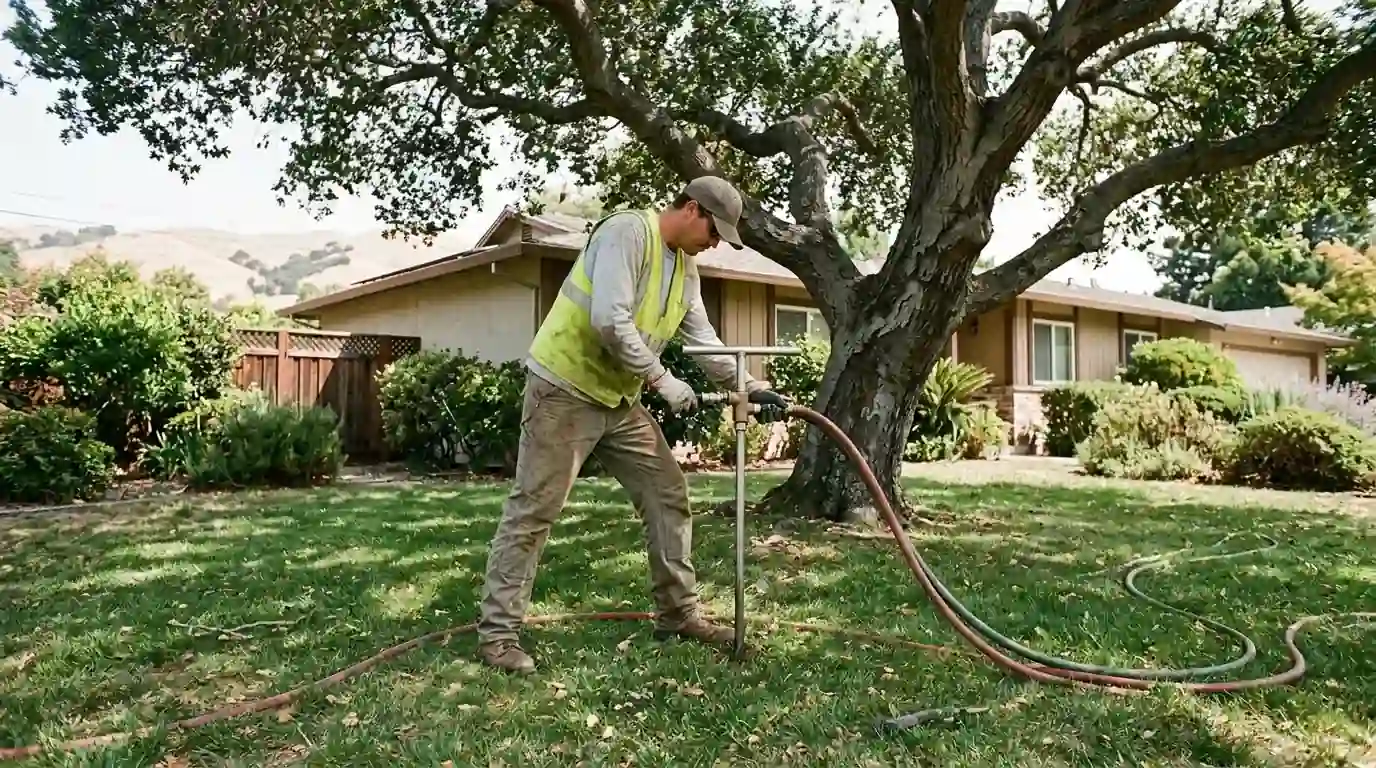
Depending on the pest, that could be horticultural oil or insecticidal soap for scale and aphids, a soil or trunk application, or a protective bark spray for pines still holding their own. We match the method to the insect and to what grows nearby.
Time it to the pest's cycle
Many treatments only work while insects are active or the tree is moving water. Bark beetle protection goes on ahead of the warm flight season, while dormant oil for scale goes on in winter.
Haul out the breeding wood
Infested limbs, fresh pine slash and beetle-killed trees left on site feed the next generation. We cut out and haul away that wood so it doesn't seed the neighbors' pines.
Fix the stress behind it
Treatment buys time, but water and soil decide whether the tree holds on. We walk you through deep summer watering and mulch, then return to see whether the pressure has dropped.
Why Oakland trees get hit by bark beetles and scale
Oakland's dry season runs roughly May to October, and most of the rain lands between November and March. After a short or thin winter, pines and oaks in the hills head into summer with dry soil, and that's when beetle pressure climbs. Monterey pines on the ridges above Montclair and along Skyline Boulevard get the worst of it, since shallow soil over rock holds little water by late August.
Rules matter when a pest call turns into a removal. Monterey pine is not on Oakland's protected list, though private removal still needs posting and written notice to Parks and Recreation. A coast live oak is protected at 4 inches in diameter, and most other species at 9 inches, so a beetle-killed oak usually still needs a permit. Street trees are a special case, because the city only prunes them in hazardous situations and owners need the city's hold-harmless form before infested limbs come off.
Work that often goes with tree pest treatment
Where we handle tree pest treatment
From the office on Martin Luther King Jr Way in Temescal and the Walnut Creek office on Bonanza Street, we cover Oakland and the East Bay. The biggest communities we serve, with a main ZIP code for each:
Tree pest treatment questions we hear in Oakland
Can a Monterey pine with pitch tubes be saved?
Sometimes, if the pitch tubes are few, the crown is still fully green and the tree is pushing out plenty of fresh resin. Once needles start browning from the top, the beetles have usually won. At that stage the money is better spent removing the tree before it dries out and becomes a fire and falling hazard.
Are aphids on my street tree worth treating?
Usually only when the honeydew is a real nuisance or the tree is young and struggling. Healthy mature street trees handle aphids, and ladybugs and lacewings often bring numbers down by midsummer. When we do treat, we start with the gentlest option, such as a strong water rinse or insecticidal soap, before anything stronger.
When is the right time to treat oak pit scale?
Winter, while the oak is dormant and the scale insects sit exposed on small branches. A dormant oil applied then smothers them without coating summer leaves. We also prune out the worst of the dead twigs, since heavily infested shoots rarely recover and keep feeding the next round of scale.
Will spraying one pine protect the others in my yard?
No. Each pine needs its own protection, because beetles pick trees one at a time by scent and stress level. If one pine on your lot is under attack, nearby pines face higher risk, so we normally check every pine within reach and treat or watch them as a group.
Do borer holes mean my oak has to come down?
Not always. Borers usually follow other trouble, like drought, root damage or disease, so we look for that cause first. An oak with a few exit holes and a full canopy can carry on for years. Widespread holes plus decay or cracks at the base point toward removal.
Saws, chippers, grinders and climbing gear from names like Stihl, Husqvarna and Vermeer
StihlHusqvarnaVermeerBanditMorbarkRaycoAltecPetzlSilkySherrillTeufelbergerNotchEchoToro
Need tree pest treatment in Oakland or the East Bay?
Call and tell us what the tree is doing. Someone picks up any hour, and we can usually talk you through the next step on that first call.