
Ivy and vine removal from trees in Oakland, CA
English ivy is one of the most common things we find wrapped around trunks in shaded Oakland yards. Once it climbs, it hides the bark you need to see and loads the tree with weight it was never built to carry.
Quick answer
Ivy and vine removal frees a tree's trunk and canopy from English ivy and other climbing vines. You need it once ivy climbs past head height, hides the lower trunk or starts reaching into the crown. We cut every vine at chest height, clear a ring of bare ground around the base, peel the lower vines off by hand and let the upper growth die back.
What ivy and vine removal involves in Oakland
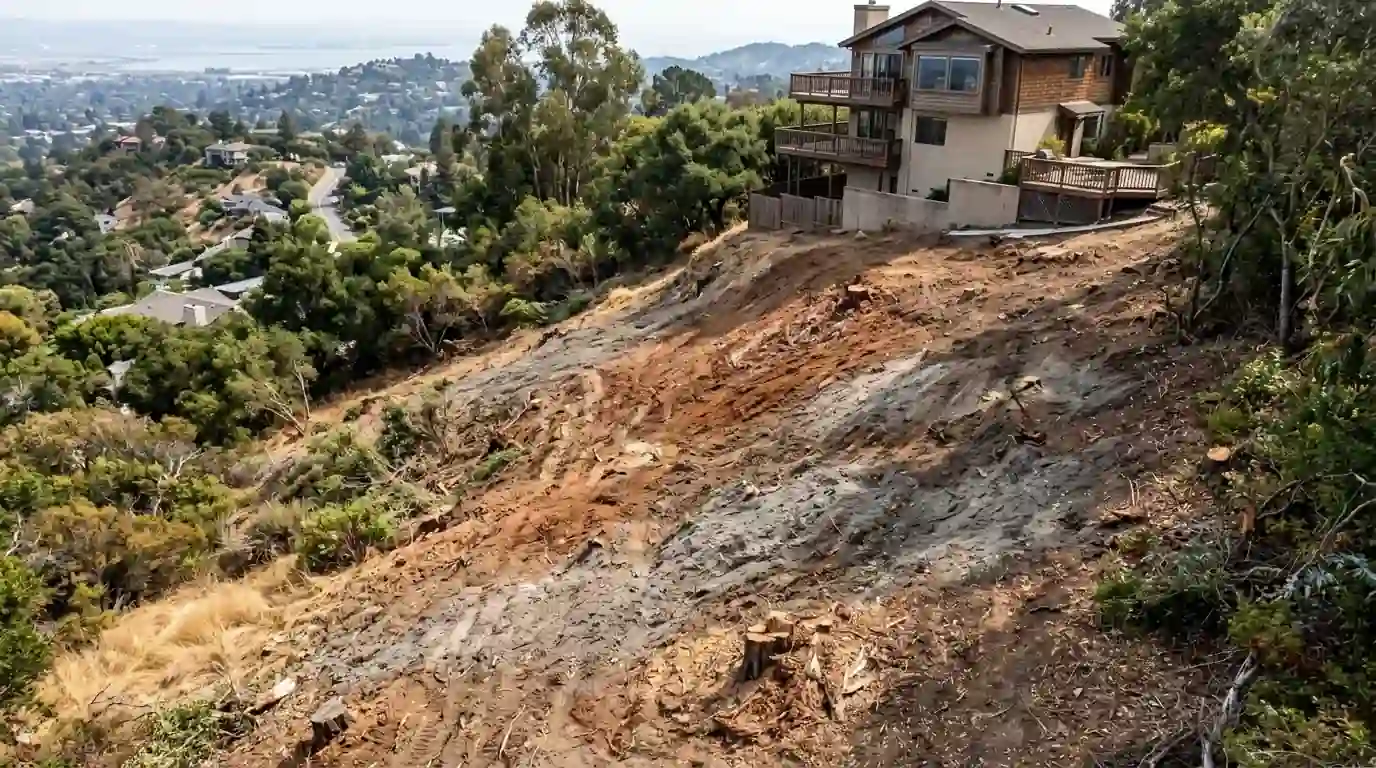
Ivy doesn't feed on a tree, but it competes with it in every other way. It climbs toward light, and on a shaded trunk that means up into the canopy. Once it gets there it spreads along limbs, shades the tree's own leaves and adds weight to branches. In a winter storm, a canopy heavy with wet ivy catches wind like a sail.
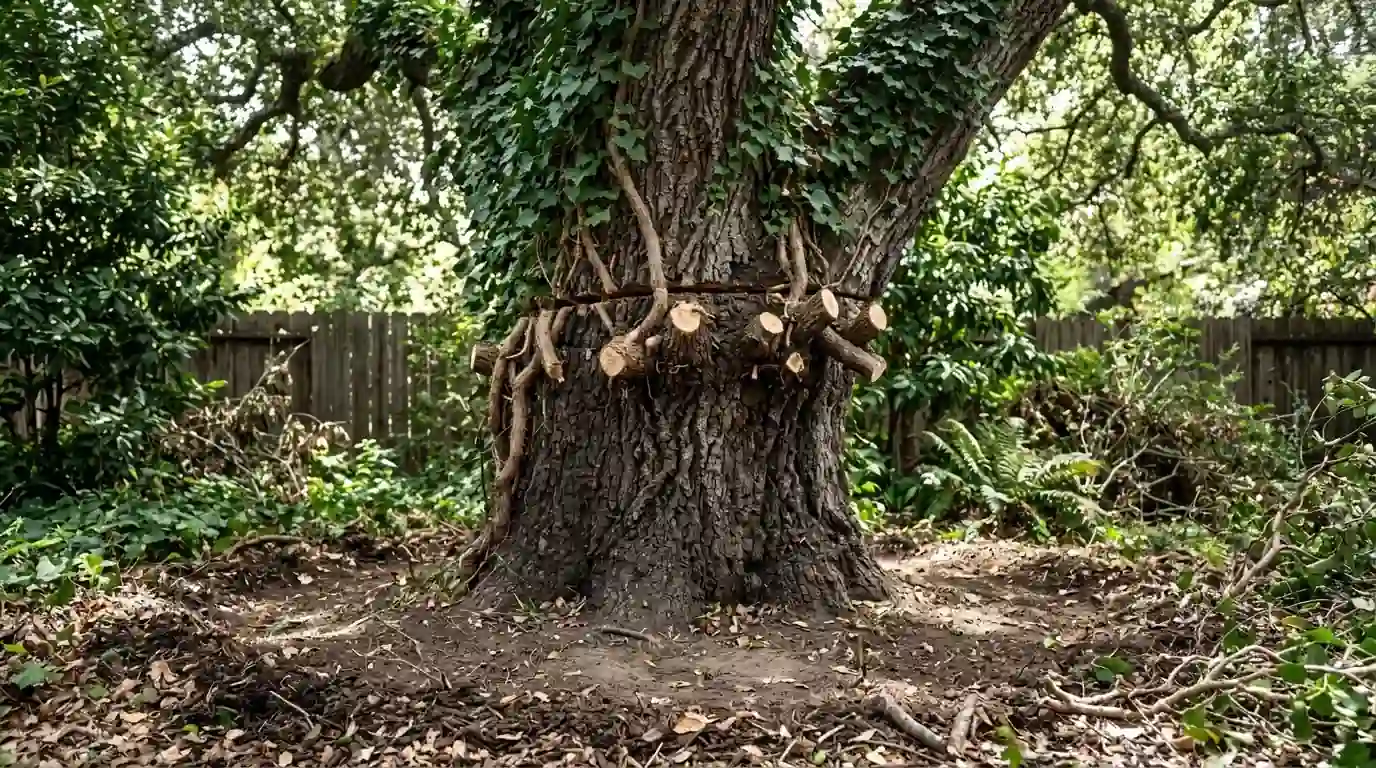
The bigger problem for us is what ivy hides. A trunk wrapped in vines could have a crack, a cavity, a bleeding canker or mushrooms at the root flare, and nobody would know. Split unions and soft bark turn up under ivy on trees that looked healthy from the patio. Before anyone can judge whether a tree is sound, the vines have to come off the lower trunk.
Ivy is also fuel. A trunk wrapped in dry ivy gives a ground fire a ladder straight into the crown, and the dead leaves trapped in the vines dry out every summer. In the hills, inspectors look for exactly that kind of vertical fuel, which is why ivy work often happens alongside defensible space work or raising the lower canopy.
Signs ivy is hurting the tree it's climbing
- Vines past head heightOnce ivy climbs beyond arm's reach, it moves toward the canopy quickly and gets much harder to strip by hand.
- Ivy leaves in the crownGlossy leaves along the limbs that don't match the tree's own foliage mean ivy is shading and weighing down the canopy.
- Sparse tree foliageWhen the tree's leaves look thin while the ivy looks lush, the vine is winning the competition for light.
- A trunk you can't seeIf the bark at the base and the root flare are hidden, cracks, cavities and cankers are hidden too.
- Woody stems as thick as a wristOld vine stems are heavy, hold water against the bark and tear it when they finally pull loose.
- An ivy groundcover bed underneathA bed of ivy around the tree keeps sending new runners up the trunk every season.
How we cut ivy loose without damaging bark
Cut every vine at chest height
We sever each stem around the trunk at about chest height with hand saws and loppers, never a chainsaw against the bark. Cutting the stems stops water from reaching everything above.
Clear a "life saver" ring
Below the cut, we pull vines off the trunk and clear a ring of bare soil a few feet wide around the base. The ring gives the tree breathing room and cuts off new climbers before they start.
Leave the upper vines to die
We don't rip live ivy out of the canopy, because pulling it down strips bark and can bring dead wood with it. The upper growth browns out over the following weeks and loosens its grip.
Look the trunk over
With the lower trunk exposed, we check the bark, root flare and unions and tell you what we see. Anything worrying gets a closer look before we leave.
Haul every cutting
Ivy roots from cut pieces that touch the ground, so we bag or chip it and take it away rather than leaving piles.
Climb for dried vines when needed
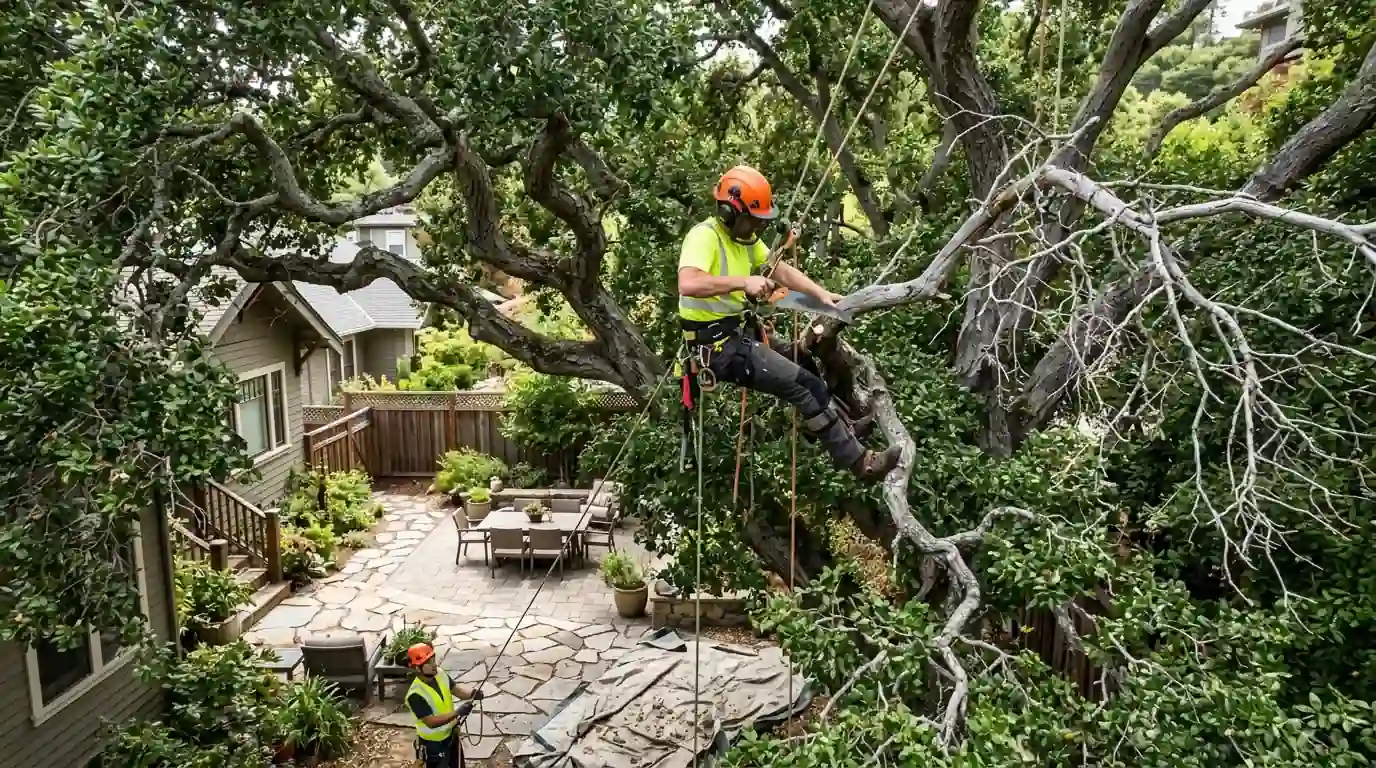
Near a roof or inside the fire district, we come back and climb to pull the dried upper vines once they've let go of the bark.
Where ivy takes over in Oakland and the East Bay
English ivy thrives in shade and steady moisture, which describes plenty of Oakland. Older yards under big oaks in Trestle Glen, shaded canyon lots in the hills and creek-side properties all grow it hard. Many of those ivy beds were planted on purpose long ago as slope groundcover, and they've been climbing the nearest trees ever since.
Cutting ivy off a protected tree is fine as long as the tree isn't harmed. Oakland's tree code counts girdling and similar damage as a form of removal, so a careless saw cut that rings the bark can turn into a permit problem. That's one reason we cut vines with hand tools and keep blades off the bark. Inside the wildfire district, ivy-covered trunks near the house also count as ladder fuel. If the exposed trunk shows decay or cankers, a risk assessment is the sensible next step.
What changes the effort of an ivy removal
Every job is priced after we see the tree. These are the things that move the number.
- Number of trees and trunk sizeA single trunk is quick. A row of large oaks along a fence line, each wrapped in ivy, takes much longer.
- Vine thicknessThin green runners pull by hand. Old woody stems need saws and careful cuts so the bark isn't scored.
- Groundcover around the treesA small ring around one trunk is simple. A whole slope of ivy feeding many trunks adds a lot of pulling and hauling.
- Canopy workClimbing to remove dried ivy from limbs over a roof takes a climber and rigging, unlike ground-level cutting.
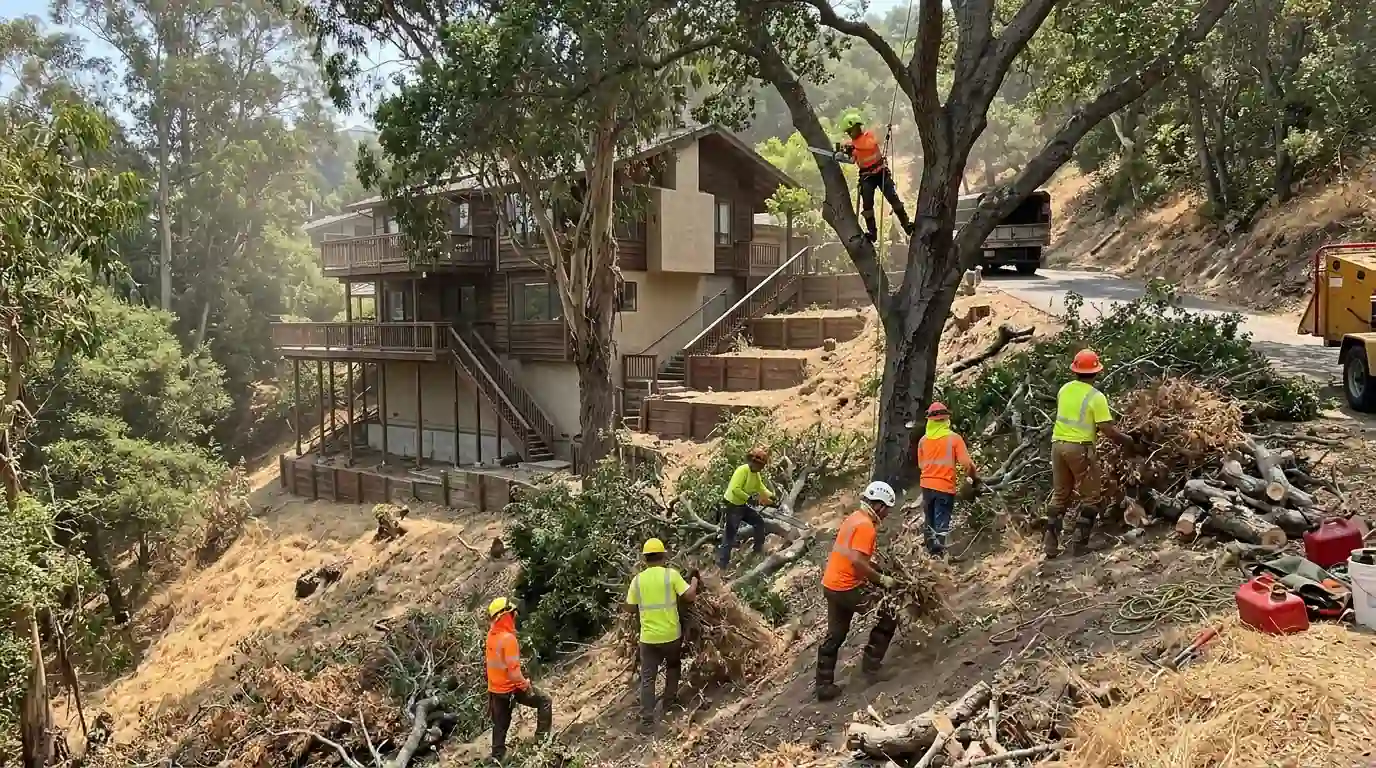
- Access and slopeIvy grows thickest on shaded, steep banks, where every bag has to be carried up to the street.
Work that often goes with ivy and vine removal
Where we handle ivy and vine removal
From the office on Martin Luther King Jr Way in Temescal and the Walnut Creek office on Bonanza Street, we cover Oakland and the East Bay. The biggest communities we serve, with a main ZIP code for each:
Ivy and vine removal questions we hear in Oakland
Does English ivy actually kill trees?
Not directly, since it doesn't feed off the tree. It shades the canopy, adds heavy weight to limbs, traps moisture against bark and hides decay. Over years that stress weakens a tree and makes storm failure more likely, especially once ivy has reached the crown.
Why not pull all the ivy out of the canopy at once?
Pulling live ivy down tears bark and can drop dead branches on whoever is below. Cutting at chest height kills the upper growth first. Once it has dried and loosened, it comes off with far less damage, and we climb to remove it when it hangs near a roof.
How wide should the bare ring around the trunk be?
A few feet is the usual target, enough that runners from surrounding groundcover can't easily reach the bark. On a tree sitting in a slope of ivy, a wider ring buys more time between checkups. Keeping that ring clear each year is the easiest way to stop regrowth.
Will ivy grow back after it's cut off a tree?
It can, from roots left in the soil and from cut pieces that touch the ground. That's why we haul cuttings away and pull roots inside the ring. Walk the ring once or twice a year and tug out any new runners before they start climbing.
Saws, chippers, grinders and climbing gear from names like Stihl, Husqvarna and Vermeer
StihlHusqvarnaVermeerBanditMorbarkRaycoAltecPetzlSilkySherrillTeufelbergerNotchEchoToro
Need ivy and vine removal in Oakland or the East Bay?
Call and tell us what the tree is doing. Someone picks up any hour, and we can usually talk you through the next step on that first call.