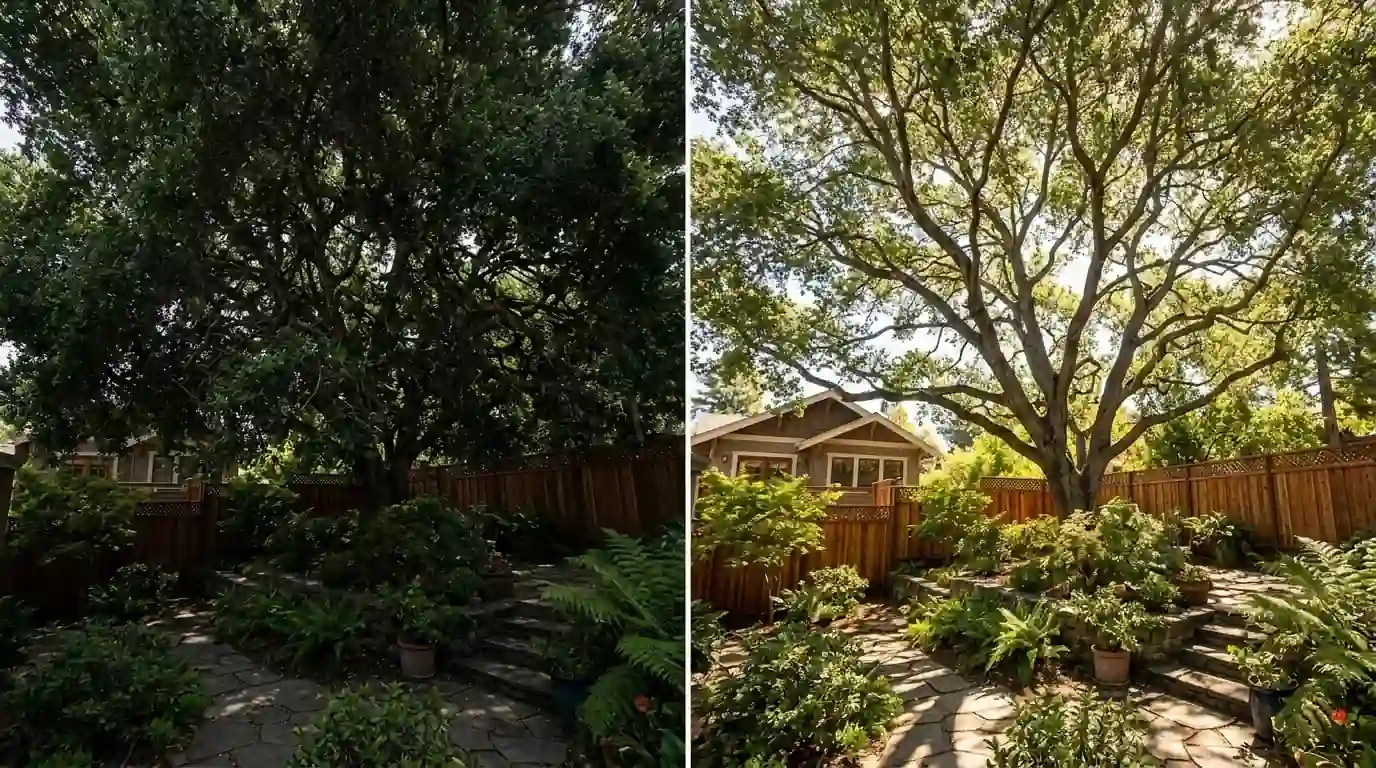
Crown reduction in Oakland, CA
When an Oakland tree has outgrown its space, over a roof, toward a neighbor or into a view, the answer is often a smaller crown, not a stump. We shorten height and spread with reduction cuts that leave the tree healthy and natural looking.
Quick answer
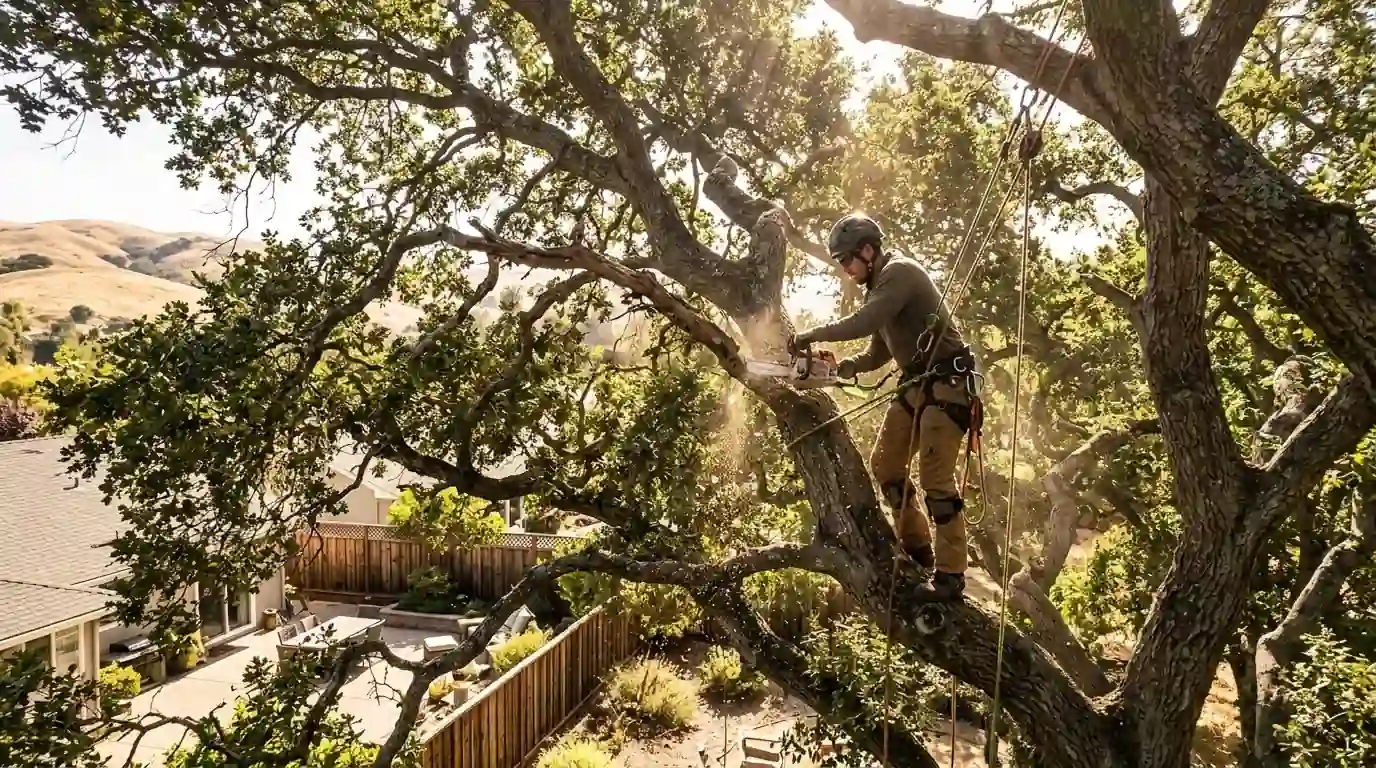
Crown reduction lowers a tree's height or spread by cutting limbs back to living side branches large enough to take over as the new tips. It suits trees that have outgrown their spot but are otherwise sound. Unlike topping, it keeps the natural form and avoids weak regrowth. We pick each cut point, remove modest amounts per visit and lower the wood over structures.
What crown reduction involves in Oakland
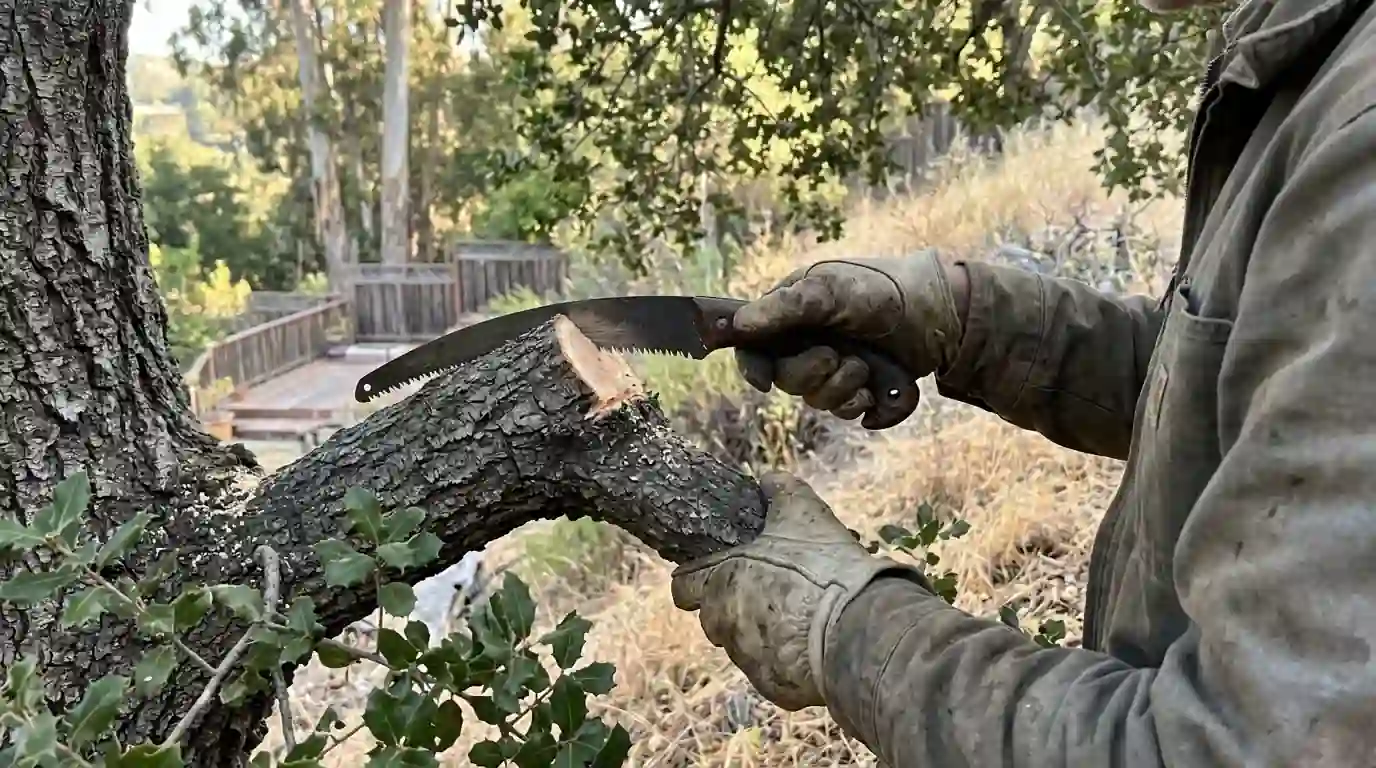
The whole job rests on one kind of cut. A reduction cut shortens a limb back to a lateral, a side branch growing in roughly the same direction, at least a third the diameter of the part being removed. That lateral becomes the new leader of the limb. It already has leaves, so it keeps feeding the wood below the cut, and the wound closes from the edges over time. Done across the crown, the tree ends up smaller but still shaped like itself.
Topping is the opposite. A topped tree has its leaders sawn off at an arbitrary height, usually between branches, leaving big stubs with no foliage to support them. The stubs decay, the tree panics and pushes out clusters of fast, weakly attached shoots, and within a few years it's taller, denser and more dangerous than before. In Oakland, topping a protected tree isn't just bad practice. The code counts it as removal.
Reduction has limits too. A tree can lose only so much leaf area at once before it starts declining, so heavy reductions are spread over two or three visits a few years apart. Some species take reduction well, such as many oaks, London plane and bay laurel. Others, like Monterey pine and older eucalyptus, respond poorly to large cuts, and for those, removal and replanting is sometimes the more honest recommendation.
When is crown reduction the right call?
- Limbs reaching over the roofA tree that has grown out over the house can be pulled back so its weight sits over the yard.
- Height crowding a viewTrees that have grown into a bay or hill view can sometimes be lowered while staying healthy.
- One-sided growth toward a neighborReducing the long side brings the crown back into balance and eases tension over the fence.
- A long, heavy limb with a weak unionShortening it cuts the strain on the attachment point and lowers the chance it tears out.
- Approaching overhead linesBranches heading toward the service drop can be reduced, while primary lines stay with PG&E.
- A tree that was topped beforeOld topped trees can be restored over several visits by picking new leaders and reducing the weak sprouts.
What shapes the scope of a crown reduction?
Every job is priced after we see the tree. These are the things that move the number.
- How much size to take offA small trim of the outer crown is quicker than a large reduction across the whole tree.
- Height of the treeTaller crowns need more climbing time and longer lowering lines.
- What sits belowRoofs, solar panels and skylights under the crown slow down each piece.
- Species and conditionBrittle or stressed trees need more careful cut selection and smaller pieces.
- Staged workA reduction done over two or three visits spreads the work out over time.
What happens during a crown reduction?
Agree on the target size
We settle on how much height or spread you need back and check whether the tree can give that in one visit or needs stages.
Pick a lateral for every cut
Our climber traces each limb to find a side branch of the right size and direction, and that branch sets where the limb ends.
Work from the top and outside in
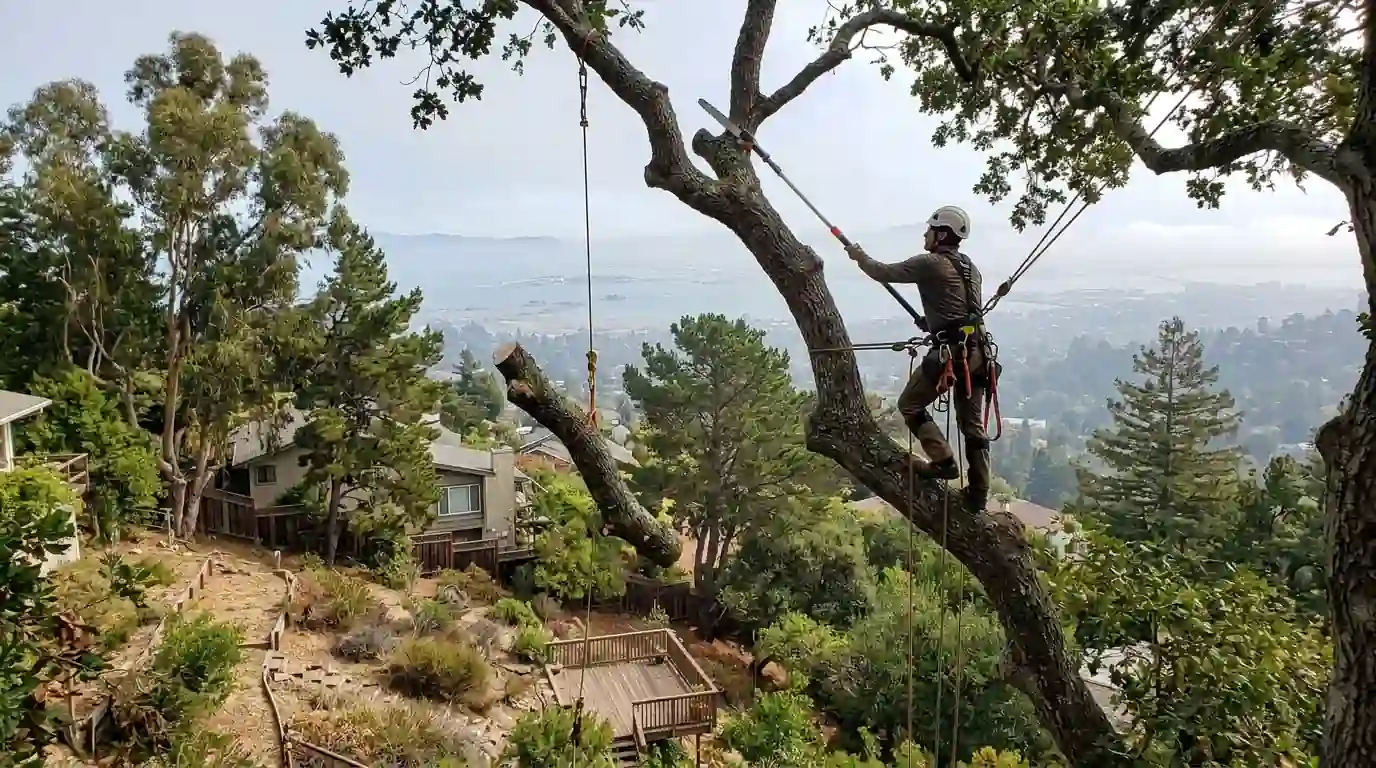
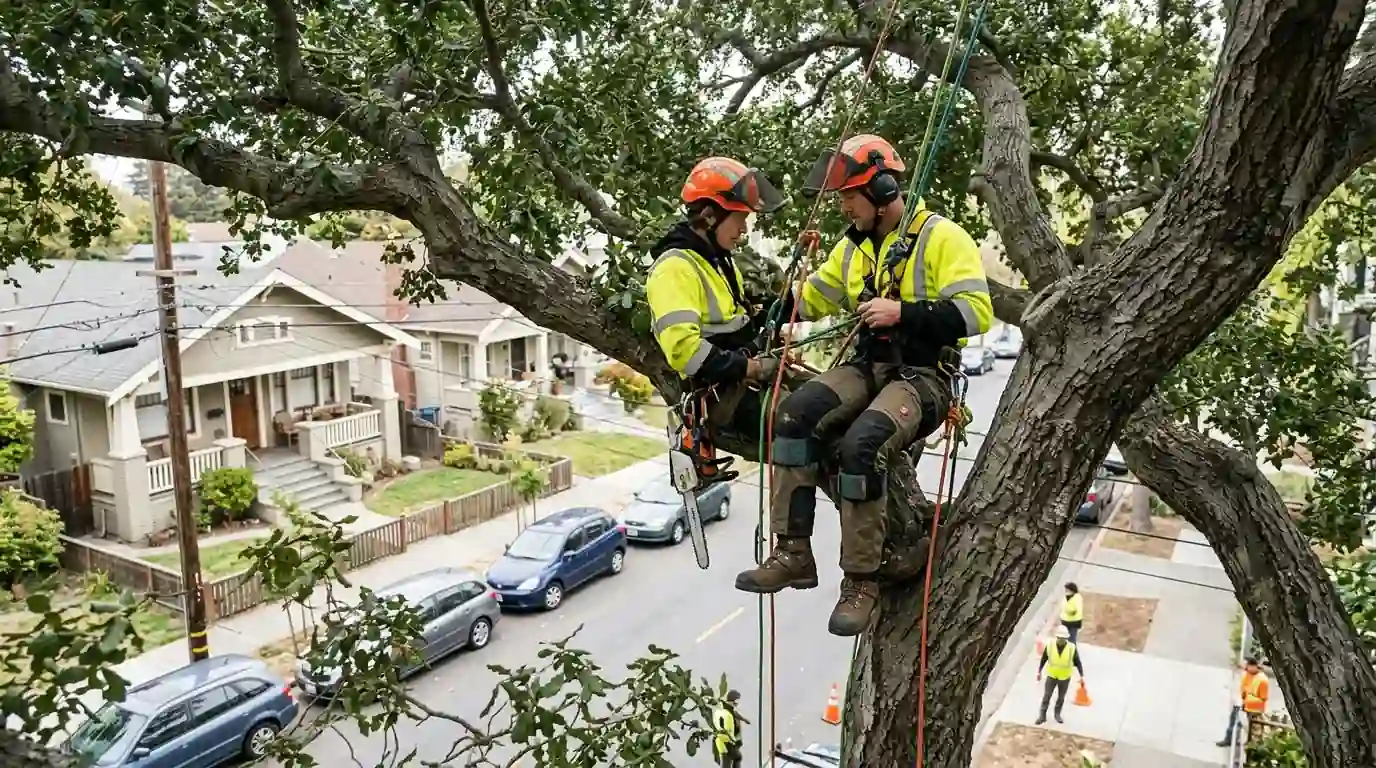
Reductions start at the leaders and outer tips, using a pole saw or hand saw from rope positions inside the crown.
Lower over structures
Pieces above roofs, decks and fences are tied off and lowered, with a ground worker running the line.
Shape and check balance
We step back to make sure the crown reads as even and natural, then make small balancing cuts if needed.
Clean up and plan the next stage
Brush is chipped and hauled, and if the reduction is staged, we note which limbs are next for a follow-up visit.
How do Oakland's rules treat crown reduction?
Oakland's protected tree chapter covers coast live oaks at 4 inches DBH and most other trees at 9 inches DBH. Its definition of removal includes topping, so a crude height cut on a protected tree can trigger the same consequences as cutting it down without a permit. Proper reduction cuts back to laterals are a different thing, and keeping each visit modest is part of staying on the right side of that. If a large reduction is truly needed, we talk through whether it calls for a word with the city before work starts.
In Berkeley, removing more than 25 percent of an oak's leaf, stem or root system within 24 months counts as excessive pruning and needs an exception request, which is another reason to stage big reductions. In the hills above Montclair and Hiller Highlands, reductions often pair with fire clearance, pulling limbs back to 10 feet from chimneys and walls. On steep lots, our climber does most of the work from rope positions in the tree, since lifts rarely reach.
Work that often goes with crown reduction
Where we handle crown reduction
From the office on Martin Luther King Jr Way in Temescal and the Walnut Creek office on Bonanza Street, we cover Oakland and the East Bay. The biggest communities we serve, with a main ZIP code for each:
Crown reduction questions we hear in Oakland
How is crown reduction different from topping a tree?
Reduction cuts each limb back to a living side branch that takes over as the new tip, so the tree keeps feeding the wood and closing the wound. Topping saws through leaders at a set height with no branch to support the stub, which leads to decay and weak sprouts. Oakland counts topping a protected tree as removal.
How much smaller can a tree get in one visit?
It depends on species and health, but most trees shouldn't lose more than a modest share of their leaf area at once. We often reduce a few feet in height or spread per visit. If you need more, we stage it over two or three visits a few years apart.
Can a tree that was topped years ago be fixed?
Often it can be improved. We select one or two of the strongest sprouts on each old stub to become new leaders and reduce or remove the rest. It takes several visits over a few years, and the tree won't regain its original form, but it gets much sturdier.
Will crown reduction make my tree grow back faster?
Some extra growth is normal, since the tree replaces lost leaf area. Proper reduction cuts keep that growth moderate and spread along the remaining laterals. Heavy cuts or topping cause the explosive regrowth people worry about. Staying modest per visit keeps the tree's response calm.
Saws, chippers, grinders and climbing gear from names like Stihl, Husqvarna and Vermeer
StihlHusqvarnaVermeerBanditMorbarkRaycoAltecPetzlSilkySherrillTeufelbergerNotchEchoToro
Need crown reduction in Oakland or the East Bay?
Call and tell us what the tree is doing. Someone picks up any hour, and we can usually talk you through the next step on that first call.