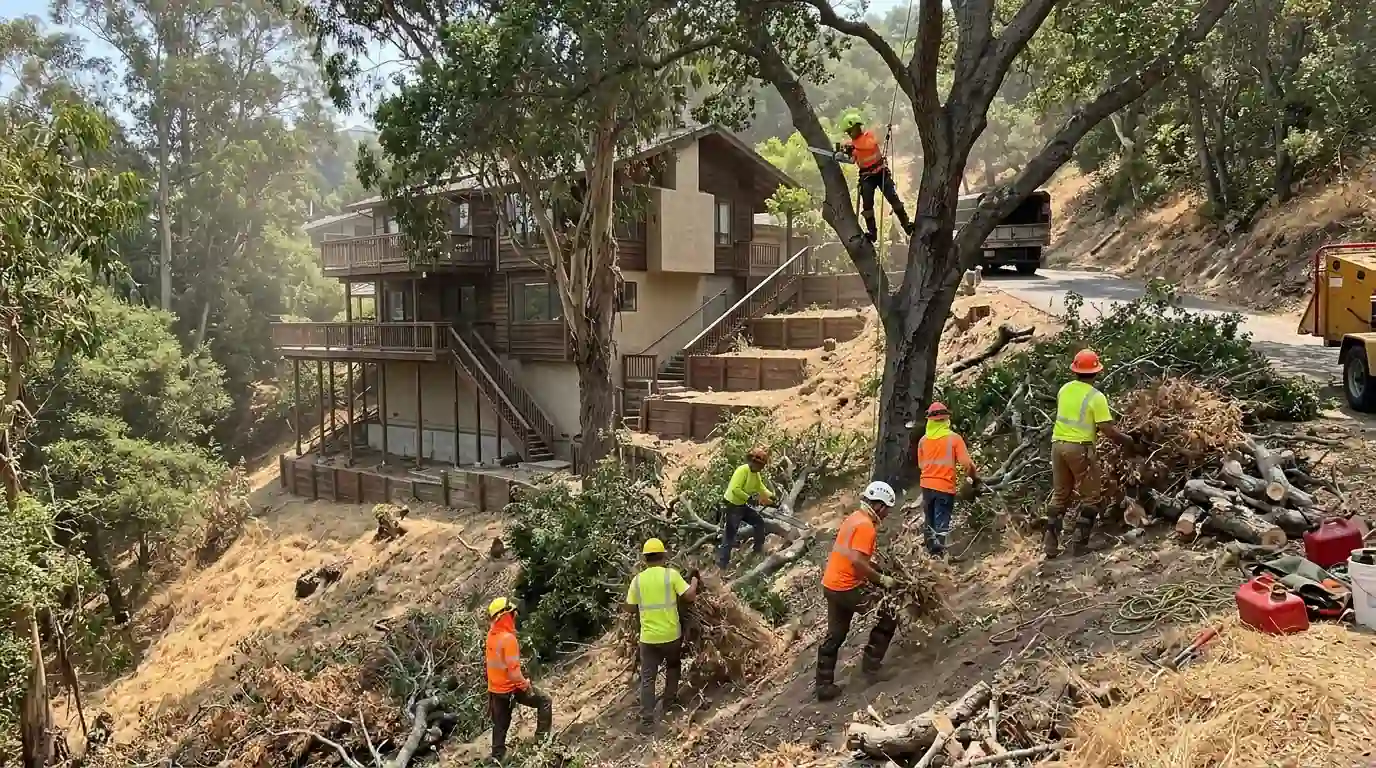
Crown raising in Oakland, CA
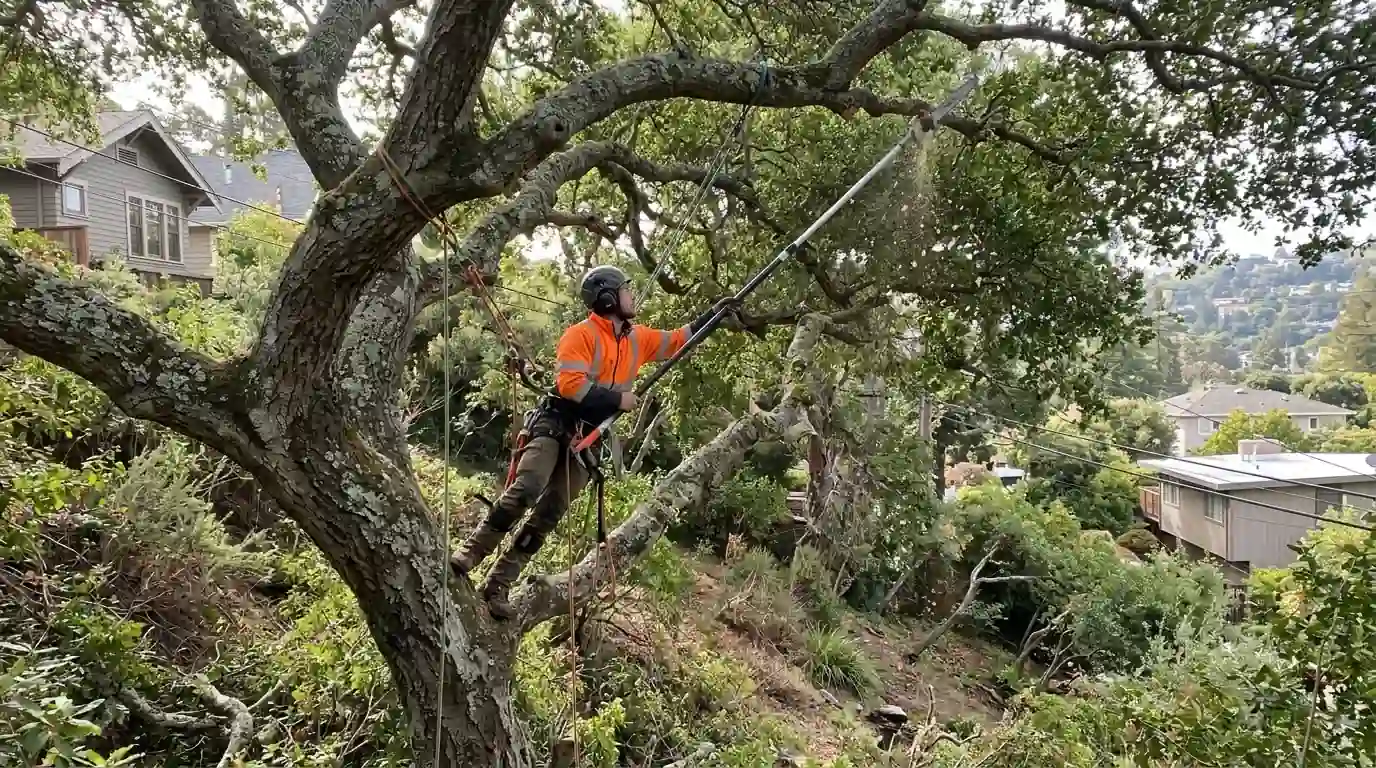
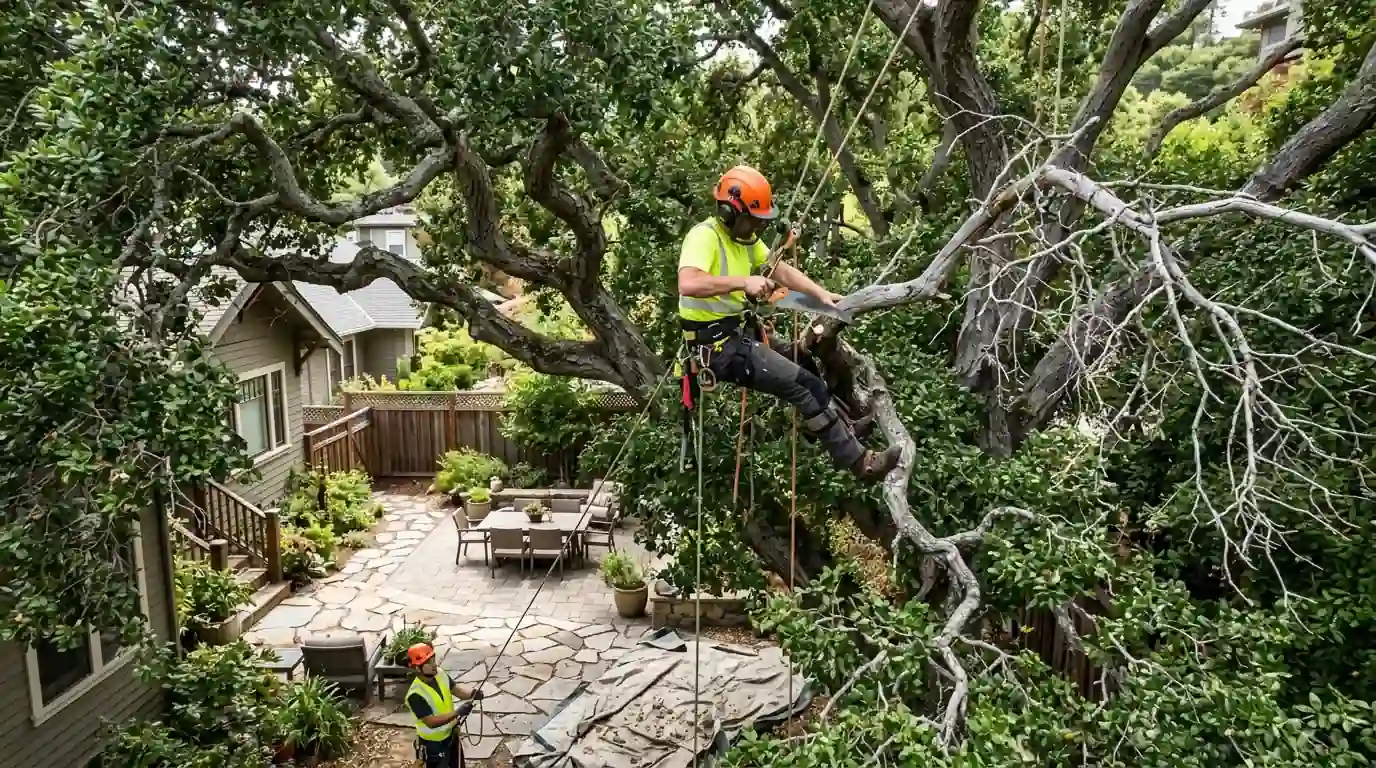
Low limbs scrape trucks, hang over the roof edge and give a ground fire a ladder into the canopy. We raise Oakland crowns by removing or shortening the lowest branches, so you get clearance without hurting the tree.
Quick answer
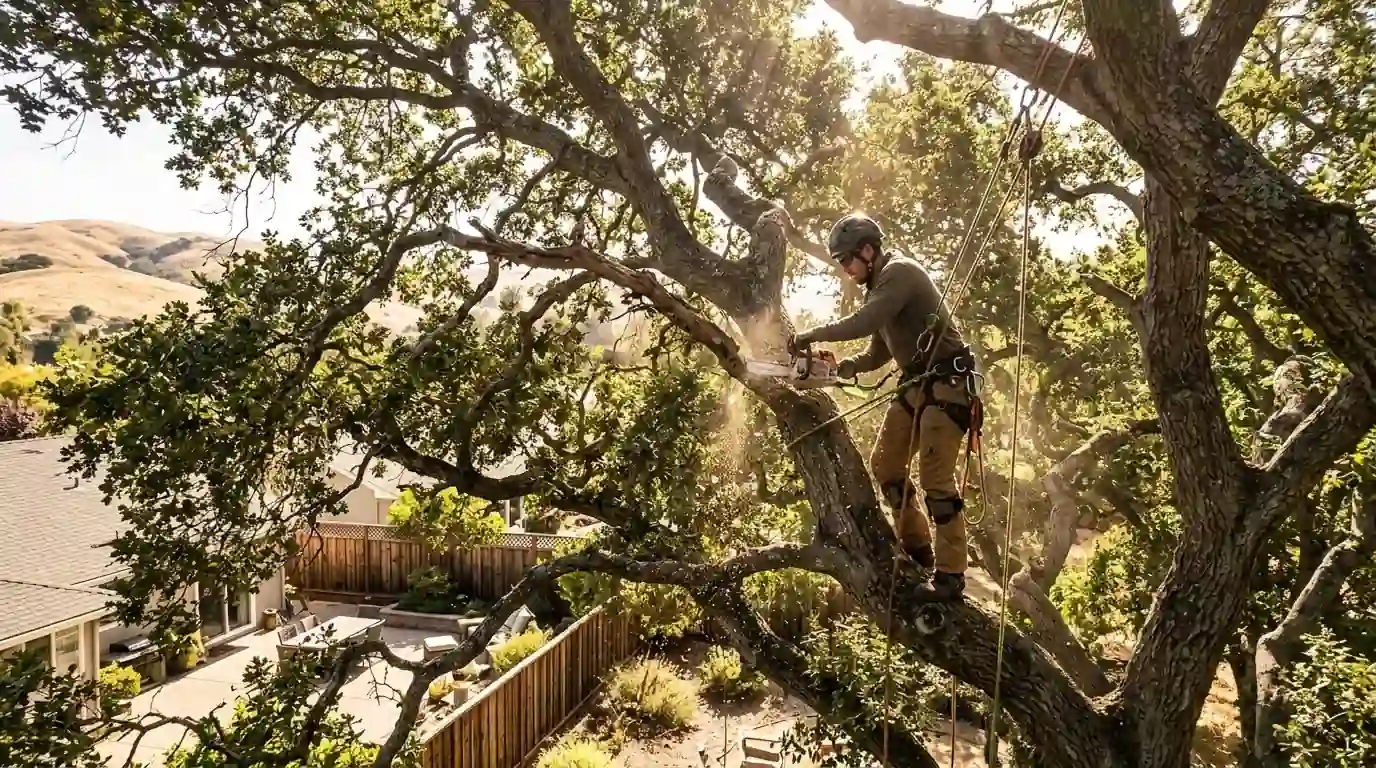
Crown raising, also called limbing up, removes or shortens the lowest branches of a tree to create clearance underneath. You need it over driveways, sidewalks, streets and roofs, and in the Oakland hills to meet the fire district's rule of limbs at least 6 feet above the ground. We remove limbs in stages, keep enough live crown up top, and cut at the branch collar.
What crown raising involves in Oakland
Clearance is the whole point, and the numbers depend on what's underneath. A walkway needs enough room for people with umbrellas. A driveway needs room for a delivery van or a moving truck. Streets need clearance for garbage trucks and fire engines, which matters on the narrow, winding roads of the hills. Over a roof, the goal is limbs pulled back from shingles and gutters. We start every job by asking what needs to pass under or beside the tree.
Fire is the other big driver in Oakland. When the lowest limbs sit near dry grass, shrubs or leaf litter, a ground fire can climb straight into the crown. Firefighters call these ladder fuels. Lifting the canopy breaks that ladder. Oakland Fire's yearly inspections in the wildfire district expect tree limbs at least 6 feet above the ground and 10 feet from any structure or chimney in the 5 to 30 foot zone. A raise is often the main tree job on a hills inspection list, alongside brush and fuel clearing on the ground.
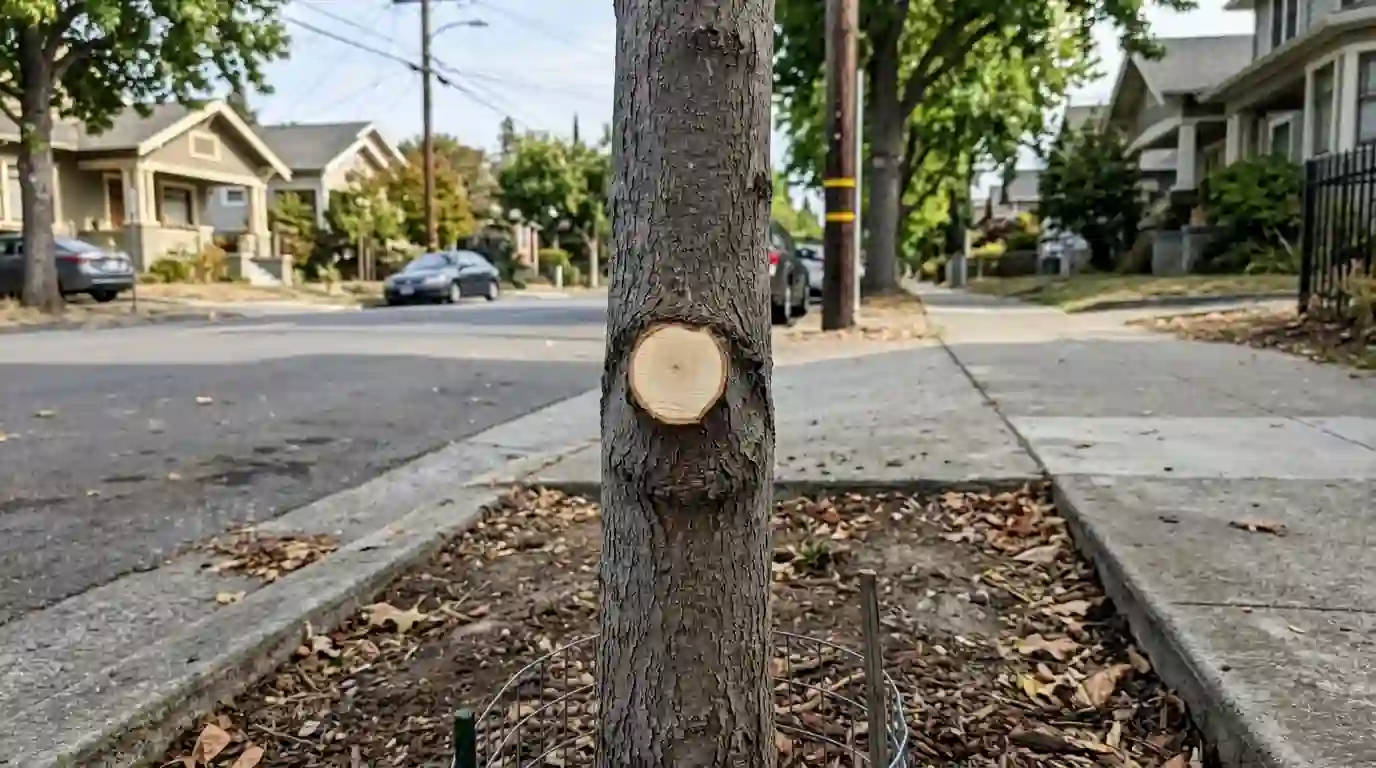
The mistake with raising is taking too much. A tree needs most of its leaves up high, and a common guideline is to keep at least two thirds of the tree's height in live crown. Strip a young tree too far, and it ends up a lollipop on a thin stick, prone to bending and breaking. On young trees, we raise gradually over several years, shortening low limbs first and removing them later. For new plantings, young tree pruning sets that clearance early.
When do low limbs need raising?
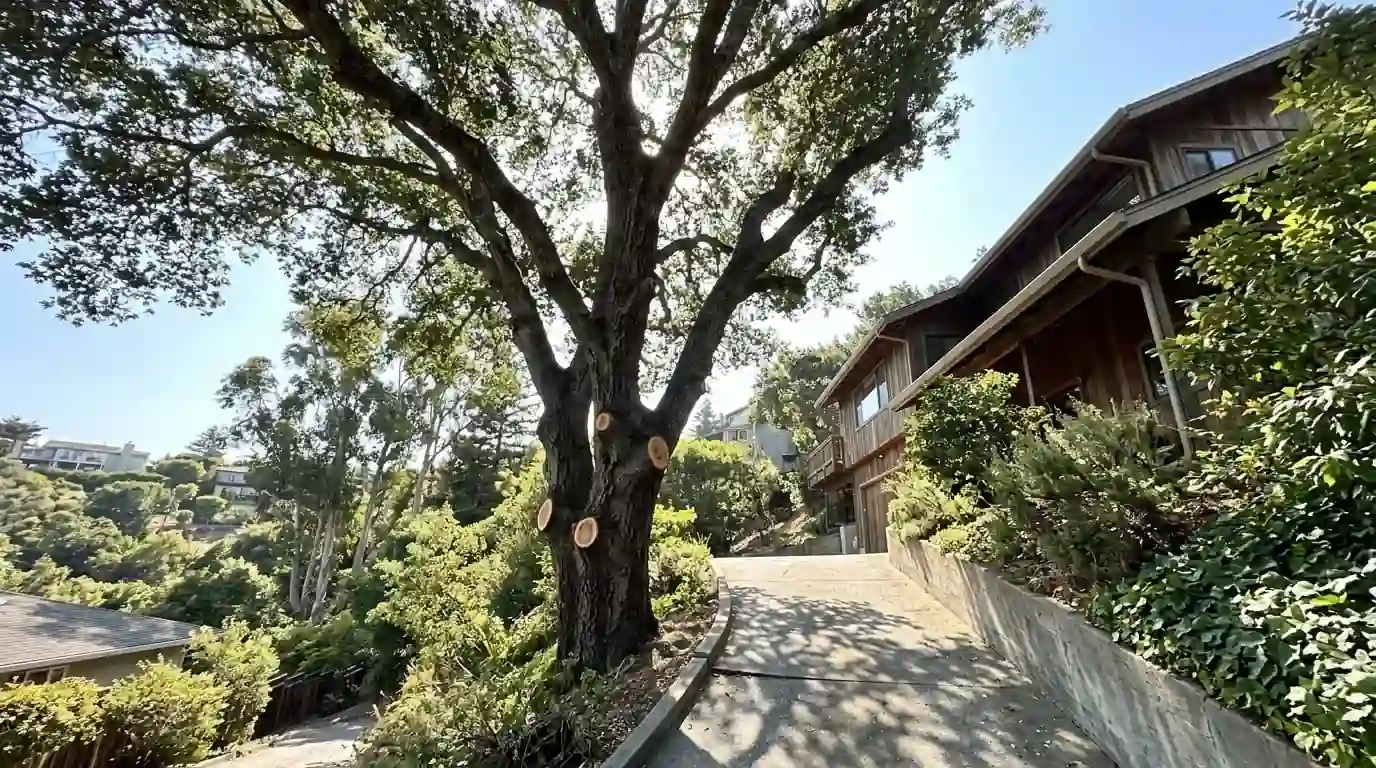
- Trucks clip the branchesBroken limbs hanging over the street or driveway after a delivery are a clear sign the canopy is too low.
- Branches resting on the roof edgeLimbs on shingles wear them down, clog gutters and give rats a bridge onto the house.
- People duck on the sidewalkLow branches over a public walkway are a hazard for pedestrians, especially at night.
- A fire inspection noticeHills properties in the wildfire district get yearly inspections, and low limbs near the house are a common finding.
- Grass and shrubs under the canopyDry vegetation under low branches forms a ladder fuel path into the tree.
- No light reaching the lawn edgeLifting the lowest limbs brings in morning and evening light from the side.
How do we lift a crown safely?
Measure the clearance you need
We check what has to fit underneath, the fire zone distances if you're in the hills, and how much live crown the tree can spare.
Start with the lowest, weakest limbs
Dead, crossing and drooping low branches come off first, which often gives much of the needed room.
Shorten before removing
On big lower limbs, we sometimes reduce the end weight first, then take the limb to the collar in a later visit so the tree isn't hit with large wounds at once.
Cut in three steps
Heavy limbs get an undercut, then a top cut farther out, then a final cut at the collar, so the bark doesn't tear down the trunk.
Check from below and clean up
We walk the driveway, path or street to confirm the clearance, then chip the limbs and sweep the area.
What do Oakland's fire rules and streets mean for crown raising?
In the wildfire district, raising is the tree work inspectors look for most. Zone 1, from 5 to 30 feet around the house, calls for limbs at least 6 feet above the ground and 10 feet from structures and chimneys. Proposed state Zone 0 rules for the first 5 feet would push that further, with no branches within 10 feet of roofs, walls or chimneys and no dead branches. Oakland plans outreach in 2026, mock inspections in 2027 and enforcement with citations from 2029. The 1991 Oakland Hills fire is why these rules carry so much weight in Upper Rockridge and the ridges above it.
The streets matter too. Many hill roads are narrow, with cars parked on one side, so overhanging limbs force fire engines and trucks into the opposite lane or stop them outright. Raising a street-side tree can make a real difference to access. If the tree is a city street tree, Oakland prunes street trees only in hazardous or emergency situations, and owners can apply through a hold-harmless form to have pruning done themselves. For a coast live oak 4 inches DBH or larger, we keep each raise modest, since heavy cutting on a protected oak counts as removal under the code.
What decides how much work a crown raise takes?
Every job is priced after we see the tree. These are the things that move the number.
- Number and size of low limbsA few small branches over a path are quick, but heavy lower limbs over a roof take rigging.
- Clearance height neededStreet and truck clearance asks for more lift than a walkway or garden bed.
- Traffic controlWork over a street or shared driveway may need cones, a spotter and timing around neighbors.
- Slope and accessHillside trees with limbs over a steep drop take longer to reach and lower.
- Number of treesFire clearance often covers every tree near the house, not just one.
Work that often goes with crown raising
Where we handle crown raising
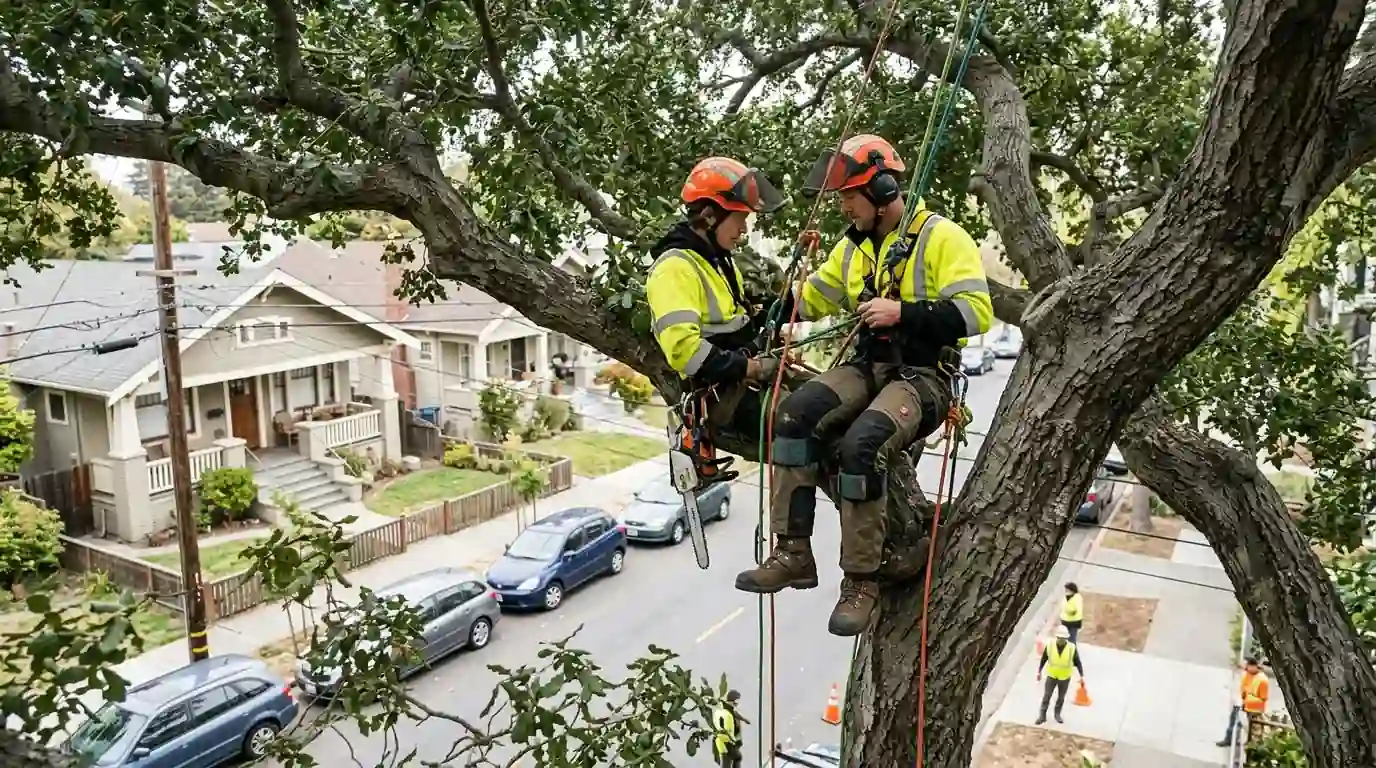
From the office on Martin Luther King Jr Way in Temescal and the Walnut Creek office on Bonanza Street, we cover Oakland and the East Bay. The biggest communities we serve, with a main ZIP code for each:
Crown raising questions we hear in Oakland
How high should tree limbs be for Oakland's fire inspection?
In the 5 to 30 foot zone around the house, Oakland Fire expects tree limbs at least 6 feet above the ground and 10 feet from any structure or chimney. On a slope, we measure from the uphill side and look at what's growing beneath, since shrubs under a tree can still form a ladder.
How much of the trunk can be cleared of branches?
A common guideline is to keep live crown on at least the top two thirds of the tree's height. Raising past that leaves the tree top-heavy and short on leaves. On tall trees, that still allows plenty of clearance. On short or young trees, we raise in stages over several years.
Can you raise a tree that hangs over the street?
Yes. We set out cones, use a spotter and time the cuts around traffic. If the tree sits in the city planting strip, it may be a city street tree, and Oakland has its own process for owners who want one pruned. We check that before starting.
Will removing lower limbs make my tree unstable?
Not when done in moderation. Lower limbs help taper the trunk on young trees, so we leave some temporarily on those. Mature trees handle a reasonable raise well. The problems come from stripping too much at once or cutting into the trunk past the collar, and both are things we avoid.
Saws, chippers, grinders and climbing gear from names like Stihl, Husqvarna and Vermeer
StihlHusqvarnaVermeerBanditMorbarkRaycoAltecPetzlSilkySherrillTeufelbergerNotchEchoToro
Need crown raising in Oakland or the East Bay?
Call and tell us what the tree is doing. Someone picks up any hour, and we can usually talk you through the next step on that first call.