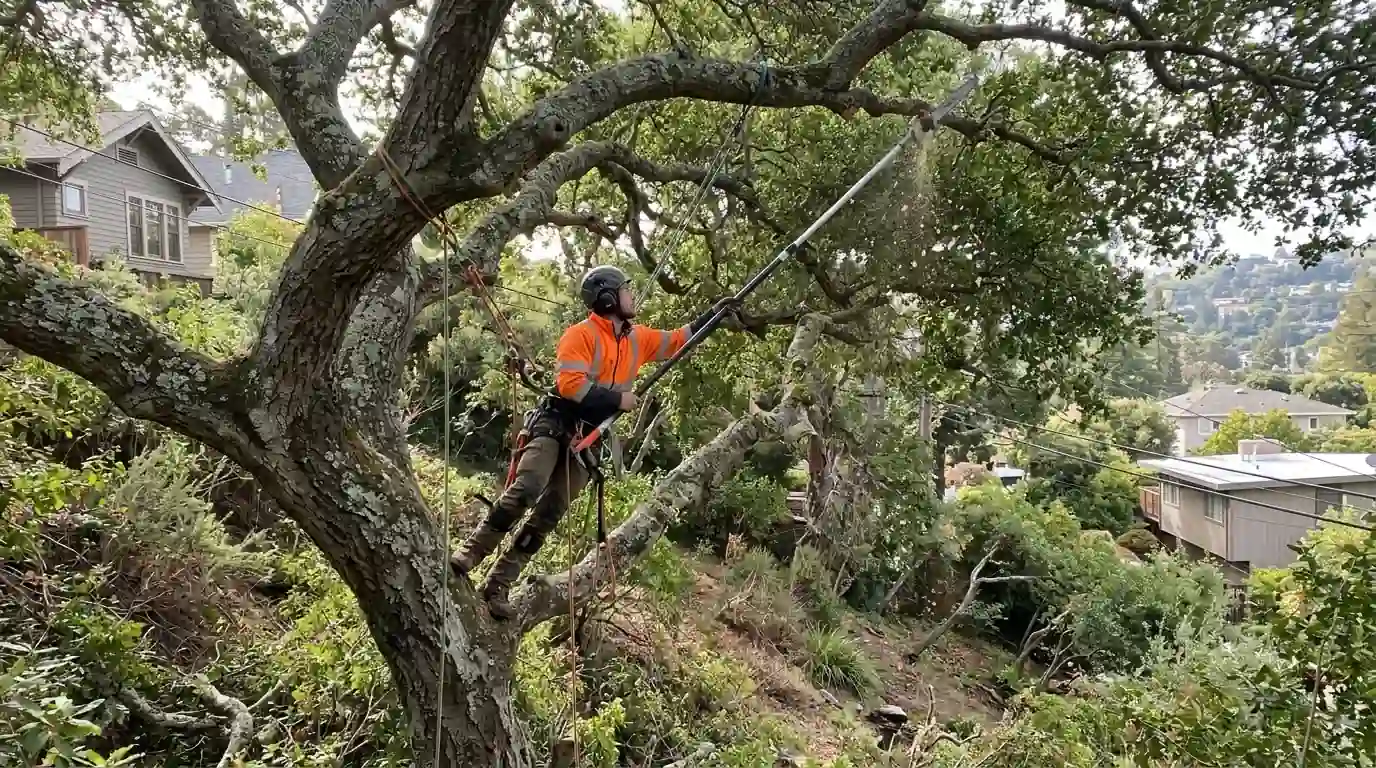
Crown thinning in Oakland, CA
A dense crown catches wind like a sail and shades the yard below to bare dirt. We thin Oakland canopies by removing selected inner branches, so air and light pass through while the tree keeps its natural shape.
Quick answer
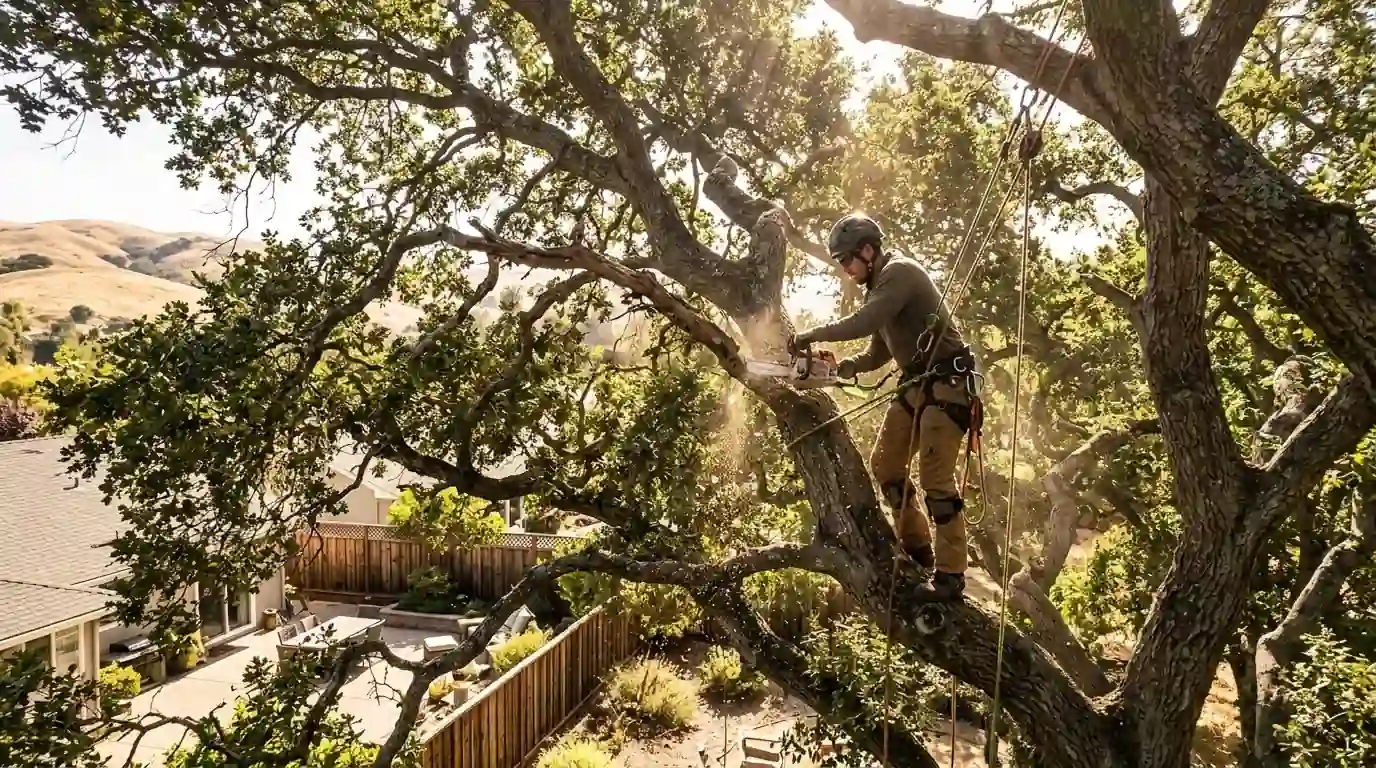
Crown thinning is selective removal of smaller live branches throughout the canopy to lower its density. It cuts wind load, lets light reach lawns and gardens and improves airflow, without changing the tree's height or outline. Our climber removes crowded, crossing and weak branches evenly across the crown, typically taking out no more than about 15 to 20 percent of the live foliage.
What crown thinning involves in Oakland
Think of a tree's crown as a sail. The denser the foliage, the more wind it catches, and the more force runs down the limbs into the trunk and roots. In the gusts that come with East Bay winter storms, a thick, heavy crown is more likely to lose limbs or tip on wet ground. Thinning lets some of that wind pass through. The tree still bends and moves, but each limb carries less load. That matters most for trees standing over a house, a parked car or a busy sidewalk.
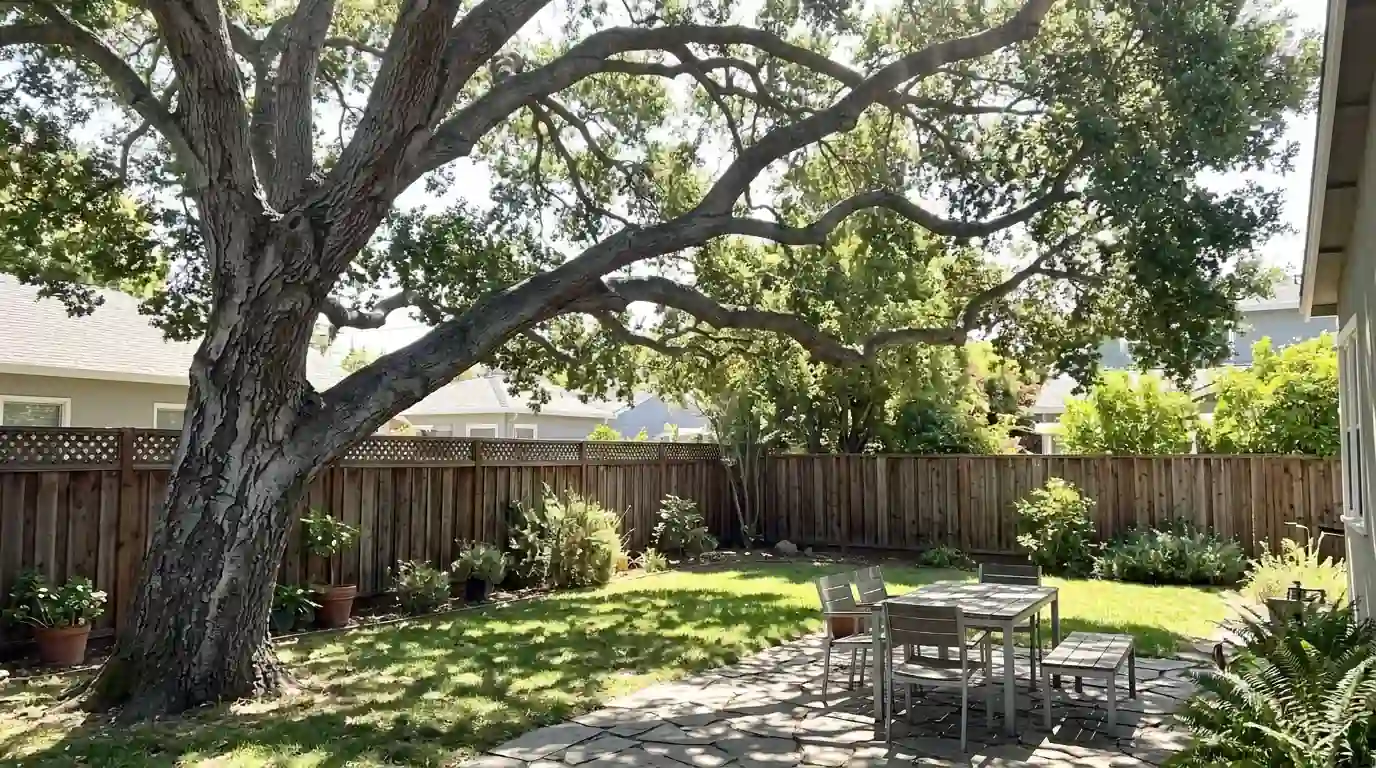
Light is the other reason people call. Under a dense coast live oak or a crowded acacia, lawns die out and vegetable beds stall. A careful thin opens small gaps across the crown, so dappled light reaches the ground through the day. The tree doesn't look cut. From the street it keeps the same outline, just less heavy. For a bay view through the trees, our view pruning work uses some of the same cuts with a narrower goal.
Where we cut matters as much as how much. Thinning targets branches that are crossing, rubbing, growing back toward the center, or crowded together off the same spot. We spread the cuts across the whole crown instead of stripping the interior. That last mistake, called lion's tailing, leaves all the foliage at the branch tips, which actually raises the load on each limb. Good thinning keeps inner growth along the main limbs and makes every cut at a collar or a healthy side branch.
Which trees in Oakland benefit from crown thinning?
- Dense oaks shading the whole yardCoast live oaks grow thick, evergreen crowns that block sun year-round, and a light thin brings some of it back.
- Fast-growing acaciasAcacias put on heavy growth quickly and can split in wind, so periodic thinning reduces that weight.
- Trees that whip hard in stormsIf a crown sways dramatically or drops twigs in moderate wind, it's carrying more sail than it should.
- Crowded, rubbing branches insideLimbs grinding against each other open wounds that let decay in.
- Moss, mildew or poor airflowDamp, still air in a packed canopy favors fungal problems on leaves and bark.
- Gardens that stopped producingFruit trees and vegetable beds under a dense shade tree often need more light than they're getting.
How do we thin a crown without overdoing it?
Set the goal together
More light on a patio, less wind load over the house or better airflow for an ailing tree each call for a slightly different pattern of cuts.
Start with dead and damaged wood
Removing what's already dead often opens the crown more than people expect, and it costs the tree nothing.
Choose branches evenly across the crown
Our climber works top to bottom and side to side, picking crowded and crossing branches so the thinning reads as even from every angle.
Keep the inner growth
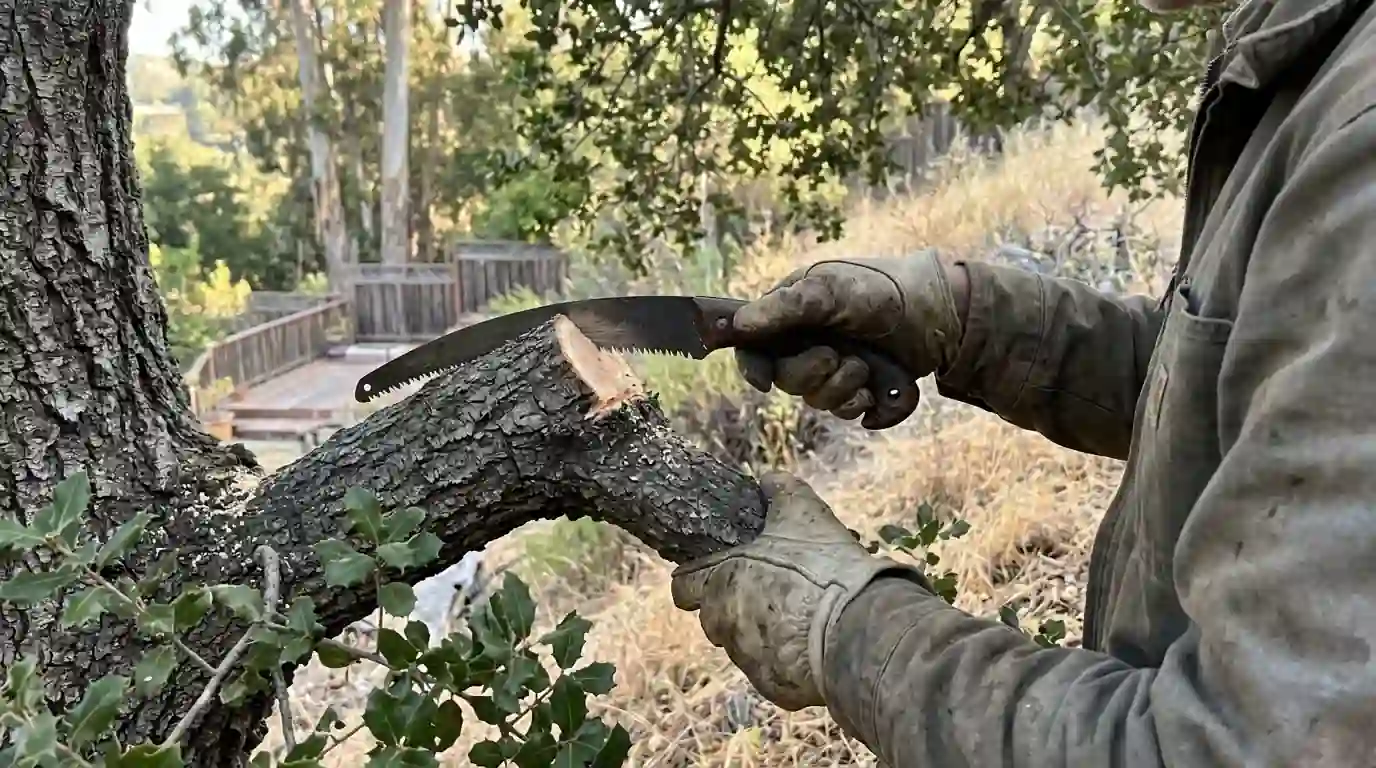
We leave foliage along the main limbs and cut back to collars or strong laterals, never stripping branches bare to the tips.
Step back and check
Partway through, we look from the ground and from inside the house if light is the goal. It's easier to take a little more than to put branches back.
What should Oakland owners know before thinning an oak or acacia?
Thinning a coast live oak in Oakland stays well within the rules when it's done properly. The city protects coast live oaks at 4 inches DBH, and its definition of removal covers topping and similar damage, so heavy-handed cutting on a protected oak can be treated like removing it. A measured thin of 15 to 20 percent of the foliage, spread through the crown, is normal care. In Berkeley the line is stated plainly: more than 25 percent of an oak's leaf, stem or root system within 24 months counts as excessive pruning.
Season matters for oaks here. Sudden oak death spreads most in wet springs, and fresh cuts during the rains invite trouble, so we schedule oak thinning for the dry months. Acacias and eucalyptus, common in Oakmore and along the hills, tolerate thinning most of the year. In the wildfire district, thinning also supports the horizontal and vertical spacing that Oakland Fire expects in the 30 to 100 foot zone, alongside defensible space clearing closer to the house.
What determines the size of a thinning job?
Every job is priced after we see the tree. These are the things that move the number.
- Crown size and densityBig, packed canopies have many more branches to evaluate and cut.
- SpeciesOaks call for slower, more careful selection than a fast-growing acacia or privet.
- How much to removeA light thin goes quicker than a heavier one, though we keep both within safe limits.
- Climbing accessTrees on slopes, next to structures or over pools take more setup and lowering.
- Season limitsOak thinning gets planned for the dry months, which affects when the work can happen.
Work that often goes with crown thinning
Where we handle crown thinning
From the office on Martin Luther King Jr Way in Temescal and the Walnut Creek office on Bonanza Street, we cover Oakland and the East Bay. The biggest communities we serve, with a main ZIP code for each:
Crown thinning questions we hear in Oakland
How much of a crown can you thin at once?
We usually stay around 15 to 20 percent of the live foliage in a single visit, and less on older or stressed trees. Taking more forces the tree to push out a flush of weak shoots. If a canopy needs more opening than that, we split the work across two visits a couple of years apart.
Will crown thinning stop a tree from falling in a storm?
It lowers the wind load on the crown, which reduces limb breakage, but it can't fix a bad root system or a decayed trunk. If a tree has a lean, root damage or rot, thinning alone isn't the answer. A risk assessment tells you whether the tree needs more than a thin.
Is thinning safe for an acacia that already split once?
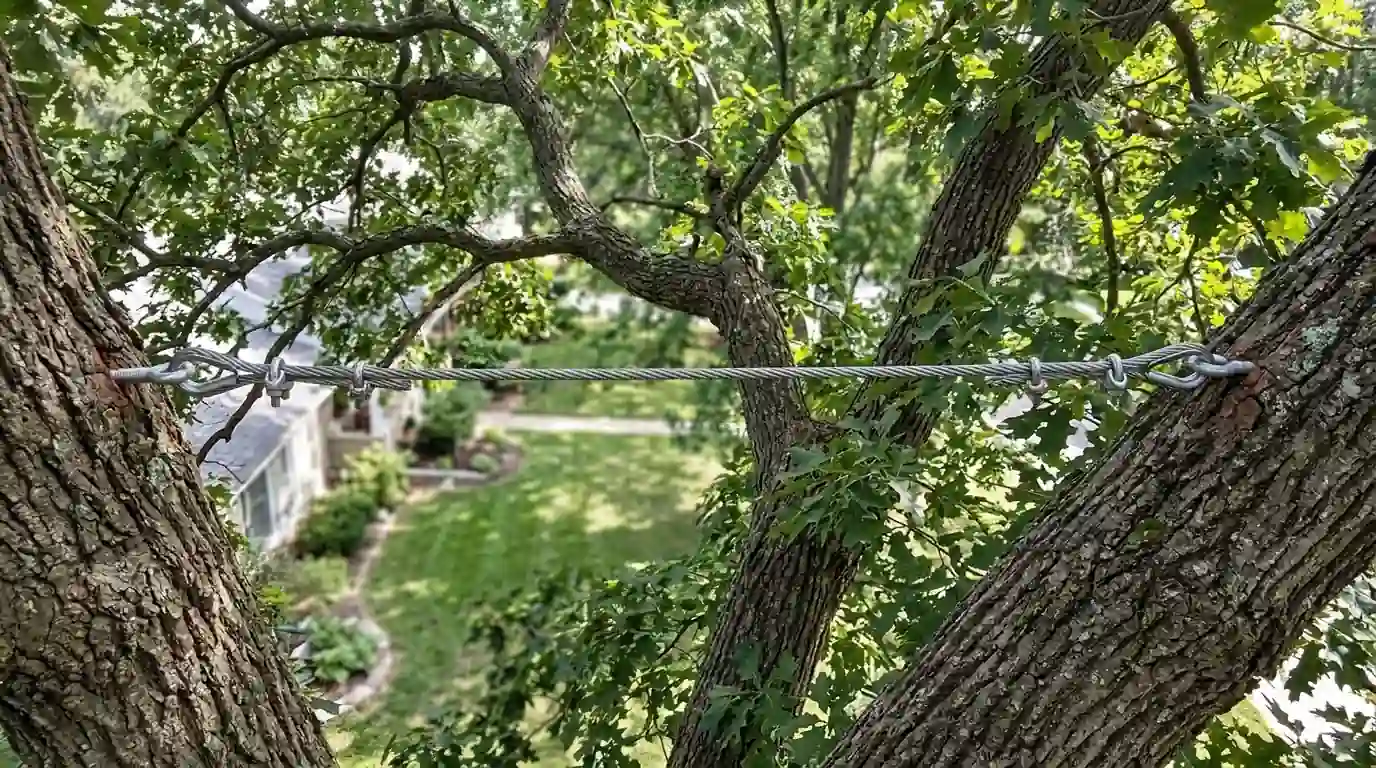
Thinning helps an acacia by reducing the weight on its long limbs, but a tree that has split may have a weak union elsewhere too. We look at the old break and the remaining forks. Sometimes a thin plus a support cable makes sense, and sometimes the honest answer is removal.
Will a thinned tree look sparse?
It shouldn't. Done right, the tree keeps its shape and size, and most neighbors won't notice anything beyond a lighter look. If a tree looks see-through or has bare limbs with tufts at the ends, it was over-thinned, which is the opposite of what we do.
Saws, chippers, grinders and climbing gear from names like Stihl, Husqvarna and Vermeer
StihlHusqvarnaVermeerBanditMorbarkRaycoAltecPetzlSilkySherrillTeufelbergerNotchEchoToro
Need crown thinning in Oakland or the East Bay?
Call and tell us what the tree is doing. Someone picks up any hour, and we can usually talk you through the next step on that first call.