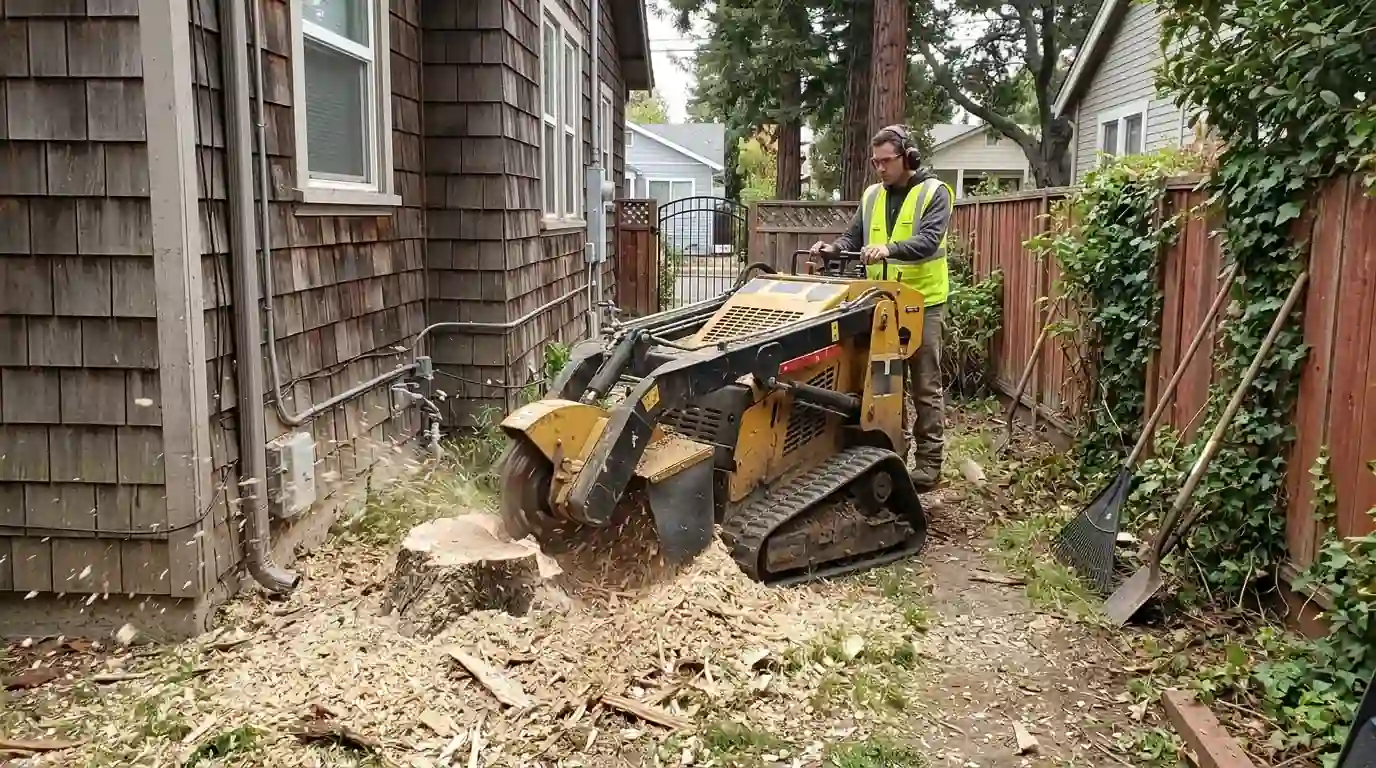
Tree planting in Oakland, CA
A tree planted in the wrong spot becomes the removal job twenty years later. We help Oakland homeowners pick a tree that fits the space, plant it at the right depth and set it up to survive its first dry summers.
Quick answer
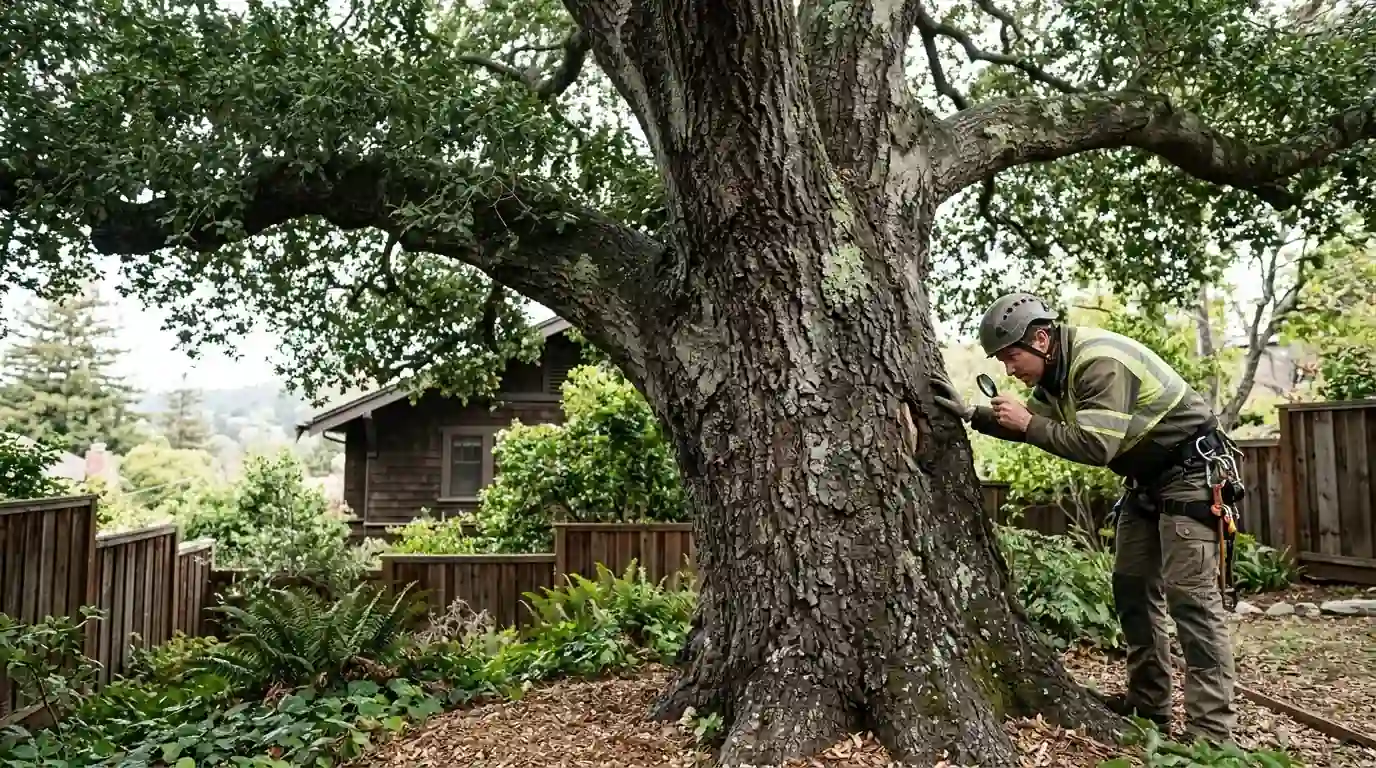
Tree planting starts with matching the species to the space: room for canopy and roots, distance from the house, wires overhead and sun. You need it when replacing a removed tree, filling a bare yard or meeting a permit's replacement condition. We choose the tree with you, plant it with the root flare at grade, stake only if needed and leave you a watering plan.
What tree planting involves in Oakland
The right tree for an Oakland yard depends on the space more than on looks. A coast live oak, valley oak or coast redwood will eventually spread wide and grow tall, so each needs a large yard with room well away from the foundation and the sewer line. Madrone is lovely but particular, and it wants sharp drainage. A narrow side yard or a front strip under power lines calls for something much smaller.
Many of the removals we do started as handsome trees in a bad spot. Redwoods set three feet from a garage, blue gum eucalyptus along a fence line, pines squeezed between two houses. Each one grew into a problem for roots, roofs or neighbors. A little planning on planting day saves the stump grinding and cleanup that comes when a tree outgrows its place.
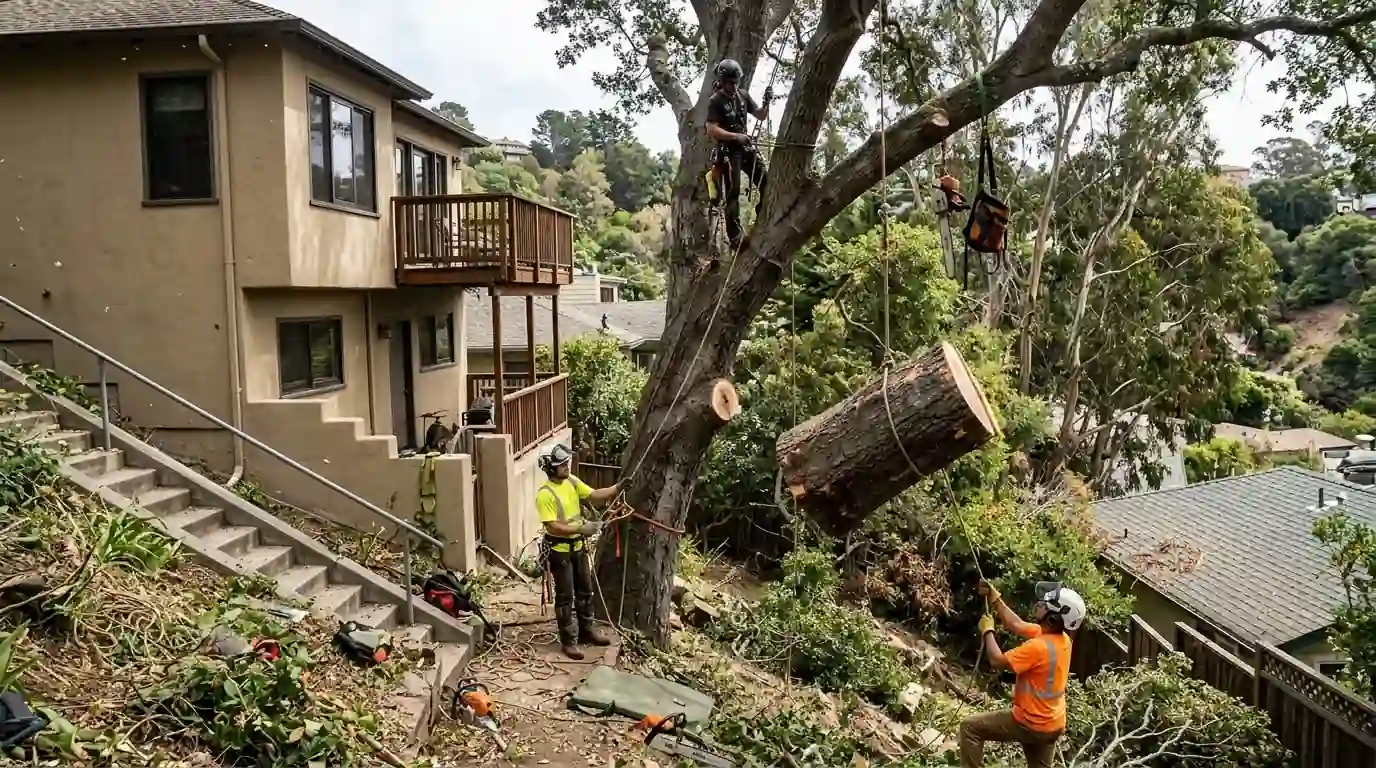
Planting also follows a permitted removal. Oakland's code names native replacement trees, and the permit can require them. We handle the whole sequence: taking out the old tree, grinding the stump where the new one goes, and setting a young tree that suits the spot. Then we explain exactly how to water it, because most newly planted trees in the East Bay fail from summer drought rather than disease.
When is the right time to plant a new tree?
- A permit calls for a replacementRemoving a protected tree in Oakland can come with a condition to plant one or more native trees of a set size.
- A removal left the yard bareLosing a big shade tree changes how hot the house gets in summer, and a young tree starts that shade over.
- The rainy season is closePlanting in fall lets winter rain settle the soil and grow roots before the first long dry spell.
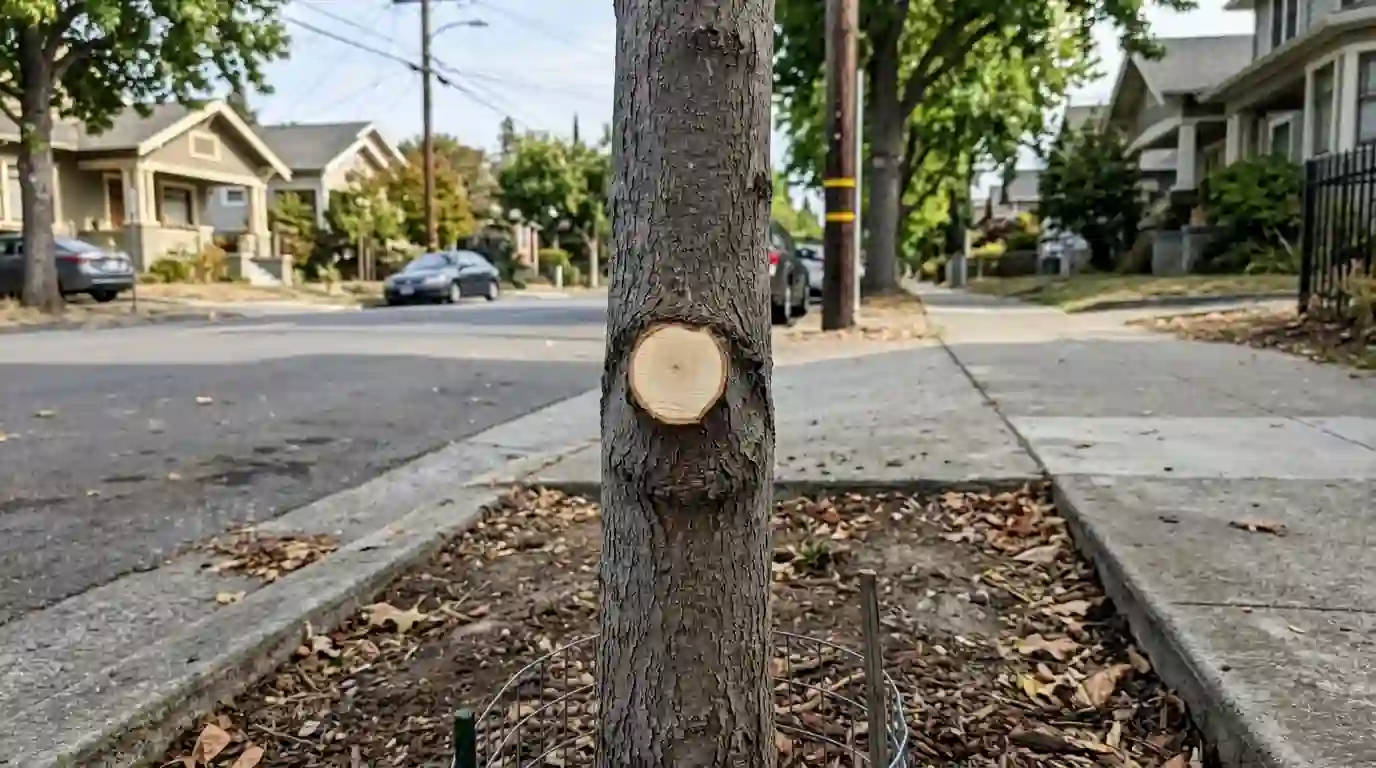
- A street strip sits emptyAn empty planting strip by the sidewalk is a chance to add a small tree that suits the space and the wires above.
- You want privacy or a screenA row of the right evergreen can block a view without growing into a fence-busting problem.
- A slope needs rootsNative trees with deep roots help hold soil on hillside lots that have lost their cover.
What goes into the cost of planting a tree?
Every job is priced after we see the tree. These are the things that move the number.
- Size of the nursery stockA 24-inch box tree is far heavier than a 15-gallon tree and may need extra hands or a dolly to set.
- SpeciesNative oaks, redwoods and madrone vary in availability, and some sizes take longer to source.
- Site preparationGrinding an old stump, lifting sod or breaking hard clay adds time before the hole is dug.
- Distance to the planting spotA tree carried up stairs or across a steep hillside yard takes more work than one set beside the driveway.
- Number of treesPlanting several replacement trees in one visit spreads the setup time across all of them.
- Irrigation setupAdding a drip ring or watering bag helps the tree through summer and adds a little to the job.
How we plant a tree that lasts
Measure the space
We check the distance to the house, fences, paving, sewer lines and wires, and note how much sun the spot gets. That decides how big the tree can be at maturity.
Choose the species and stock
We go over options that fit, from natives like coast live oak to compact street trees. At the nursery we look for a straight trunk, a strong leader and no roots circling the container.
Dig wide, not deep
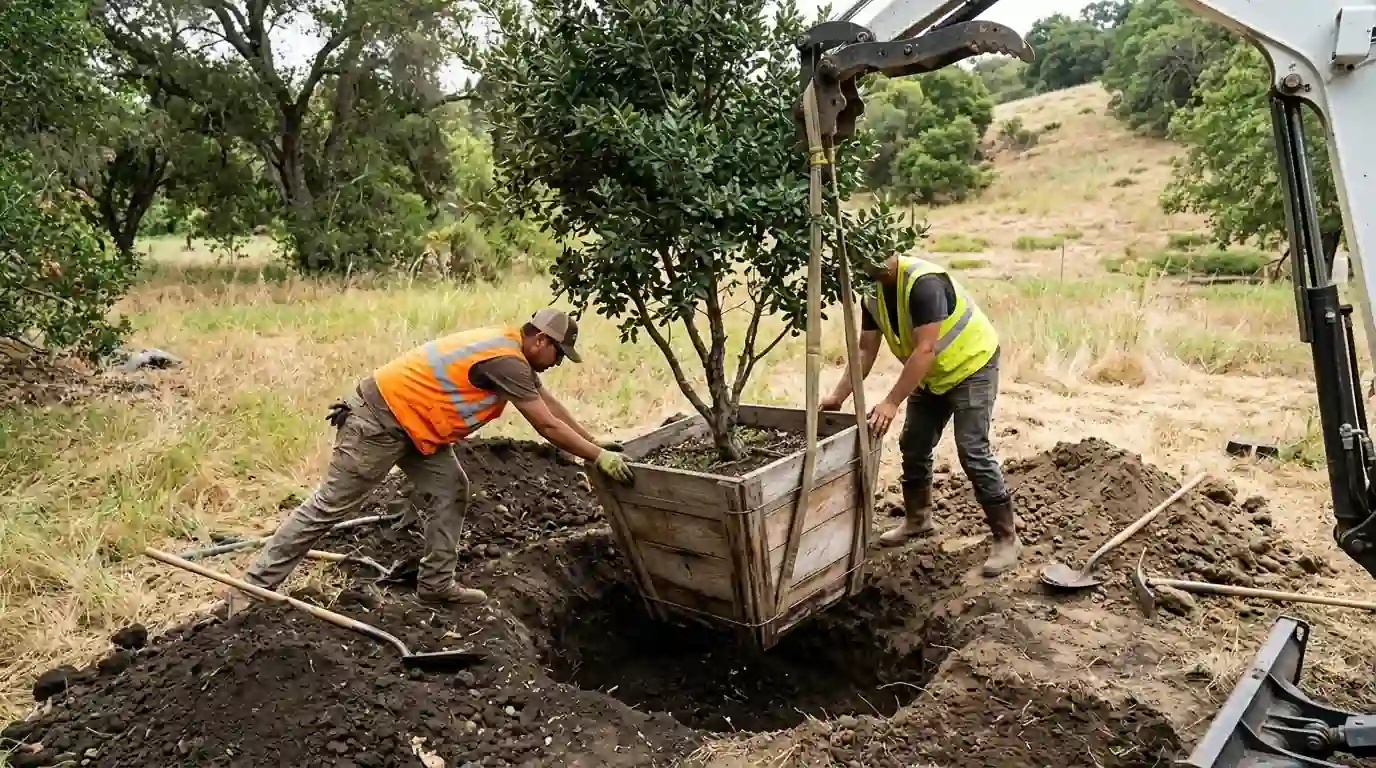
The hole is two to three times as wide as the root ball but no deeper. The tree sits on firm, undisturbed soil so it doesn't sink after watering.
Set the root flare at grade
The point where the trunk widens into roots stays at or slightly above the soil line. We tease out or cut any circling roots so they grow outward instead of choking the trunk.
Backfill, mulch and soak
We backfill with the native soil, build a shallow watering basin and spread wood chip mulch a few inches back from the trunk. Then we soak the root ball and the surrounding soil thoroughly.
Stake only if it needs it
Most young trees grow stronger trunks without stakes. When wind or slope calls for support, we use two loose ties set low and tell you when to take them off.
Oakland's replacement trees and planting under wires
When Oakland requires a replacement after a protected tree comes out, the code names five native species: coast redwood, coast live oak, madrone, California buckeye and California bay laurel, at 24-inch box size. No replacement is required for nonnative species. We help pick among those five for the actual space. A buckeye stays smaller and suits mid-size yards. Bay laurel carries sudden oak death spores without dying, so we keep it away from existing oaks.
Street strips in neighborhoods like Laurel and Dimond often sit under overhead lines. PG&E keeps the top primary lines clear, but a tall tree planted below them gets pruned hard for life, so a small-maturing tree is the better choice. Then comes water. The dry season runs roughly May to October, and a new tree needs deep, regular watering through at least its first two or three summers, tapering as roots spread.
Work that often goes with tree planting
Where we handle tree planting
From the office on Martin Luther King Jr Way in Temescal and the Walnut Creek office on Bonanza Street, we cover Oakland and the East Bay. The biggest communities we serve, with a main ZIP code for each:
Tree planting questions we hear in Oakland
Which native trees count as replacements under Oakland's tree code?
Coast redwood, coast live oak, madrone, California buckeye and California bay laurel, planted at 24-inch box size. Those are the species the code names. Your permit spells out how many trees are required and where, and we match the species to each spot so the new trees actually take hold.
How often should I water a newly planted tree in Oakland?
During the first dry season, plan on a deep soak about once a week, more during hot spells, so the whole root ball and the soil around it get wet. In the second and third summers you can stretch the interval as roots spread. Skip watering while winter rain is doing the job.
Can I plant a coast redwood in a small backyard?
We advise against it. Coast redwoods grow fast, get very tall and send roots far out, so in a small yard they crowd foundations, fences and neighbors within a couple of decades. If you want a native tree in a tight space, a California buckeye is usually the better fit.
How deep should a new tree be planted?
No deeper than it grew in the nursery. The root flare, where the trunk widens at the base, should sit at the soil line or just above it. Trees planted too deep often decline slowly over years from girdling roots and bark rot, and the cause is hard to fix once it's buried.
What tree can go in a planting strip under power lines?
A small tree whose mature height stays well below the lines, so it never needs topping to clear them. The width of the strip matters too, since a narrow strip can't hold a big root system without lifting the sidewalk. We look at both before suggesting a species.
Saws, chippers, grinders and climbing gear from names like Stihl, Husqvarna and Vermeer
StihlHusqvarnaVermeerBanditMorbarkRaycoAltecPetzlSilkySherrillTeufelbergerNotchEchoToro
Need tree planting in Oakland or the East Bay?
Call and tell us what the tree is doing. Someone picks up any hour, and we can usually talk you through the next step on that first call.