Oak Tree Pruning
Large valley oaks and coast live oaks over homes and lawns need deadwood removed and light structural cuts, not heavy thinning.
DetailsDanville sits between Las Trampas and Mount Diablo, and its valley oaks are some of the biggest trees we work on. We prune them, remove failing trees and keep fuel down on the large lots that back onto open hills.
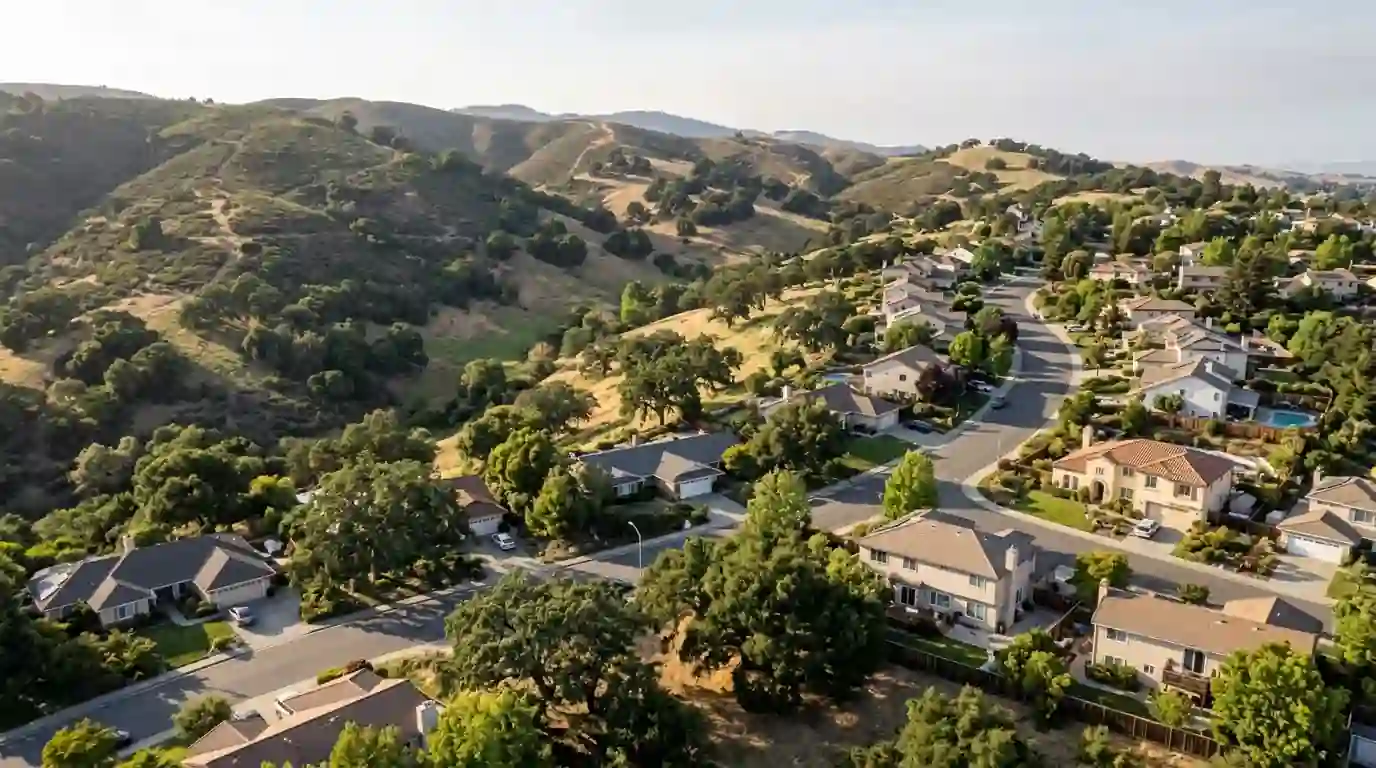
Danville jobs center on big valley oaks and coast live oaks spread across larger lots, many in planned neighborhoods with HOA landscape rules. We prune those oaks lightly, take out trees that have died or failed, protect roots during remodels and clear dry grass and brush on hillside parcels. The town keeps its own tree rules, and we check them before any cutting.
Danville grew out of the old ranch land of the San Ramon Valley, and in many neighborhoods the valley oaks stayed when the houses went in. The result is a town where a single oak can shade half a backyard, a front lawn or a whole cul-de-sac. Coast live oaks fill the creek corridors and north-facing hillsides, and bay laurel and California buckeye mix in near water.
Las Trampas rises along the west side of town, and Mount Diablo looms to the east. Between them, neighborhoods range from older homes near Hartz Avenue downtown to larger estates in Blackhawk and along Diablo Road. Lots are often bigger than elsewhere in the East Bay, with long drives, pools, sport courts and landscaping wrapped around the oaks.
Those oaks face pressures that build slowly. Lawns and sprinklers wet the root collar all summer, patios cover root zones and grade changes sever roots during remodels. On the hillside edges, dry grass and brush reach right up to fences, and summer heat in the San Ramon Valley pushes past what most of the East Bay sees. Clay soils hold winter rain, which loosens roots on saturated slopes.
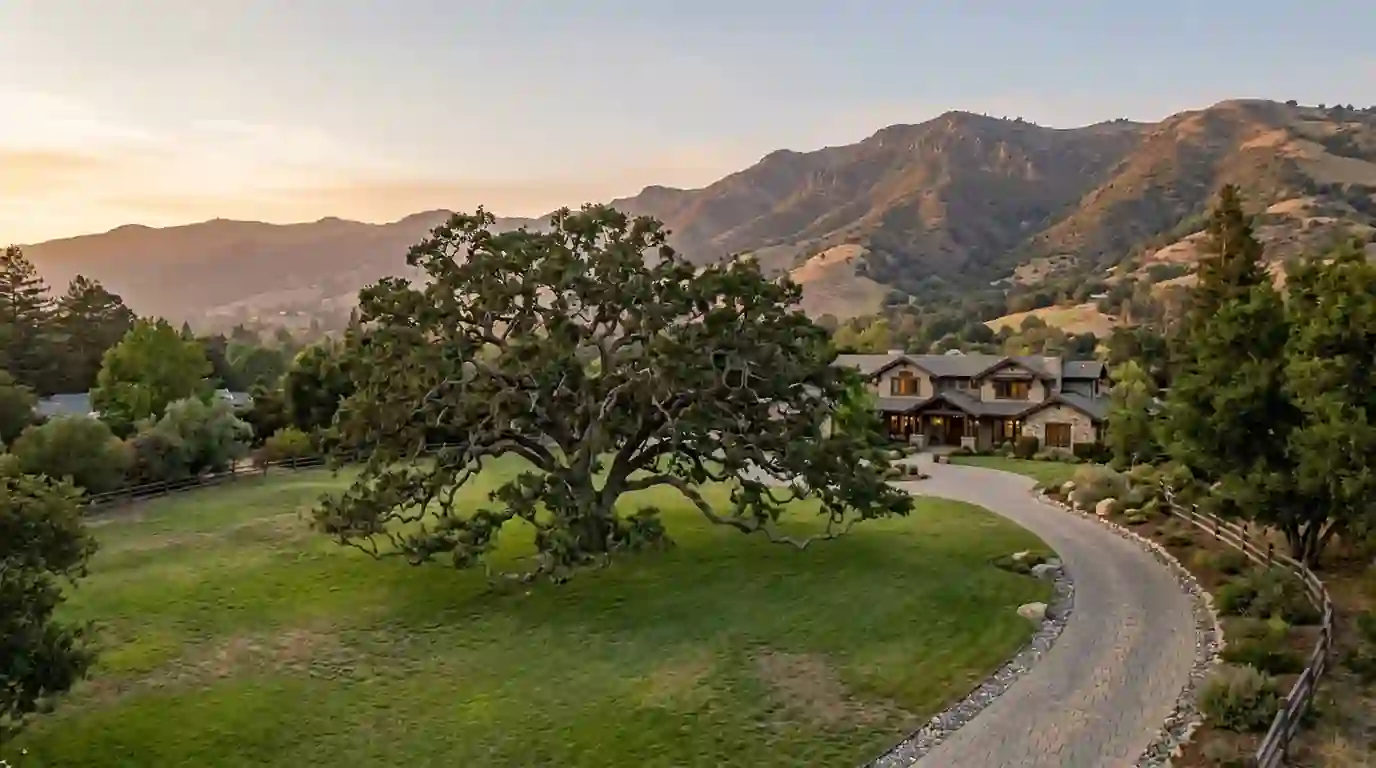
Large valley oaks and coast live oaks over homes and lawns need deadwood removed and light structural cuts, not heavy thinning.
DetailsOwners of very large oaks want to know whether decay, a crack or fungus at the base means the tree is still safe near the house.
DetailsBig oaks with heavy, spreading leaders sometimes benefit from support cables that take strain off a weak fork.
DetailsHomes backing onto open hillsides near Las Trampas and Mount Diablo need grass, brush and low limbs cleared before summer.
DetailsRemodels, pools and additions are common on large lots, and the oaks next to them need root zone protection while work happens.
DetailsDanville has its own tree rules, and native oaks carry weight in them. Before we remove or heavily prune a tree, we check how the town treats it and whether approval is needed. If it is, our permit assistance assembles the measurements, photos and reasons the application calls for, so the review can move along without back and forth.
Many Danville neighborhoods add a second layer: homeowners association landscape rules. Some require approval for tree removal, set replanting expectations or control what can go in common areas and street-facing yards. We ask for those rules early and work within them. Between the town and the association, it pays to sort out every approval before scheduling anything major.
Space is usually on our side. Wide streets, long driveways and big side yards let us bring the chipper close and move wood efficiently. The challenge is protecting what's around the tree: pavers, pool decks, lighting, irrigation and planted beds that took years to fill in. We lay down plywood and mats, rope pieces down rather than dropping them and leave the landscaping as we found it.
Gated communities and HOA neighborhoods come with access windows, vendor check-in and rules about parking on common streets. We sort those out before the job. On hillside lots near open space, steep backyards and dry grass mean spring is the window for fuel work. Homes further down the valley in San Ramon and up toward Walnut Creek show similar patterns.
ZIP codes for Danville: 94506, 94526.
Size alone isn't a reason to remove it. A healthy valley oak with good structure can live safely beside a home for a very long time. The real questions are decay, cracks, root damage and how the tree has been watered and pruned. We inspect the base, trunk and crown and tell you whether pruning, cabling or removal fits.
Many do, especially for trees visible from the street or in common areas. Check your association's landscape rules or ask the management company. Association approval is separate from the town's own tree rules, so you may need both. We can supply photos and a short description of the tree for either review.
Only when the structure calls for it. Cables help oaks with two or more heavy leaders joined at a weak fork, or long limbs reaching over a roof or patio. They reduce strain but don't fix decay. We install them high in the crown and check them over the following years. Many oaks need only pruning and deadwood removal.
Fence off the root zone under the canopy before work starts and keep machinery, spoil piles and materials outside it. Route the pool plumbing around major roots. Excavation close to the trunk can kill an old oak slowly over several years, so we review the plans and mark where digging would cause the most harm.
Call any hour. Tell us the street, the tree and what changed, and we will plan the visit around your access.