Brush and Lot Clearing
Cutting dry grass to 4 inches and clearing broom and dead brush is the most common job here each spring.
DetailsChabot Park sits in the east Oakland hills above Interstate 580, where open grassy slopes and eucalyptus groves run toward Lake Chabot. We clear brush, remove eucalyptus and cut back the dry growth that builds up here every summer.
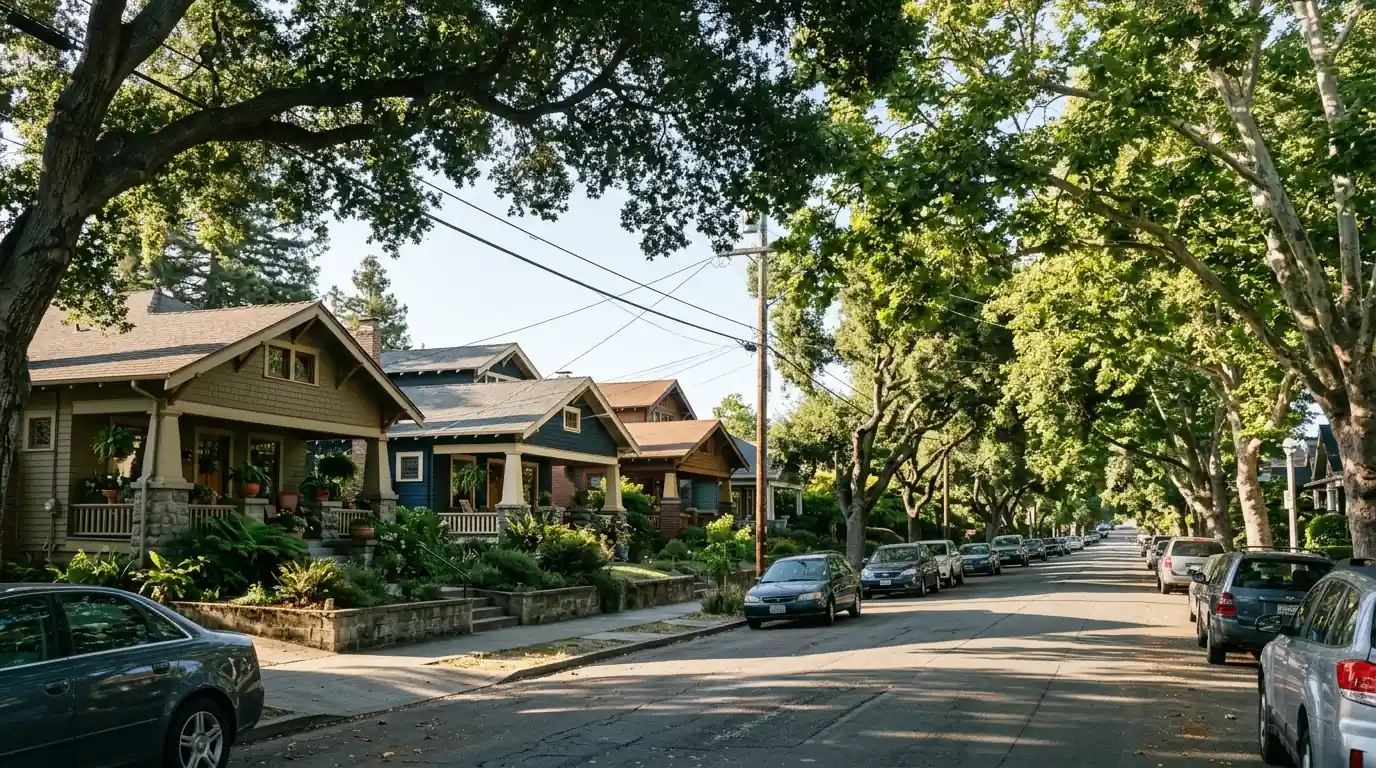
We remove eucalyptus, clear brush and dry grass, and prune trees around Chabot Park homes. The neighborhood sits on the east Oakland hills near Lake Chabot and Interstate 580, with more open grass and eucalyptus than the wooded canyons farther north. Summer grass and bark litter are the main fuels here, and most of our work targets them.
Chabot Park is more open than most Oakland hill neighborhoods. Slopes that aren't built on stay in wild grass, which turns gold by early summer and dries hard through fall. Eucalyptus stands in groves along the hillsides and ridgelines, and the trees drop long bark strips, leaves and branches onto the grass below.
Around the homes, you'll find coast live oaks, Monterey pines, acacias and fruit trees in many yards. Lake Chabot and its regional park lie just to the east, and open land wraps around parts of the neighborhood. That mix of dry grass, eucalyptus litter and open hillside is why fire clearance comes first here.
Soils on these slopes are clay-heavy, and they stay soaked through the rainy months from November to March. Big eucalyptus on wet clay can fail in winter storms. Sequoyah sits just to the north with a similar mix, and the flatter streets of San Leandro start below the freeway.
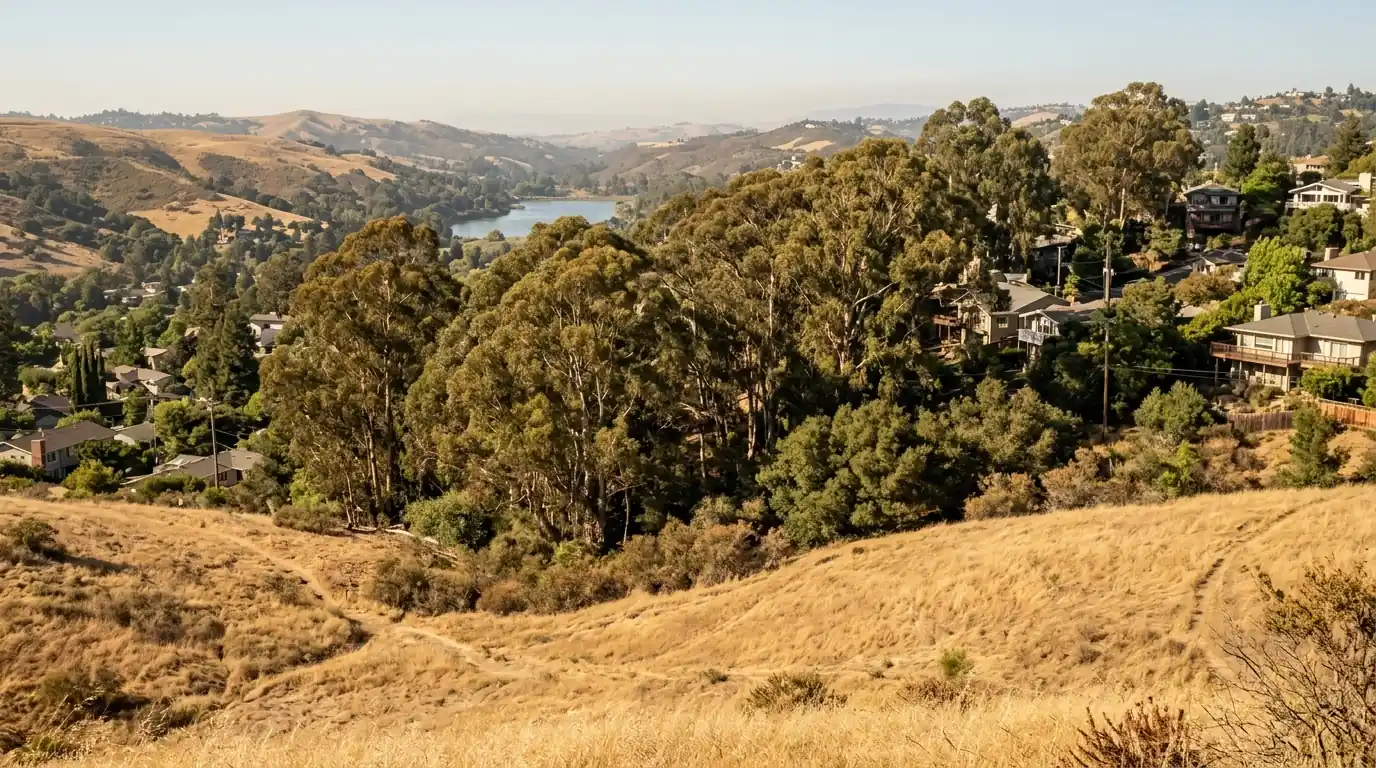
Cutting dry grass to 4 inches and clearing broom and dead brush is the most common job here each spring.
DetailsEucalyptus close to houses drops bark and limbs that feed fire and dent roofs. Owners often take out the nearest trees first.
DetailsLimbing up trees, spacing shrubs and clearing gutters help Chabot Park homes pass the yearly inspection.
DetailsDrought-stressed pines and acacias die on the dry slopes. We take them down before they become fuel or fall.
DetailsAfter eucalyptus removal, owners often want the stumps ground out so the ground can be replanted or mowed.
DetailsChabot Park is in Oakland's wildfire district. Zone 1, from 5 to 30 feet off the house, requires tree limbs at least 6 feet up and 10 feet from walls and chimneys, with roofs and gutters cleared. Zone 2 runs out to 100 feet or the property line and calls for grass no taller than 4 inches, spacing between trees and shrubs, and dead plants removed. The proposed Zone 0 rules aren't final, and Oakland plans non-enforced inspections in 2028 before citations start in 2029.
Eucalyptus is not protected under Oakland's tree chapter, so removing one on private land needs no permit. Monterey pine isn't protected either but still needs posting and written notice to Parks and Recreation. Coast live oaks are protected from 4 inches DBH, and most other species from 9 inches DBH, so we measure oaks near a eucalyptus job. Our eucalyptus removals plan around any oak that has to stay.
Many Chabot Park streets are wider than in the north hills, which makes parking the truck and chipper easier. The challenge is the open slope. We work grass and brush by hand on steep ground and use the chipper at the road to keep loose material from piling up.
Eucalyptus near houses comes down in sections on ropes, since dropping a long trunk on a slope can roll or slide. In winter we avoid driving onto soft clay. Wood is cut into rounds and hauled off, or left stacked for the owner when asked.
ZIP codes for Chabot Park: 94605.
Usually at least once in late spring, then again if it grows back before fall. The fire district standard for Zone 2 keeps grass at 4 inches or less. Cutting before the grass turns fully dry is easier and safer. We also clear eucalyptus bark and leaves that collect on the slope.
Yes, if it stands on your land. Eucalyptus isn't protected under Oakland's tree chapter. We check whether any nearby oak is protected, since oaks from 4 inches DBH need a permit and must not be damaged during the work. Then we plan the rigging and the cleanup.
They grow tall and heavy, often on shallow roots in clay soil. After long rains the soil loosens and loses grip, and wind pushes the crown. Bark strips and dead limbs also break off. A tree near the house with a lean or a lifting root plate is worth checking before storms.
Yes, we can grind the stumps after removal. Eucalyptus stumps often sprout again if left, so grinding them helps. We grind to below the soil line and rake the chips into the hole or haul them away, depending on what you want to plant next.
Call any hour. Tell us the street, the tree and what changed, and we will plan the visit around your access.