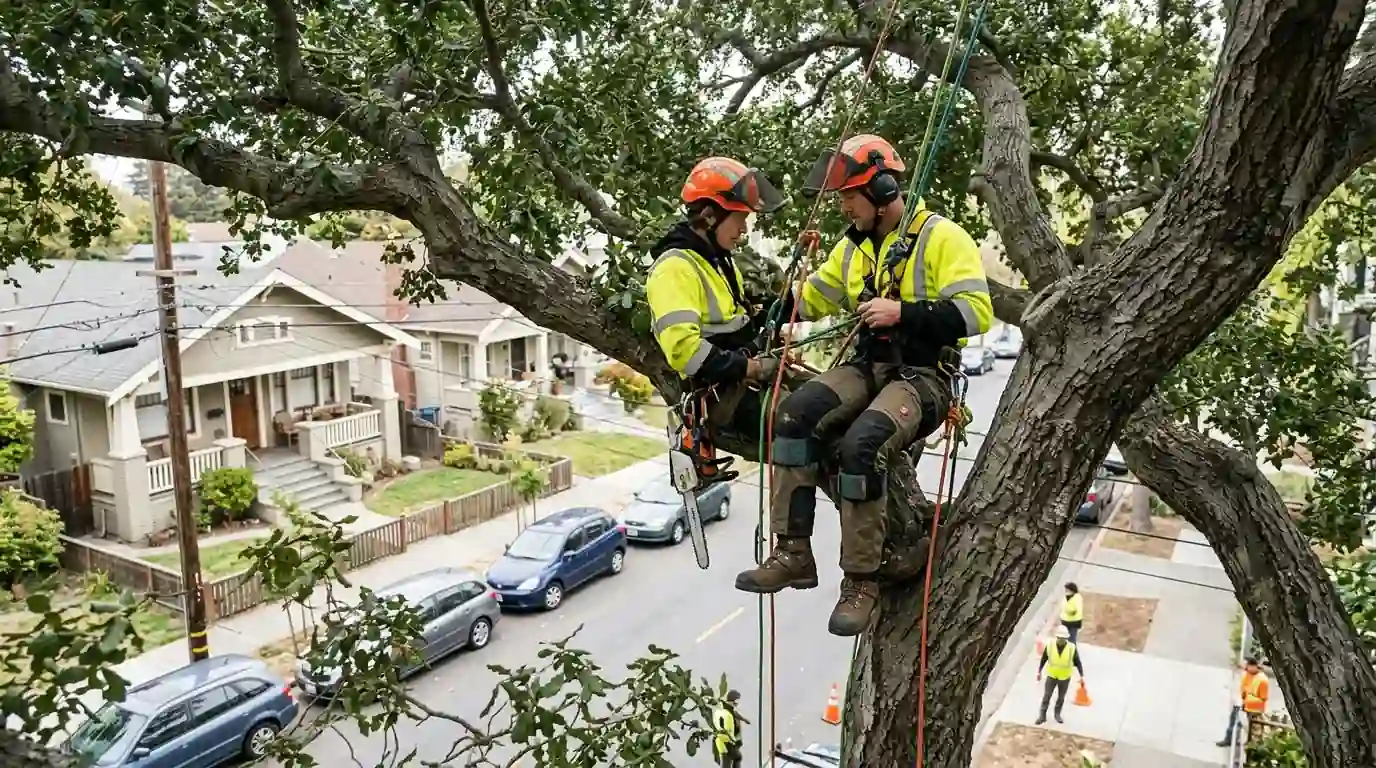
Service drop tree clearance in Oakland, CA
The wire from the pole to your house is yours to keep clear, and Oakland's yard trees grow into it fast. We trim branches back from the service drop and the phone and cable lines, with PG&E handling the power side.
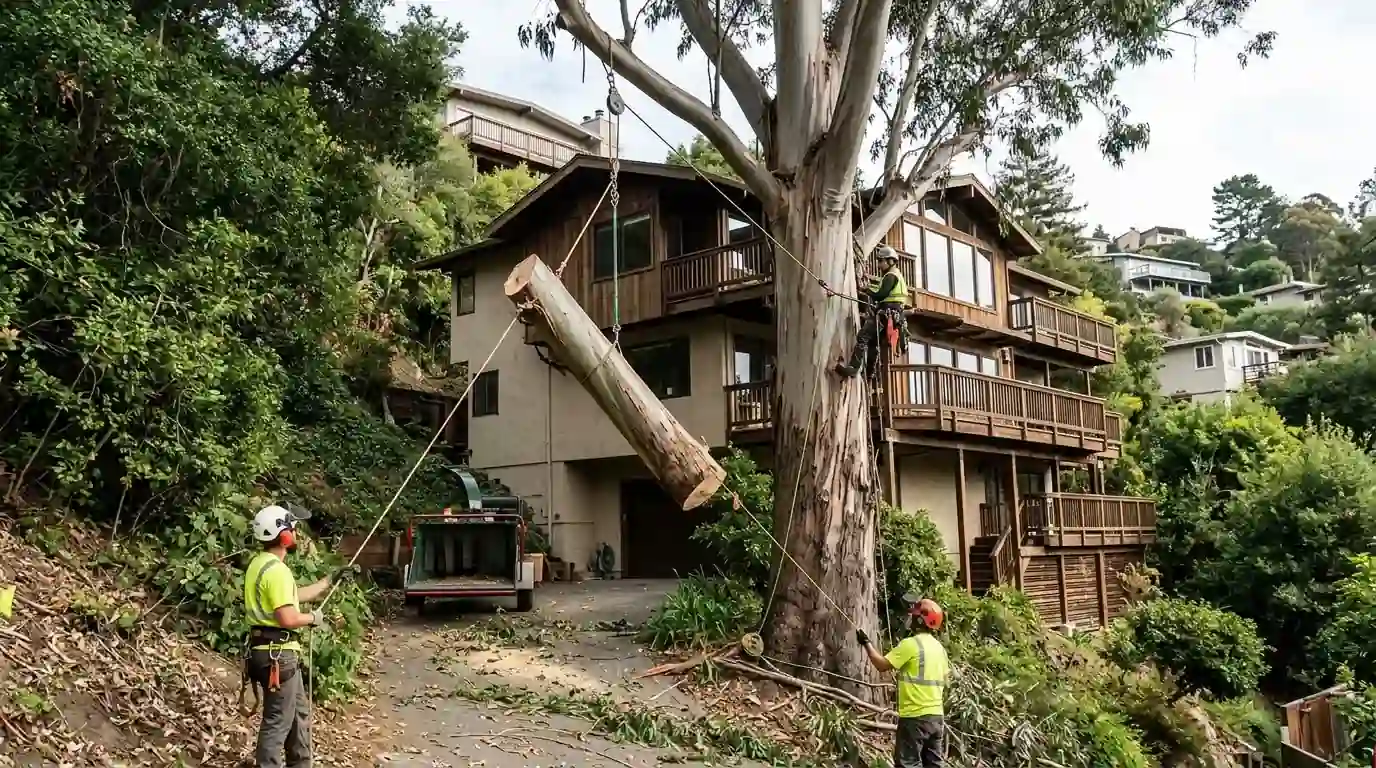
Quick answer
Service drop clearance is trimming tree limbs away from the overhead wire that carries power from the pole to your house, along with phone and cable lines. You need it when branches touch, rub or hang over those wires. We look at the tree, help you line up a temporary disconnect with PG&E when the wire is in the work zone, then prune the limbs back and haul the brush.
What service drop clearance involves in Oakland
Most people assume the utility trims every wire on the street. PG&E does keep the top two lines on the pole clear, the primary lines, and that costs you nothing. The service drop is different. It's the wire, often a twisted bundle, running from the pole down to the weatherhead on your roof or wall, and keeping trees off it is the owner's job. Phone and cable lines lower on the pole fall in the same group. We never work on or near the primary lines.
A branch resting on a service drop doesn't look like much. Over months, wind rocks the limb and wears the insulation thin, and a growing limb can pull the line into a sag. Squirrels use those branches as an on-ramp to the wire and chew what they find. Ice is rare here, but winter storms bring gusts and soaked limbs, and a worn spot can arc or the drop can tear loose.
In older neighborhoods like Grand Lake and Dimond, the pole often stands along the rear property line, so the drop crosses a backyard full of fruit trees, privet or a neighbor's oak. Each layout changes how we prune, and most of the time this is a short, targeted job. When a tree has grown around the wire, clearance becomes part of a wider canopy trim.
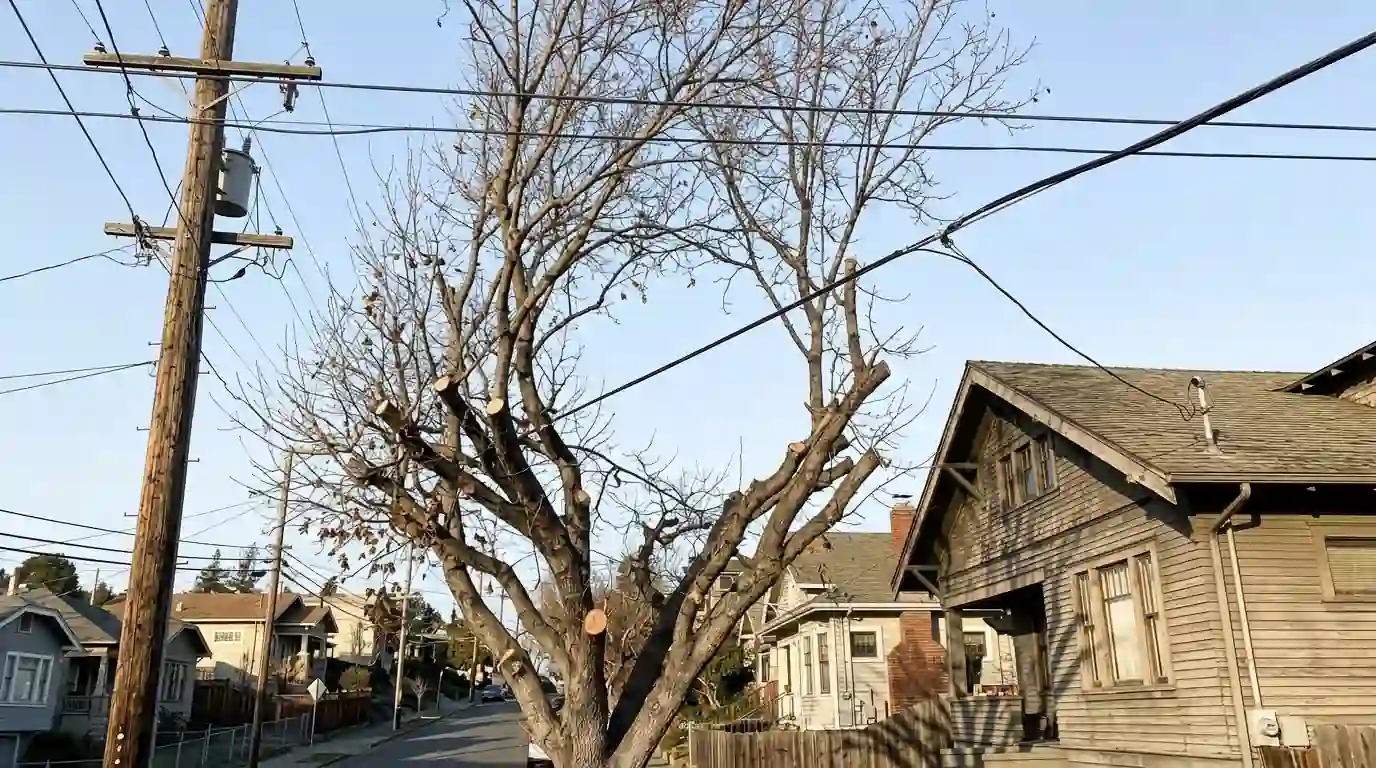
How can you tell a tree is getting into your service drop?
- Leaves or twigs touch the wireAny contact counts. A branch that brushes the drop in summer will rest on it once winter rain loads the leaves.
- The drop hangs lower than it used toA line that dips further over the yard or driveway than last year may be carrying the weight of a limb you can't see from below.
- Lights flicker when the wind picks upFlicker that lines up with gusts can mean branches are moving the wire or working a connection loose.
- Squirrels run along the wireIf you watch squirrels hop from a limb onto the drop, the branch is close enough to serve as a bridge, and chewed insulation tends to follow.
- Bark is rubbed smooth at one spotA worn, polished patch on a limb right where it crosses the wire shows the two have been rubbing for a while.
- The phone or cable line is pinned downPhone and cable lines hang lower than the power drop, so they're often the first to get trapped under a growing branch.
How we plan and trim around a service drop
We trace the wire from pole to house
We follow the drop from the pole to the weatherhead, note every limb within reach of it and check the phone and cable lines too.
You call PG&E before work near the drop
PG&E advises a call before anyone works near a service drop, and they can disconnect it temporarily. We tell you what we'll be cutting so you can describe it, and we set our day to match theirs.
Our climber works from the far side
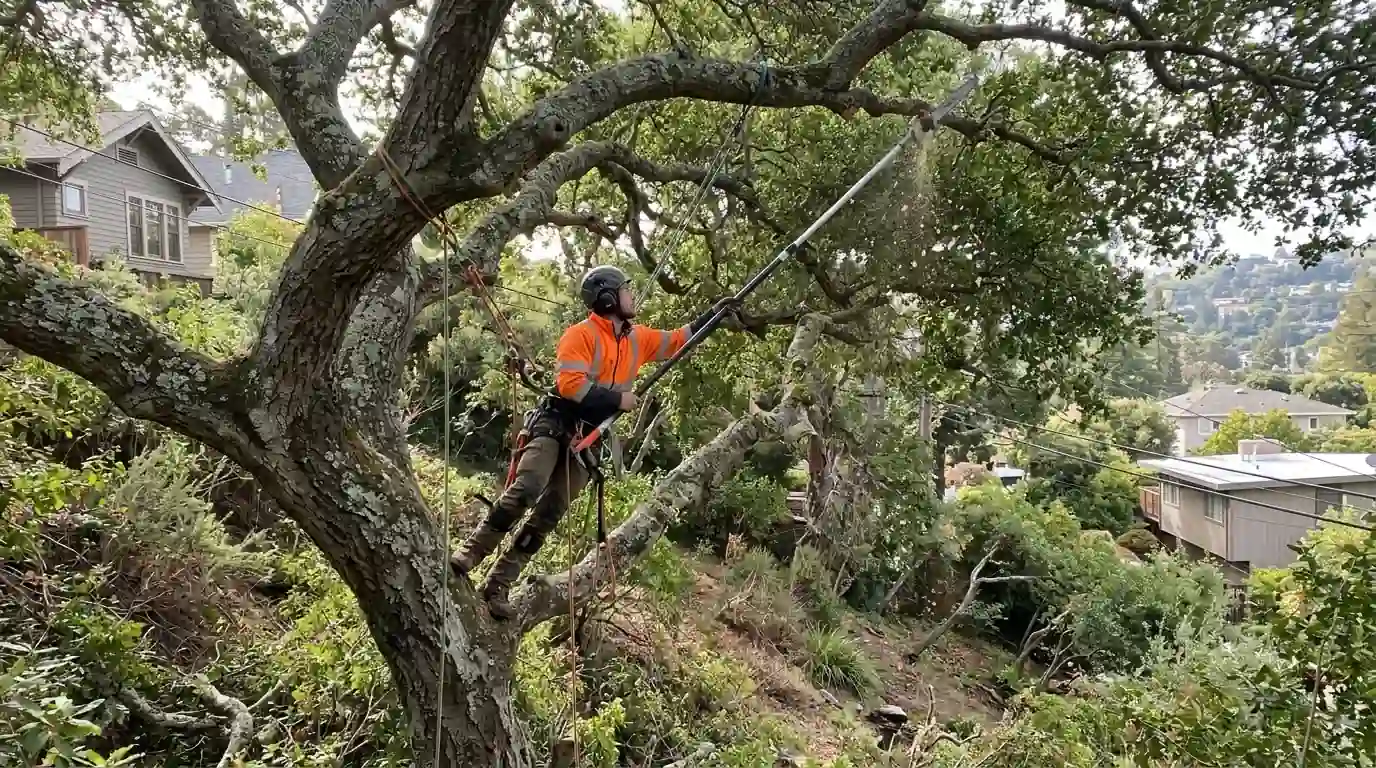
The climber ties in on the side of the tree away from the wire and works limbs back toward the trunk, so cut pieces swing away from the line instead of into it.
Limbs over the wire are tied and lowered
Any branch over the drop is roped before it's cut and lowered under control.
Cuts go back to a branch union, not a stub
We prune to a side branch or the trunk, which keeps the tree healthier and slows regrowth toward the wire.
We clean up and PG&E reconnects
Once we're clear of the line, the drop is reconnected. We chip the brush and rake the yard.
Oakland tree rules, PG&E and the wires on your lot
Oakland's tree rules still apply when the reason for cutting is a wire. The code counts topping and similar damage to a protected tree as removal, and a coast live oak is protected at 4 inches DBH while most other trees are protected at 9 inches. So we clear the drop with pruning cuts, not by topping the crown. For a city street tree, the City of Oakland prunes only in hazardous or emergency situations, and owners can apply to prune it themselves with the city's hold-harmless form before we trim it.
In the hills, drops often run through fast-growing pine, bay laurel and eucalyptus. Inside the Oakland Wildfire District, Zone 1 calls for limbs kept 10 feet from any structure or chimney, and the weatherhead sits right on the house. So the cuts that clear your drop often help with the yearly fire inspection too.
What shapes the work of clearing a service drop?
Every job is priced after we see the tree. These are the things that move the number.
- How far the tree has grown around the wireA few twigs touching is quick. A limb that has grown up and over the drop needs more cuts and more rigging.
- Whether a disconnect is neededWork right at the drop waits on PG&E's temporary disconnect, which sets the timing of the day.
- Where the drop crosses the lotA wire over a backyard behind a narrow gate is slower than one over a driveway.
- Species and growth rateA fast acacia or eucalyptus may need more taken back than a slow oak or a fruit tree.
- Phone and cable lines on another routeLower lines that run through a different tree add a second round of pruning.
- Brush volume and the carry to the chipperHow much wood comes out, and how far it travels to the street, shapes the cleanup.
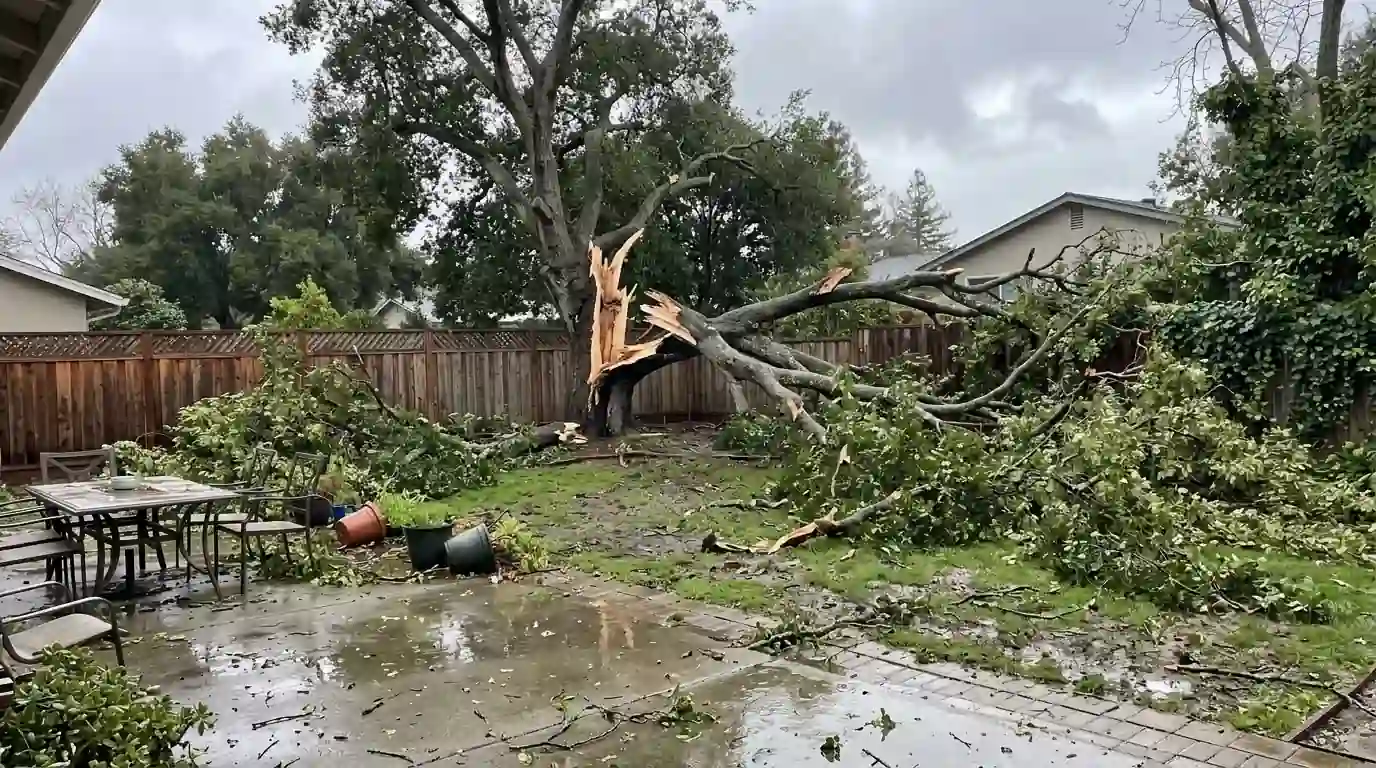
A limb came down on the service drop in a storm. What now?
Stay away from it, and keep kids and pets back too. A limb resting on the drop can be pressing on a live wire, and wet wood and wet ground make contact worse. Don't pull the branch or cut near it. Call PG&E first. They make the line safe, and that may mean disconnecting the drop at the pole.
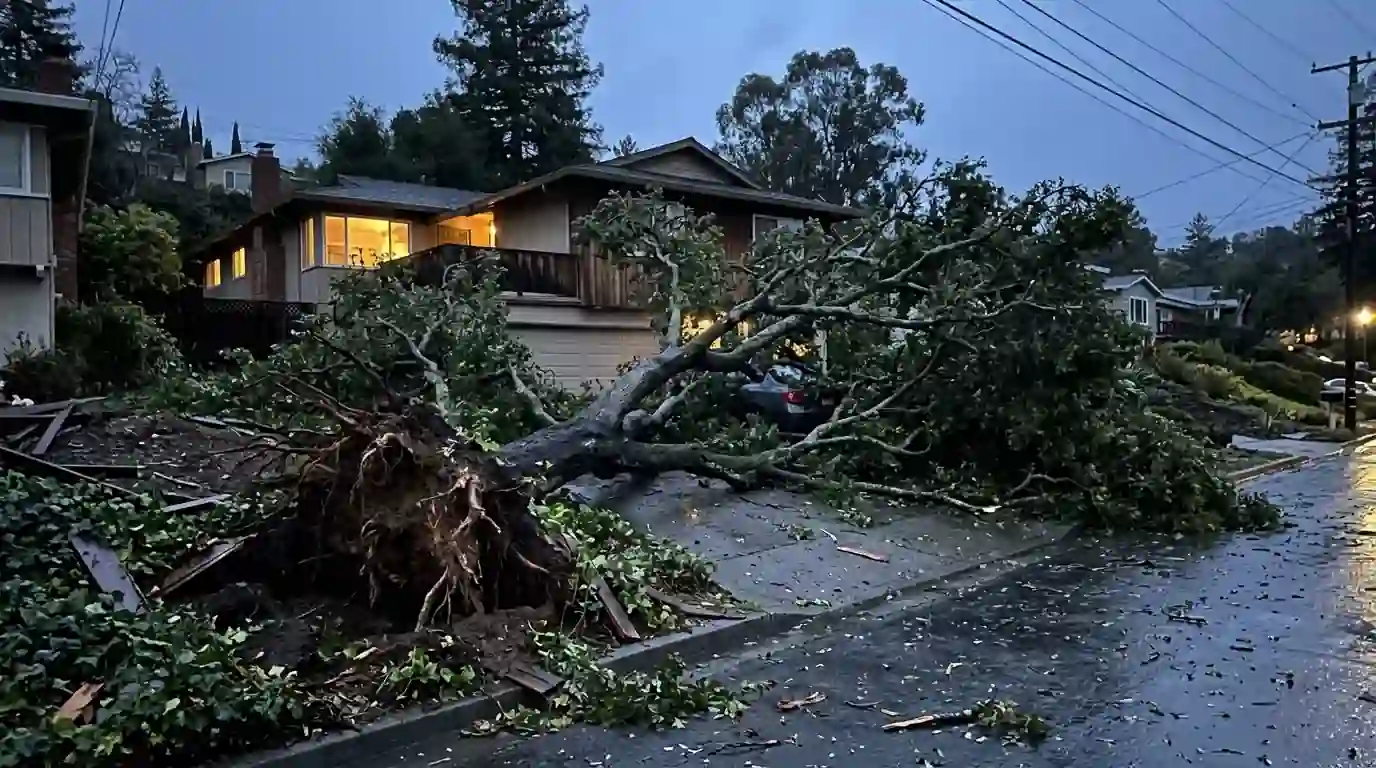
Once PG&E has the wire handled, call us. Our phone is answered 24/7. We lower the limb in pieces and check the tree for the crack or decay that let it fail. If the whole tree is coming apart, the job moves into storm damage cleanup or a removal.
Work that often goes with service drop clearance
Where we handle service drop clearance
From the office on Martin Luther King Jr Way in Temescal and the Walnut Creek office on Bonanza Street, we cover Oakland and the East Bay. The biggest communities we serve, with a main ZIP code for each:
Service drop clearance questions we hear in Oakland
Will PG&E trim the branches touching the wire to my house at no charge?
No. PG&E keeps the top two lines on the pole, the primary lines, clear at no cost to you. The service drop that runs from the pole to your house is the owner's to keep clear, along with phone and cable lines. That's the part we trim, after you've called PG&E about the drop.
How do I set up a temporary disconnect before the trimming?
Call PG&E, say you're having a tree trimmed near your service drop and ask about a temporary disconnect. They advise that call before any work near the drop. We'll tell you which limbs we're cutting so you can describe the job.
Can you trim a tree that touches the high-voltage lines at the top of the pole?
No. We never work on or near primary lines. Those top two lines are PG&E's to keep clear, at no cost to you, so report the contact to them.
Who keeps branches off my phone and cable lines?
The property owner does. Those lines hang below the power drop and aren't part of what PG&E clears. We trim them back the same way, usually in the same visit as the service drop.
How much space should be left between the branches and the service drop?
Enough that the limb won't reach the wire after a season of growth or in a storm wind. We cut to a branch union, so the distance depends on the species. A fast grower like acacia gets more room than a slow coast live oak.
Saws, chippers, grinders and climbing gear from names like Stihl, Husqvarna and Vermeer
StihlHusqvarnaVermeerBanditMorbarkRaycoAltecPetzlSilkySherrillTeufelbergerNotchEchoToro
Need service drop clearance in Oakland or the East Bay?
Call and tell us what the tree is doing. Someone picks up any hour, and we can usually talk you through the next step on that first call.