Dead tree removal in Oakland, CA
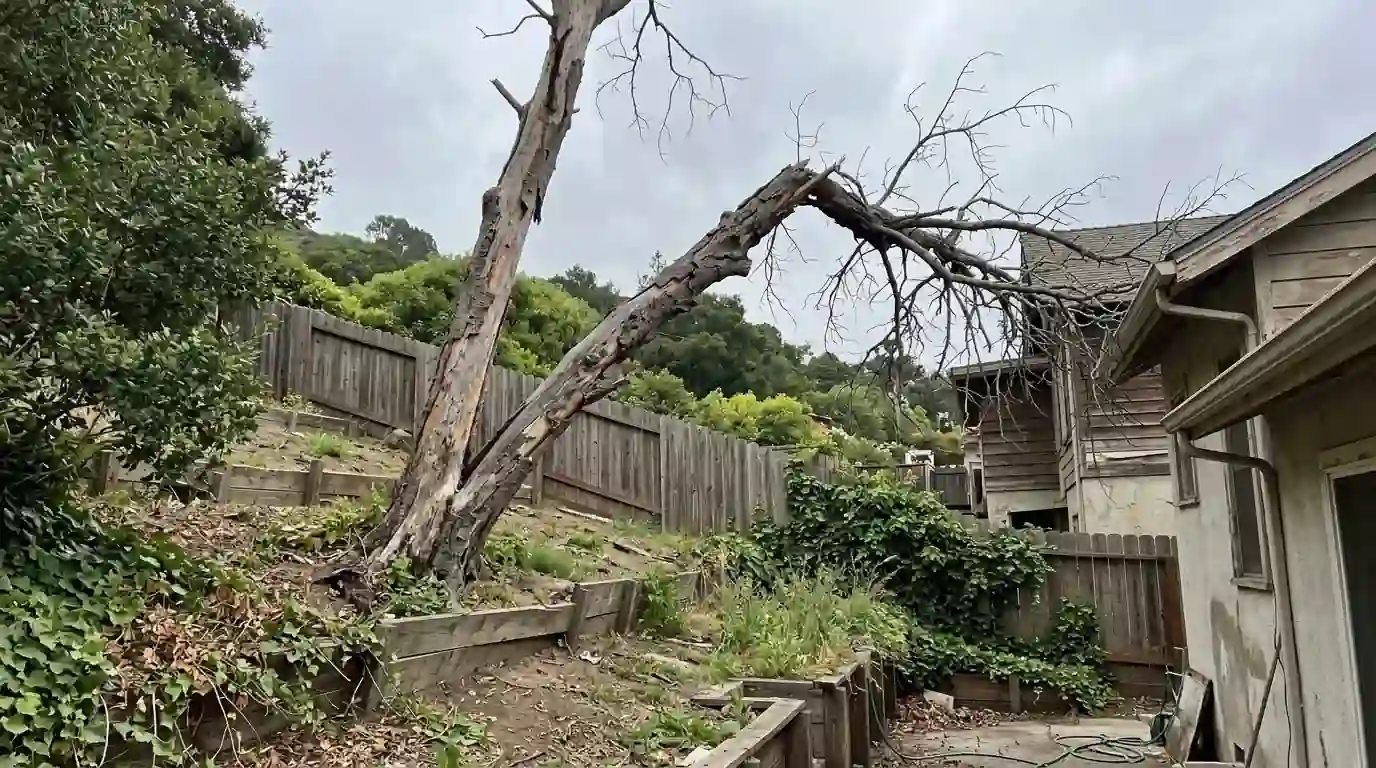
A dead tree in Oakland keeps standing long after it stops growing, and then it lets go on its own schedule. We take dead oaks, pines and eucalyptus down in controlled pieces, before wind or rot picks the day.
Quick answer
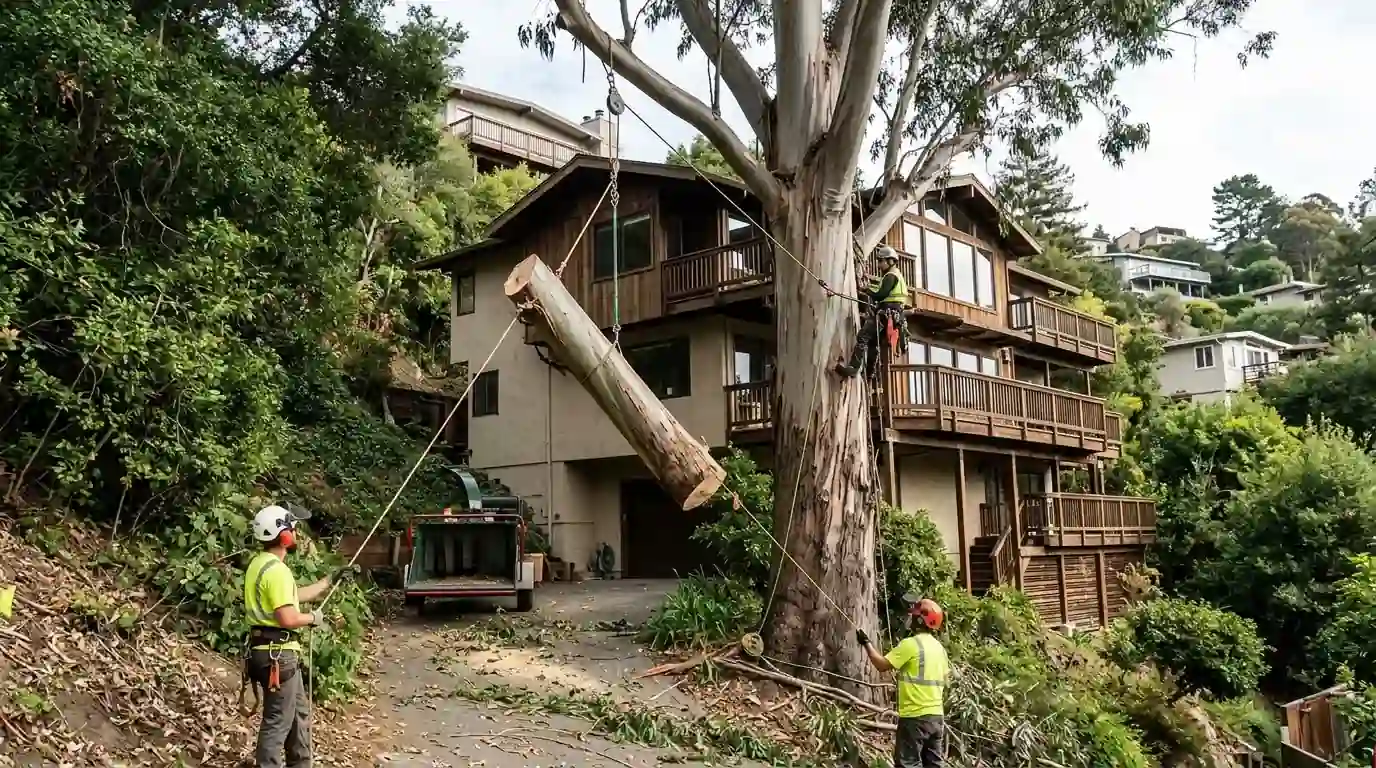
Dead tree removal is cutting down a tree that has stopped living, using methods suited to dry, brittle wood. You need it when a tree holds no green leaves in season, sheds bark or drops limbs near a house, fence or street. We test the trunk and limbs, rig pieces down with ropes or a lift instead of free-felling, then chip the brush and haul the wood.
What dead tree removal involves in Oakland
Dead wood doesn't behave like live wood. Once the water leaves the fibers, limbs turn stiff and brittle, and they snap instead of bending. A green branch can take a rope load and flex; a dead one can break at the tie-in point or shatter when it lands. That changes how our climber moves through the tree, where he anchors and how big each piece can be. On a dead tree we cut smaller sections and lower more of them on ropes, even when the ground below looks open.
Oakland has lost a lot of trees in the last decade. Drought years stress Monterey pines until bark beetles finish them, and a pine that looked thin in spring can be rust brown by fall. Coast live oaks in the hills and around Joaquin Miller Park have died from sudden oak death, which shows up as dark bleeding cankers on the lower trunk. Old blue gum eucalyptus stems die back as well, leaving tall gray spars standing over yards and roads.
Then there's the fire side. A standing dead tree is dry fuel, and in the hills above Highway 13 that matters every summer. Dead needles and twigs catch embers easily, and a dead pine next to a deck can carry flame toward the house. Taking it out before the dry season sets in around May removes that fuel before the hottest months. If you're unsure whether a tree is dead or just dormant, a risk assessment sorts that out first.
How can you tell a tree is dead and not just dormant?
- No new leaves by late springDeciduous trees like liquidambar or plum that stay bare after April, while the neighbors leaf out, are usually dead or close to it.
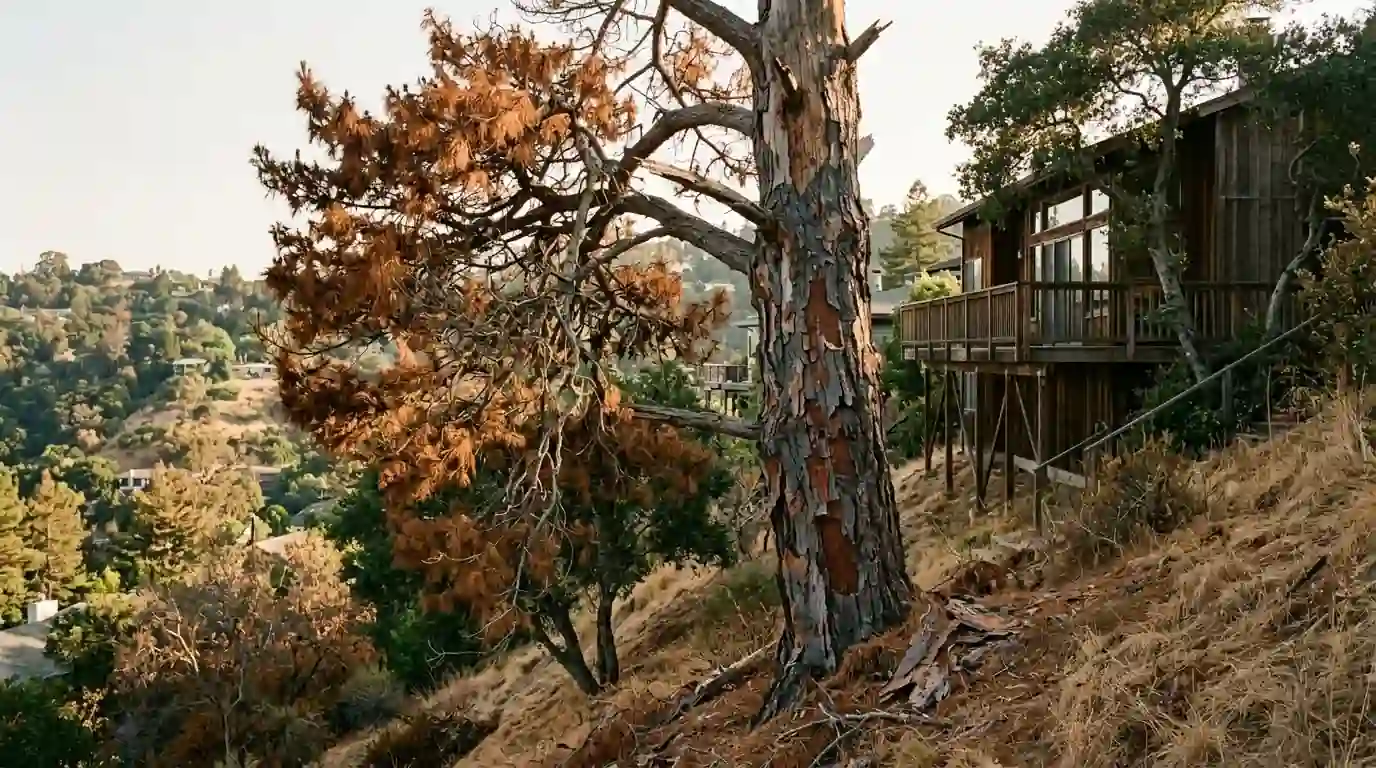
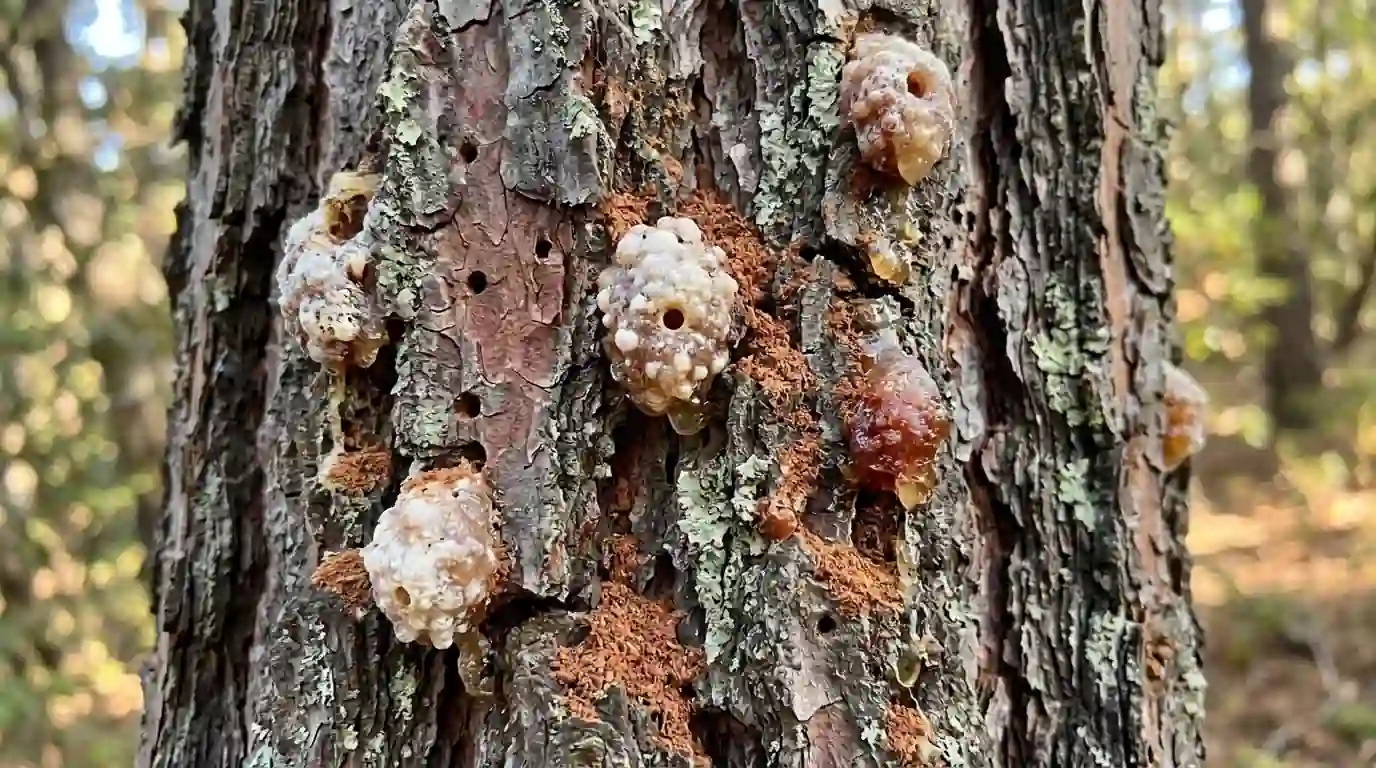
- Brown needles that stay attachedMonterey pines that turn orange or brown all at once, with the needles still hanging on, often have bark beetles or severe drought damage.
- Bark falling off in platesLoose bark that peels away to show dry, pale wood underneath means the living layer has stopped working there.
- A scratch test that shows brownScrape a twig with a thumbnail. Moist green under the bark is alive, while dry brown all the way across is dead.
- Fungus around the baseMushrooms, conks or shelf fungus at the root flare point to decay in the roots or lower trunk, where you can't see the damage.
- Bleeding cankers on an oakDark reddish sap oozing from the lower trunk of a coast live oak is the classic sign of sudden oak death.
- Limbs dropping on calm daysA tree that sheds branches with no wind at all has lost its wood strength, and bigger pieces will follow.
What changes the scope of a dead tree job?
Every job is priced after we see the tree. These are the things that move the number.
- How far the decay has goneA recently dead tree can still be climbed. One that has stood dead for years may need a lift or crane because the wood can't hold a climber.
- Height and spreadTaller trees mean more sections, more rigging and more hours on the ropes.
- What sits underneathRoofs, service drops, greenhouses and fences under the canopy slow every cut, since nothing can be dropped.
- Access to the treeBackyards up long stairs in the hills, or lots with no side gate, mean carrying every piece out by hand.
- City paperworkWalnut Creek requires a permit for trees 9 inches in diameter or larger even when they're dead, and in Oakland we confirm what applies before cutting a dead oak.
- Cleanup choicesLeaving rounds stacked for you is less work than hauling all of it, and stump work is a separate step.
What happens on site when we take down a dead tree?
Test the wood before anyone climbs
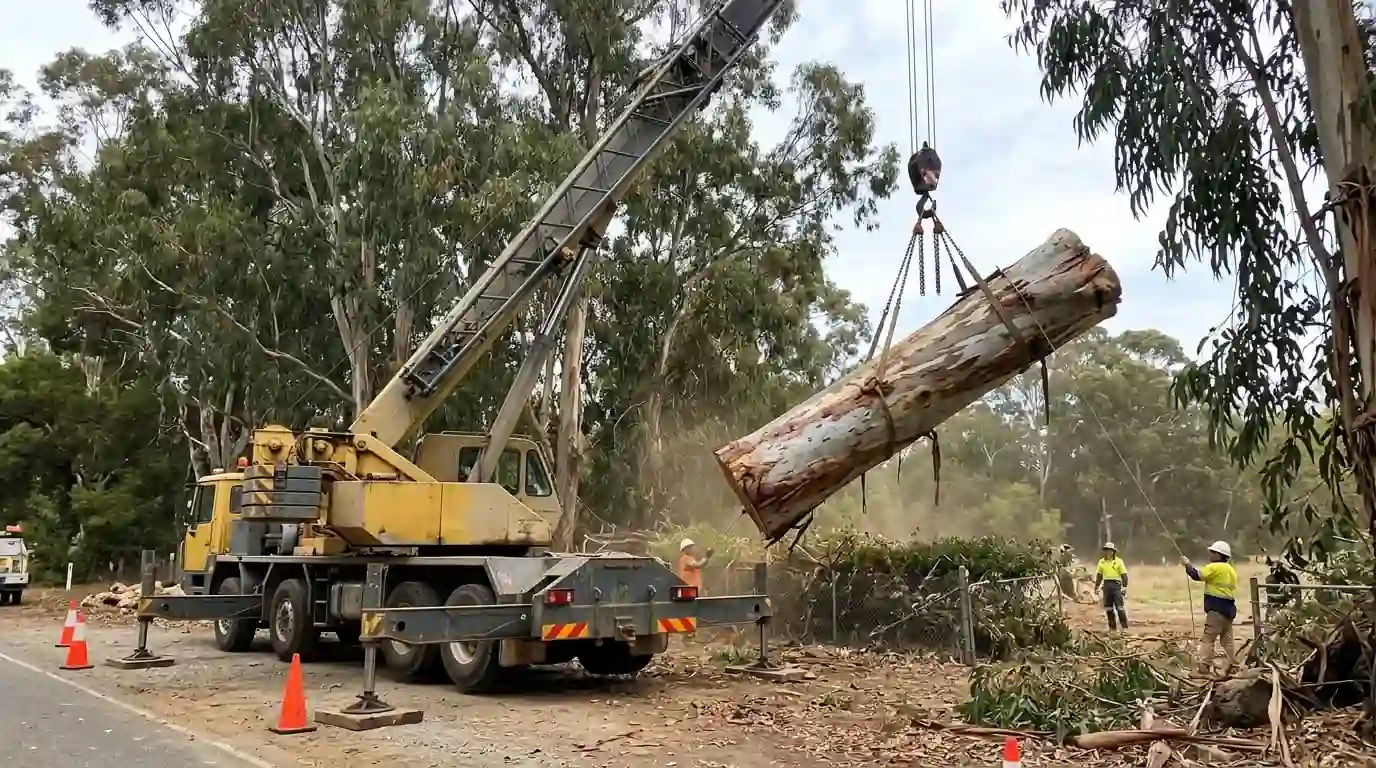
We sound the trunk with a mallet, look for cracks and fungus, and decide whether the tree is safe to climb at all. If it isn't, we work from a lift or bring in a crane.
Anchor in solid wood
Our climber ties in on the strongest wood available, sometimes a healthy neighboring tree, rather than trusting a dead fork. Rigging points get the same scrutiny.
Cut small and lower on rope
Dead limbs come off in shorter pieces than we'd take from a green tree. Each piece is tied, cut and lowered so it never free-falls onto a roof, fence or garden bed.
Bring the spar down in rounds
Once the crown is gone, the trunk comes down in sections. On open ground we may fell the last piece, but only after checking that the hinge wood is sound enough to steer it.
Chip, haul and rake
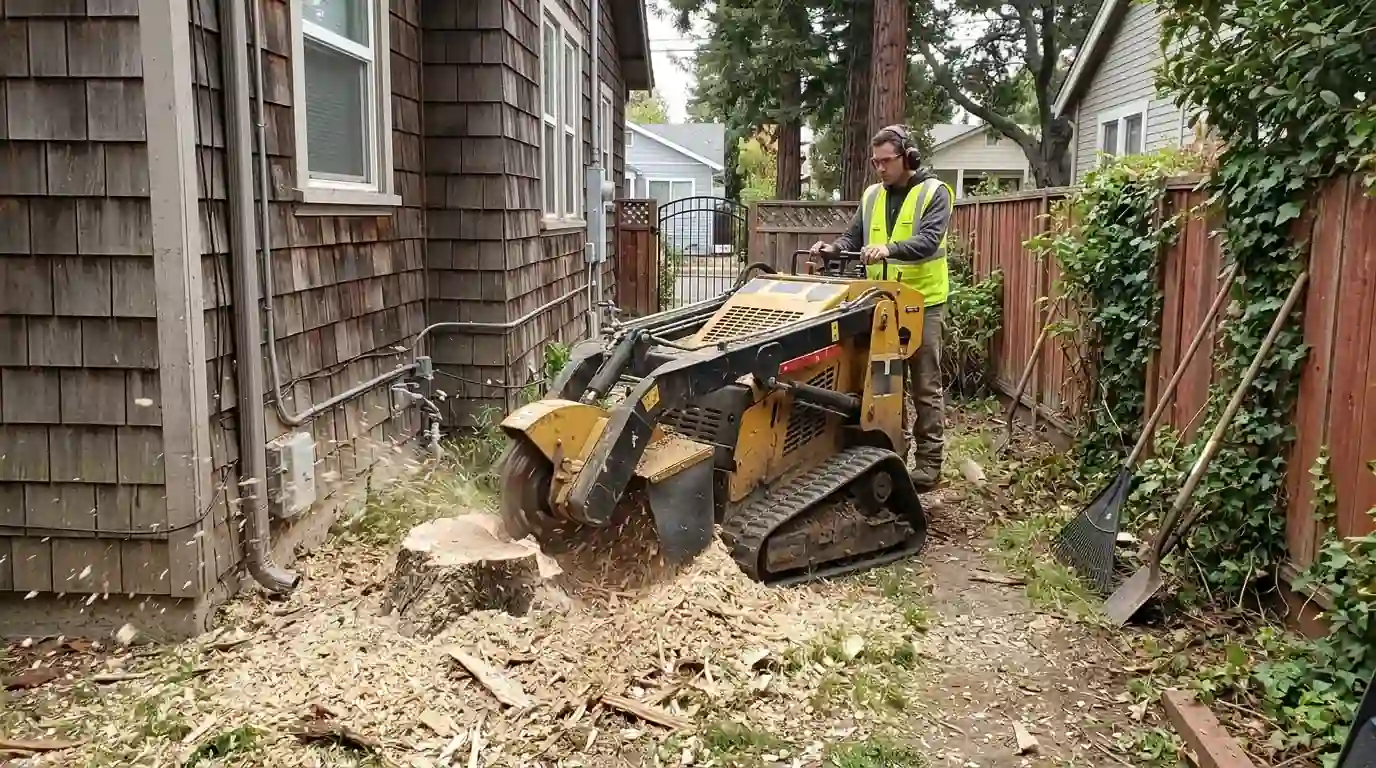
Brush goes through the chipper at the curb, wood is hauled or cut to length, and the work area is raked and blown clean. The stump stays unless you ask us to grind it out afterward.
What Oakland and East Bay rules apply to a dead tree?
Oakland's protected tree chapter covers coast live oaks at 4 inches DBH and most other trees at 9 inches DBH, measured 4.5 feet above the ground. A dead oak started life as a protected tree, so we check with the city on what paperwork applies before we cut, and we handle the permit side if one is needed. Eucalyptus and Monterey pine fall outside the chapter, though a Monterey pine on private land still needs posting and written notice to Parks and Recreation before removal. When a dead tree is an immediate threat, the city can waive the permit, but the removal must be reported on the first business day after.
Across the hills, the wildfire district adds its own pressure. Oakland Fire's yearly inspections expect limbs at least 6 feet above the ground and 10 feet from structures and chimneys in the 5 to 30 foot zone, plus dead plants cleared farther out. A dead pine leaning over a deck in Montclair is exactly the kind of thing inspectors flag. Outside Oakland the rules shift: Walnut Creek's permit covers any tree 9 inches across or larger, dead or alive, and other East Bay cities each have their own tree rules, which we check before cutting.
Work that often goes with dead tree removal
Where we handle dead tree removal
From the office on Martin Luther King Jr Way in Temescal and the Walnut Creek office on Bonanza Street, we cover Oakland and the East Bay. The biggest communities we serve, with a main ZIP code for each:
Dead tree removal questions we hear in Oakland
Is a dead tree more dangerous to remove than a live one?
Yes, usually. Dead wood is brittle, so limbs can snap under a climber's weight or break at a rope tie-in. We test the trunk before climbing, cut smaller pieces and switch to a lift or crane when the wood is too far gone to trust. That extra care is why dead trees take longer per foot than green ones.
How long can a dead tree stand before it falls?
There's no fixed clock. A dead pine can hold for a year or two, while a eucalyptus with root rot can drop in the first big storm. Saturated soil and wind from atmospheric rivers between November and March are when most dead East Bay trees fail. If it stands near a house or street, plan on removal before the rains.
Can I leave part of a dead tree standing for birds?
Sometimes, if it stands well away from buildings, paths and fences, and outside the fire clearance zones. We can cut it down to a short, stable trunk that wildlife can use while removing the crown that would otherwise fall. On hillside lots in the wildfire district, a dead tree close to the house usually has to go entirely.
My pine died within one summer. Will the one next to it die too?
It might. Bark beetles move from a dying pine into stressed neighbors, especially in drought years, so taking the dead tree out promptly removes the brood source. While we're there, we look at the nearby pines for pitch tubes and fading needles and tell you what we see, so you can decide on treatment for the ones still green.
Saws, chippers, grinders and climbing gear from names like Stihl, Husqvarna and Vermeer
StihlHusqvarnaVermeerBanditMorbarkRaycoAltecPetzlSilkySherrillTeufelbergerNotchEchoToro
Need dead tree removal in Oakland or the East Bay?
Call and tell us what the tree is doing. Someone picks up any hour, and we can usually talk you through the next step on that first call.