View Pruning
Pines, cypress and eucalyptus have grown into the bay views homes were built for, and careful thinning opens them back up.
DetailsEl Cerrito is a small city whose homes climb a steep hillside above the bay. We prune, remove and clear trees on its sloped lots, stairways and view streets.
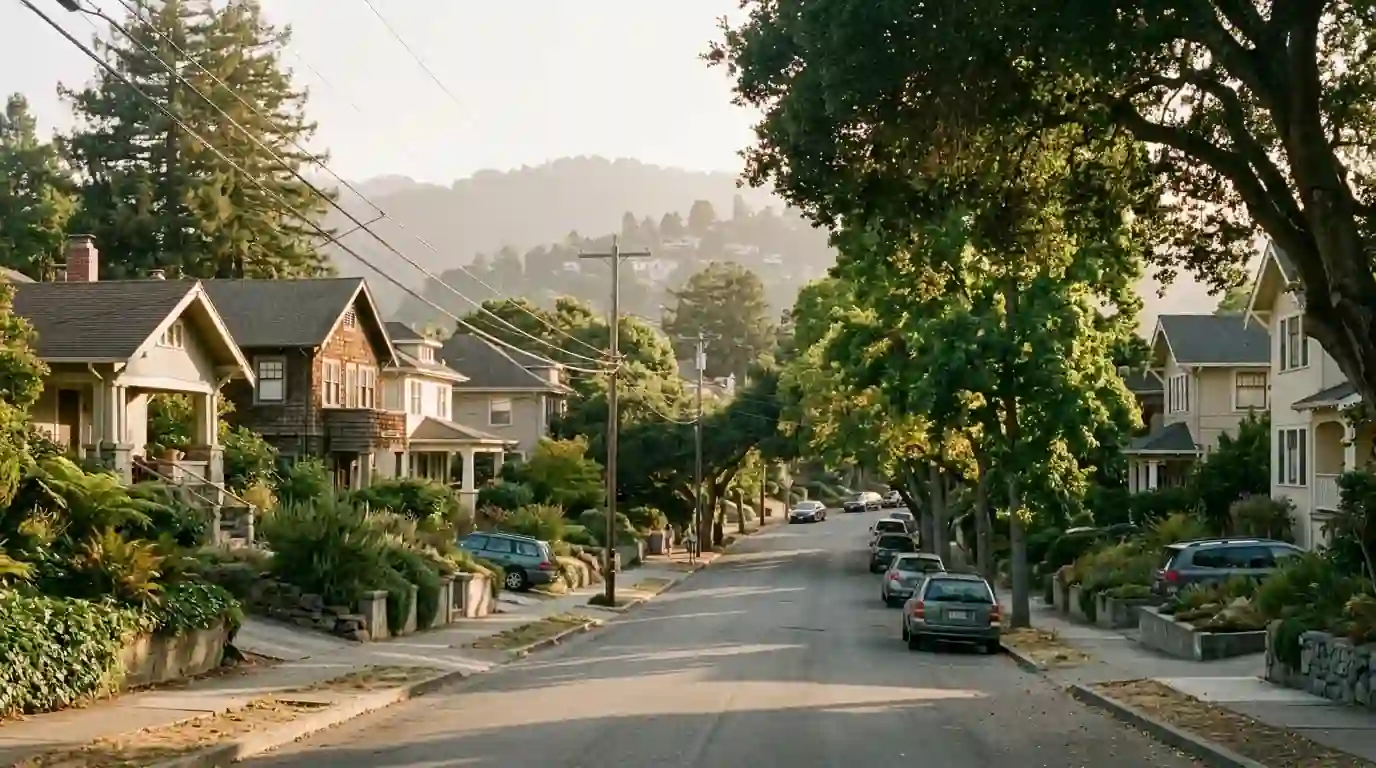
We prune and remove trees across El Cerrito, where most homes sit on El Cerrito's hillside with bay views. Oaks, pines, eucalyptus and redwoods grow on terraced lots, and the upper streets border open space and fire fuel. View pruning, fire clearing and careful removals on slopes are the common jobs. El Cerrito has its own tree rules, and we check them first.
El Cerrito is compact, and most of it tilts. From the flats along San Pablo Avenue, streets climb steeply east toward the ridge, and homes are stacked on terraced lots with retaining walls and long stairways. Many houses were built in the middle of the last century, oriented for bay views to the west.
Those views are the reason many trees here get pruned. Monterey pines, cypress and eucalyptus planted decades ago now block the outlook from decks and windows. Upper streets near the ridge border open space with coast live oak, bay laurel and dry grass, the same terrain that runs north from the Berkeley Hills.
Down in the flats, lots are smaller and more level, with fruit trees, privet hedges and a mix of street trees. Bamboo and ivy show up in older gardens and spread where no one has watched them. Winter wind off the bay hits the upper slopes hard, and tall pines there drop limbs and needles onto roofs. Gutters on those streets fill fast, and a clogged gutter full of dry needles is exactly the fuel that fire inspectors look for each summer. Many owners pair a needle cleanout with their winter pine trim.
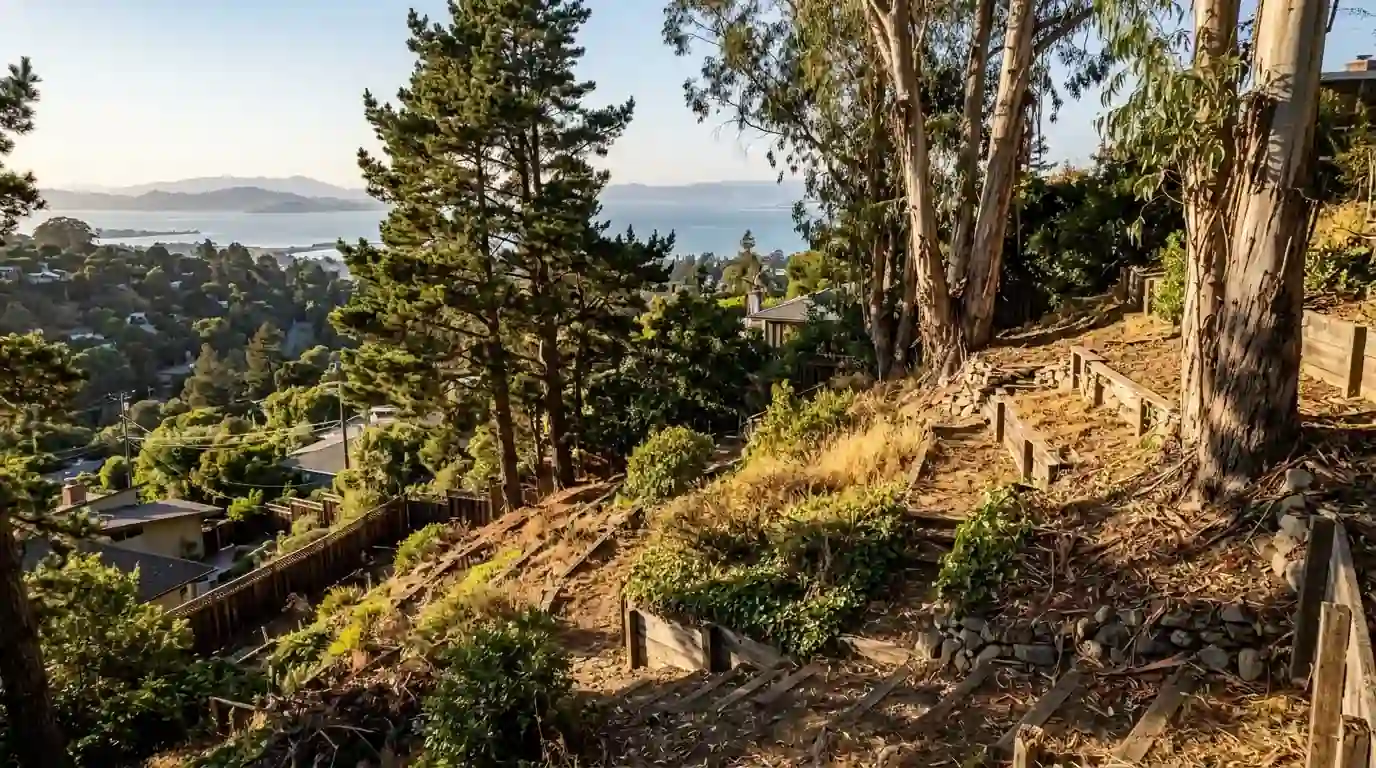
Pines, cypress and eucalyptus have grown into the bay views homes were built for, and careful thinning opens them back up.
DetailsUpper streets near open space need brush, dry grass and low limbs cleared before fire season.
DetailsTall Monterey pines on windy slopes drop heavy limbs on roofs, and some are best taken down.
DetailsIvy climbing old trees in hillside gardens hides decay and adds weight and fuel.
DetailsRunning bamboo planted in older gardens spreads under fences into neighboring yards.
DetailsEl Cerrito has its own tree rules, separate from Berkeley's and Richmond's. Some removals and heavy pruning need city approval, and it depends on the tree and where it stands. We check the current requirements for your tree before cutting and tell you plainly if a permit is involved. If it is, our permit help gets it started.
View disputes come up on these slopes. California law lets you trim branches hanging over your property line if it doesn't harm the tree, but you can't cut a neighbor's tree beyond that without permission. We stay on your side of the line and suggest talking with your neighbor before view work on a shared tree.
Many El Cerrito homes sit well above or below the street, reached by long stairs. We carry gear by hand, rig wood down by rope and haul brush up in loads. The steepest streets have little parking, so we set up early and keep the chipper tight to the curb.
Driveways are short and steep, and some homes share them with neighbors. We plan where to set the truck before the day starts. Jobs near the Berkeley line or in Richmond pair easily with El Cerrito runs, since the streets connect along the hillside. When a removal sits at the bottom of a long stair with no clear lowering path, we talk through a crane option before booking.
ZIP codes for El Cerrito: 94530.
Often, yes. View pruning thins selected limbs and windows the canopy so you can see through it while the tree stays healthy. We avoid topping, which ruins the tree and grows back thicker. If the tree is on your neighbor's side, we only trim what hangs over your line.
Running bamboo spreads by underground runners that travel under fences and paths. Cutting the canes isn't enough. We cut the grove down, dig out the runners and root mass, and can set a barrier where it borders a neighbor. Expect to pull a few new shoots in the following season.
Cut dry grass and brush, remove dead limbs, and limb trees up so ground fire can't reach the canopy. Clear needles and leaves from roofs and gutters, and pull juniper and broom away from walls. We do this before the dry season, which usually runs from about May to October.
Some are, some aren't. Blue gums shed bark and drop heavy limbs without warning, and on steep lots above homes that's a real risk. We look for decay at the base, cracks in big limbs and lean toward the house. Healthy ones can be cleaned out and reduced, and failing ones should come down.
Call any hour. Tell us the street, the tree and what changed, and we will plan the visit around your access.