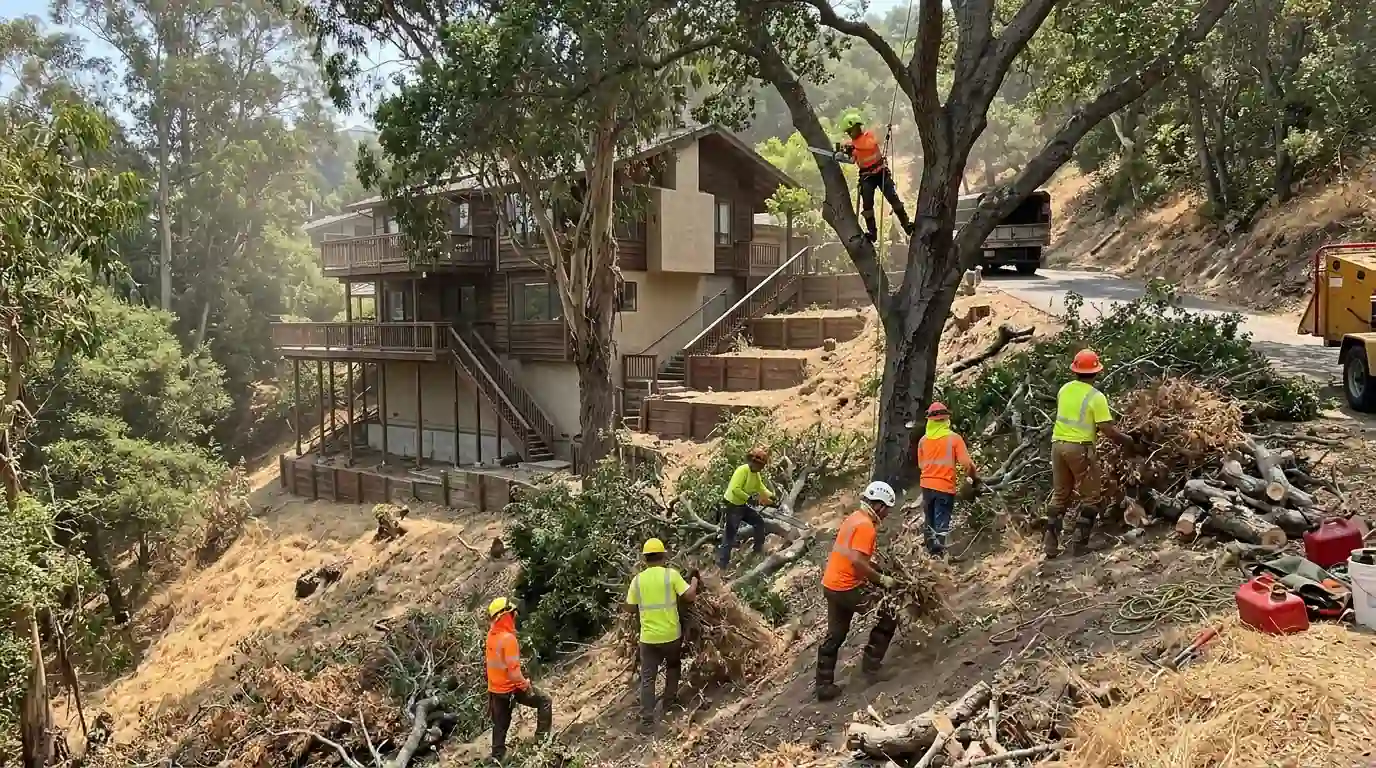
Commercial tree service in Oakland, CA
Trees on a commercial property in Oakland touch tenants, parked cars, walkways and fire inspections all at once. We plan the work around your property's schedule and keep the trees safe and in line with the rules year after year.
Quick answer
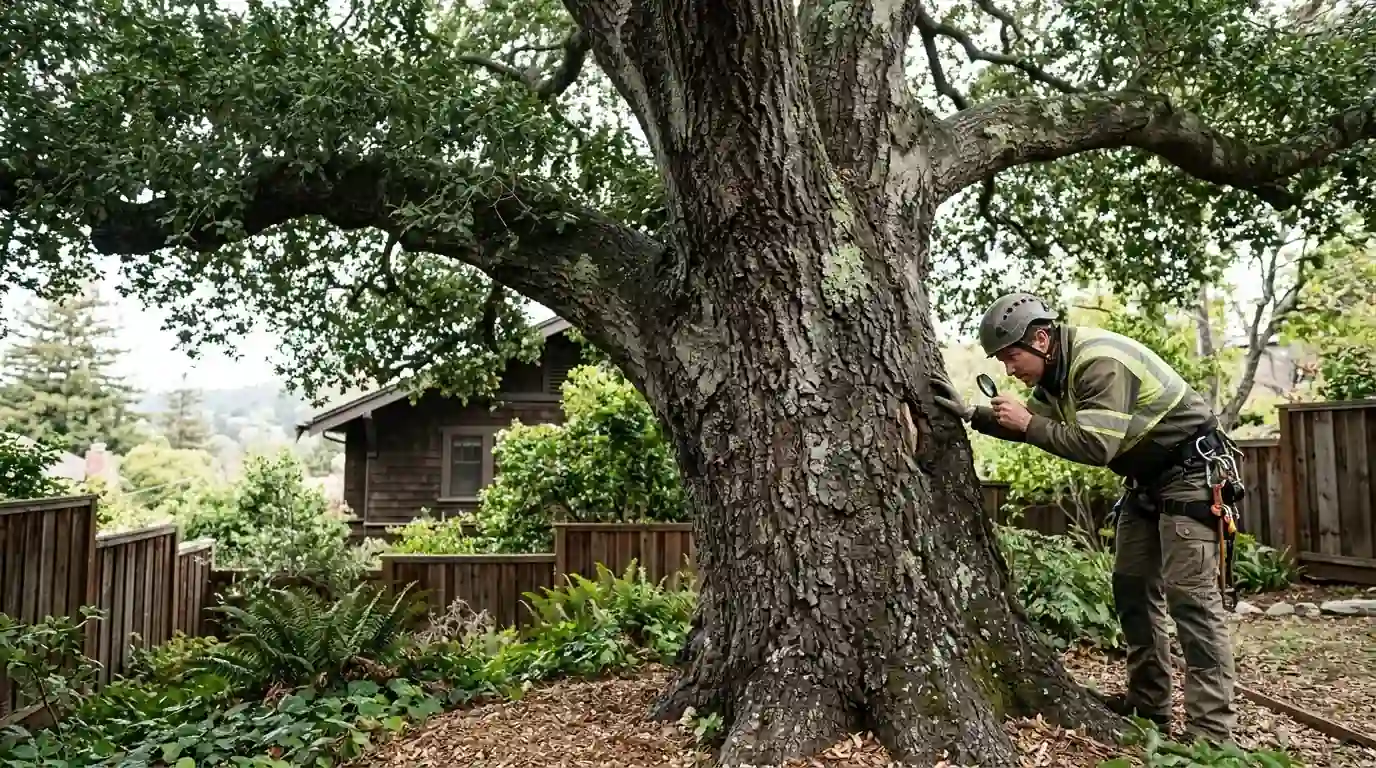
Commercial tree service covers pruning, removals, clearance and planning for HOAs, apartment complexes, property managers, schools and churches. You need it when a property has many trees, a busy parking lot or a hillside fire inspection to pass. We inventory the trees, set a pruning cycle, schedule work around residents and traffic, and keep clear records for the board or owner.
What commercial tree service involves in Oakland
A homeowner usually calls about one tree. A property manager is looking after dozens, sometimes hundreds, spread across parking lots, courtyards, slopes and street frontage. The work is less about any single cut and more about a plan: knowing which trees need attention this year, which can wait, and which carry risk to people walking beneath them every day.
We set up that plan with a walk through the property. Each tree gets noted by location, species, size and condition, with a short note on what it needs. From there we build a pruning cycle that spreads the work across a few years, so the budget stays steady and no section of the property gets neglected. Trees with defects go to the top of the list, and some get a closer risk assessment.
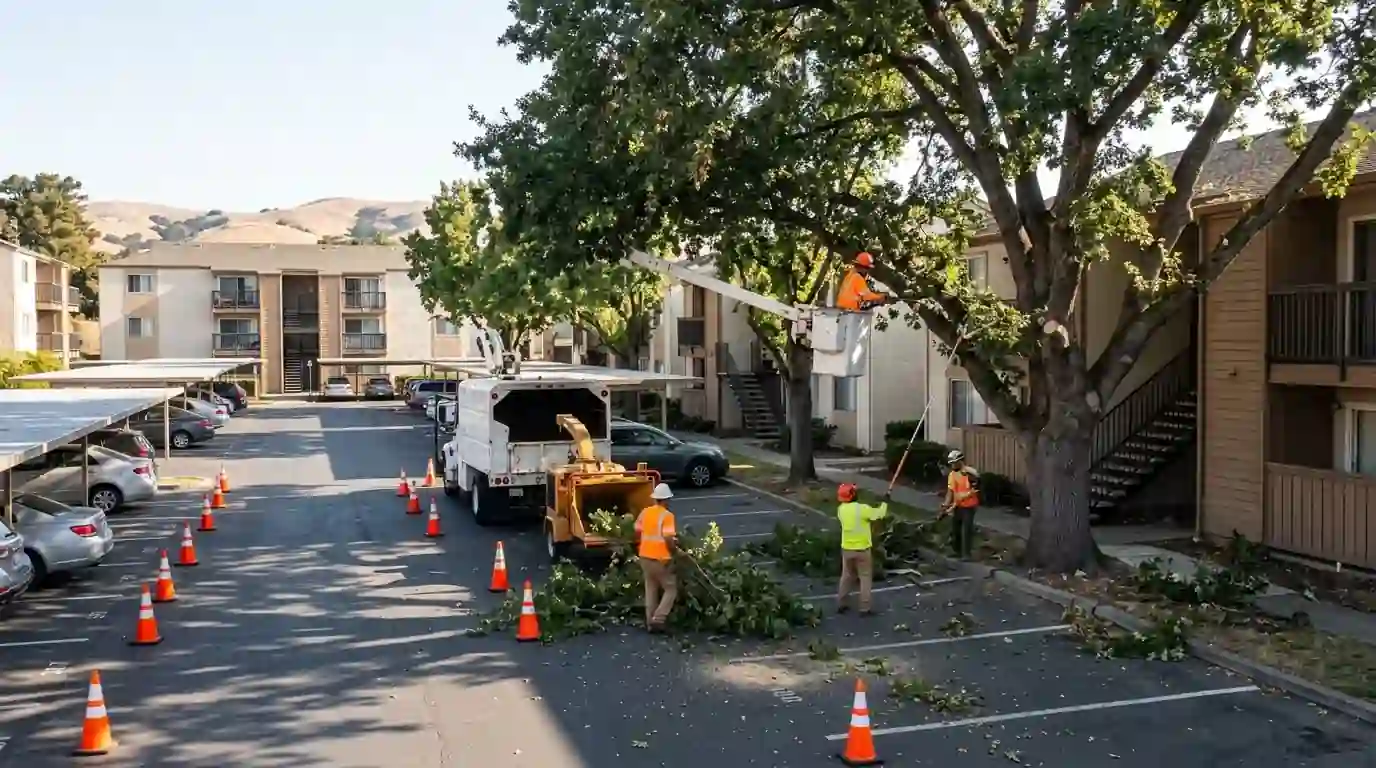
Working on an occupied site means planning around people. Apartment residents need notice to move cars, schools want work done outside class hours or over breaks, and churches need the lot clear for weekend services. We cone off work zones, keep walkways open where we can and leave the site swept before we go. Boards and owners get a short written summary of what was done and what's coming next.
When does a commercial property need tree work?
- Limbs hanging low over parkingBranches that brush car roofs or truck mirrors need raising before they scratch vehicles or break under a delivery truck.
- Walkways under a heavy canopyLow limbs, dropping deadwood and slippery leaves over paths put residents and visitors at risk.
- A hillside fire inspection is comingComplexes in the Oakland hills face yearly inspections for limb clearance, spacing and debris.
- Roots lifting paving or curbsHeaved sidewalks and cracked lot surfaces create trip hazards and need coordinated root and concrete work.
- Complaints about light or viewsResidents notice when trees block windows, lights or signs, and selective pruning usually solves it.
- No record of past tree workWithout an inventory, nobody knows which trees were last pruned or which ones have a known defect.
What affects the cost of commercial tree service?
Every job is priced after we see the tree. These are the things that move the number.
- Number and size of treesA complex with a few dozen mature trees takes far more time than a small courtyard.
- Pruning cycle lengthShorter cycles mean more frequent visits but lighter work each time, while long gaps lead to heavier jobs.
- Access and traffic controlBusy lots, narrow drive aisles and tight courtyards need more setup and staging time.
- Working hoursJobs scheduled around school breaks, weekend services or early mornings can affect how the work is staged.
- Fire zone scopeHillside properties may need clearance work across slopes on top of routine pruning.
- Removals and stump workTaking out declining trees and grinding stumps adds to the scope of a regular visit.
How we run tree care across a managed property
Walk the site and build an inventory
We record each tree's location, species, size and condition, and flag anything with cracks, decay or dead limbs. The inventory becomes the base for every decision after.
Set priorities and a pruning cycle
Urgent safety work comes first. The rest of the trees go onto a rotating schedule, so each section gets pruned every few years instead of all at once.
Agree on scheduling and notices
We plan dates with the manager or board, give notice for cars that need moving, and work around move-ins, school hours and services.
Work the zones in order
Our crew cones off each work zone, prunes for clearance and structure, removes deadwood and handles any removals on the list. Debris is chipped and hauled the same day.
Report what was done
After each visit, you get a summary of the trees worked, anything new we spotted and what's next. That record helps with board meetings and fire inspections.
Check after storms
After heavy winter weather, we can walk the property to look for hangers, cracked limbs and leaning trees before they cause harm.
Fire zone clearance and city rules for East Bay properties
Apartment complexes, HOAs and schools in the Oakland hills fall inside the city's wildfire district and face yearly inspections from the Oakland Fire Department. Within 30 feet of buildings, tree limbs must be pruned at least 6 feet above the ground and 10 feet from structures and chimneys, with leaves and needles cleared from roofs and gutters. From 30 to 100 feet, trees and shrubs need spacing and dry growth removed. We build that defensible space work into the property's annual schedule.
Protected tree rules still apply on commercial land. Oakland protects coast live oaks from 4 inches in diameter and most other trees from 9 inches, so removing a declining tree from a parking island usually needs a permit. Properties outside Oakland are no different in principle, since Walnut Creek, San Leandro and other cities each have their own tree rules, and we check them before any removal.
Work that often goes with commercial tree service
Where we handle commercial tree service
From the office on Martin Luther King Jr Way in Temescal and the Walnut Creek office on Bonanza Street, we cover Oakland and the East Bay. The biggest communities we serve, with a main ZIP code for each:
Commercial tree service questions we hear in Oakland
How often should an HOA prune its trees?
Most HOAs do well on a rotating cycle of three to five years for mature trees, with young trees pruned more often to set good structure. Trees over parking, walkways and buildings may need attention more often. We split the property into sections so each year's work and budget stay steady.
Can you work around residents' parked cars at an apartment complex?
Yes. We plan the work zone by zone, and the manager sends notices a few days ahead telling residents which spaces to clear. We cone off each zone, finish it and move on, so only part of the lot is closed at any time.
Do you do tree work at schools during the school year?
We can, but we schedule around students. Most school jobs happen on weekends, after hours or over breaks, especially any work above walkways or play areas. Where weekday work can't be avoided, we close off the area completely and keep everyone well clear.
What tree records should a property manager keep?
A simple inventory of each tree, its condition and its work history covers most needs. It shows the board where money goes, helps plan budgets and gives fire inspectors a clear record. We provide that summary after each visit so the file stays current.
How do hillside complexes pass the Oakland fire inspection?
By keeping tree limbs at least 6 feet off the ground and 10 feet from buildings within 30 feet of structures, clearing roofs and gutters of leaves and needles, and spacing trees and shrubs farther out. We time this work before the summer inspection season so the property is ready.
Saws, chippers, grinders and climbing gear from names like Stihl, Husqvarna and Vermeer
StihlHusqvarnaVermeerBanditMorbarkRaycoAltecPetzlSilkySherrillTeufelbergerNotchEchoToro
Need commercial tree service in Oakland or the East Bay?
Call and tell us what the tree is doing. Someone picks up any hour, and we can usually talk you through the next step on that first call.