Tree protection during construction in Oakland, CA
A remodel, an addition or a new retaining wall can kill a mature tree slowly, from roots crushed or cut during the job. We plan protection before the first excavator arrives on your Oakland lot and keep watch until the work wraps up.
Quick answer
Tree protection during construction keeps trees alive through building work by fencing off the root zone, keeping grade changes and trenches out from under the canopy, and pruning roots and limbs cleanly where work must come close. You need it for additions, foundation work, utility trenches or grading near a mature tree. We set the fencing, coordinate with your builder and check the tree as work goes on.
What tree protection during construction involves in Oakland
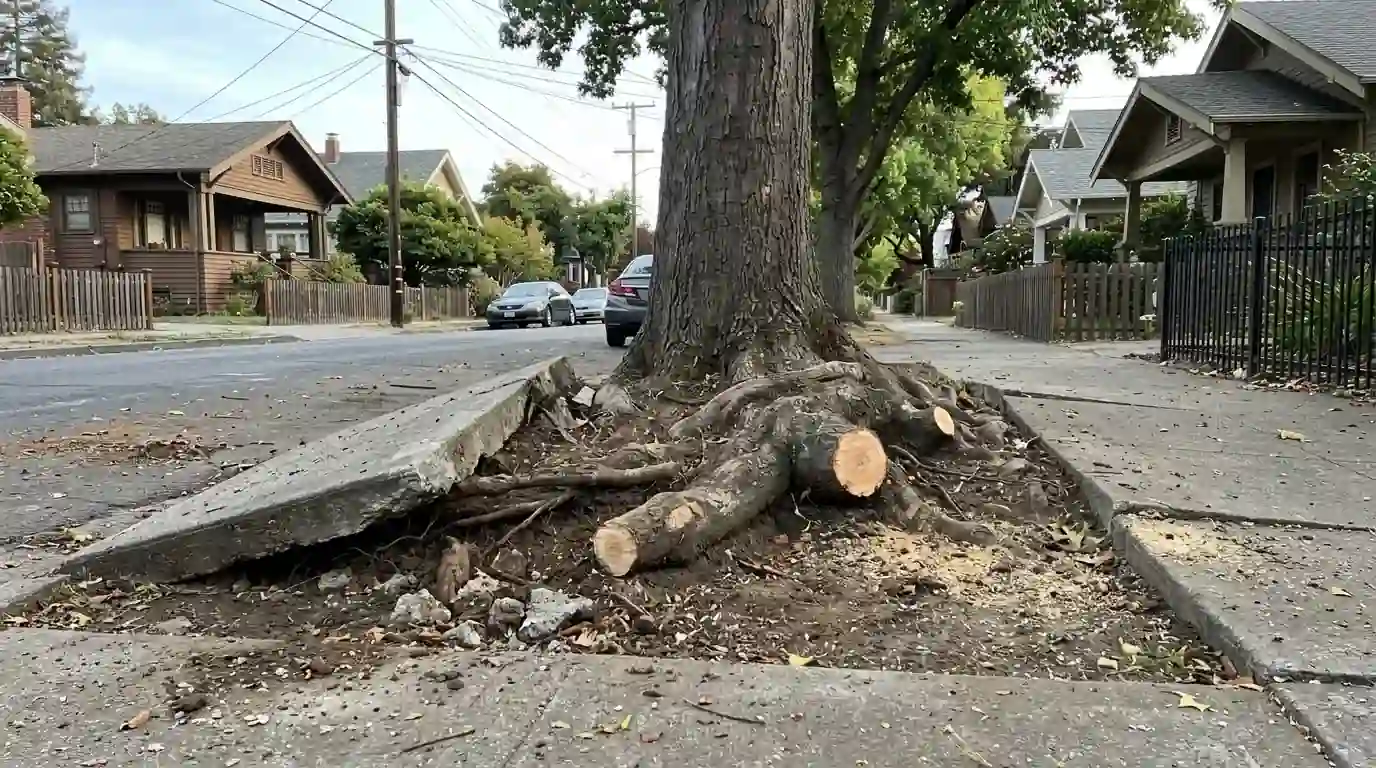
Construction damage rarely shows up while the crew is still on site. A coast live oak can look fine through a whole remodel, then start dropping leaves and dying back two or three years later, after the house is finished. By then the damage is done: roots crushed under parked trucks and stacked lumber, soil compacted by foot traffic, or a trench cut straight through the main roots for a new sewer lateral.
Most of a tree's roots sit in the top foot or two of soil and spread well past the edge of the canopy. That's why a little fence hugging the trunk does almost nothing. Real protection means fencing a wide area around the tree, keeping materials, equipment and washout water out of it, and planning trenches and footings around the roots instead of through them.
We work with homeowners, architects and builders from the design stage when we can. Moving a footing a few feet, bridging a beam over a big root, or switching a trench to boring under the roots can save a tree that would otherwise be lost. Where removal is the only option, we handle that too, and the permits that come with it through our permit help.
When does a tree need protection on a building site?
- An addition is going in near the canopyNew footings within the dripline of a mature tree can cut through the roots that feed and anchor it.
- A sewer or utility trench is plannedLateral replacements and new utility runs often head straight through the root zone of a front yard tree.
- Grading or a new retaining wallLowering soil strips feeder roots, while piling soil over roots smothers them, and both can kill a tree slowly.
- Heavy equipment needs a pathExcavators, concrete trucks and loaded pickups crossing the root zone pack the soil and crush shallow roots.
- Materials need a staging spotStacking lumber, gravel or concrete washout under a tree compacts the soil and can poison the roots.
- The tree is a protected sizeIn Oakland, a coast live oak at 4 inches in diameter and most other trees at 9 inches fall under the tree code.
How we protect a tree from the start of the job to the end
Map the root zone
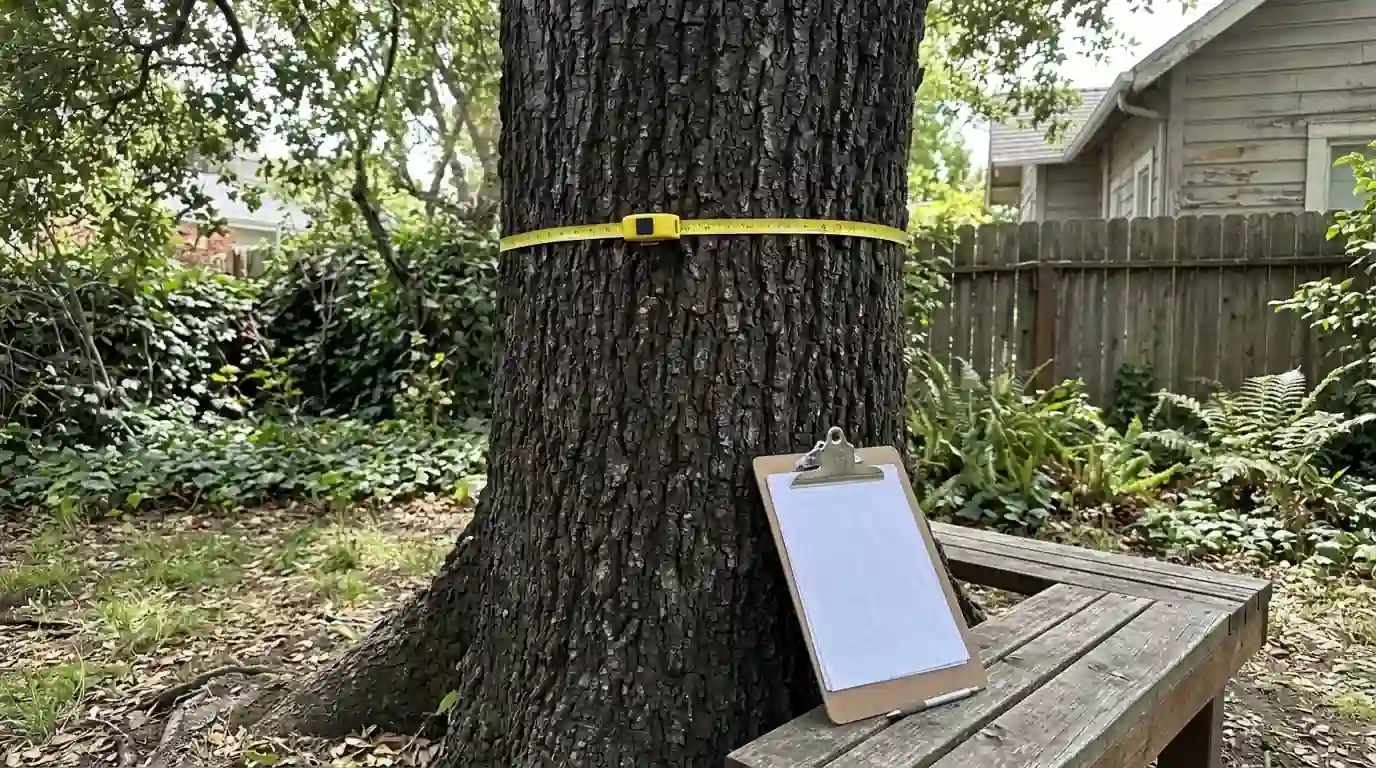
We measure the trunk and canopy and mark a protection zone on the site plan. Its size depends on the species, age and health of the tree, not just the reach of the branches.
Review the plans with your builder
We look at footings, trench routes, grade changes and access paths, then suggest changes that keep work out of the root zone. Small shifts made early are far cheaper than losing the tree.
Install fencing and mulch
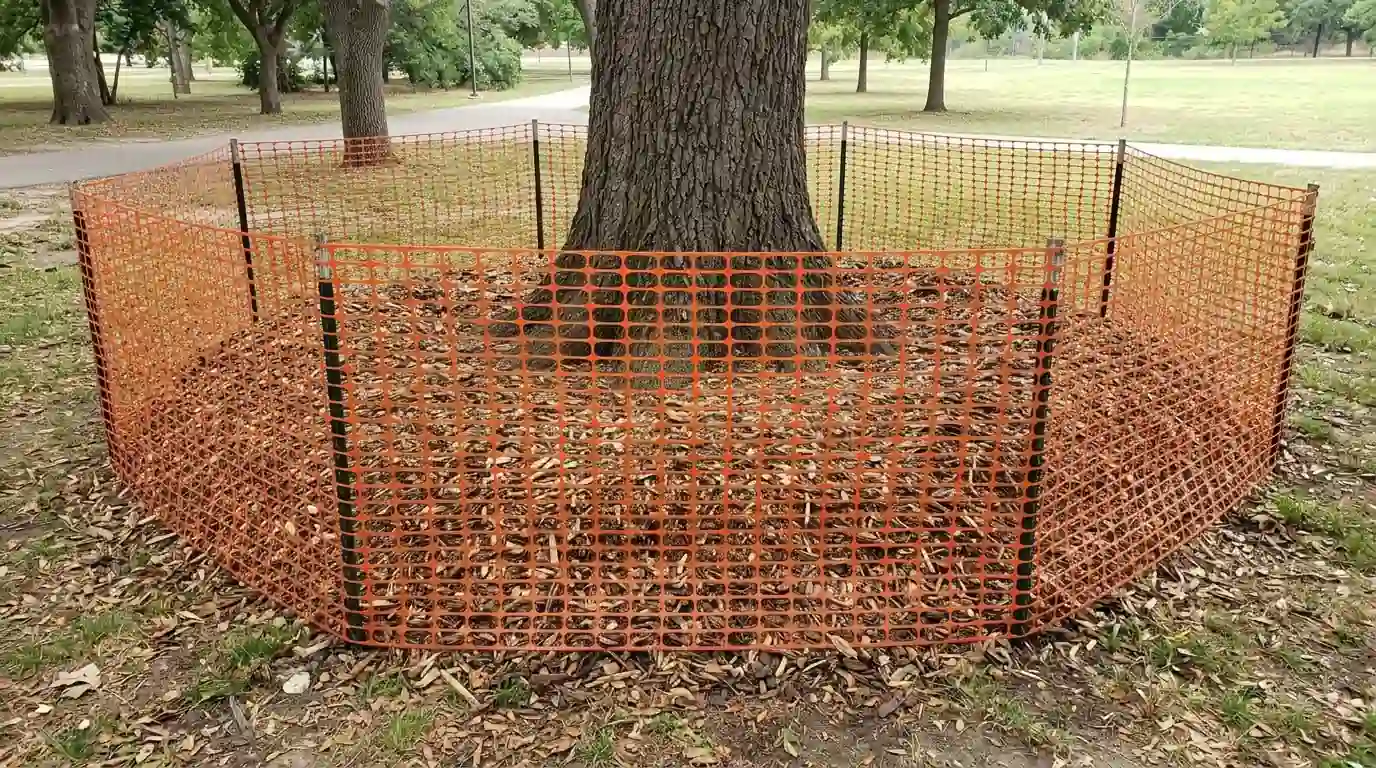
Sturdy fencing goes up around the protection zone before demolition starts, with signs to keep crews out. Inside it, we spread a thick layer of wood chips to cushion the soil and hold moisture.
Prune roots and limbs ahead of the work
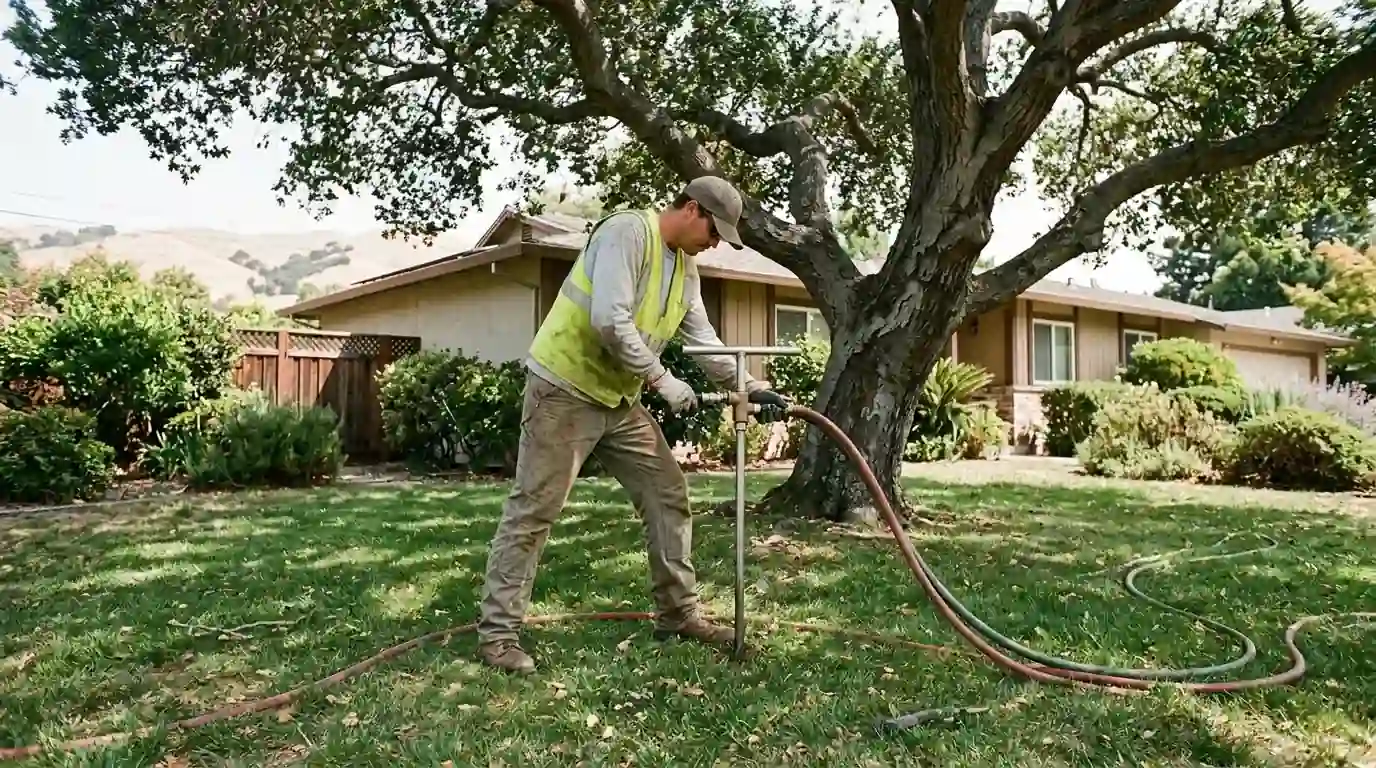
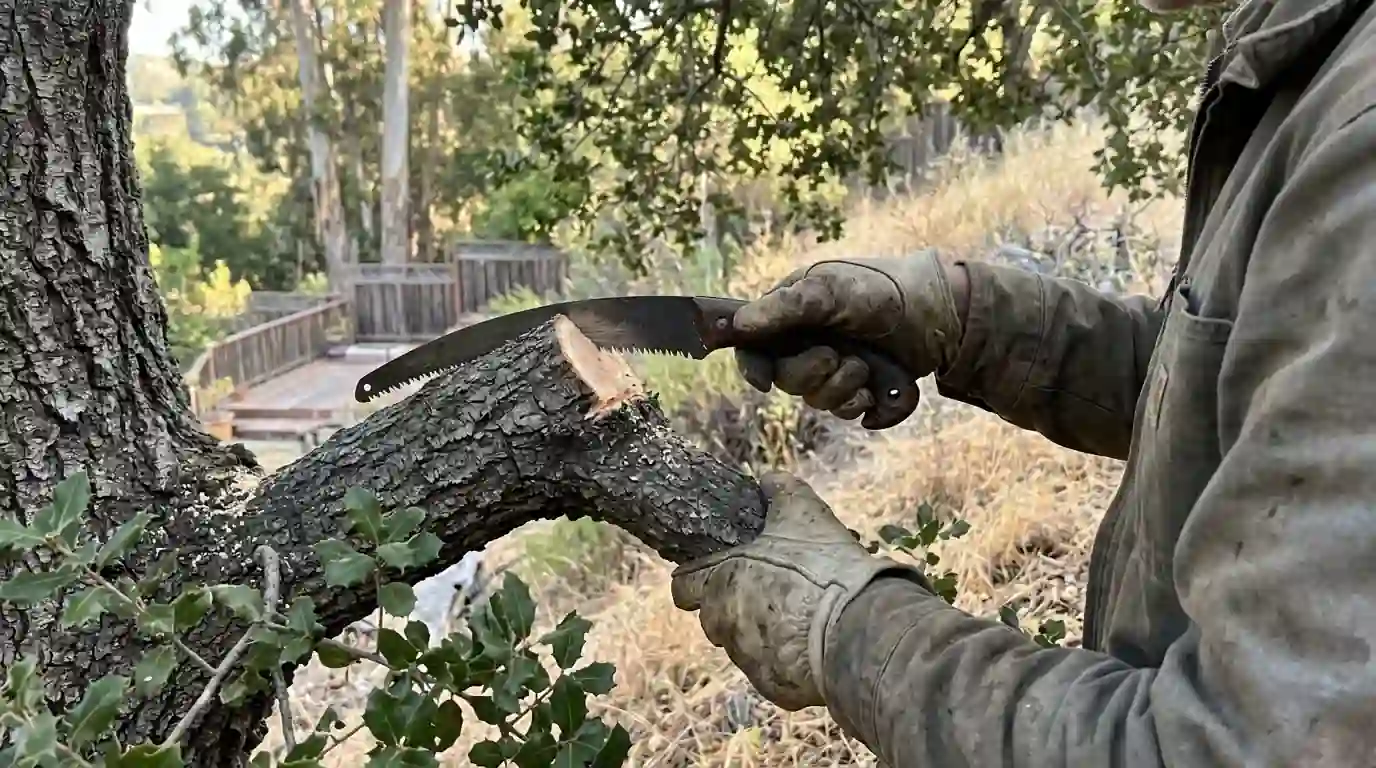
Where digging must come close, we expose and cut roots cleanly by hand before the excavator arrives. Low limbs that would be torn by equipment get pruned properly beforehand.
Monitor during construction
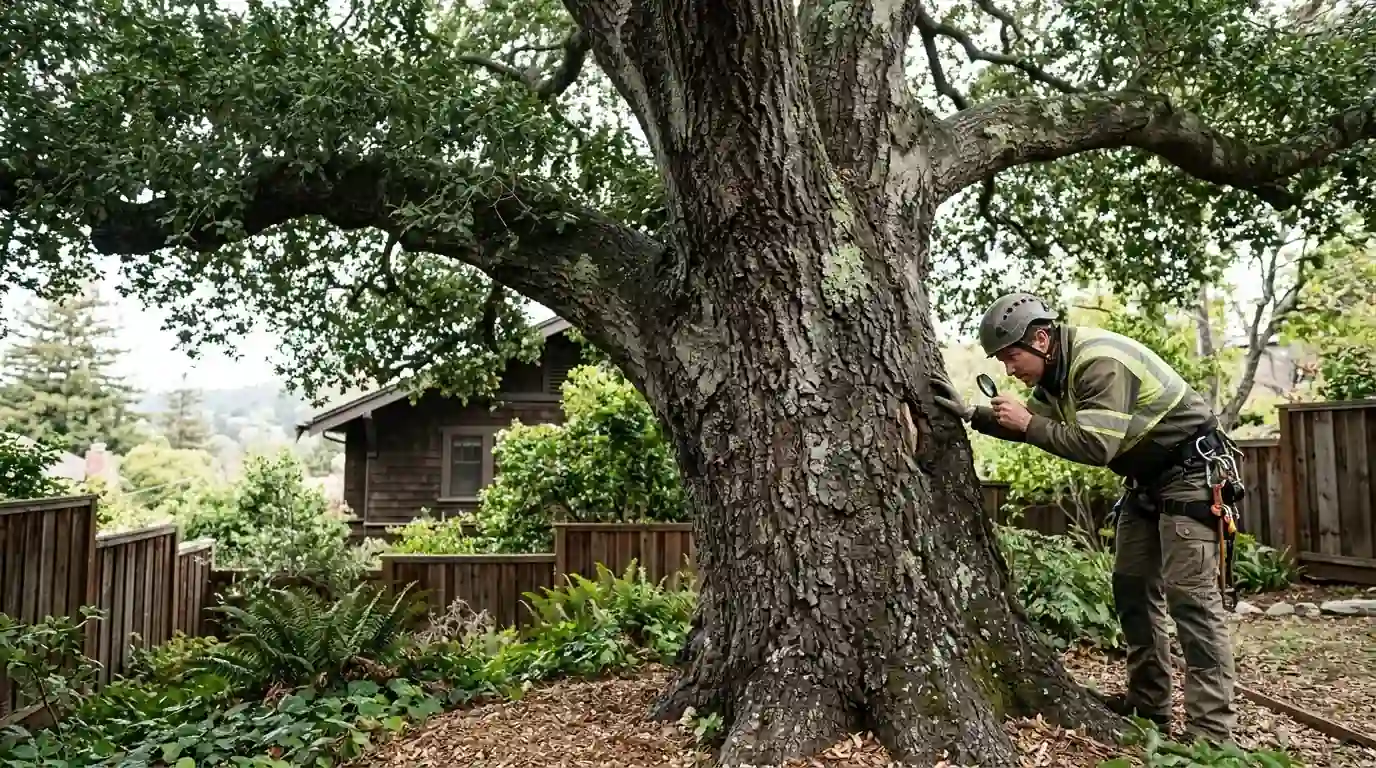
We visit at key stages, such as excavation and foundation pours, to check the fencing, the soil and the tree. If something goes wrong, like a trench drifting into the zone, we deal with it the same day.
Help the tree recover after
When the builder leaves, we take down the fencing, loosen compacted soil where needed and set up a watering plan. Some trees benefit from a follow-up visit over the next two summers.
Oakland's permit rules for building near protected trees
Oakland's tree code doesn't only cover cutting a tree down. Regrading around a protected tree, girdling it or topping it counts as removal too, so careless construction can trigger the same rules as a chainsaw. When construction work or earthwork comes within 10 feet of a protected tree, the city requires a permit, and protection measures are typically part of what gets approved. We help owners understand where their project falls before the first trench is dug.
Hillside lots in Upper Rockridge, Hiller Highlands and Montclair add another layer. Space is tight, the only staging area is often right under the biggest oak, and retaining walls cut deep into slopes full of roots. Many of these homes also sit in the Oakland wildfire district, so we plan protection around the clearance rules, keeping limbs pruned at least 6 feet up and 10 feet back from the new structure.
What shapes the cost of tree protection on a project?
Every job is priced after we see the tree. These are the things that move the number.
- Size of the protection zoneBigger trees and multiple trees need more fencing, more mulch and more layout time.
- Length of the projectA short remodel needs fewer monitoring visits than a ground-up rebuild lasting many months.
- Root work ahead of diggingHand or air excavation to cut roots cleanly along a trench or footing adds labor up front.
- Plan review and reportsTime spent reviewing drawings, meeting the builder and writing up tree protection notes adds to the scope.
- Permit paperworkProjects near protected trees can involve city forms, which take time to prepare and follow.
- Recovery care afterwardSoil loosening, mulch and follow-up watering visits are part of bringing a tree through a long project.
Work that often goes with tree protection during construction
Where we handle tree protection during construction
From the office on Martin Luther King Jr Way in Temescal and the Walnut Creek office on Bonanza Street, we cover Oakland and the East Bay. The biggest communities we serve, with a main ZIP code for each:
Tree protection during construction questions we hear in Oakland
Does Oakland need a permit for building near a protected tree?
Yes. When construction work or earthwork comes within 10 feet of a protected tree, the city requires a permit. A coast live oak is protected from 4 inches in diameter and most other species from 9 inches. We help you sort out early if your project triggers this, so it doesn't stall the job later.
How far out should tree protection fencing go?
Ideally well past the trunk, often to the dripline or beyond for older trees, since roots spread wider than the canopy. On tight urban lots that isn't always possible, so we set the largest zone the project allows and add mulch, plywood or other measures where work must pass close.
Can a new sewer lateral be installed without killing my front yard tree?
Often, yes. The trench route can sometimes shift to the side of the root zone, or the lateral can be bored or pipe-burst under the roots instead of open cut. Where a trench must pass close, we cut roots cleanly by hand ahead of the machine.
Why do trees die a few years after construction ends?
Because root damage takes time to show. A tree draws on stored energy for a season or two after losing roots or growing in compacted soil, then starts to decline. Dieback at the top, thin leaves and early leaf drop are typical signs. Protection during the job prevents most of these delayed losses.
Is it okay to add fill soil over tree roots during a remodel?
It's one of the most damaging things that can happen to a mature tree. Even several inches of fill can cut off air to the roots, and oaks are especially sensitive. If grade must rise near a tree, we plan a dry well, a retaining edge or another way to keep soil off the root zone.
Saws, chippers, grinders and climbing gear from names like Stihl, Husqvarna and Vermeer
StihlHusqvarnaVermeerBanditMorbarkRaycoAltecPetzlSilkySherrillTeufelbergerNotchEchoToro
Need tree protection during construction in Oakland or the East Bay?
Call and tell us what the tree is doing. Someone picks up any hour, and we can usually talk you through the next step on that first call.