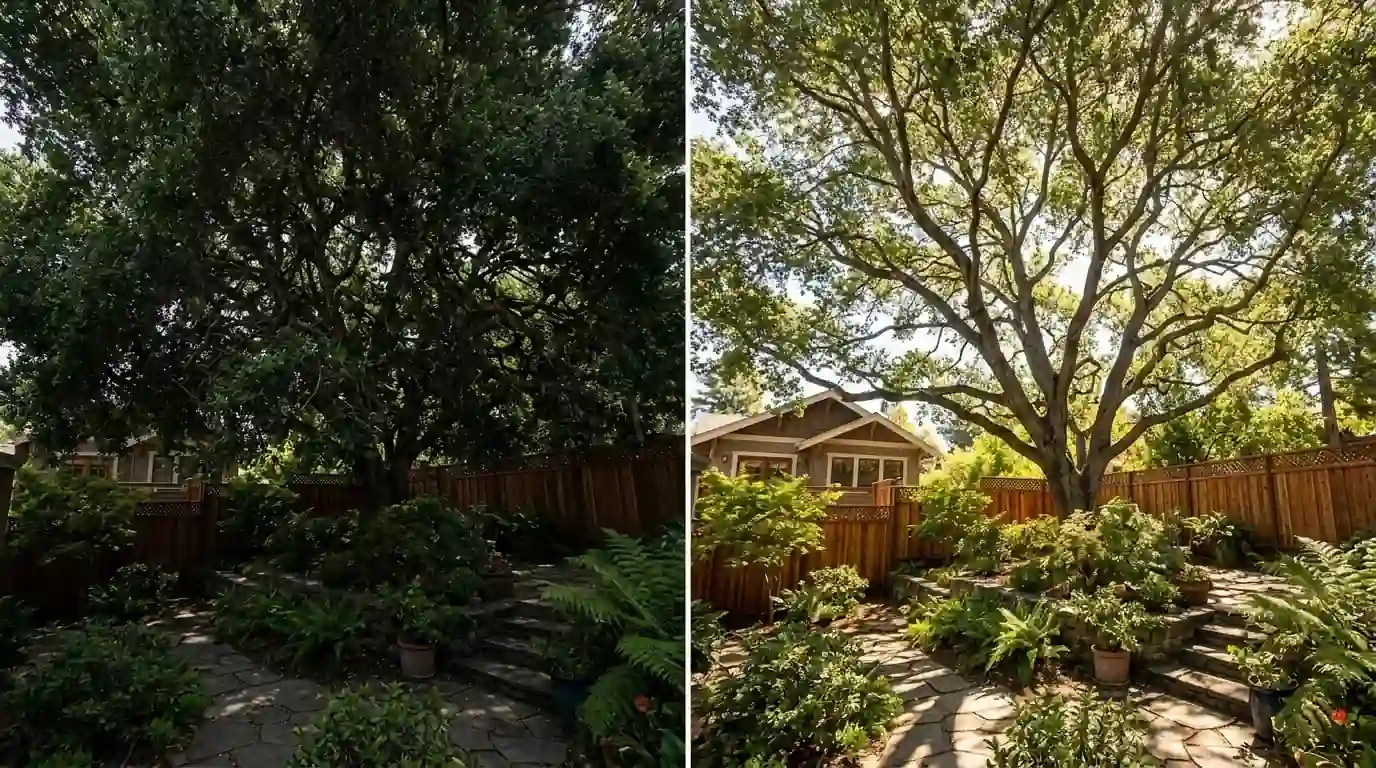
Tree trimming in Oakland, CA
Most Oakland trees don't need to come down. They need a careful trim every few years, with dead wood out, roofs cleared and limbs cut back the right way, so they stay healthy and stay put.
Quick answer
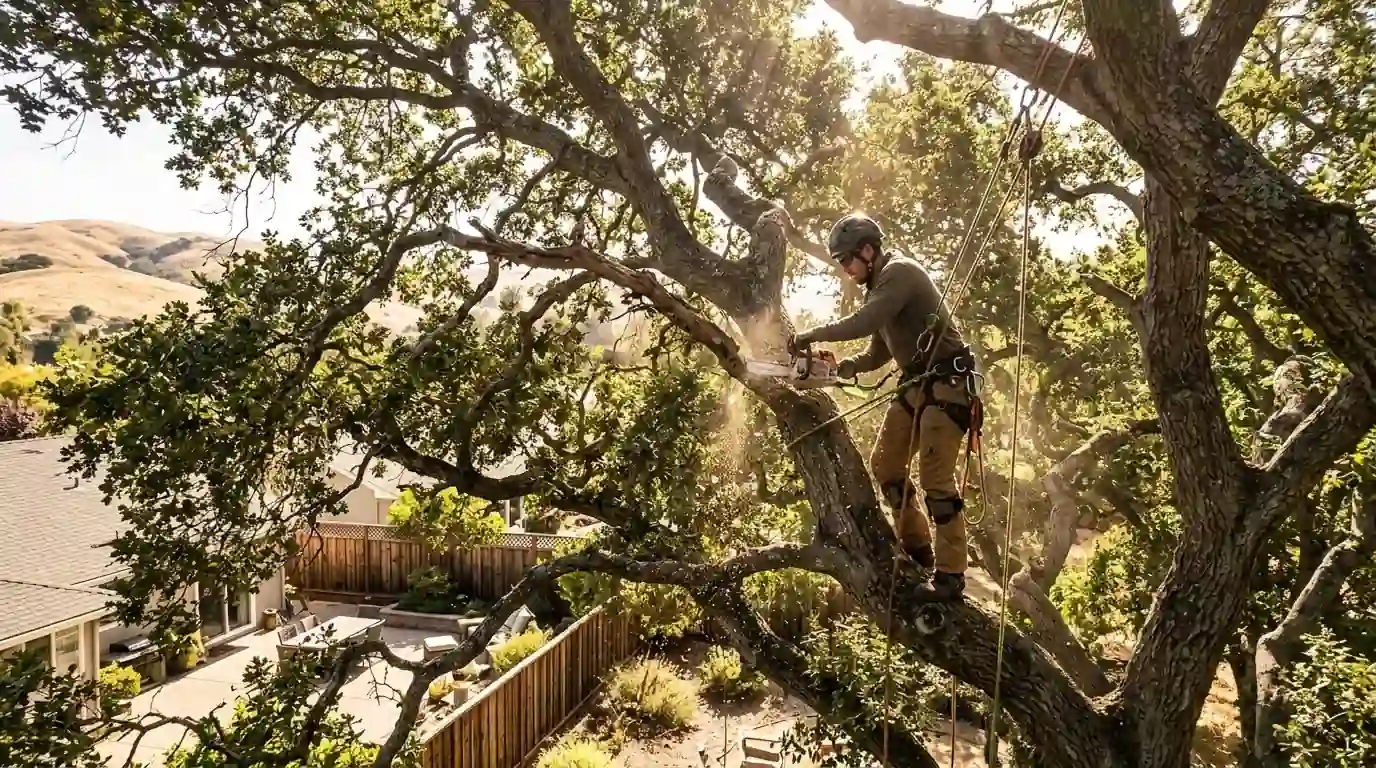
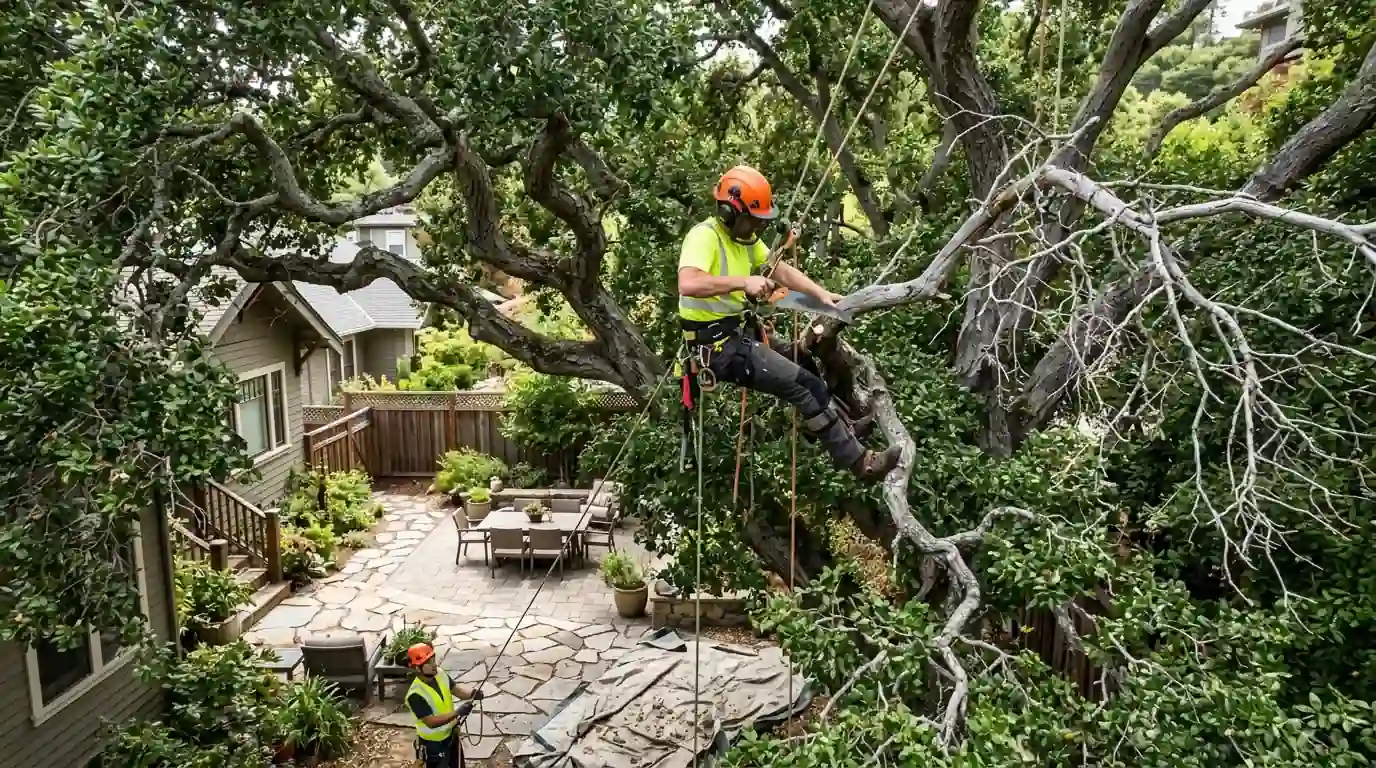
Tree trimming is routine pruning that removes dead, broken, crossing and overextended branches and keeps limbs clear of buildings, lines and walkways. Most mature trees benefit every three to five years, younger ones more often. Our climber works through the canopy with rope and hand saws, making each cut at the branch collar or back to a healthy side limb.
What tree trimming involves in Oakland
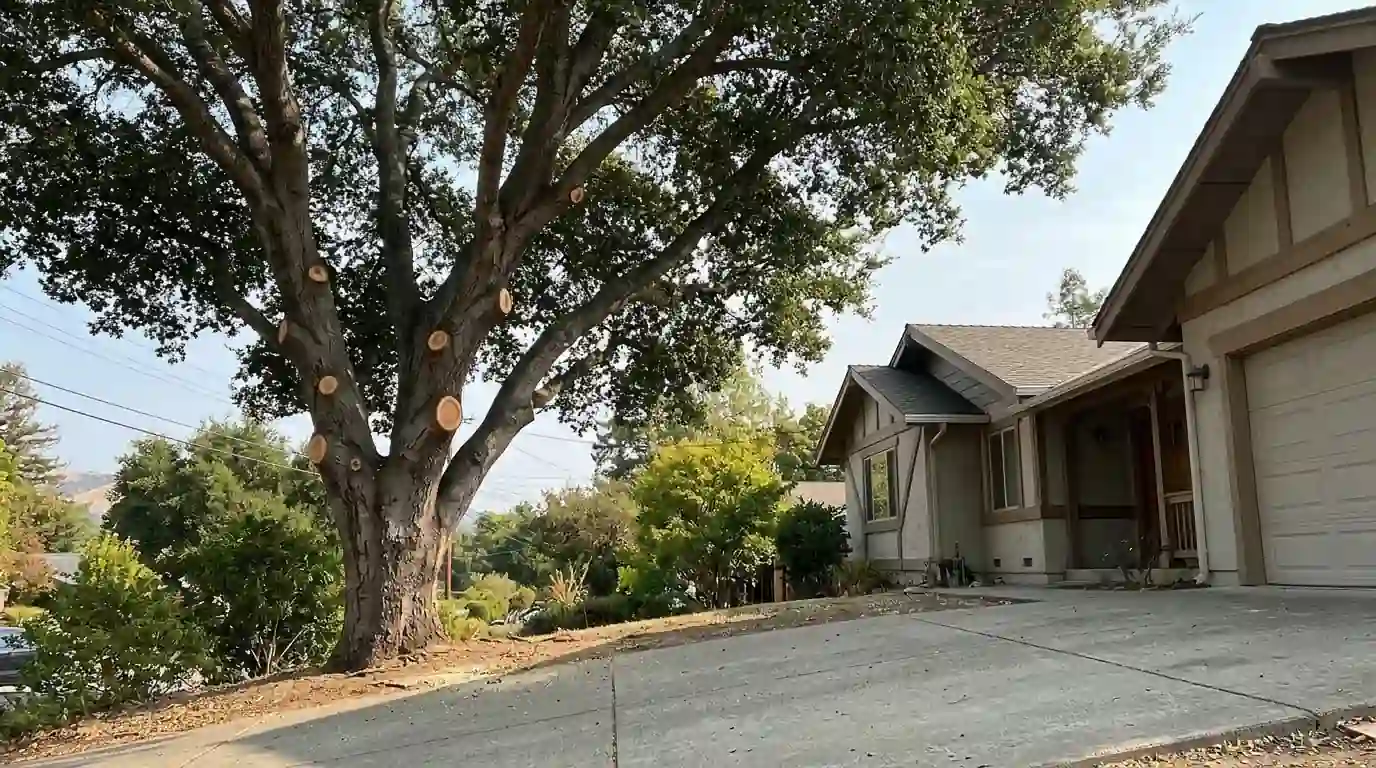
A good trim is mostly invisible. When we're done, the tree should look like itself, a little lighter, a little cleaner, with nothing hanging over the roof and no dead wood waiting to drop. What you shouldn't see is stubs, flush cuts against the trunk, or a canopy stripped bare on the inside with tufts at the ends. Those mistakes stress the tree and often grow back as weak, crowded shoots that need more work later.
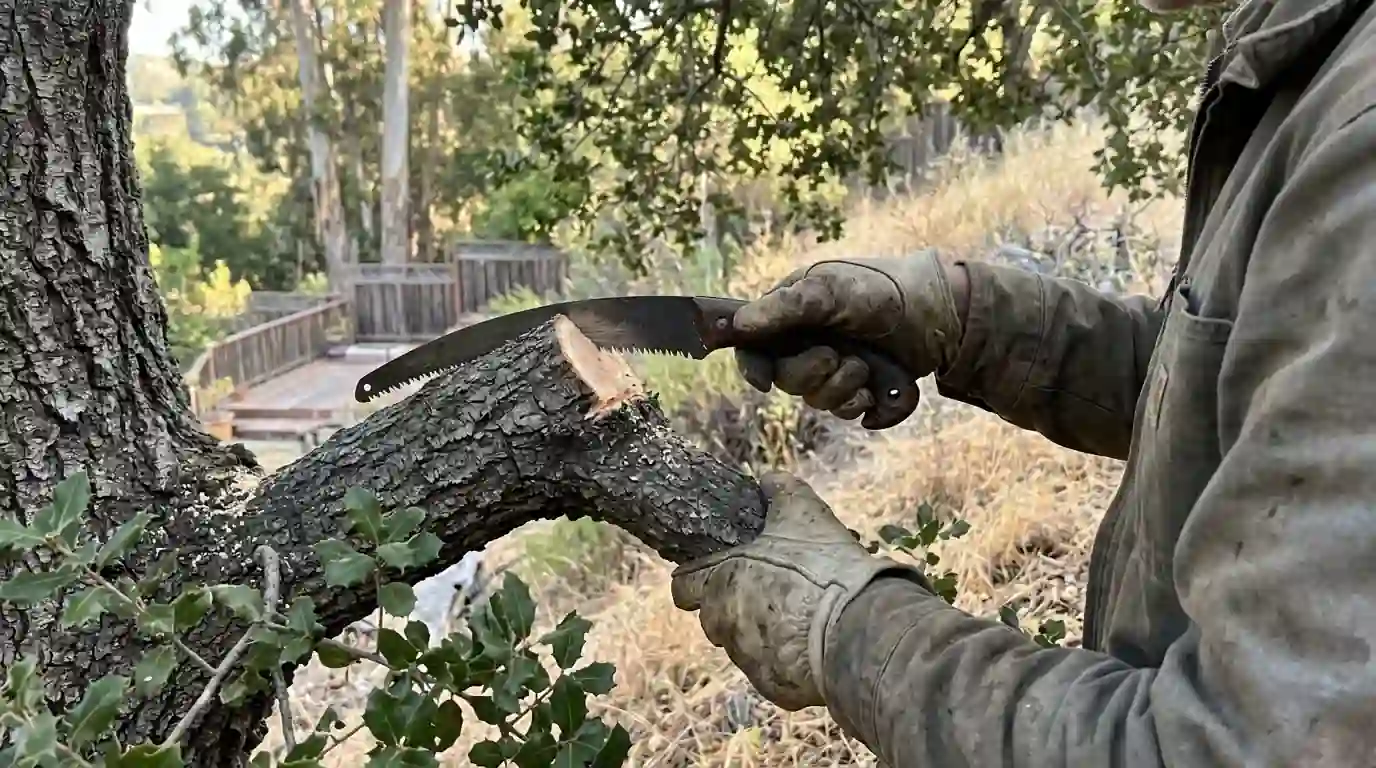
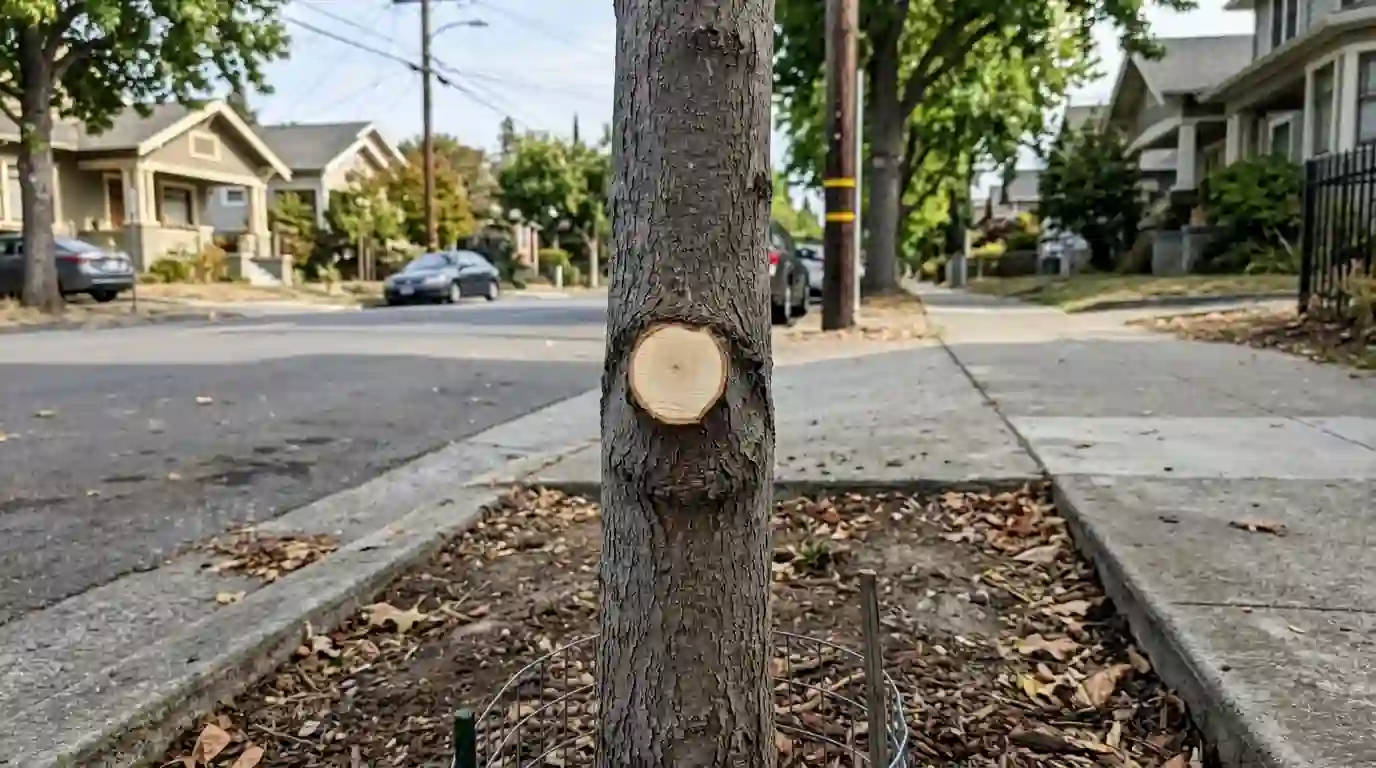
Every cut we make is one of three kinds. A removal cut takes a branch back to its point of origin, just outside the branch collar, the slightly swollen ring where it joins the trunk. A reduction cut shortens a limb back to a side branch big enough to take over. A deadwood cut clears out what's already dead. We avoid cutting into the collar, because that's where the tree seals the wound, and we never leave a bare stub with nothing to feed it.
Timing depends on the tree. Most broadleaf trees can be trimmed most of the year. Coast live oaks are better trimmed in the dry months than during the rains, and fruit trees respond well to cuts made during winter dormancy. On a typical Oakland lot we might trim a liquidambar out front, raise a plum off the walkway and clear a pine from the gutters, all in one visit. For heavier work on oaks, our oak pruning page goes deeper into timing and disease.
What tells you a tree is due for a trim?
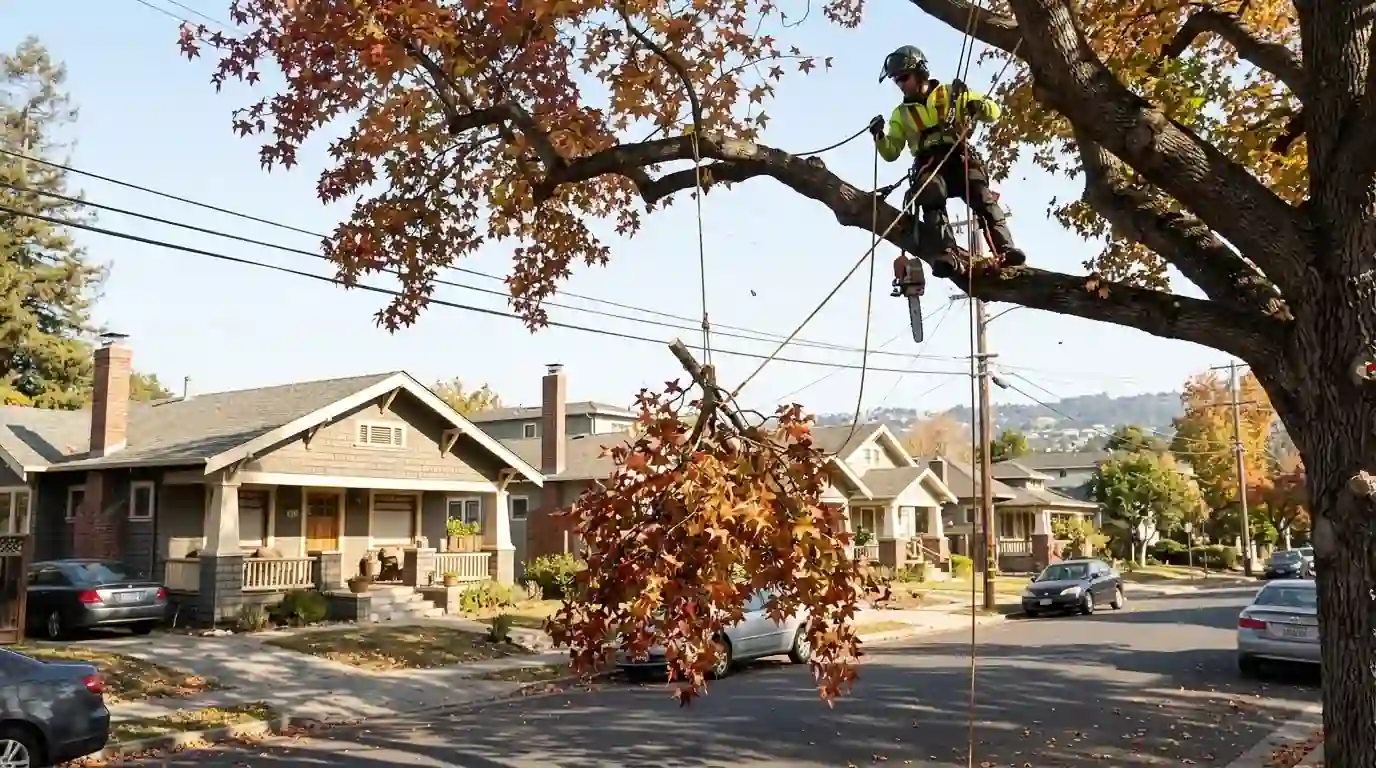
- Branches touching the roofLimbs rubbing shingles wear them down, drop debris into gutters and give rodents a path onto the house.
- Dead wood in the canopyGray, leafless branches inside an otherwise green crown are the first pieces to fall in wind.
- Limbs crossing and rubbingTwo branches rubbing open wounds in each other, which lets decay in.
- Low limbs over the sidewalkBranches that catch heads, umbrellas or truck mirrors need lifting or shortening.
- A lopsided crownA tree that has grown heavy toward one side, often reaching for light, can be balanced with selective cuts.
- Limbs near the service dropBranches growing into the line from the pole to your house need clearing. PG&E can disconnect the line temporarily so the work happens safely.
What decides how big a trimming job is?
Every job is priced after we see the tree. These are the things that move the number.
- Tree size and numberOne tall tree can take as long as several small ones.
- How long since the last trimA tree left ten years carries far more dead wood and overgrowth than one kept on a cycle.
- Climbing difficultySteep hillside yards and trees right against the house slow every move.
- What sits belowGreenhouses, skylights, ponds and delicate gardens mean more rigging and lowering.
- Clearance goalsLight cleanup takes less time than lifting a canopy over a driveway or clearing a chimney.
- Debris volumeBig canopies produce a lot of brush, and hauling all of it takes more chipper loads.
How does a trimming visit actually go?
Walk the tree with you
We stand under the canopy and point out what we plan to cut and why, and we agree on clearance goals for the roof, path or street.
Rope in and climb
Our climber sets a line high in the tree and moves out along the limbs, so no spikes go into a tree we're keeping.
Clear dead and damaged wood first
Dead, broken and diseased branches come out before any live wood is touched, which often solves half the problem.
Make selective live cuts
Crossing limbs, weak attachments and overlong branches are cut at the collar or back to a strong lateral. We keep live-wood removal modest so the tree isn't shocked.
Lower the heavy pieces
Anything over a roof, fence or garden bed gets tied and lowered instead of dropped.
Chip and clean up
Brush goes through the chipper, leaves are raked from the yard and gutters below, and the street is swept.
What Oakland rules affect trimming a tree?
Trimming is allowed in Oakland, but the code draws a firm line. Removal in the protected tree chapter covers more than cutting a tree down. Topping, girdling and similar damage count as removal, so over-cutting a coast live oak 4 inches DBH or larger, or most other trees 9 inches DBH or larger, without a permit can bring the same trouble as cutting it down. That's one reason we keep live-wood removal modest. Berkeley sets its own line: removing more than 25 percent of an oak's leaf, stem or root system within 24 months counts as excessive pruning and needs an exception.
Street trees follow a separate path. The City of Oakland prunes its street trees only in hazardous or emergency situations, so owners who want a street tree trimmed can apply to prune it themselves through the city's hold-harmless form for street tree pruning. In the wildfire district, trimming also serves the fire inspection: limbs at least 6 feet above the ground and 10 feet from structures and chimneys in the 5 to 30 foot zone. A trim in Rockridge or Piedmont is usually about roofs and sidewalks, while a hills trim often focuses on fire clearance.
Work that often goes with tree trimming
Where we handle tree trimming
From the office on Martin Luther King Jr Way in Temescal and the Walnut Creek office on Bonanza Street, we cover Oakland and the East Bay. The biggest communities we serve, with a main ZIP code for each:
Tree trimming questions we hear in Oakland
How often should a mature tree in Oakland be trimmed?
Every three to five years suits most mature shade trees. Fast growers like eucalyptus and acacia may need it more often, and trees near roofs or lines may need yearly clearance cuts. Young trees benefit from light structural trimming every year or two while they set their shape.
Do you use climbing spikes when trimming?
No. Spikes punch wounds into the bark, and we only use them on trees coming down. For trimming, our climber moves on rope and limbs, tying into the canopy from above. On some trees, a lift does the same work from the outside.
Can I trim my neighbor's branches that hang over my yard?
California generally lets you cut overhanging branches back to the property line, as long as the cuts don't harm the tree's health. Cutting into a shared or neighbor's tree beyond that can bring double or triple damages. We trim to the line with proper cuts and suggest talking to the neighbor first.
What's the difference between trimming and pruning?
In everyday use they mean the same job. Some people say trimming for clearance and tidy-up work and pruning for health and structure. Our trimming visits cover both: dead wood out, clearance gained and a few structural cuts where they help the tree.
Saws, chippers, grinders and climbing gear from names like Stihl, Husqvarna and Vermeer
StihlHusqvarnaVermeerBanditMorbarkRaycoAltecPetzlSilkySherrillTeufelbergerNotchEchoToro
Need tree trimming in Oakland or the East Bay?
Call and tell us what the tree is doing. Someone picks up any hour, and we can usually talk you through the next step on that first call.