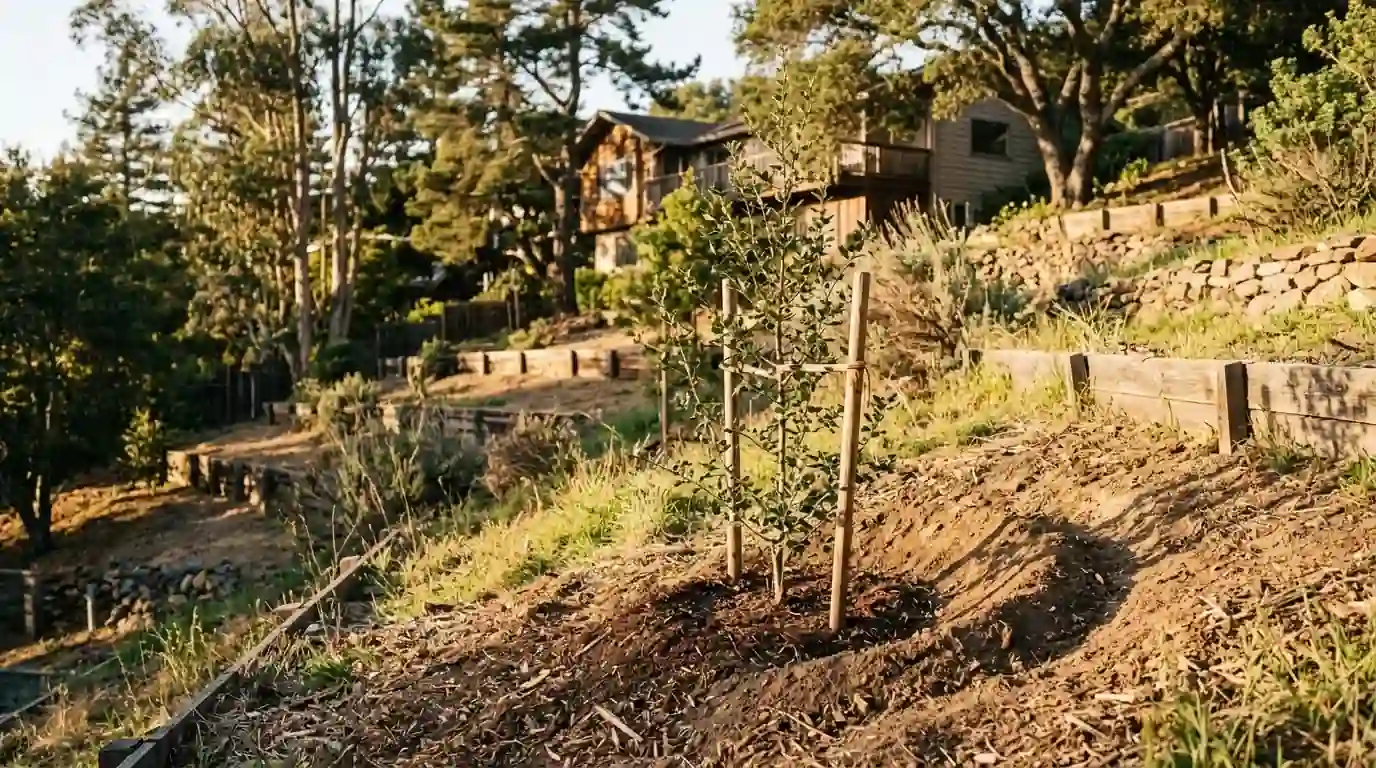
Right tree, right place starts with mature size
Most tree problems we see in the hills started on planting day. A redwood set a few feet from a foundation, a pine tucked under the eave, or a fast grower placed beneath the service drop looked fine at five gallons. Twenty years later it became a removal job.
Picture the tree at full size before you dig. Note the height, the spread and how the canopy will sit relative to the roof, the wires, the view and the neighbor's yard. Then choose the species that fits that space, rather than squeezing a big tree into a small one.
- Measure the open space at the spot: distance to the house, the fence and any wires.
- Check sun and shade across the day, since hill lots often have one side in deep shade.
- Look at the slope and the drainage; water runs off fast and pools at the toe.
- Note what is below ground: sewer laterals, water lines and retaining wall footings.
- Choose the species last, once the space is clear.
Keep new trees out of Zone 1 clearances
The Oakland hills sit inside a wildfire district with yearly fire department inspections. The 1991 Oakland Hills fire is the reason the rules are so strict about fuel near homes, and planting decisions should follow them from the start.
Zone 1 runs from 5 to 30 feet from the house. In that band, tree limbs need to be at least 6 feet above the ground and 10 feet from any structure or chimney. A tree whose mature canopy will reach the roof is a poor choice inside Zone 1, no matter how small it is today.
Zone 2 runs from 30 to 100 feet, or to the property line if that is closer. There the rule is spacing, both side to side and from the ground up, so fire cannot climb from shrubs into canopies or jump from tree to tree. Plant groups with gaps between them, not continuous screens.
Closer in, the state has proposed Zone 0 rules for the first 5 feet around the house. They are not final, but the proposal would keep shrubs, combustible mulch and firewood out of that strip. Planting a tree right against the house works against every one of these zones. Our defensible space crews see the results of tight planting every summer.
Native trees that suit the hills
Oakland's tree code names a short list of replacement species: coast redwood, coast live oak, madrone, California buckeye and California bay laurel. Valley oak belongs in the same conversation for larger, sunnier lots. All of them have long histories in the East Bay, and most handle dry summers once established.
- Coast live oak: evergreen, broad and slow; often reaches 30 to 60 feet tall with a spread close to its height. Best on a large lot, well away from the house.
- Valley oak: deciduous and the largest of the group, often 60 feet or more with a wide crown. Needs deep soil and a big open space, like a lower meadow.
- Madrone: red peeling bark and evergreen leaves, commonly 20 to 50 feet in gardens. Wants fast drainage and little summer water once settled; a good fit on a rocky slope.
- California buckeye: small, often 15 to 30 feet, multi-stemmed and spring flowering. Drops its leaves in late summer drought, which is normal. Fits smaller yards and spots near wires.
- California bay laurel: dense evergreen that can grow large, often 30 to 60 feet. Its leaves carry sudden oak death spores without the bay dying, so keep new bays away from existing oaks.
- Coast redwood: grows fast and can pass 100 feet over decades. Needs steady water and room for wide, shallow roots; happiest in a moist canyon bottom, far from foundations.
Mature sizes vary with soil, water and exposure. A redwood in a wet ravine in Shepherd Canyon will outgrow one on a dry ridge, and an oak in deep soil will spread wider than one on thin rock. Treat these numbers as a planning range, not a promise.
Matching each species to a spot on the lot
Put the big trees low and far from the house. On a typical hill lot, that means valley oak or coast live oak downslope where the canopy has room and sits outside Zone 1. Redwoods belong in the wettest, most sheltered spot, often a canyon bottom or a north-facing bank.
Use the smaller species closer in and up top. A buckeye works near a patio edge, a slope beside the driveway or the corner under the service drop. Madrone does well on a well-drained bank where water never sits, which is also where many other trees struggle.
Think about the view as well. A tree planted downslope can grow into the view from the deck. Choosing a species whose mature height stays below that line saves years of view pruning later.
Smaller trees near wires and foundations
Wires and foundations deserve the most caution. A tree planted under the service drop or near the primary lines will be pruned hard for the rest of its life. A tree planted close to a foundation can lift slabs, crowd footings and drop litter into gutters.
- Under or near wires: pick a small species such as California buckeye, and keep tall growers well to the side.
- Near foundations and retaining walls: leave room for the mature canopy and the roots; small trees only.
- Near sewer laterals: keep thirsty, fast trees away from the line.
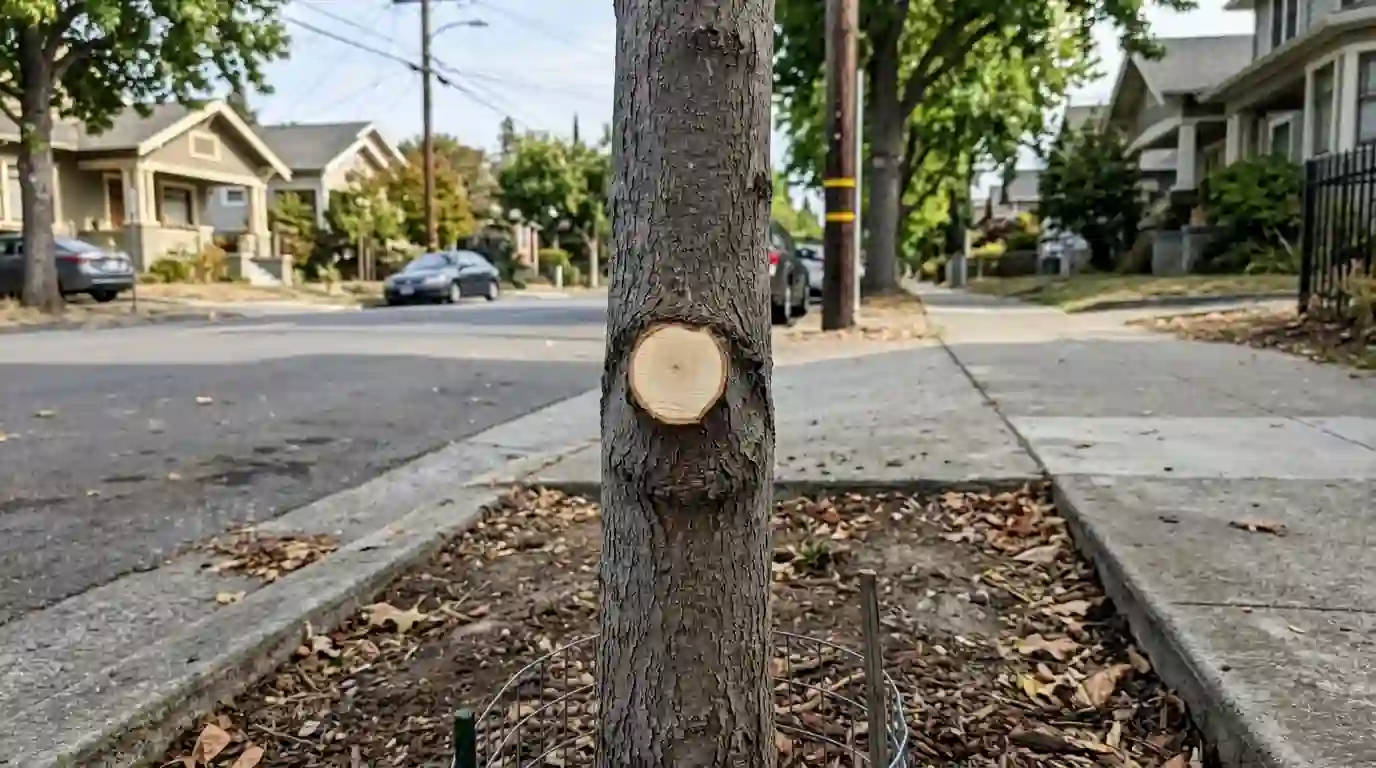
- Near the street: check whether the strip belongs to the city before planting there.
Redwoods are the most common mistake. They look tidy and narrow when young, and they grow very fast. Set close to a house, they end up with roots under the slab and a canopy over the roof, with no easy way back.
Skip new eucalyptus and Monterey pine near homes
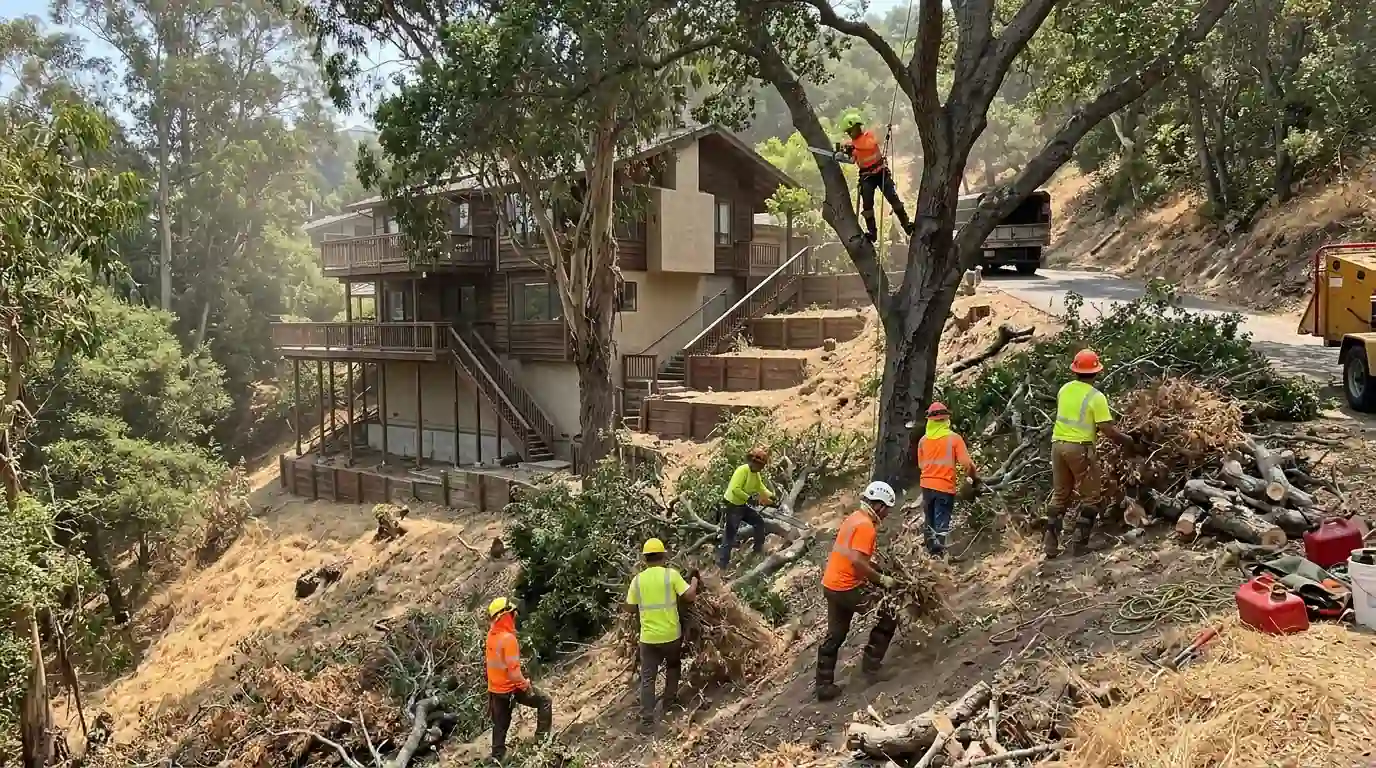
Blue gum eucalyptus and Monterey pine fill much of the older canopy in the hills. They grow fast and tall, they shed bark, needles and oily litter, and they drop heavy limbs. Neither belongs near a house in a fire district, and we advise against planting new ones there.
If you already have them, that is a separate decision about thinning, clearance or removal. The planting decision is simpler: choose a native from the list above, and keep the eucalyptus and pine out of new plans close to the house.
Water through the first dry seasons
Native trees handle dry summers once their roots spread, but young trees need help. The dry season runs roughly from May to October, and the first two or three summers decide whether a new tree takes hold.
Water deeply and less often rather than a little every day. A slow soak that wets the whole root ball and the soil just beyond it trains roots to go down and out. On a slope, build a small soil berm on the downhill side so the water soaks in instead of running away.
Taper the water as the tree settles. By the third or fourth summer, most oaks, madrones and buckeyes need little or none. Redwoods are the exception and keep wanting water. Keep mulch a few inches back from the trunk, and in Zone 0 and close to the house, skip combustible mulch altogether.
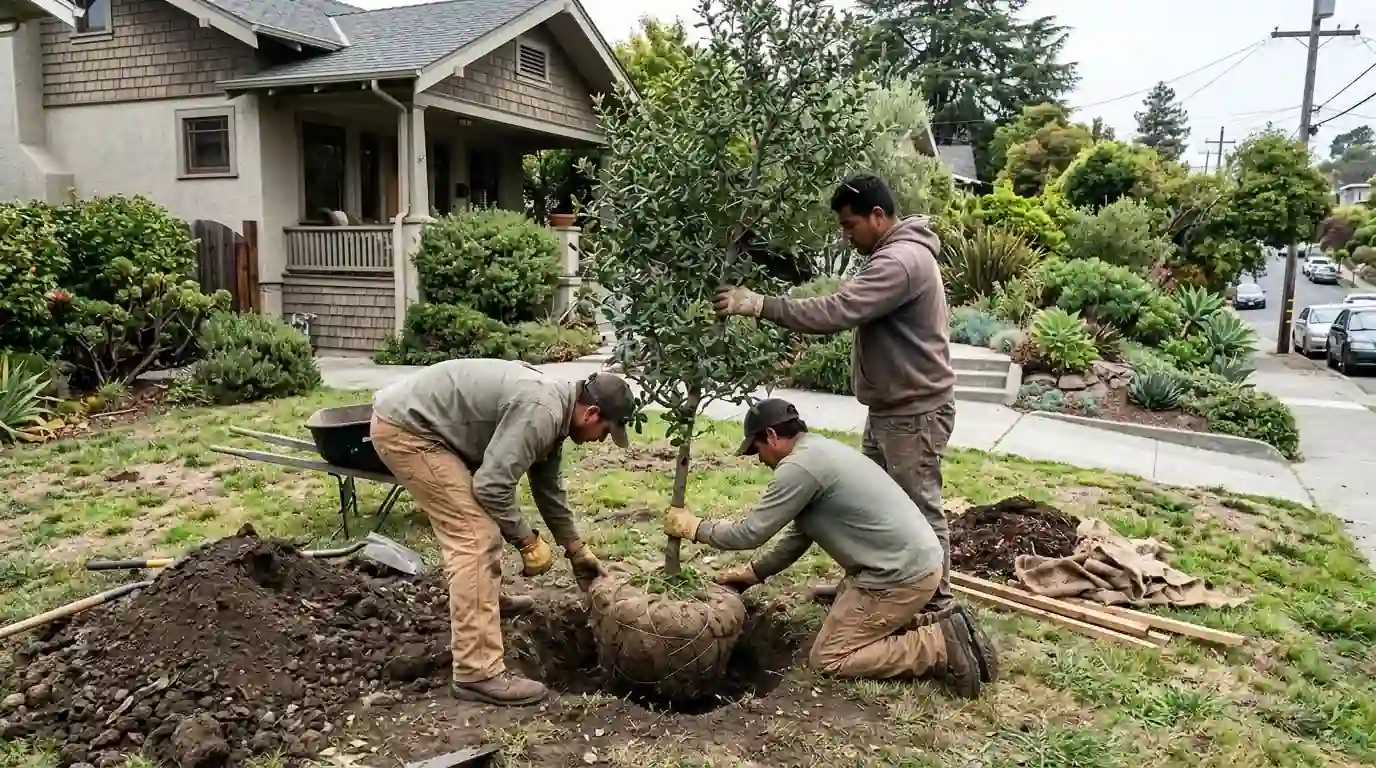
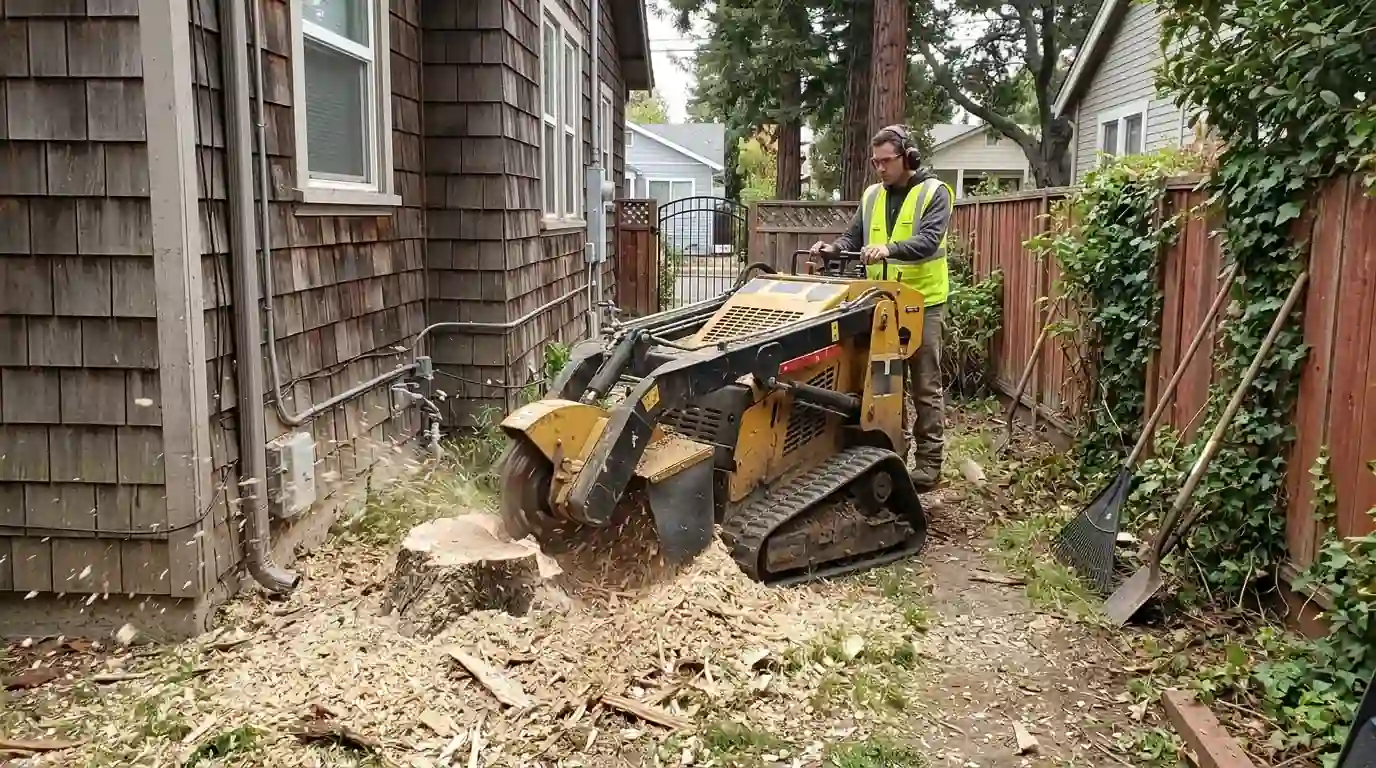
If you want help with species, spacing and the planting itself, our tree planting work covers digging on slopes, setting the root ball at the right height and staking only when the tree needs it. Where an old tree just came out, we can grind the old stump first and plant beside it.