Why the calendar matters for oaks
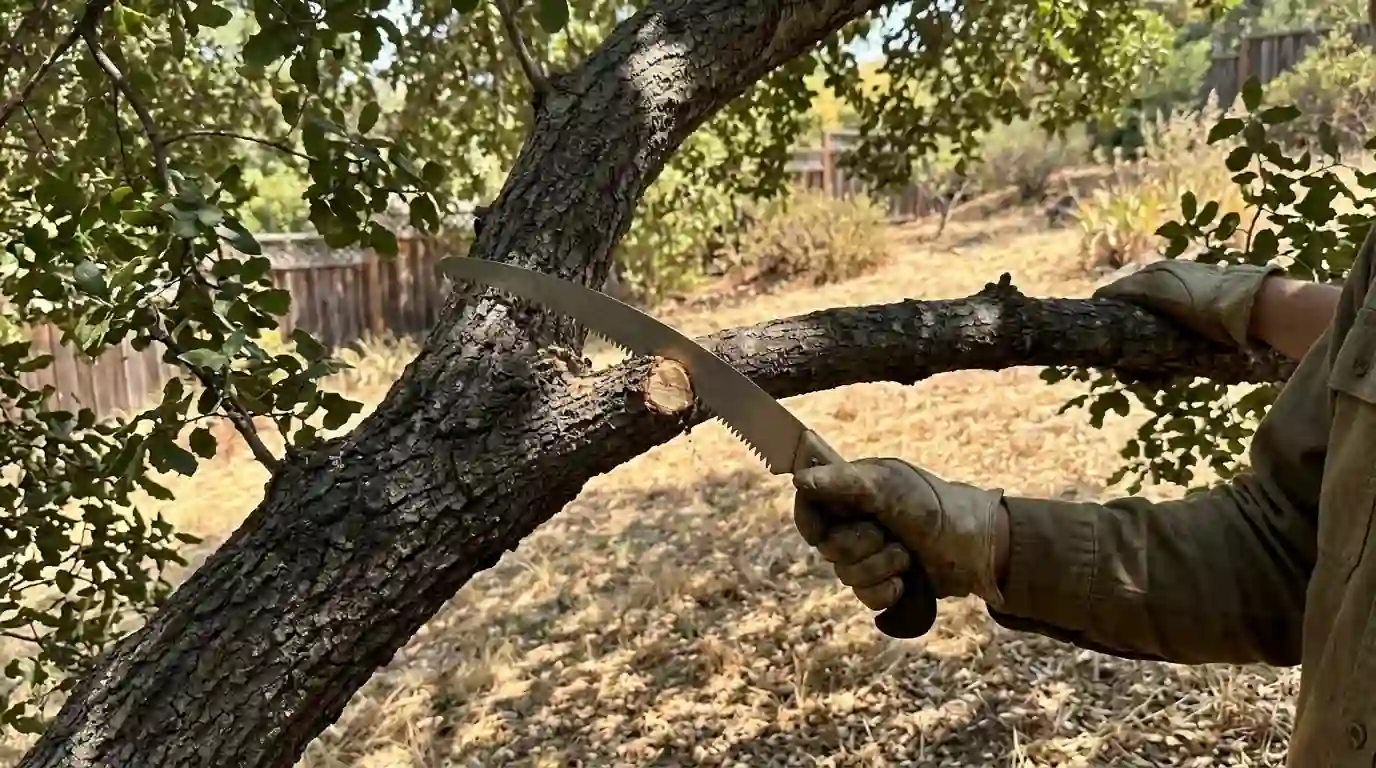
A pruning cut is an open wound. For a few weeks after the saw goes through, the exposed wood is a way in for fungi, bacteria and insects. How fast the tree closes it off, and what lands on it in the meantime, shapes how the cut heals.
In the East Bay, most rain falls November to March. Wet bark and rain splash move spores around the canopy and onto fresh cuts. The dry season, running roughly May to October, gives cuts a drier start with far fewer spores in the air.
That is why we schedule coast live oak pruning for the dry months unless a broken or hanging limb forces our hand.
Oaks also handle summer cuts well in their own right. A coast live oak keeps its leaves through the dry months and is actively growing wood around wounds, so it can start sealing a clean cut while conditions stay in its favor.
What dry season pruning lowers
Summer pruning is not a cure for anything. It is a way to stack the odds for the tree.
- Fewer fungal spores landing on fresh cuts.
- Less rain splash carrying disease from neighboring plants.
- Drier wood at the cut surface while the tree seals it off.
- Less chance of pests finding soft, wet wound tissue.
Dry season work also suits the ground. Equipment on a summer lawn leaves less damage than on soaked soil, and the root zone of an oak is easy to compact in winter.
Sudden oak death changes the stakes
Sudden oak death is caused by Phytophthora ramorum, and coast live oaks die from it. Alameda and Contra Costa counties are inside California's regulated area for the disease.
The wettest springs drive its spread. California bay laurel leaves carry and spread the spores without the bay dying, and many East Bay oaks grow right beside bays.
Pruning oaks in the dry months avoids the season when spores are moving. We also clean saws and climbing gear between trees and keep oak and bay wood on site or local, rather than spreading it across the region.
Oakland protects coast live oaks at 4 inches
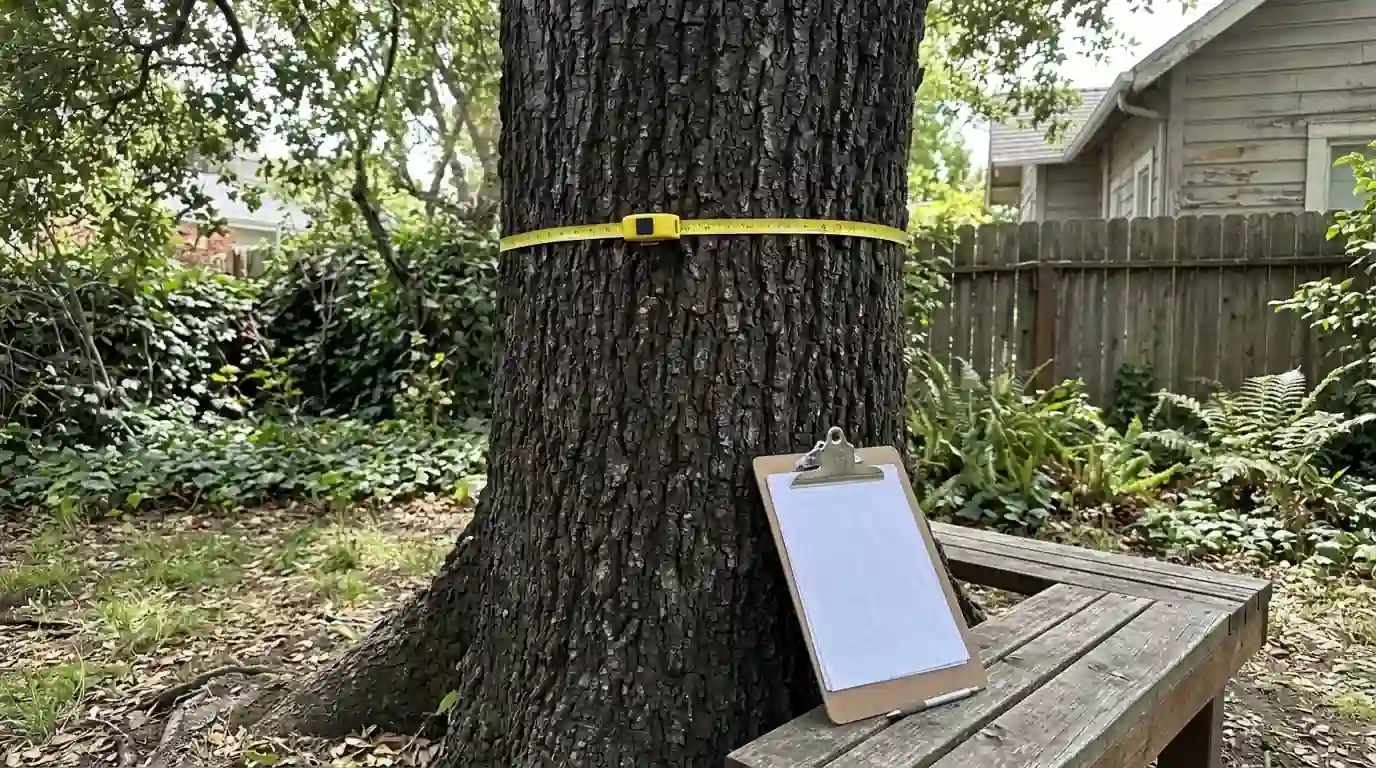
In Oakland, a coast live oak is protected at 4 inches in diameter or larger, measured 4.5 feet above the ground, on any property. Multi-trunk oaks add their trunk diameters together.
Pruning a protected oak is allowed, but the code counts topping, girdling and regrading around a protected tree as removal. A heavy cut that tops the tree can turn a pruning job into a permit problem.
That is one more reason to keep oak cuts modest. Good oak pruning takes out dead, broken and crossing limbs, clears the roof and lifts low branches. It does not try to reshape the tree.
Berkeley's 25 percent rule
Berkeley sets its oak line by circumference. Coast live oaks with 18 inches around on a single stem, or 26 inches combined on multiple stems, measured 4 feet above grade, are covered.
Removal there needs an exception request to the city, and so does excessive pruning. Berkeley defines that as more than 25 percent of the leaf, stem or root system in 24 months.
That limit is a useful rule of thumb outside Berkeley too. An oak that loses a large share of its canopy in one visit puts out stress sprouts, draws pests and can decline for years. We spread bigger jobs across seasons.
Say an oak needs roof clearance, a raised canopy over the driveway and a big dead limb out. We take the dead limb and the roof clearance in the first summer, then come back the next dry season for the lighter raising cuts. The tree never loses more than it can replace.
What not to do to a coast live oak
Most oak damage we see comes from well-meant work done the wrong way. These habits cause the most harm.
- Topping: cutting the main stems back to stubs. It counts as removal in Oakland and leaves weak regrowth.
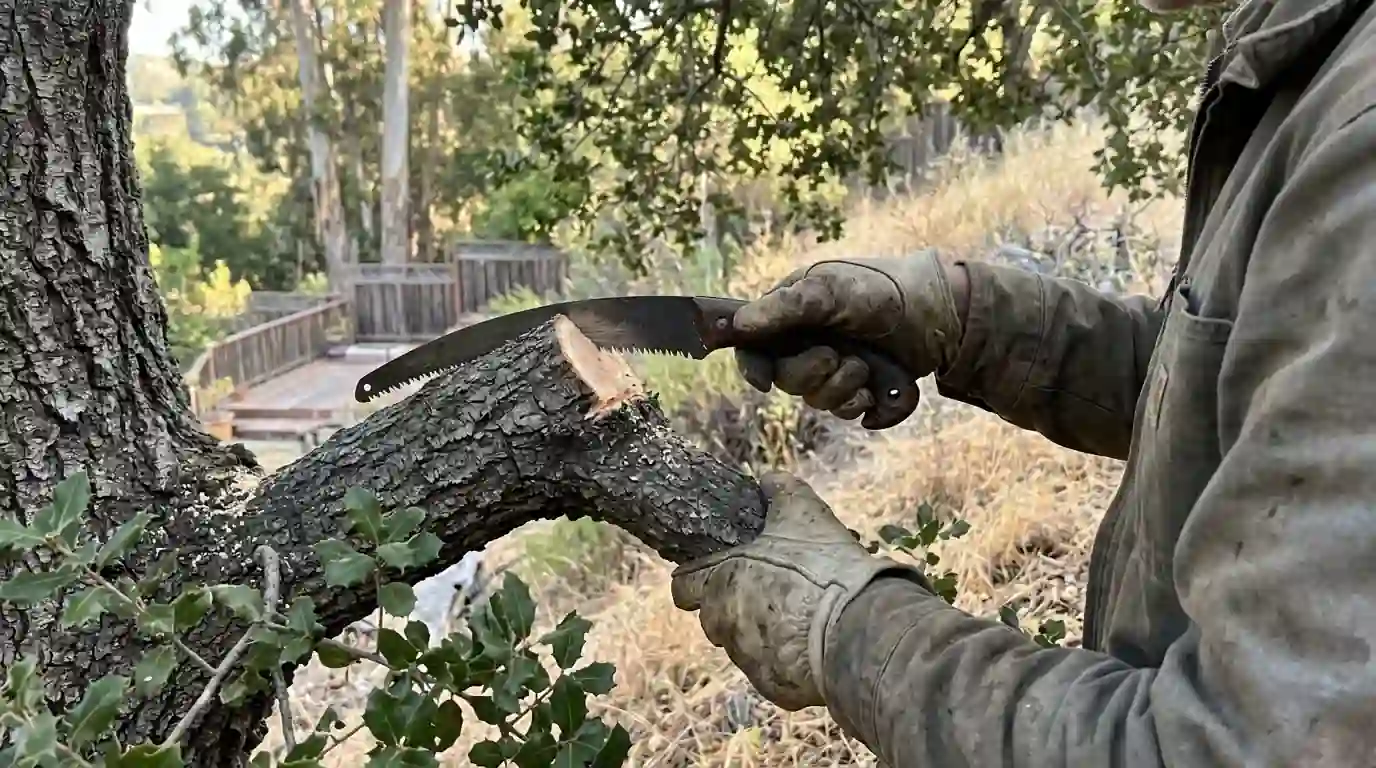
- Flush cuts: cutting a limb off level with the trunk. It removes the collar the tree uses to seal the wound.
- Heavy lion-tailing: stripping all the inner branches and leaving foliage only at the tips. It loads the ends of limbs and invites breakage.
- Watering at the trunk: running sprinklers or drip against the base in summer. Oaks are adapted to dry summers, and wet soil at the root crown invites rot.
If an oak sits in a lawn, try to keep spray off the trunk and the area right around it. Mulch the root zone instead, kept back from the bark.
Two more habits to drop: piling soil or planting beds against the trunk, and cutting roots for a new path without a plan. Both hurt the root crown, and around a protected oak in Oakland, regrading can be treated as removal.
What a good oak pruning visit looks like
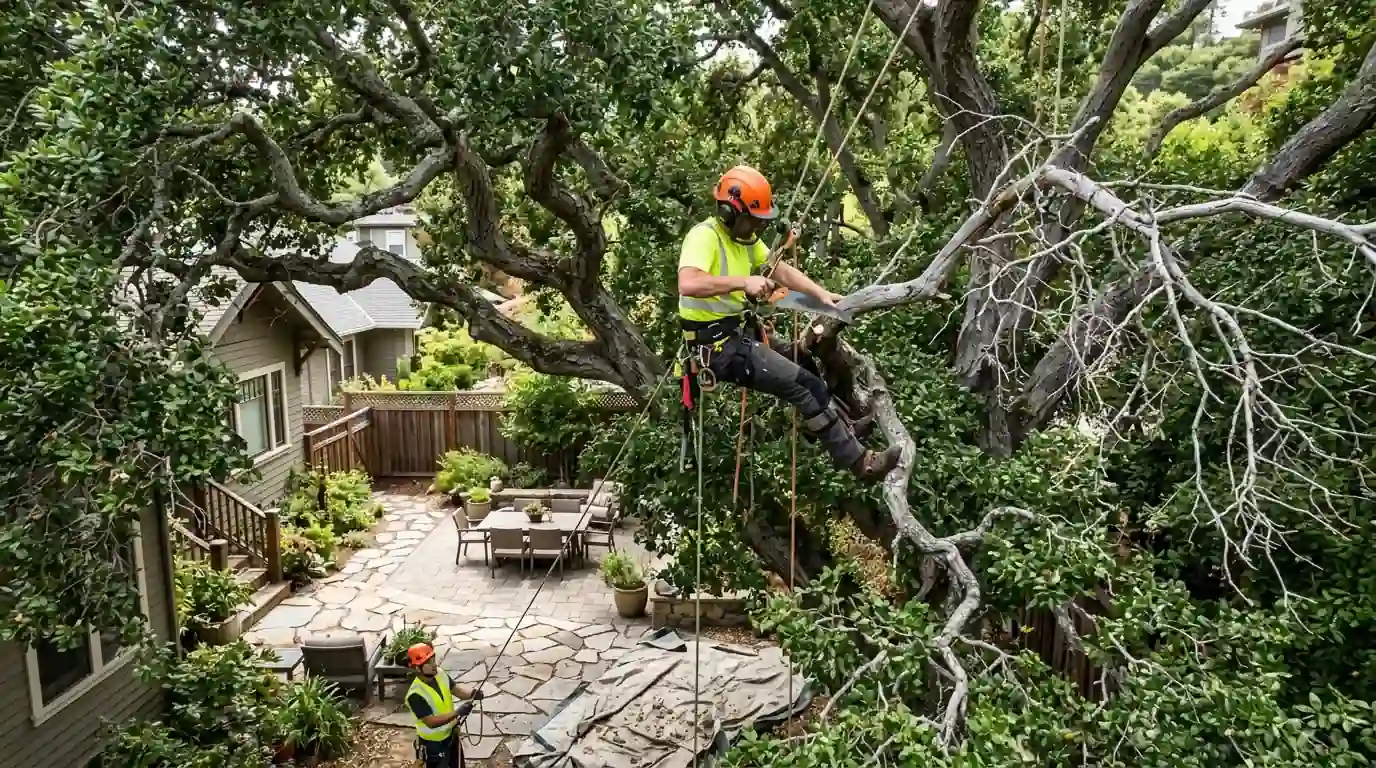
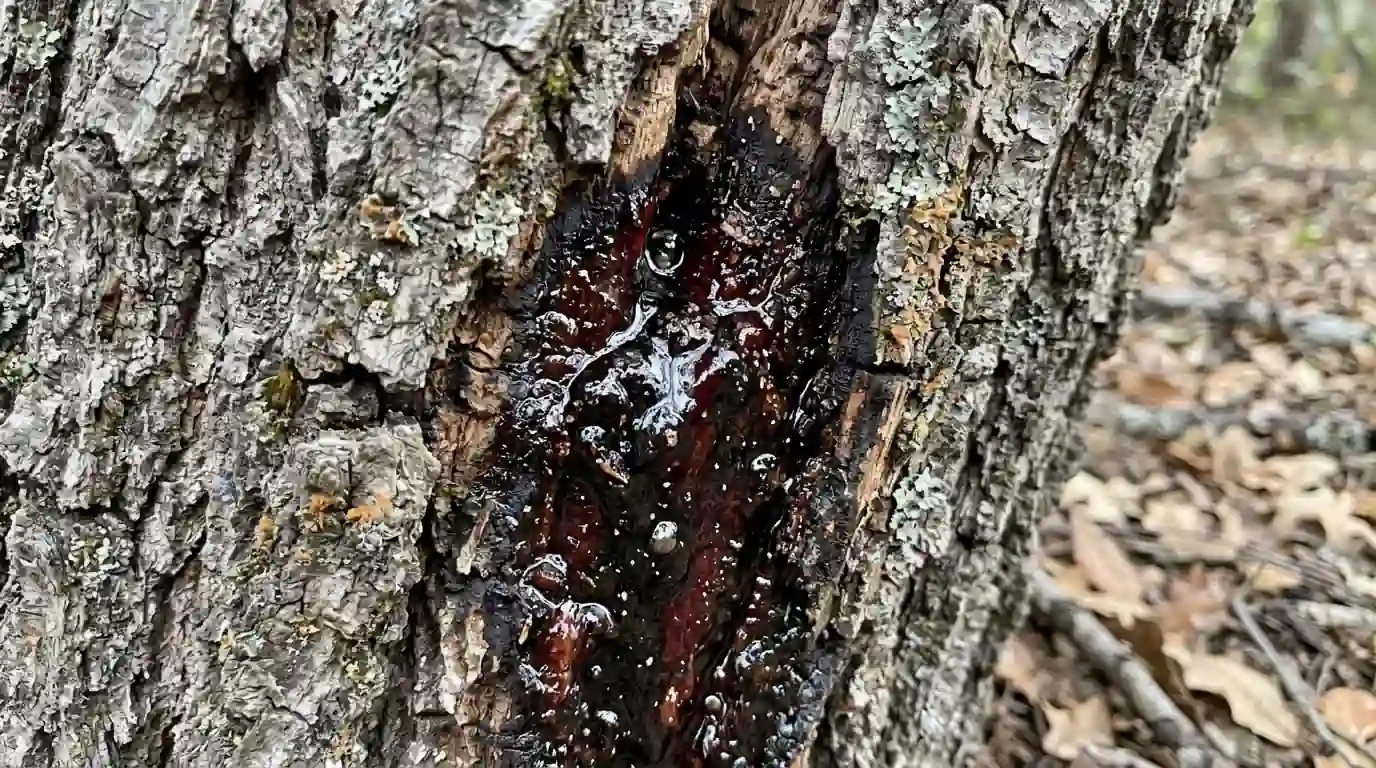
We start on the ground. We look at the root crown, the trunk for cankers or cracks, and the canopy for dead wood and limbs over the roof. Any bleeding on the lower trunk gets checked before we climb.
We also check what sits around the oak. A bay laurel hanging over the trunk, a lawn sprinkler hitting the root crown or soil piled against the bark all change the plan.
Then the climber works from the inside out. Dead wood comes out first, since it is the easiest win for the tree. Next come crossing and rubbing limbs, then any branch reaching for the roof or chimney. Cuts sit just outside the branch collar.
We keep the total small and leave the inner foliage in place. For a deadwood cleanout on a healthy oak, the canopy often looks barely changed from the street, and that is the goal.
After the visit, the oak needs little from you. Keep summer water off the trunk, watch the lower bark for dark seeping spots, and plan the next check in two or three dry seasons. Our tree risk checks can pair with that visit if the oak hangs over the house.