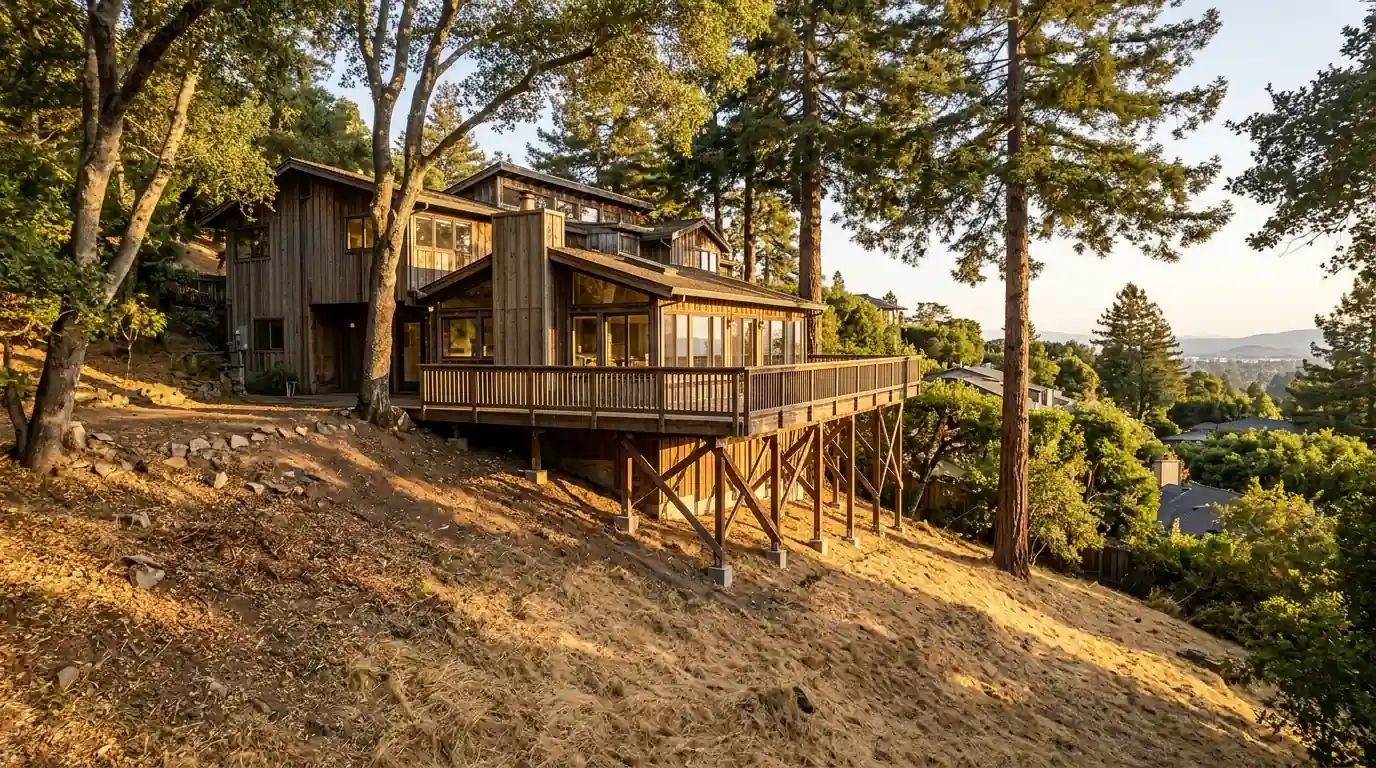
Why the hills get inspected every year
The 1991 Oakland Hills fire, also called the Tunnel Fire, is the reason the hills are strict about fuel. It ran through dense eucalyptus, pine and brush on a dry, windy day and burned into neighborhoods faster than anyone could hold it.
Today the Oakland Fire Department inspects properties in the wildfire district every year. The inspection is about what would carry fire to the house: branches over the roof, needles in the gutters, dead brush on the slope and plants packed tight against walls.
Most of what an inspector flags is tree and shrub work. A clean yard on the ground can still fail if a pine limb hangs over the chimney.
How are the zones measured?
The zones are rings measured out from the house. Attached decks and stairs count as part of the house, so the rings start at their outer edge.
- Zone 0: 0 to 5 feet from the house, including attached decks and stairs.
- Zone 1: 5 to 30 feet from the house.
- Zone 2: 30 to 100 feet from the house, or to the property line if that is closer.
On a steep Montclair or Shepherd Canyon lot, Zone 2 often runs straight downhill into brush. On a narrow lot in the upper streets, it may end at a neighbor's fence a few yards away. Measure the rings on your lot before planning the work.
What does Zone 1 ask of your trees?
Zone 1 is where most tree work happens. The goal is to keep fire from climbing from the ground into canopies and from canopies onto the roof.
- Prune tree limbs at least 6 feet above the ground.
- Keep limbs at least 10 feet from any structure or chimney.
- Clear leaves and pine needles from roofs and gutters.
- Space plants so they do not form a continuous mass.
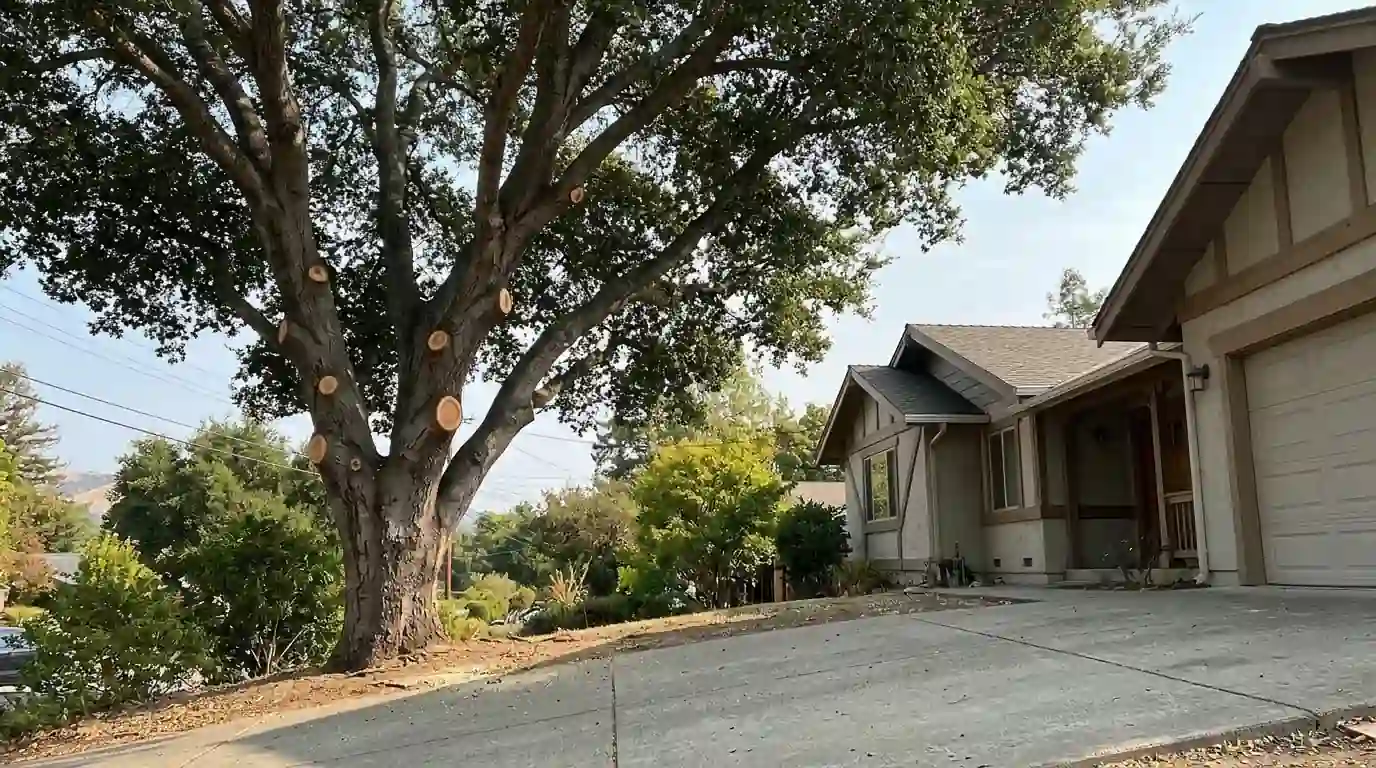
The 6-foot rule is crown raising: taking off the lowest limbs so a ground fire cannot step up into the tree. The 10-foot rule usually means cutting back limbs that reach over the roof. On a big oak or redwood, that cut needs care, since the tree may be protected and topping counts as removal in Oakland.
Zone 2 is about spacing and dead fuel
Past 30 feet, the inspection shifts from distance to the house toward spacing between plants. Trees and shrubs need horizontal space between them and vertical space between the ground layer and the canopy.
Dead plants, fallen leaves and needles need to come out. Grass should be kept to 4 inches or shorter. On many hillside lots, that means cutting out broom, thinning acacia and pulling dead limbs from the lower canopy of pines.
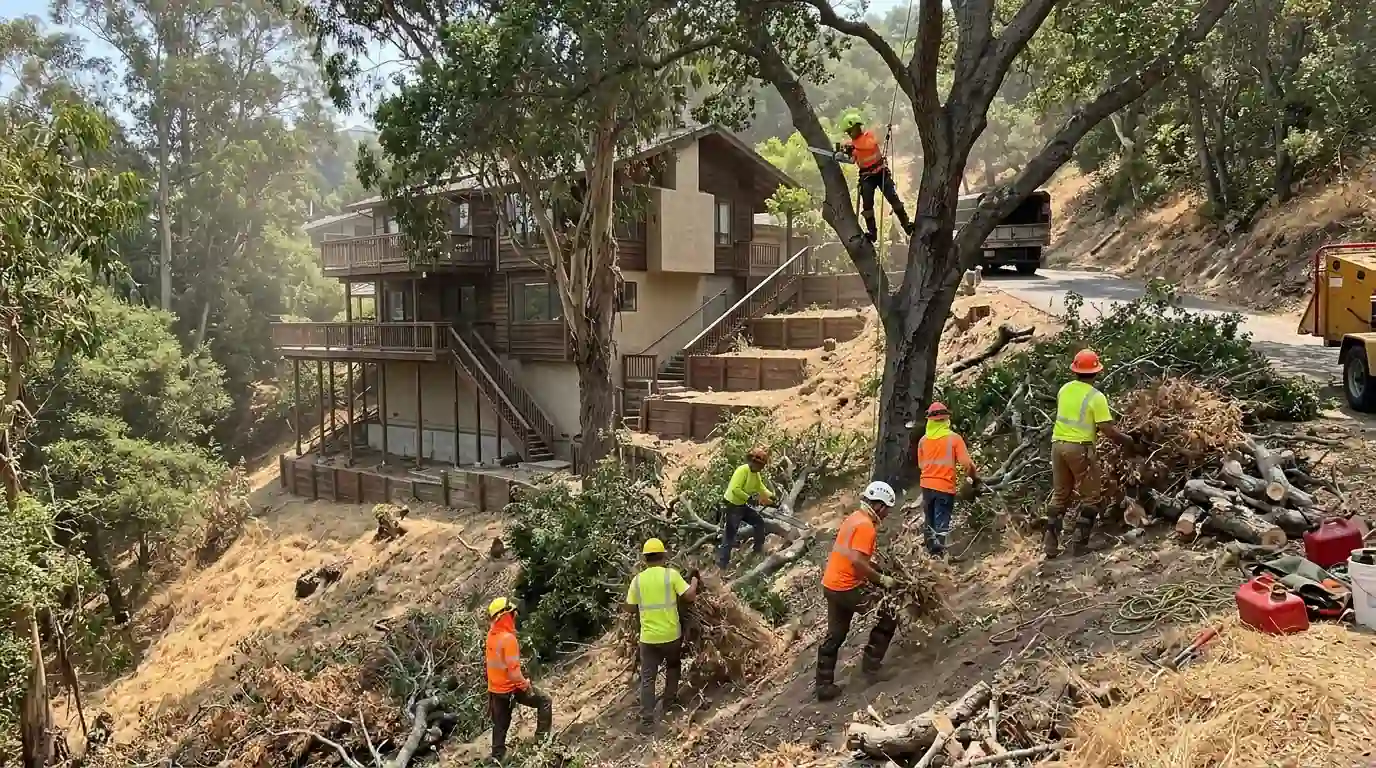
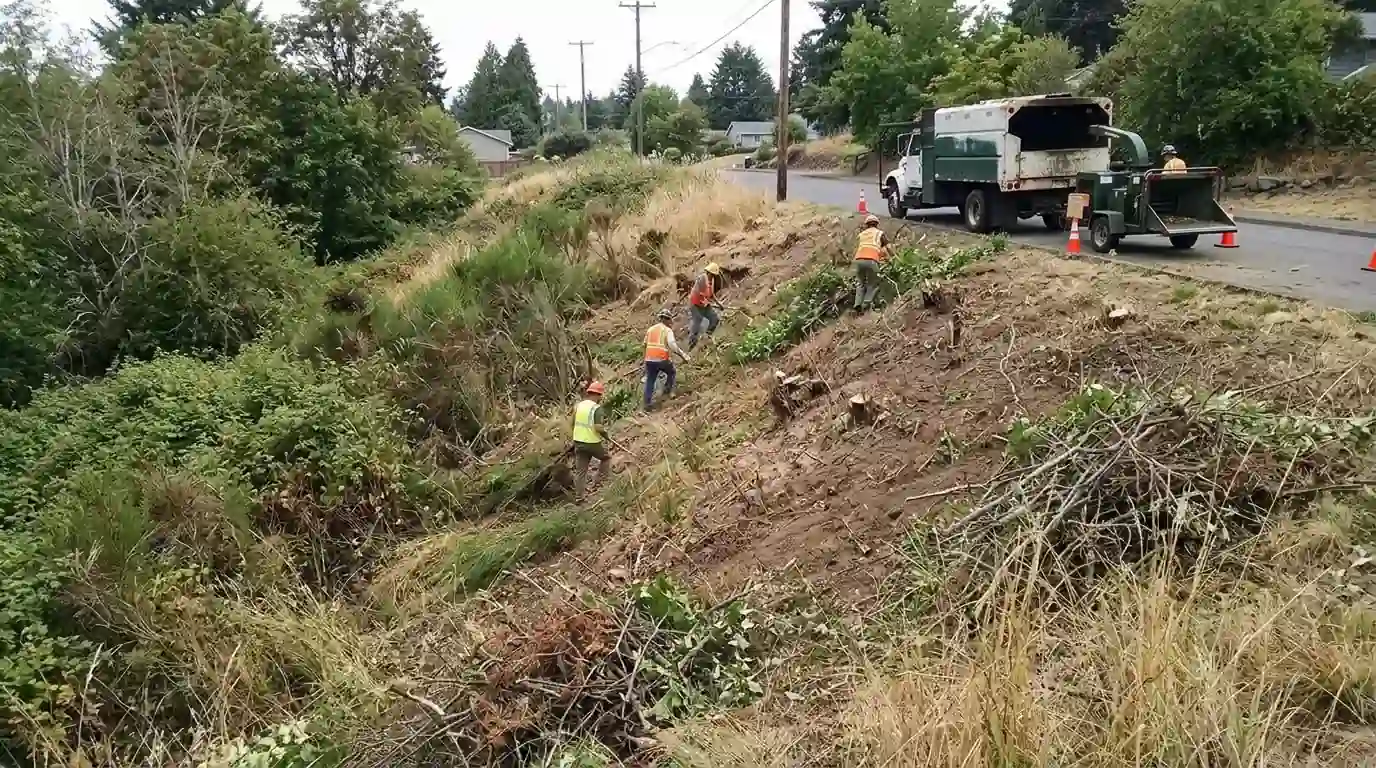
Brush on a slope is hard work by hand. We run a chipper from the street above and feed it as we clear, so the cut material leaves the site the same day. Our brush clearing crews work the slope from the bottom up so cut material does not pile against standing trees.
What the proposed Zone 0 rules would change
Zone 0 is the newest piece. The state Board of Forestry has proposed rules for it, and they are not final. Oakland has laid out a phase-in plan so owners have time to adjust.
- 2026: outreach to owners.
- 2027: mock inspections.
- 2028: inspections without enforcement.
- 2029: enforcement, with citations.
As proposed, Zone 0 would mean no branches within 10 feet of the roof, walls or chimneys, lower branches at least 6 feet up and no dead branches. In the first 5 feet from the house, there would be no shrubs, combustible mulch or firewood.
For many hills homes, the shrub rule is the big one. Foundation junipers and rosemary hedges that have grown into the siding would have to go. Bark mulch beds along the walls would need a different surface.
Eucalyptus and pine litter keep coming back
Blue gum eucalyptus sheds bark in long strips and drops leaves all year. The strips hang in the canopy, collect in gutters and pile at the base of the trunk. Monterey pine drops needles that pack into roof valleys and gutters.
Clearing that litter once is not enough. A yard that passes in spring can have a roof full of needles by late summer. Plan on cleanup more than once a year if these trees stand near the house.
Eucalyptus is not protected by Oakland's tree chapter, and neither is Monterey pine, though the pine needs posted notice and written notice to Parks and Recreation before removal on private land. That makes removal a real option where a tree sits in Zone 1 and sheds onto the roof.
Timing the work around the dry season
The dry season in the East Bay runs roughly May to October, and that is when fire risk climbs. Most rain falls November to March. The best time to get heavy clearing done is late winter and spring, before grass cures and before inspections pile up.
Some work fits better in summer. Oak pruning is one example, since dry weather lowers disease entry through fresh cuts. We plan oak cuts for the dry months and push brush and removals earlier where we can.
What a defensible space visit looks like
We walk the property with the zones in mind, starting at the house and working out. We note limbs inside 10 feet of the roof, canopies lower than 6 feet, shrubs touching walls and any dead trees on the slope.
Then we check which trees are protected before planning cuts. A coast live oak at 4 inches or more in diameter, or most other trees at 9 inches, cannot be topped or removed in Oakland without a permit. The plan works around those trees with pruning instead.
On the work day, the climbers prune and the ground crew clears, chips and hauls. Gutters and roof valleys get cleared last, after the cutting is done, so nothing new lands in them.