What this guide covers, and what it doesn't
This is general information about how California law treats trees near property lines. It is not legal advice, and it does not replace a conversation with a real estate attorney if a dispute is heading toward court or a lot of money is at stake.
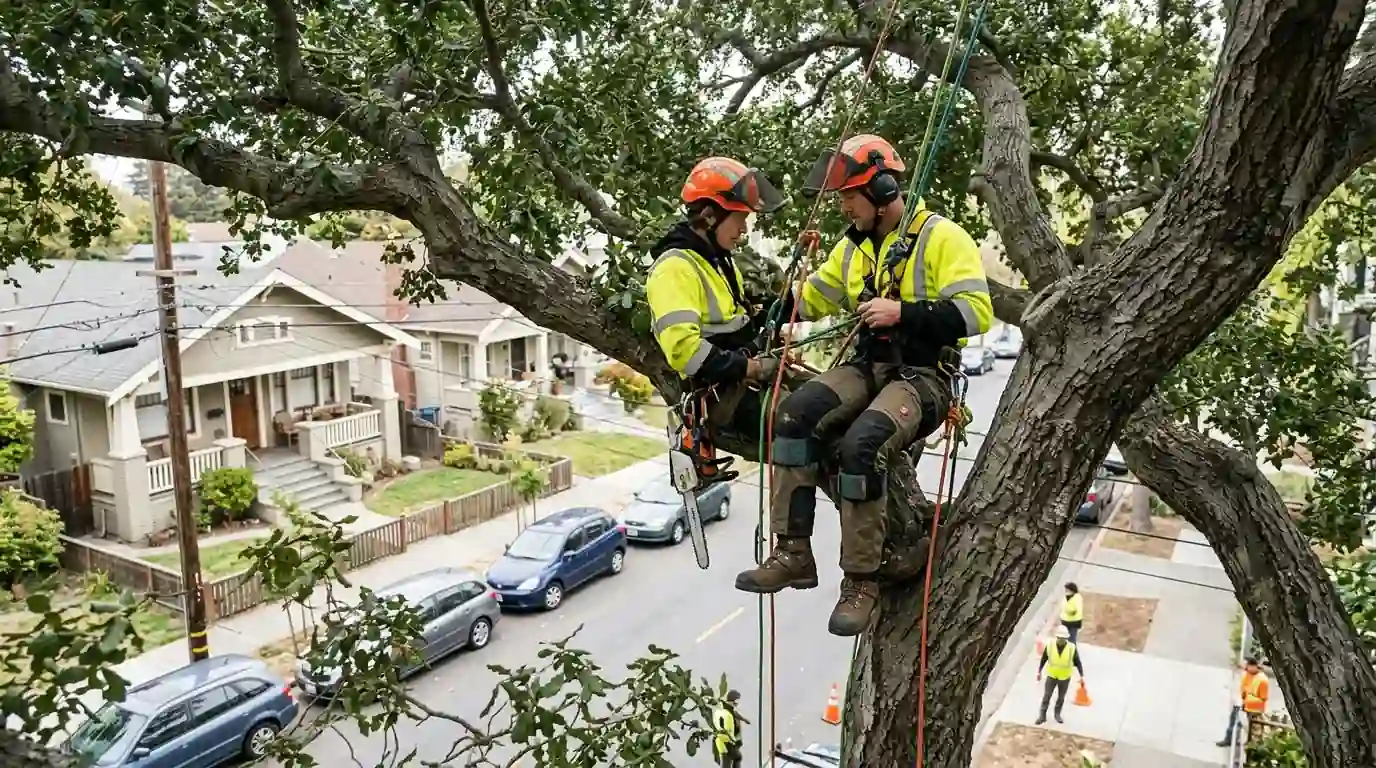
We are tree people. We see these situations every week, from oak limbs reaching over a fence in Montclair to a row of pines planted right on the line in the flats. What follows is what owners usually need to know before they pick up a saw or call us.
Can you trim branches that hang over your yard?
In California, you can generally trim branches that hang over your property, back to the property line. The big condition is that the work cannot harm the health of the tree. Cutting is allowed. Damaging the tree is not.
In practice, that line can be thin. Cutting off half the canopy of a mature oak because half of it happens to lean your way can weaken or kill the tree, even if every cut was on your side of the fence. These habits keep a boundary trim on safe ground:
- Cut only branches that actually cross the line, and stop at the line.
- Make clean pruning cuts at a branch union or collar, not stubs left wherever the fence happens to fall.
- Never top the tree or take most of one side of the crown in a single season.
- Stay on your side of the line. Climbing into the neighbor's yard or their tree needs their permission.
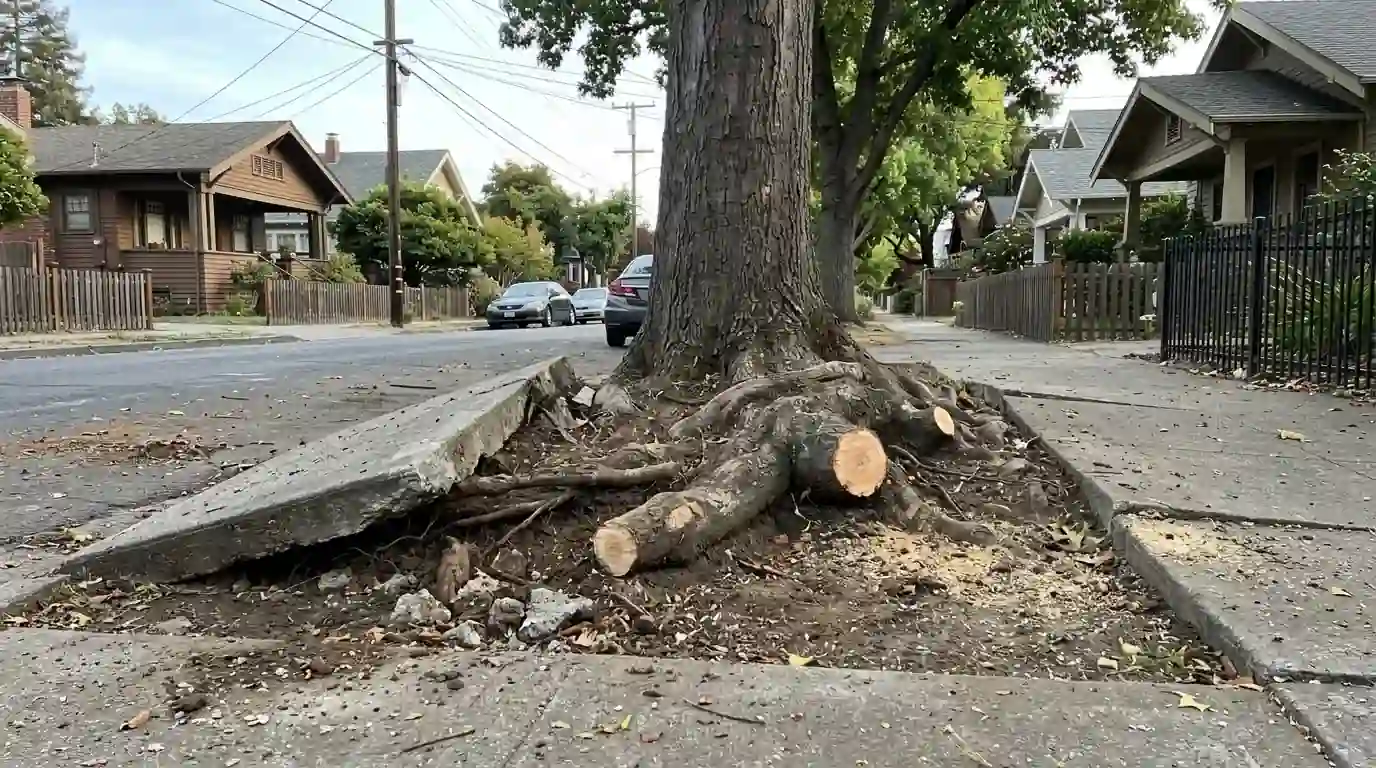
- Leave the roots alone unless someone has looked at what cutting them would do.
When an overhang is big enough that cutting to the line would take a large share of the canopy, it is time to talk with the neighbor about trimming the whole tree together, from both sides.
Why does harming the tree cost more than the trim?
California Civil Code 3346 is the reason people are careful here. Cutting or harming someone else's tree without permission can bring double or triple damages. A trim that seemed like a weekend chore can turn into a claim worth far more than the work itself.
Harm is not limited to cutting the trunk. Heavy root cuts for a new patio, piling soil against the trunk, or pruning that strips a tree's shade side can all be argued as damage. If your project will touch a neighbor's tree in any of those ways, get their agreement first, ideally in writing.
Who owns a tree that sits on the property line?
A tree whose trunk stands partly on both properties belongs to both owners in common, under California Civil Code 834. It does not matter who planted it or who waters it. If the trunk crosses the line, it is a shared tree.
Shared ownership means shared decisions. One owner should not remove, top or heavily prune a boundary tree without the other owner's agreement. That rule cuts both ways, and it protects you when the neighbor is the one with a chainsaw. When a boundary tree is dead or failing, the cleanest path is a written note signed by both owners before any work starts.
Do city tree rules apply on top of state law?
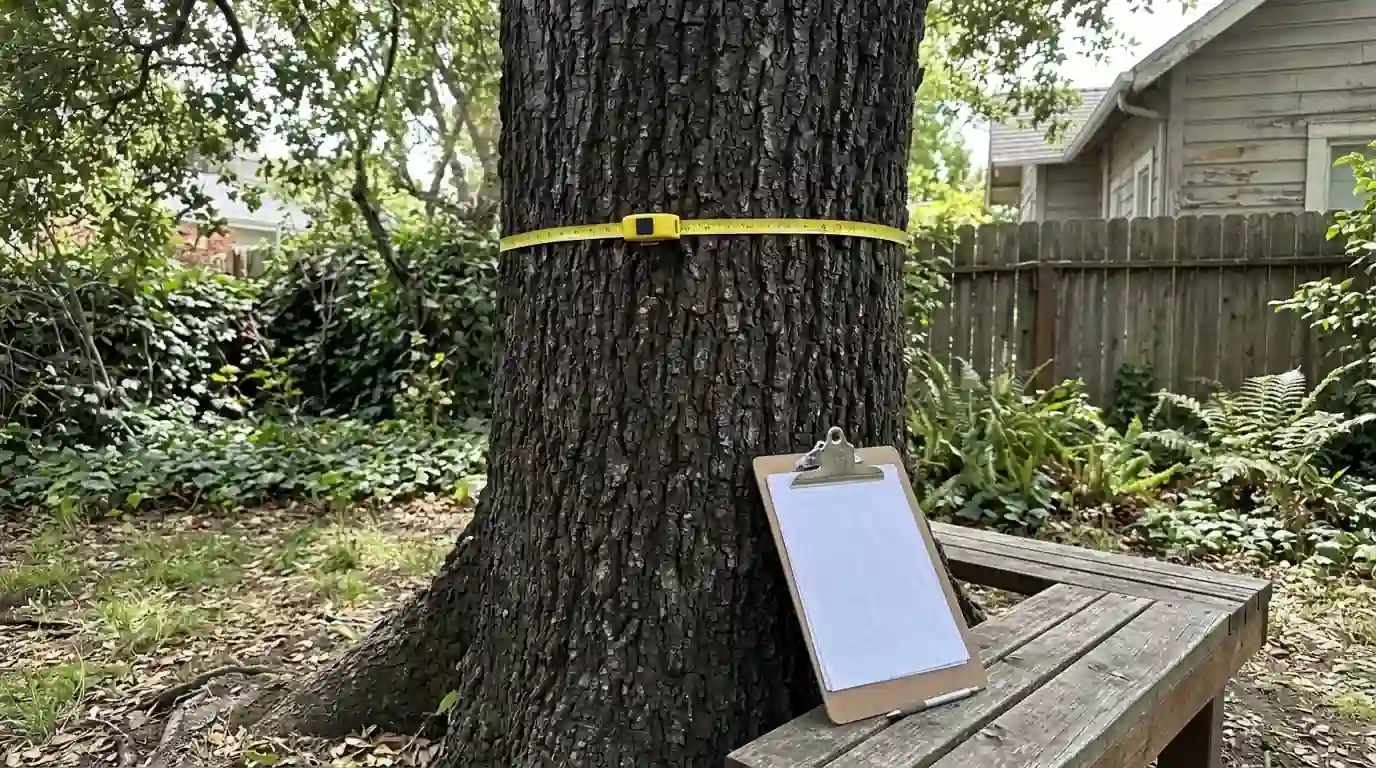
Yes, and they often matter more day to day. In Oakland, a coast live oak is protected at 4 inches DBH or larger, and most other trees at 9 inches DBH or larger. DBH is the trunk diameter measured 4.5 feet above the ground. The code counts topping, girdling and regrading around a protected tree as removal, so a careless trim on a neighbor's oak can also be a permit problem.
Berkeley requires an exception request to the city before removing a covered coast live oak or pruning more than 25 percent of its leaf, stem or root system within 24 months. Walnut Creek requires a permit to remove any tree 9 inches in diameter or larger measured 4.5 feet above grade, and neighbors within 300 feet are notified. Other East Bay cities have their own tree rules, and we check them before cutting.
Why should you talk to the neighbor first?
Most tree disputes we see could have been a five minute conversation. A neighbor who hears about the plan first is far less likely to feel ambushed when the limbs come down. Bring specifics, not complaints.
- Point out the exact branches or roots that are causing trouble.
- Explain the problem in plain terms: leaves in the gutter, a limb over the roof, roots lifting the walk.
- Offer to share a visit from a tree company so both sides hear the same advice.
- Agree on what gets cut, who pays for which part, and where the debris goes.
- Write it down in a short email or note both of you can keep.
What about a tree that blocks your view?
View disputes are the hardest ones. The rules above deal with branches that cross the line and with ownership of the trunk. A tall tree standing entirely on a neighbor's lot is a different matter, and in general it is theirs to manage.
Some cities and some homeowner associations have their own view rules, and some lots carry recorded agreements about tree height. If your view matters to you, check those documents and talk to an attorney before pushing the issue. Meanwhile, many neighbors will agree to view pruning that opens windows through the canopy without hurting the tree, especially if you offer to cover the cost.
How do we handle jobs that involve a neighbor's tree?
When we prune a tree that crosses a property line, we work from the side of the owner who called us and cut back to the line with proper cuts. We don't go onto the neighbor's land or into their tree without their okay. If the cuts on your side would take too much of the crown, we tell you before we start, not after.
For trees that may be protected under city rules, our permit help covers measuring the trunk and filing what the city needs. If a shared tree looks unsafe, a written risk look can give both owners the same facts to work from.