Is the tree in front of your house a city street tree?
Many Oakland homes have a tree growing in the planting strip between the sidewalk and the curb. In a lot of cases that tree is a city street tree. It sits in the public right of way, even though the homeowner rakes its leaves and sweeps its fruit off the walk.
Ownership is the first thing to settle. A tree set back inside the front yard, behind the sidewalk, is usually on private land. A tree in the strip, or in a cutout in the sidewalk itself, is the kind the city tends to treat as its own. When the line is unclear, ask the city before planning work.
This post is general information to help you ask the right questions. It is not legal advice, and the city's own staff have the final word on any specific tree.
When will the city prune a street tree?
The City of Oakland prunes street trees only in hazardous or emergency situations. A cracked limb hanging over the sidewalk, a tree split by a storm, or a branch blocking the street can qualify. Routine shaping, clearance for a roof or more light for a garden usually does not.
That leaves many street trees without regular care. Liquidambars, London planes, Chinese elms and ornamental pears planted decades ago have grown into heavy canopies over cars, sidewalks and front steps. Owners often notice a problem years before it rises to the level of a hazard.
If you think the tree is already dangerous, report it to the city. Describe what you see, such as a crack, a hanging limb or a trunk that has started to lean, and keep people away from it until someone looks.
How owners can prune a street tree with the city's permission
Owners who want a city street tree pruned sooner have an option. Oakland offers a Prune Your Own Street Tree option, with a hold-harmless form, for owners who take on the pruning of a city street tree themselves. Ask the city for its owner pruning form for street trees, and apply before any cuts are made.
The hold-harmless part matters. By applying, the owner takes responsibility for the work instead of the city. That is a good reason to have the pruning done carefully, with the right cuts and the right gear, rather than from the top of a borrowed ladder.
- Confirm the tree is a city street tree before planning any work.
- Apply through the city's hold-harmless form and wait for the go-ahead.
- Plan the pruning goals: sidewalk clearance, street clearance, deadwood, weight off long limbs.
- Keep the work to pruning; removal is a separate question.
- Keep a record of the approval and the date the work was done.
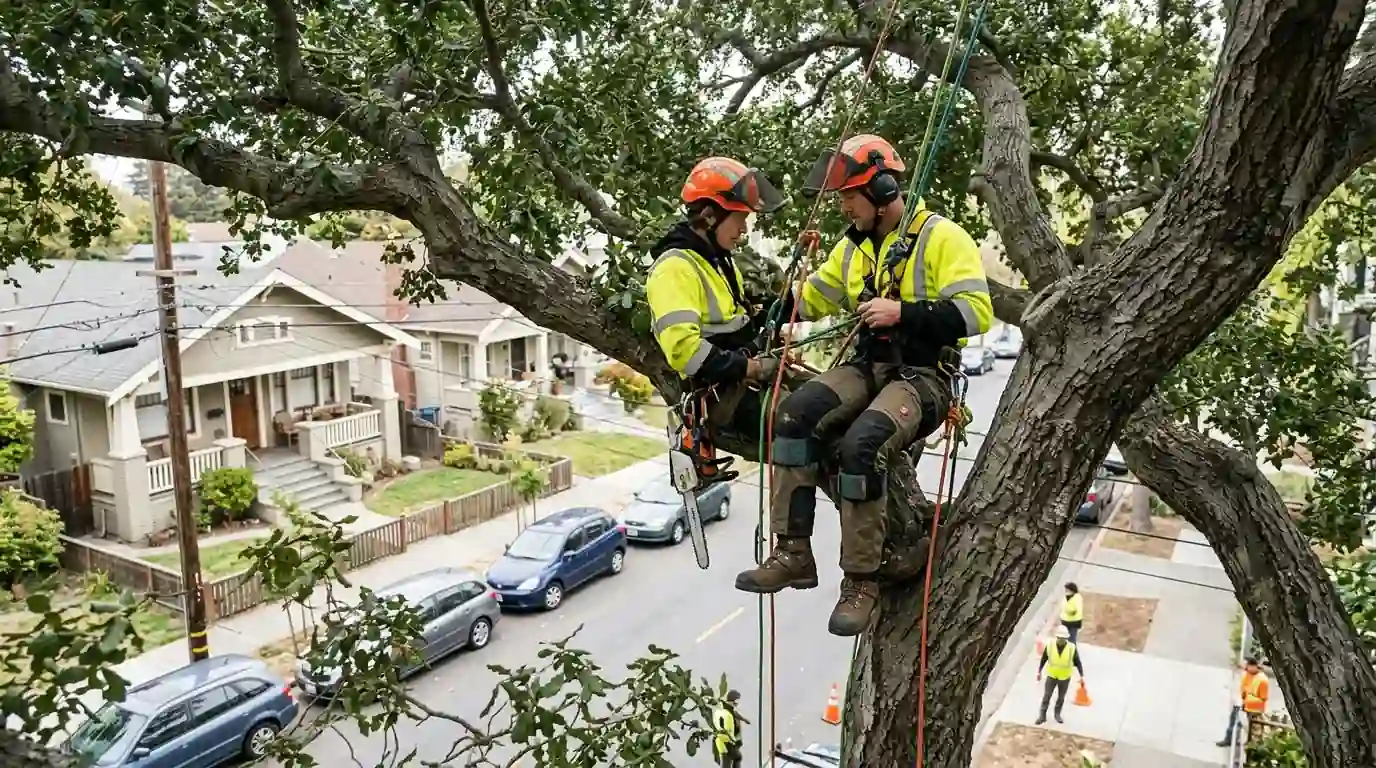
We often handle the climbing and cutting once an owner has approval in hand. Street tree work in Oakland usually means traffic on one side and a sidewalk on the other, so we set cones, keep the walk clear and lower limbs on ropes rather than dropping them. Our tree trimming crew brings the chipper so the brush leaves with us.
Removing a street tree is a different question
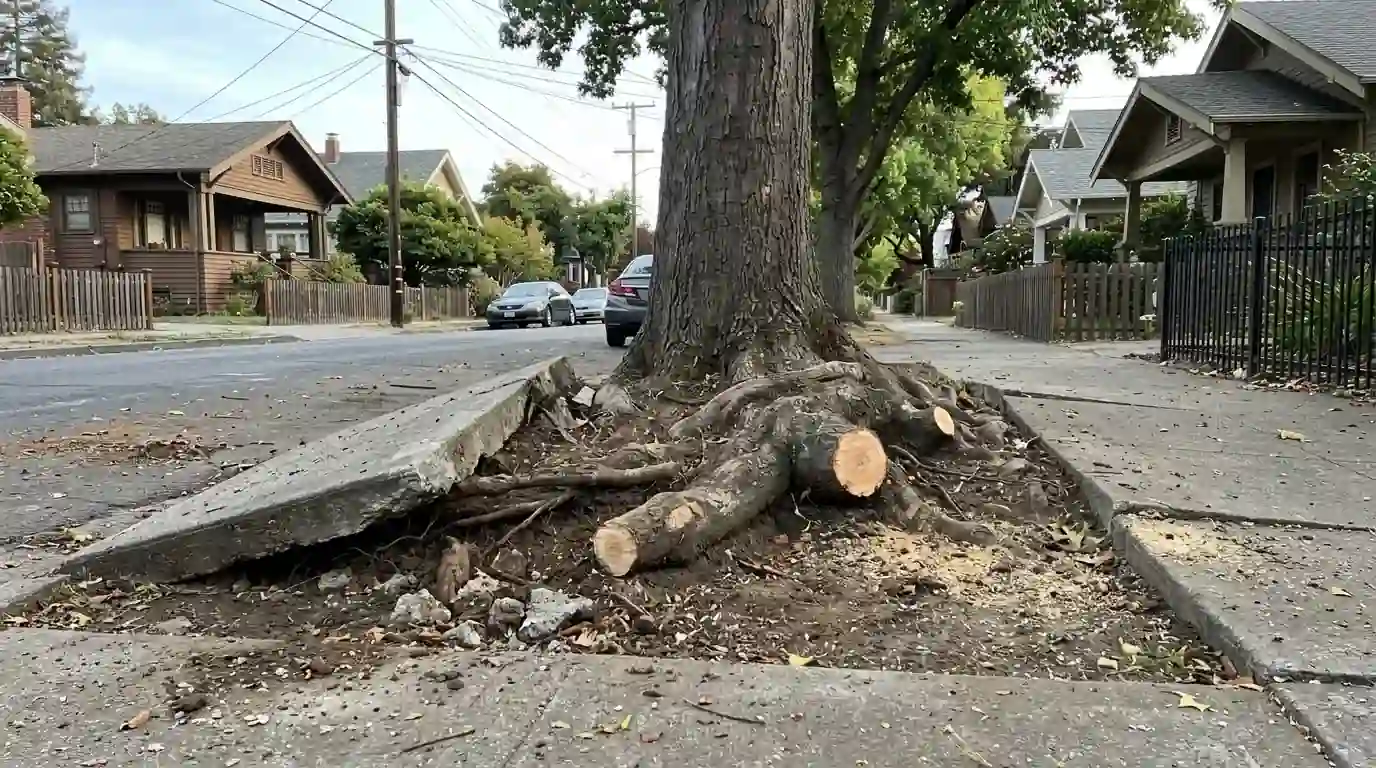
Pruning permission does not cover taking a tree out. Removing a street tree is a separate permit question, and it starts with the city. Do not assume that approval to prune lets anyone cut the tree down, top it or grind out its roots.
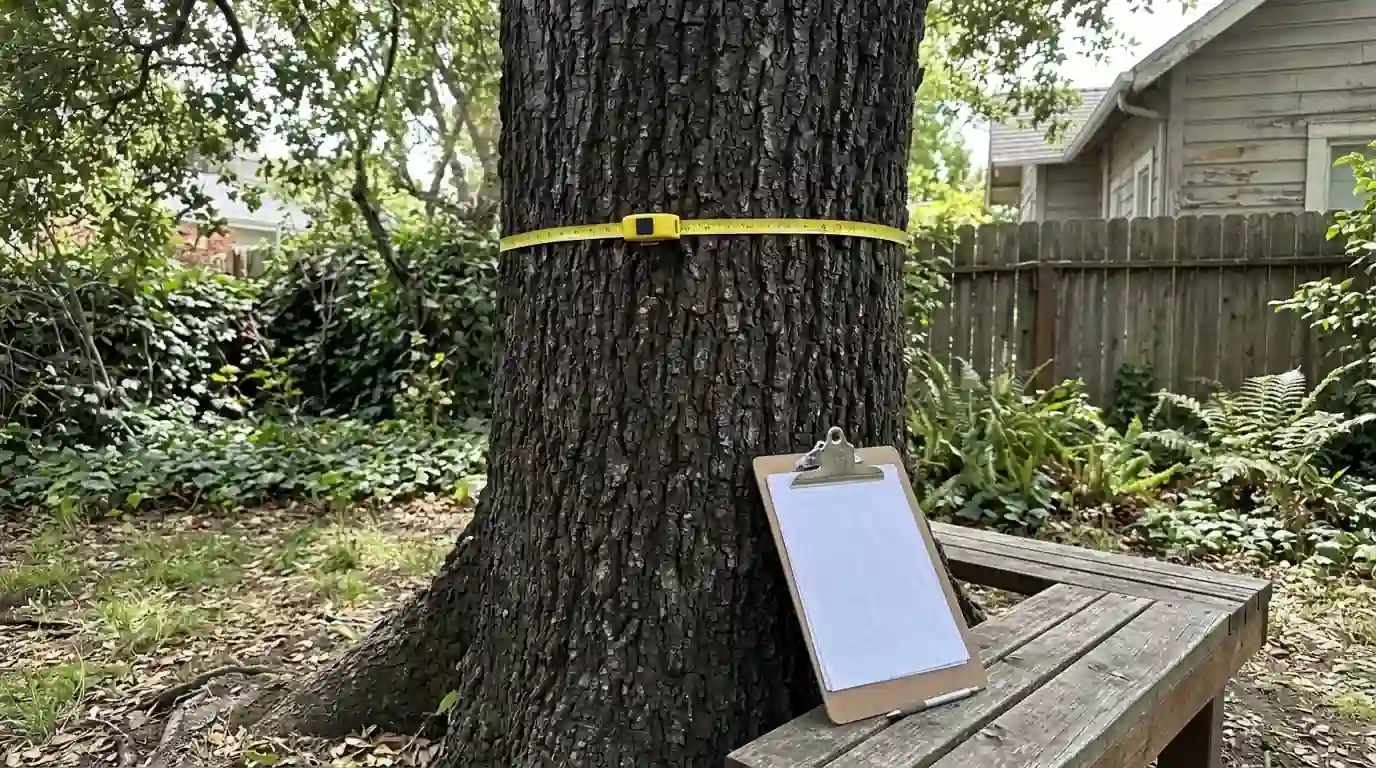
Size and species still count. Oakland protects coast live oaks at 4 inches DBH or larger and most other trees at 9 inches DBH or larger, measured 4.5 feet above the ground. Monterey pine, which is exempt on private land, is protected on city property. The code also treats topping, girdling and regrading around a protected tree as removal.
If a street tree has outgrown its spot or is lifting the walk, our permit help can sort out who decides and what the city wants to see before anything comes down.
Berkeley handles street trees another way
Cross into Berkeley and the setup flips. Berkeley's Urban Forestry Unit maintains all city street trees there. Homeowners do not prune them under an owner program the way Oakland allows, and the city crew handles the work.
Berkeley also limits pruning on covered coast live oaks. Removing more than 25 percent of the leaf, stem or root system in 24 months counts as excessive pruning and needs an exception request to the city. Other East Bay cities have their own street tree rules, and we check them before cutting.
What a good pruning cut looks like on a street tree
Street trees live hard lives. They deal with compacted soil, reflected heat, car doors and trucks clipping low limbs. Bad cuts add to that stress. Good cuts close over cleanly and leave a tree that holds up better in the next storm.
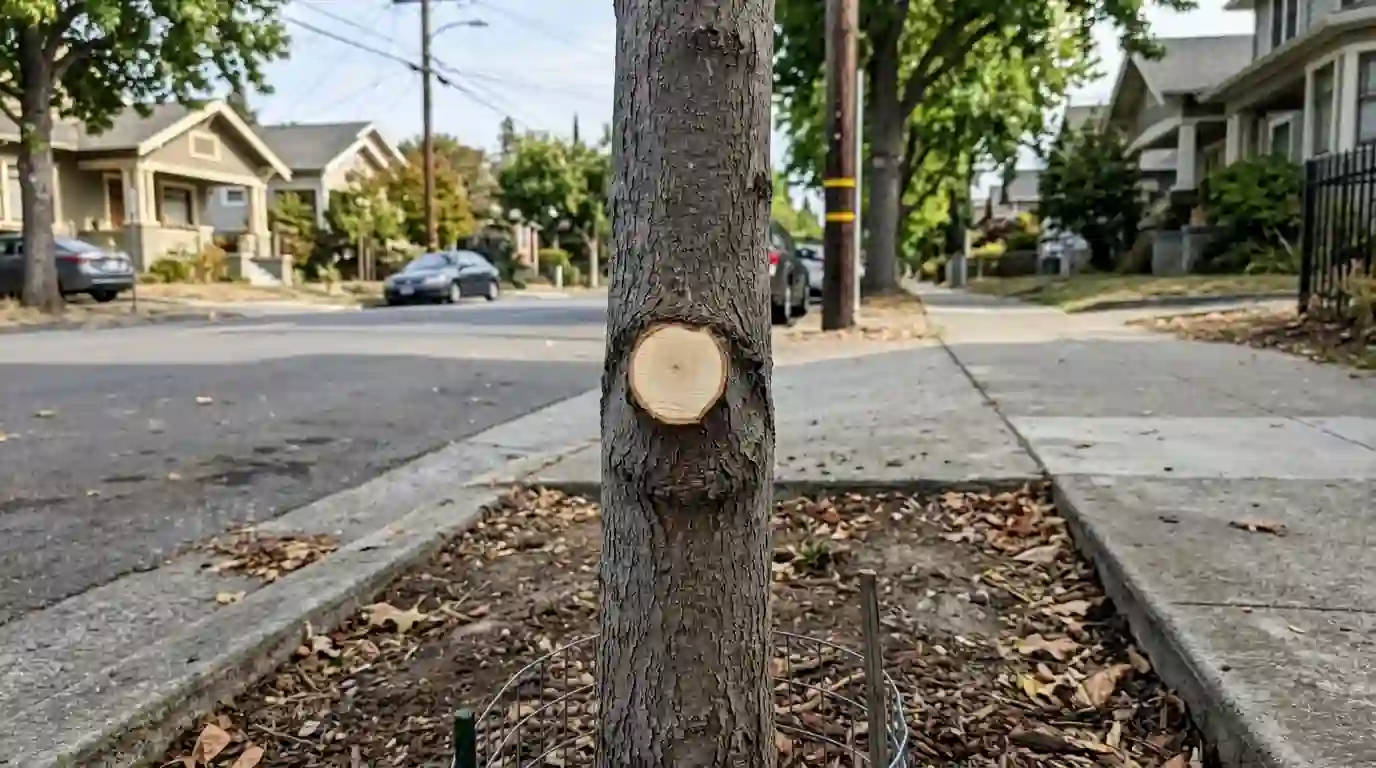
- Cut just outside the branch collar, the slightly swollen ring where a limb meets the trunk.
- Skip flush cuts that slice into the collar; they leave a wound the tree struggles to seal.
- Use three cuts on heavy limbs: an undercut, a top cut farther out, then the final cut at the collar.
- Take long limbs back to a side branch rather than leaving a stub in midair.
- Do not top the tree; in Oakland, topping a protected tree counts as removal.
- Remove only what the goal needs; heavy thinning sends a flush of weak shoots back.
Clearance is usually the main goal. Low limbs over the sidewalk catch walkers, and limbs over the street catch trucks. Raising the canopy in steps over a few years keeps the tree balanced. A young street tree is the best time to start, because structural pruning on a young tree sets one strong leader before the limbs get heavy.
Timing and tools for street tree work
Pick dry weather when you can. Cuts made during wet stretches stay damp longer, and slick bark makes climbing slower and riskier. Oak pruning in particular is better done in the dry months.
Clean, sharp tools matter more than people think. A dull saw tears bark, and a pruner carried from a diseased tree to a healthy one can move trouble along the street. Wipe blades between trees, and keep your crew and the public clear of the drop zone.