Which trees does Oakland protect?
Oakland's tree rules live in Municipal Code chapter 12.36, the Protected Trees chapter. The chapter does not care whether the tree is in a front yard, a back slope or a side strip by the garage. It cares about two things: the species and the trunk size.
Coast live oaks get the tightest line. A coast live oak (Quercus agrifolia) is protected once its trunk reaches 4 inches in diameter, on any property in the city. That is a small tree. Plenty of oaks that look like volunteer saplings along a fence have already crossed it.
Most other trees are protected at 9 inches in diameter or larger. That covers the redwoods, bays, sycamores, liquidambars, Chinese elms and fruit trees that fill older Oakland lots. A protected tree may not be removed without a tree removal permit from the city.
- Coast live oak: protected at 4 inches DBH or larger, anywhere in Oakland.
- Most other species: protected at 9 inches DBH or larger.
- Eucalyptus and Monterey pine: not protected by the chapter on private land, with a notice step for the pine.
- Any protected tree: needs a removal permit before it comes down.
How do you measure DBH the way the city does?
DBH stands for diameter at breast height. The code fixes breast height at 4.5 feet above the ground. Measuring at the base, where the trunk flares, gives a bigger number than the city uses. Measuring higher up gives a smaller one.
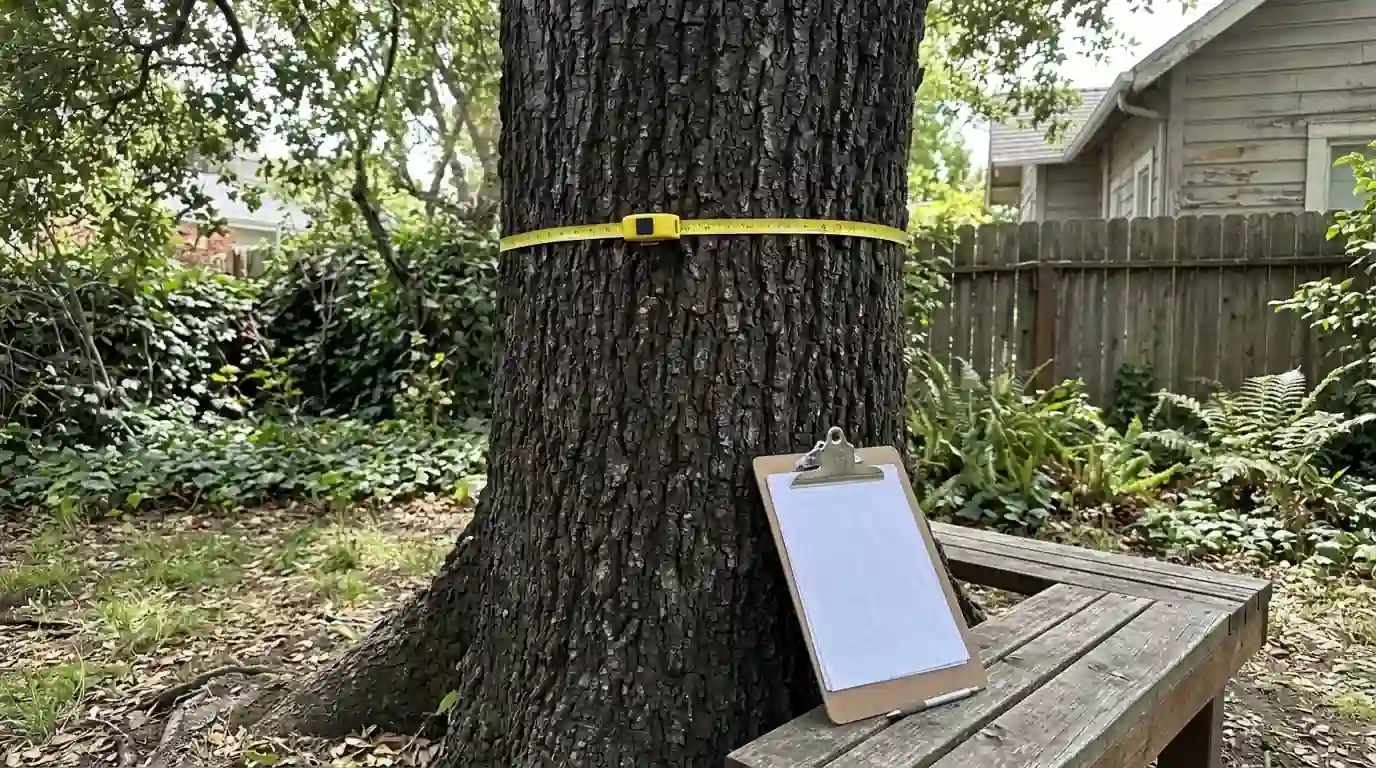
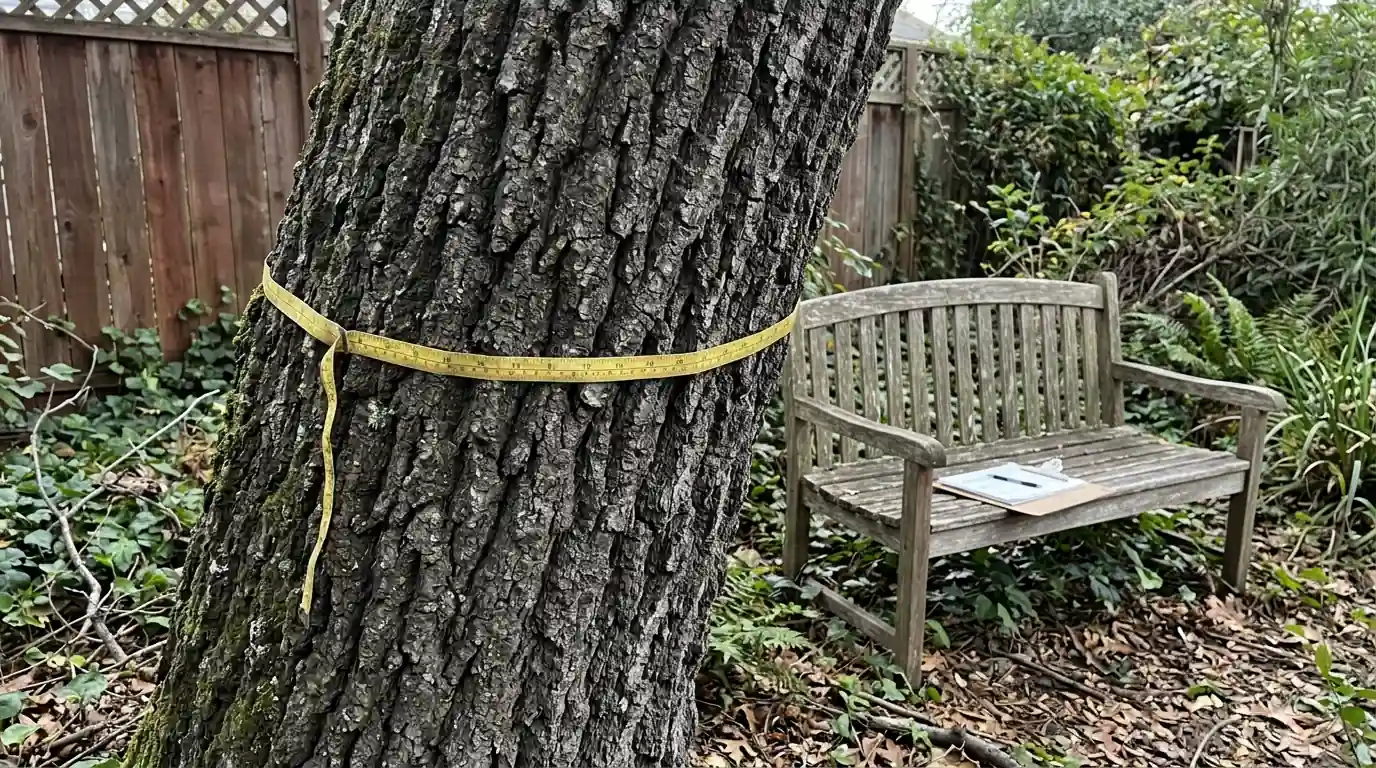
Most homeowners find it easier to measure around the trunk than across it. Wrap a soft tape around the trunk at 4.5 feet, read the circumference, then divide by 3.14. A trunk that measures about 28 inches around is close to 9 inches across.
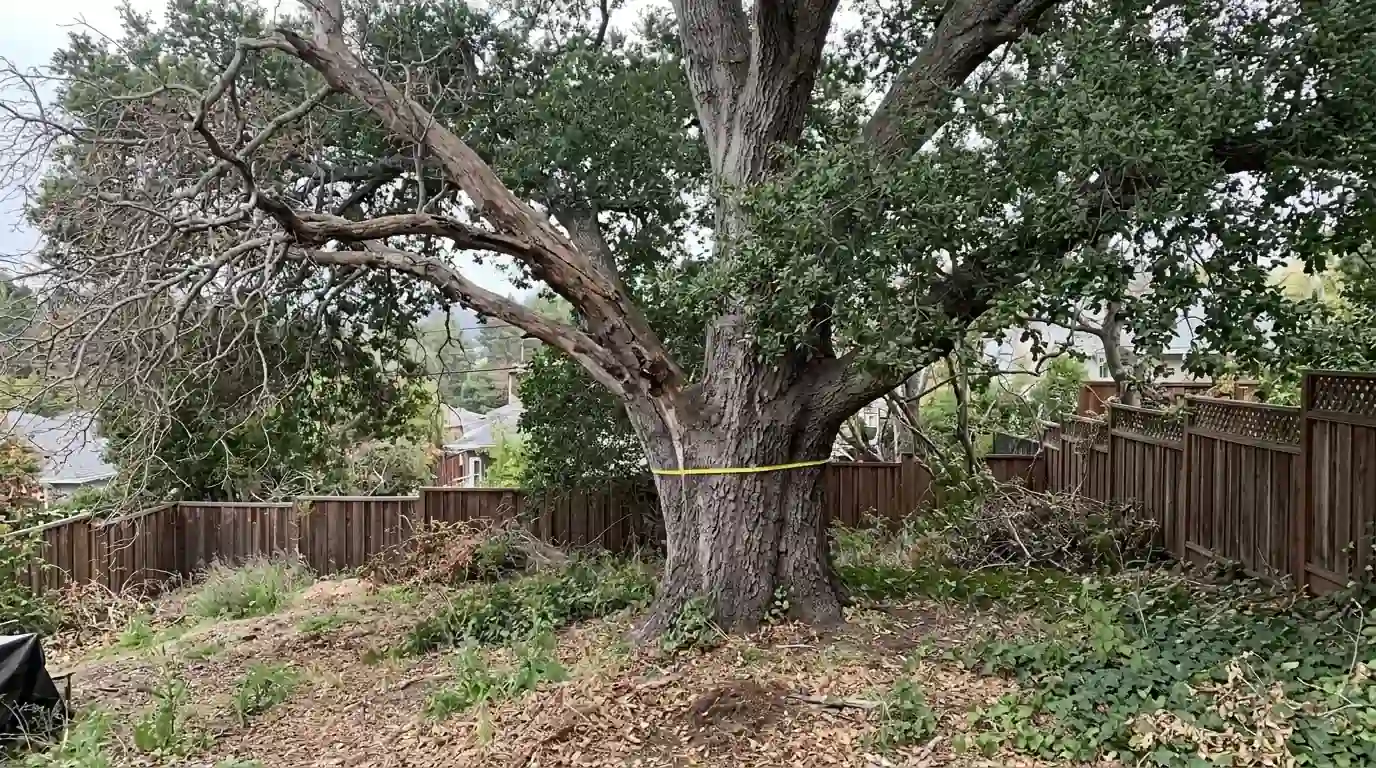
Multi-trunk trees catch people out. If a tree splits into several stems, the code adds all the trunk diameters together. Three stems of 4 inches each make a 12-inch tree in the eyes of the city, even though no single stem looks large.
- Find the spot 4.5 feet above the soil line on the trunk.
- Wrap a tape around each trunk at that height and note the circumference.
- Divide each circumference by 3.14 to get the diameter.
- Add the diameters together if there is more than one trunk.
- Compare the total with 4 inches for a coast live oak or 9 inches for most other trees.
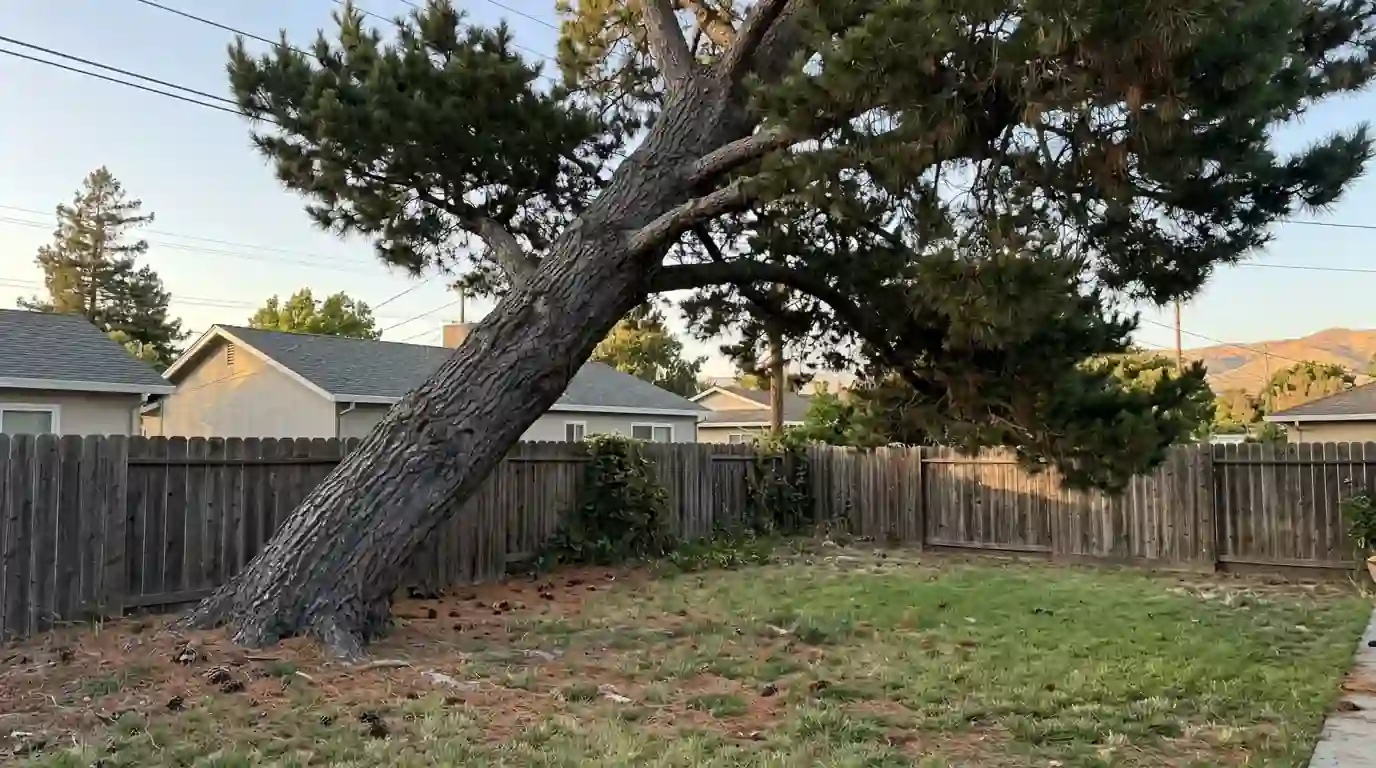
When a trunk sits on a slope, leans hard or forks right at 4.5 feet, the number gets harder to call. That is when we come out and measure it with you before anyone picks up a saw.
Are eucalyptus and Monterey pine really exempt?
Yes, with a catch for the pine. Eucalyptus and Monterey pine are not protected by chapter 12.36. On private property, a blue gum of any size can come down without an Oakland removal permit.
Monterey pine has one extra step. Before removing one on private land, the owner still needs to post notice and send written notice to Parks and Recreation. On city property, Monterey pine is protected like any other tree.
So a large pine leaning over a Montclair driveway is not a permit case, but it is a paperwork case. We build the notice step into the schedule so the pine removal does not stall on the morning the crew arrives.
Why topping and regrading can count as removal
The word removal in the code reaches further than cutting a tree to the ground. Topping a protected tree counts. So do girdling the trunk, regrading the soil around it and similar damage that will likely kill or ruin the tree.
This matters for remodels. A new patio that cuts into the root zone of a protected oak, or a retaining wall that lowers the grade around a redwood, can be treated like a removal. The same goes for a past owner's habit of topping a bay tree every few years to keep it short.
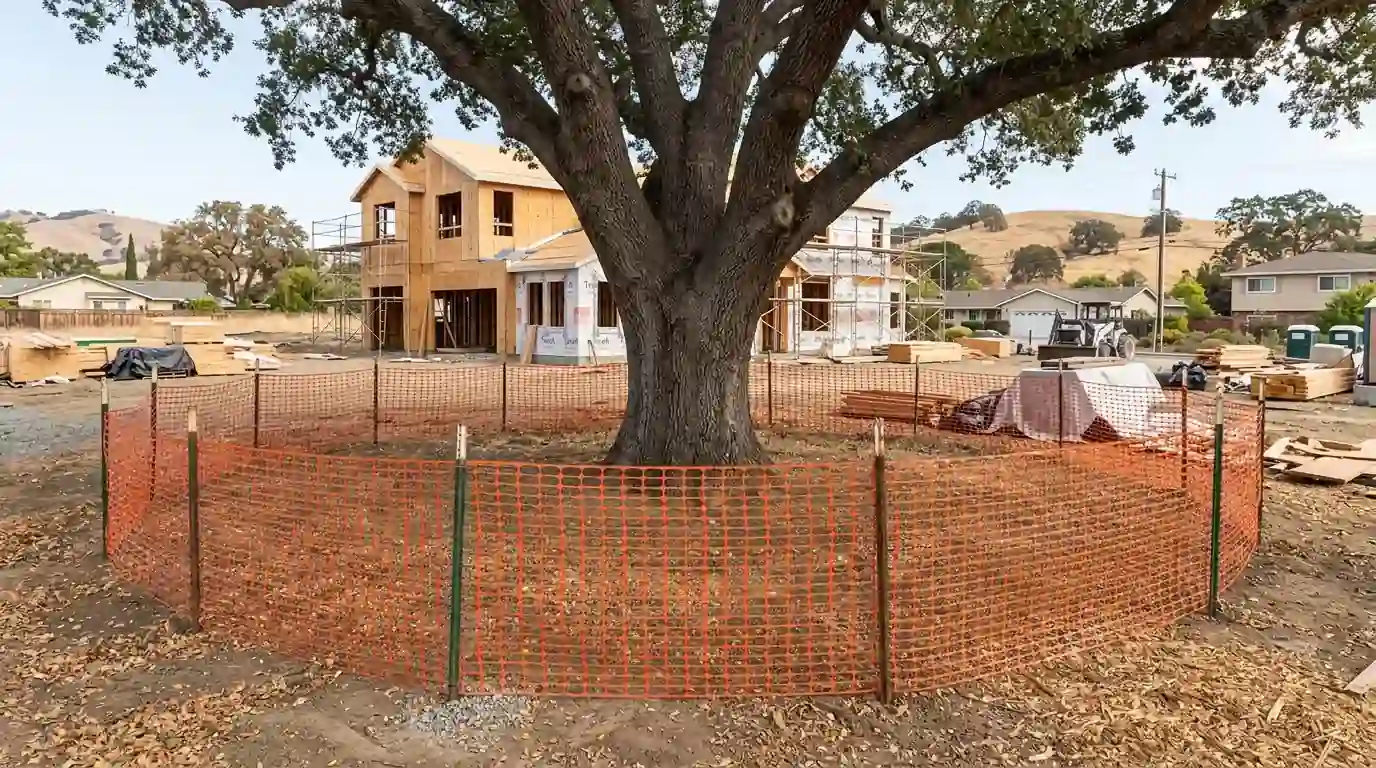
If a project will disturb soil near a protected tree, plan for it before the excavator shows up. Fencing the root zone and routing trenches around it is part of our tree protection work on build sites.
What happens when a protected tree is an emergency?
Storms do not wait for permit counters. If a protected tree is an immediate threat to safety or property, the city can waive the permit. The tree can come down first, and the removal must be reported to the city on the first business day after.
That window is short, so collect proof while the tree is still in place. Photos of the split trunk, the lifted root plate or the limb resting on the roof help show why the work could not wait.
- Photograph the tree, the damage and anything it is touching before cutting starts.
- Keep the stump and a few trunk sections until the report is in.
- Note the date and time the tree failed or became unsafe.
- Report the removal to the city on the first business day after the work.
A leaning tree that has been leaning for ten years is usually not an emergency in the city's eyes. A tree that cracked at the base during last night's wind usually is.
Which replacement trees does the city name?
When a protected tree comes out, the permit can call for replacement planting. The code names five native species, planted at 24-inch box size.
- Coast redwood
- Coast live oak
- Madrone
- California buckeye
- California bay laurel
There is no replacement requirement for nonnative species. Removing a protected liquidambar or Chinese elm still needs the permit, but the code does not ask for a replacement tree in its place.
Think about where a replacement will grow before choosing it. A redwood wants room and water. A buckeye stays smaller and handles dry summers. We can set the new tree with our tree planting crew once the old one and its stump are gone.
Street trees follow a different path
The tree in the planting strip between the sidewalk and the curb is often the city's, not yours. The City of Oakland prunes street trees only in hazardous or emergency situations.
Owners who want a city street tree pruned sooner can apply to do the pruning themselves. The city handles this through a hold-harmless form for owners who take on that pruning. Removing a city street tree is a separate matter from pruning it, so check ownership first.
Berkeley and Walnut Creek draw the line differently
Cross the city line and the numbers change. Berkeley covers coast live oaks at 18 inches of circumference on a single stem, or 26 inches combined on multiple stems, measured 4 feet above grade. Removal there needs an exception request to the city.
Walnut Creek needs a permit to remove any tree, dead or alive, that is 9 inches in diameter or larger at 4.5 feet. Neighbors within 300 feet are notified. Other East Bay cities have their own tree rules, and we check them before cutting.