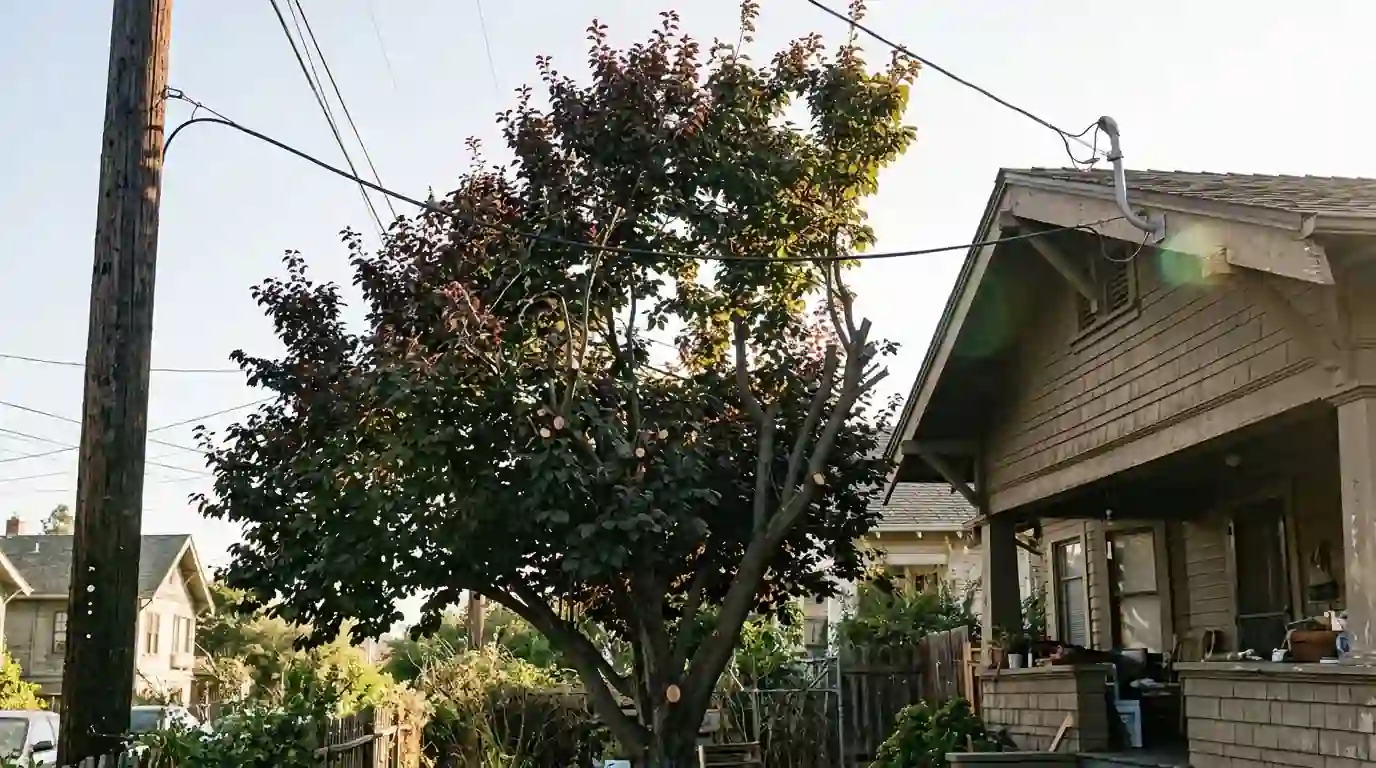
Which wires on the pole belong to PG&E?
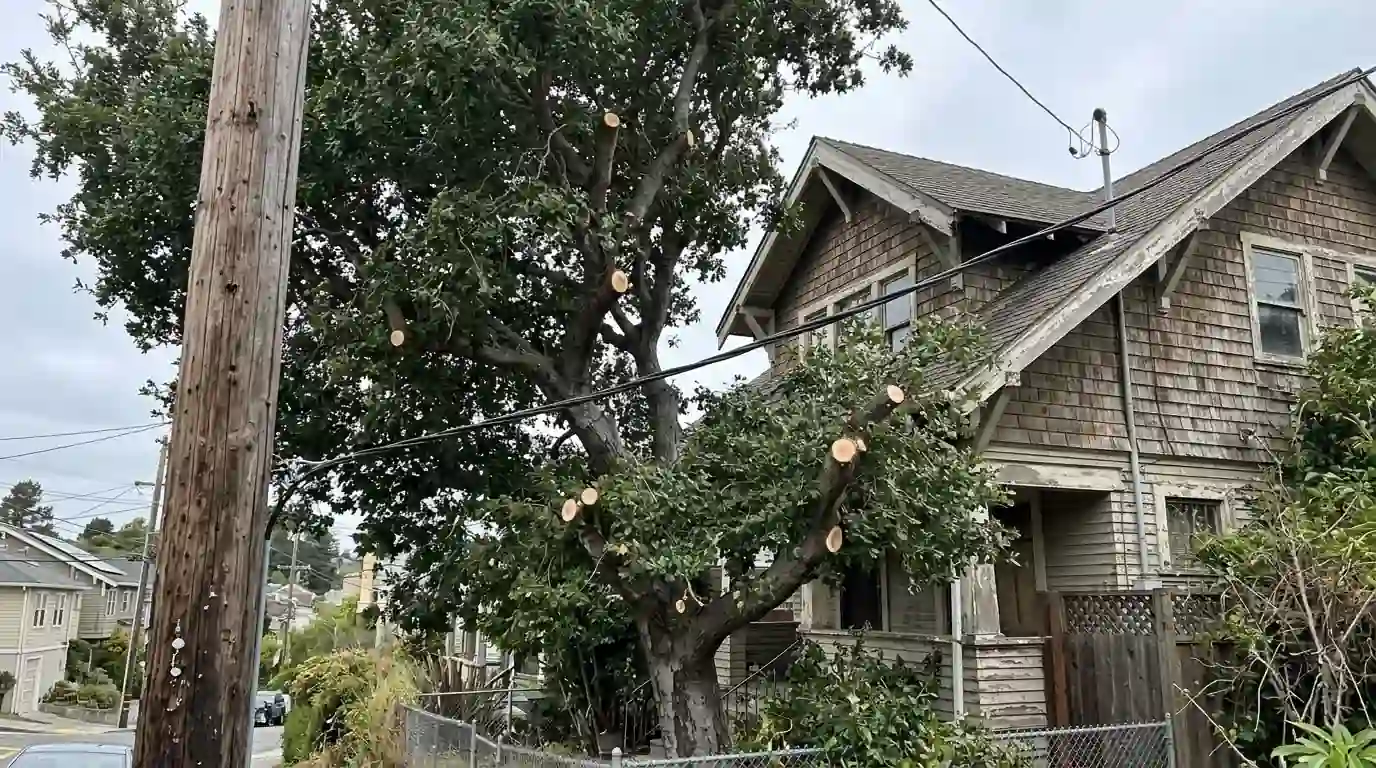
Look up at a typical Oakland utility pole and you will see several layers of wire. The top two lines are the primary lines. They carry high voltage across the neighborhood, and they are the ones PG&E is responsible for keeping clear of trees.
PG&E keeps those primary lines clear at no cost to you. If a limb from your oak or pine is growing toward the top of the pole, that clearance work is the utility's job, and their vegetation crews handle it on their own schedule.
We never work on or near primary lines. That is not a gray area for us. If a tree on your lot is tangled with the top wires, the first call goes to PG&E, and our work waits until those lines are clear or the utility has dealt with the limb.
What counts as the service drop, and who keeps it clear?
The service drop is the wire that runs from the pole to the side or roof of your house. It feeds your meter and panel. In many older Oakland neighborhoods it crosses a backyard, a side yard or a run of fruit trees before it reaches the eave.
That wire is the owner's to keep clear. The same goes for the phone and cable lines that usually hang lower on the pole and run to the house along a similar path. PG&E does not trim around them as part of its primary line work.
- Top two lines on the pole: primary lines, kept clear by PG&E at no cost to you.
- Wire from the pole to your house: the service drop, kept clear by the owner.
- Phone and cable lines: kept clear by the owner.
- Any tree touching a primary line: call PG&E first and stay away from it.
This split surprises people. A homeowner sees a utility truck trimming a street tree out front and assumes the wire to the house is covered too. It usually is not, and the branch rubbing that drop keeps growing.
Why a branch on the service drop is worth fixing soon
A limb resting on the service drop does more than look untidy. Wind moves the branch, and the branch saws back and forth across the wire jacket. Over a few winters that rubbing can wear through insulation.
Weight is the other problem. A wet canopy in a winter storm hangs lower than it does in August. A branch that clears the drop by a foot in summer can press down on it in January, and a limb that breaks can pull the wire, the mast or the meter base away from the house.
Trees on older lots grow toward light, and the open gap along a wire is often the brightest spot in a crowded backyard. That is why plums, acacias, privet and young redwoods keep reaching for the drop no matter how often someone trims them by hand.
Call PG&E before anyone works near the drop
PG&E advises calling them before work near a service drop. They can disconnect the drop temporarily, which takes power off the wire to your house while the trimming happens, and then reconnect it afterward.
We plan the date around that disconnect when a job needs it. Not every drop job does. A few small twigs well clear of the wire can be cut from a safe distance. A heavy limb resting on the drop, or a canopy that wraps around it, is a different job, and that is when we want the power off first.
Tell everyone in the house what is happening on the day. The fridge, a home office and any medical equipment all need a plan for the hours the power is down.
Never touch the lines yourself
The safest rule is the simplest one. Do not touch any overhead wire, and do not touch a branch that is touching a wire. Wood can carry current, especially when it is wet, and a pole saw or a metal ladder makes the risk worse.
- Do not climb a tree that has wires running through its canopy.
- Do not pull on a branch that is hung up on a line.
- Keep ladders, pole saws and pruning poles well away from every wire.
- Do not try to free a fallen limb from the service drop after a storm.
- Keep kids and pets out of the area until the line is cleared.
If a line is down, stay back from it and from anything it touches, such as a fence, a car or a puddle. Treat every downed wire as live. Call PG&E right away, and call 911 if there are sparks, fire or someone in danger.
How we plan service drop clearance on site
Our first step is a walk along the wire from the pole to the house. We note which trees are involved, which limbs touch or nearly touch the drop, and where the phone and cable lines run below it. Many yards have three or four trees feeding one problem.
Next we decide whether the job needs a temporary disconnect. If it does, PG&E gets the call before the date is set. Then we pick the cuts. The goal is a clear gap around the wire that will stay clear through a full growing season, not a shave that lets new shoots touch the line by spring.
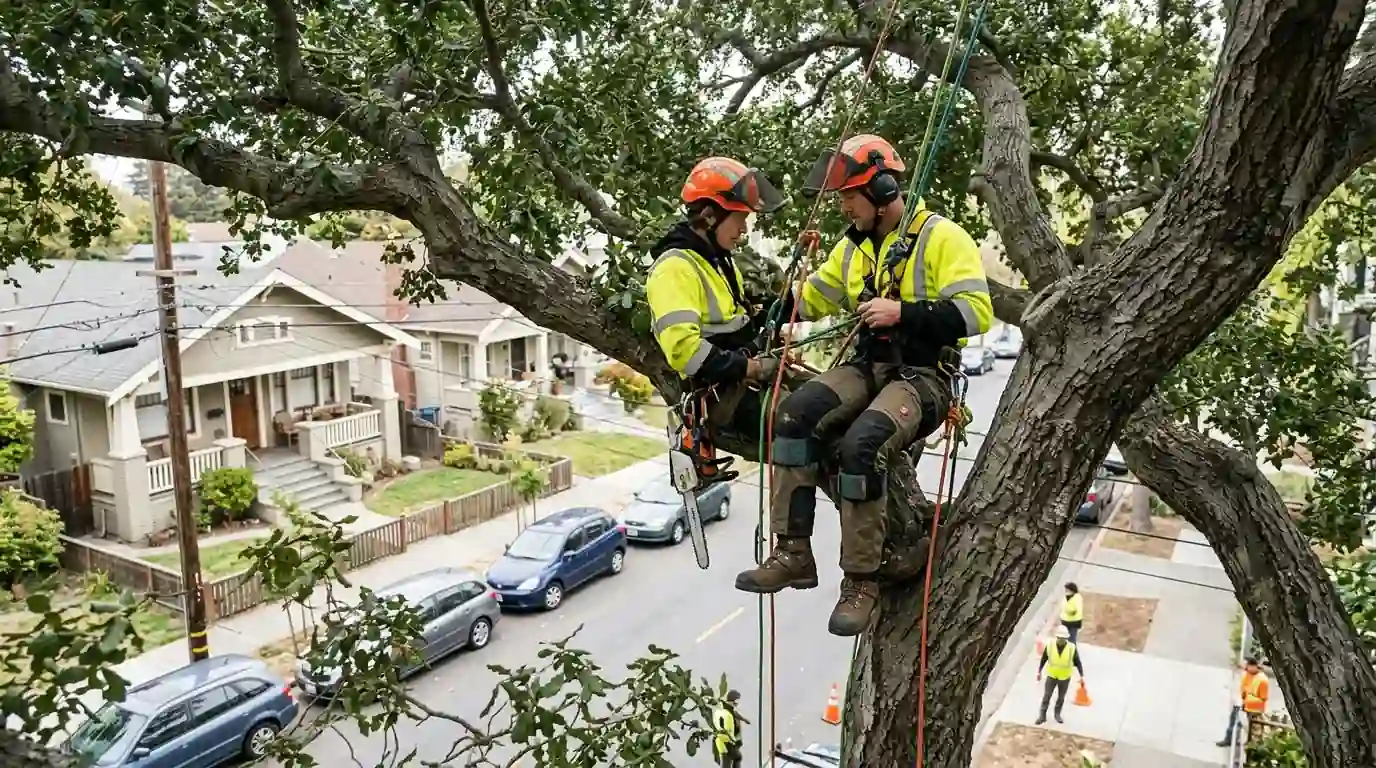
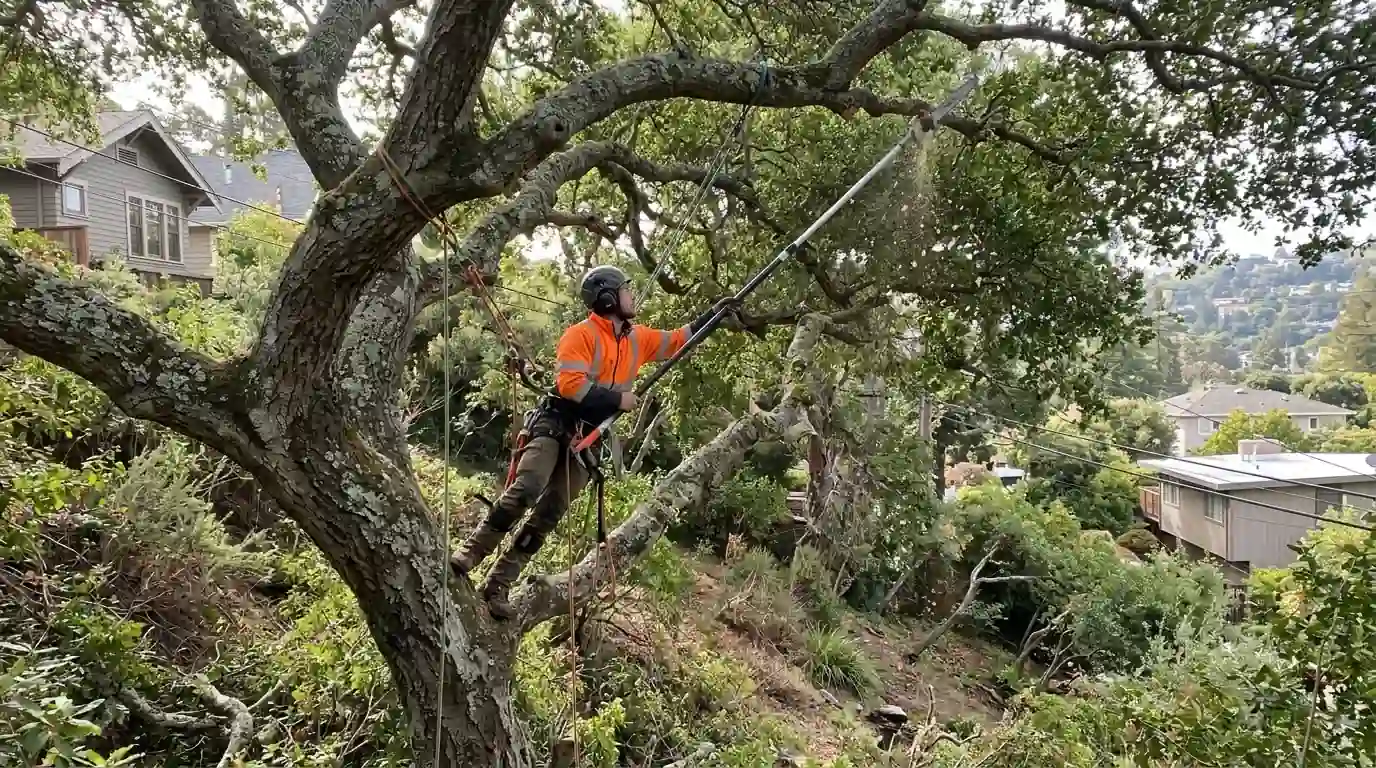
On the day, our climber works from the far side of the tree whenever possible. Limbs near the drop are tied off and lowered on ropes so they swing away from the wire, not across it. The crew on the ground guides each piece down, chips the brush and rakes the yard.
When a tree keeps returning to the wire every year, the better fix may be a reduction of the whole side facing the house, or removing a tree that was planted in the wrong spot. Our service drop clearance work covers the wire itself, and a crown reduction can take weight off the side that keeps growing toward it.
After a storm, sort the wire problem from the tree problem
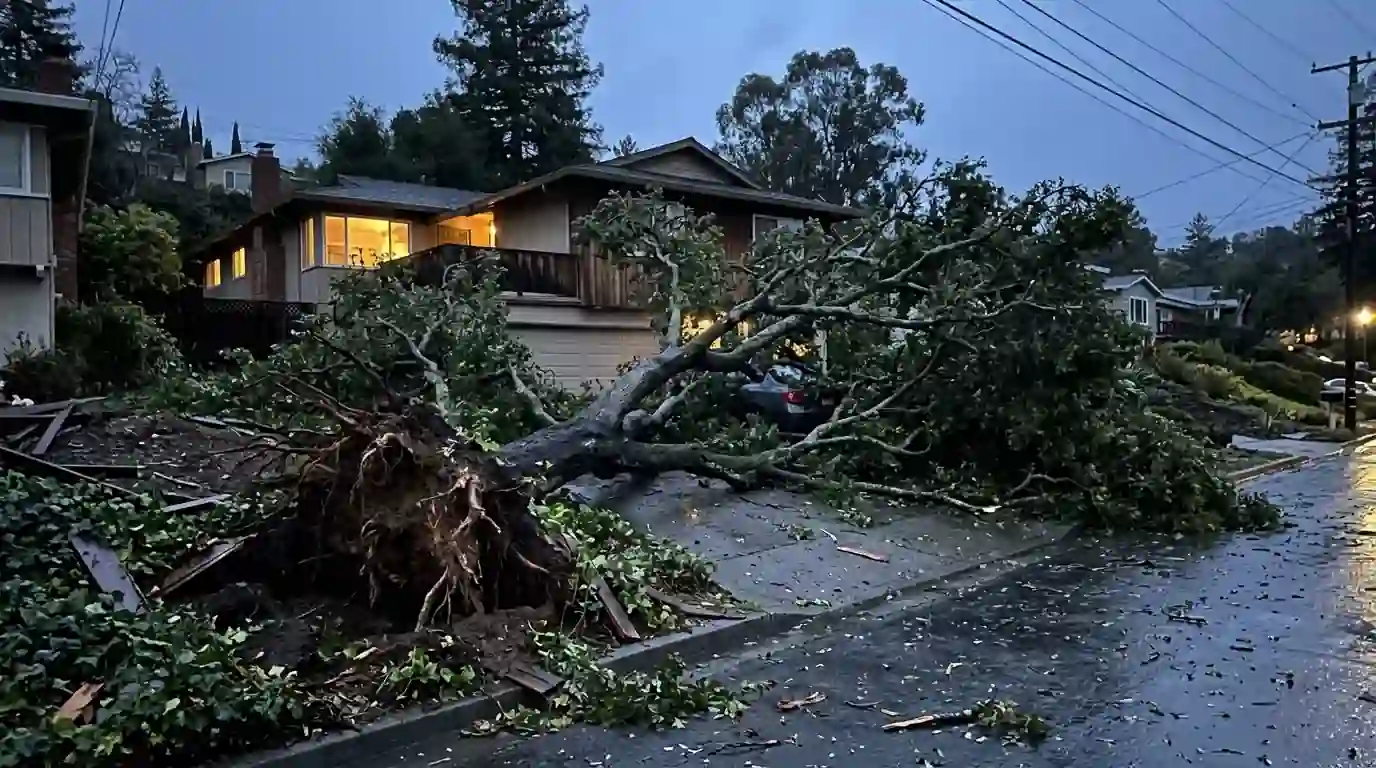
Winter storms bring most of these calls. When a tree fails and the drop is involved, the order matters. PG&E handles the electrical side first. Once the wire is safe, the tree side is ours: the broken limbs, the split trunk, the debris on the roof and the yard.
If the tree is down across the drive or leaning on the house, we can take the tree portion as emergency tree work once the utility has made the line safe. Our phone is answered 24/7, so call us while you wait on PG&E and we can line up the tree side.