Why do most dangerous trees give warning?
A tree that falls on a calm day usually had a problem for a long time. Decay spreads slowly, cracks open over seasons, and roots die back over years. The outside of the tree tends to show some of it, if you know where to look.
Two things decide how serious a defect is. The first is how big it is compared with the tree. The second is what the tree would hit if it failed. A cracked limb over an empty slope is a note for later. The same crack over a bedroom is a call today.
What do cracks and splits in the trunk mean?
A crack running down the trunk or through a big limb means the wood has already started to fail. Some cracks are old and the tree has sealed them with ridges of new wood along the edges. Others are fresh, with clean, pale wood showing, and they can widen fast in wind.
Look hardest at cracks that run through the trunk from one side to the other, cracks that connect to a cavity, and splits at the point where two large stems meet. If you can see daylight through a crack, or it moves when the tree sways, keep people clear and call us.
What is included bark, and why does it matter?
Included bark forms when two stems grow up side by side at a tight angle. Instead of building a solid wood union, the stems press bark against bark, which leaves a weak seam down the middle. The fork often looks like a tight V with a dark line or bulge down the center.
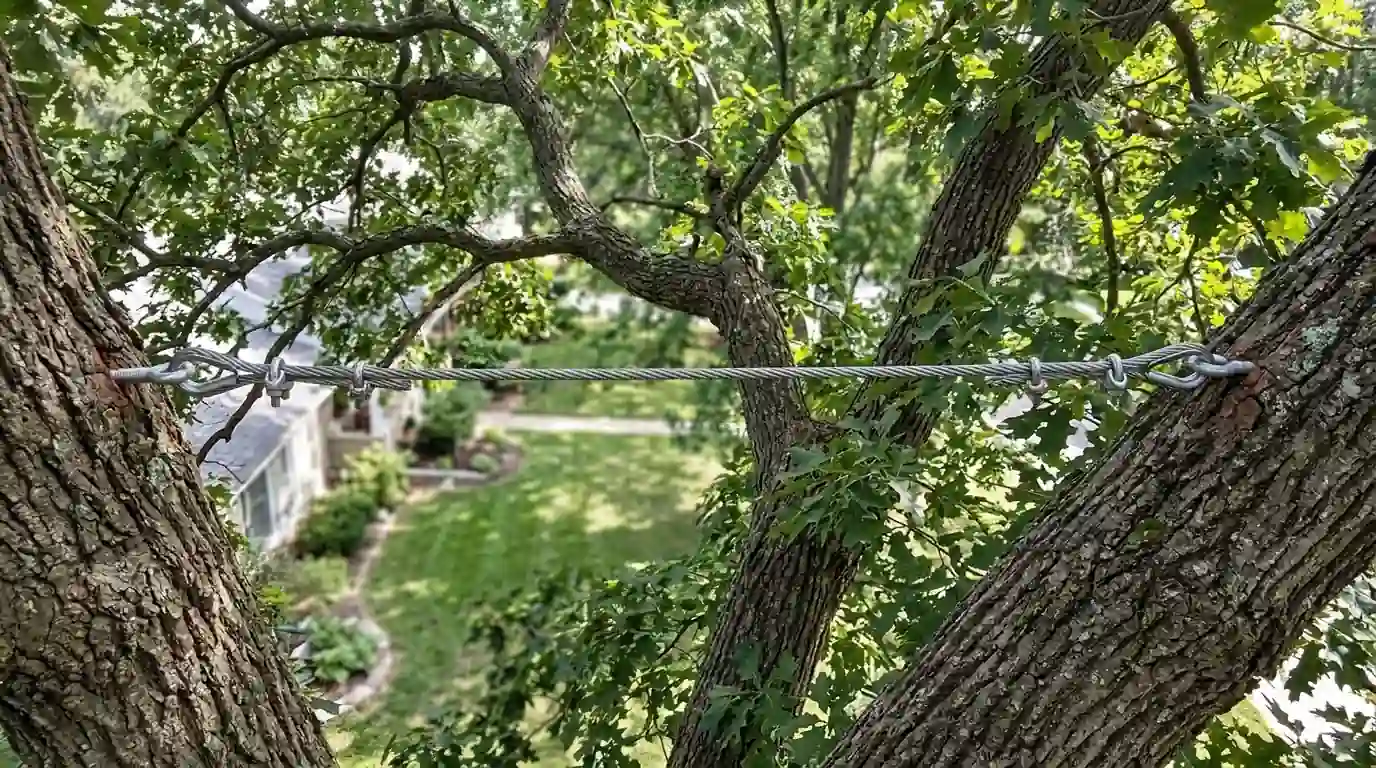
These unions are common in Bradford and other ornamental pears, liquidambar, Chinese elm and multi-stem eucalyptus. Many hold for years. Once a crack starts at the base of the V, though, the whole stem can split off. On a healthy tree, cabling the stems together can reduce the strain. On a tree that is already cracking, removal is often the only safe answer.
Which signs of rot and decay should you look for?
Decay is the defect people most often miss, because it works from the inside. A trunk can look solid while the center is mostly gone. These are the outside clues:
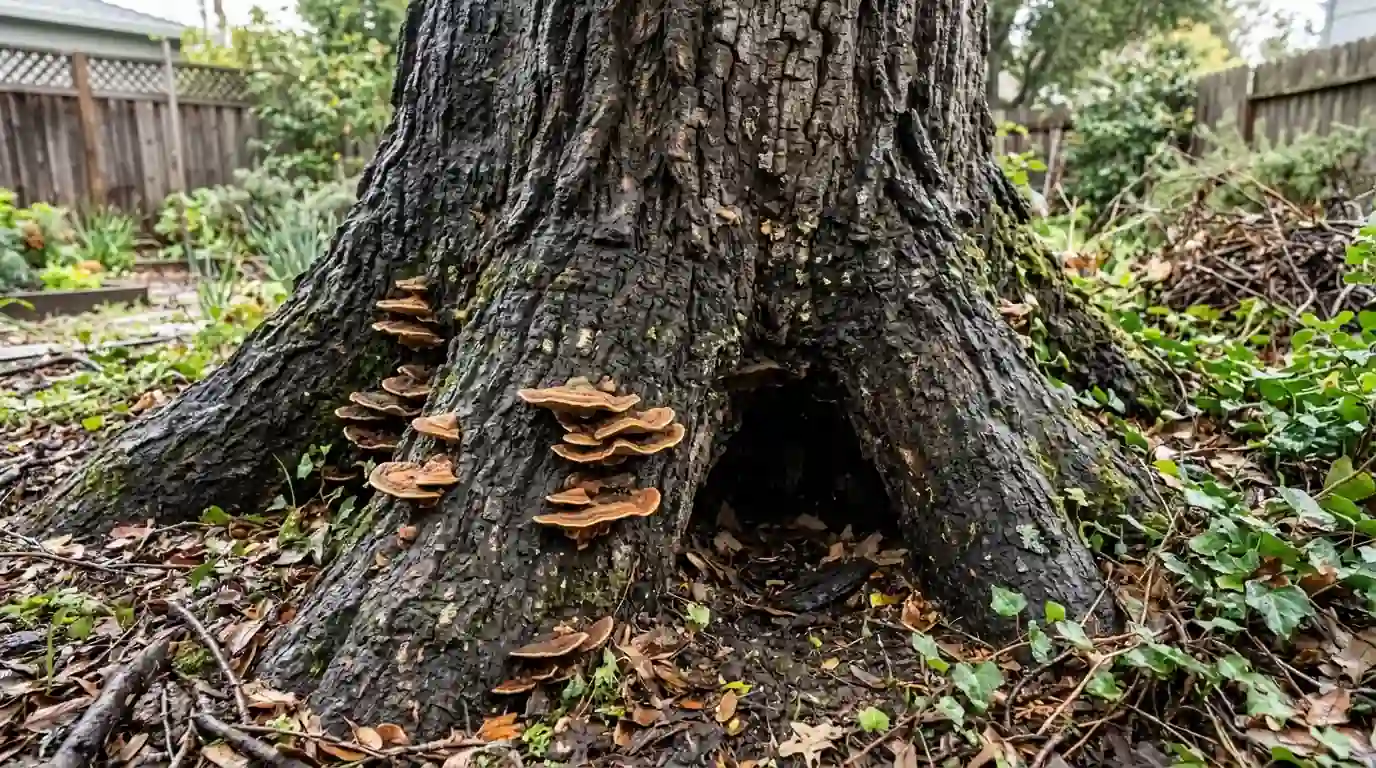
- Mushrooms, shelf-like conks or crusty fungus growing on the trunk or at the base.
- Cavities and hollows, especially ones that sound hollow when tapped.
- Soft, crumbly or sunken bark near the ground.
- Dark, bleeding sap on the lower trunk of an oak, which can be a sign of sudden oak death.
- Carpenter ants, sawdust or heavy woodpecker work in one area.
- Old pruning wounds that never closed and have turned dark and soft.
Fungus at the base is the one to take seriously. It usually means the roots or the lower trunk are decaying, and those are the parts holding the whole tree up. A fungus that appears after a wet winter is a reason for a closer look, not for waiting another season.
What do dead tops, hangers and a sudden lean tell you?
The crown and the base give their own warnings. Here is what we look for when we walk up to a tree:
- A dead or bare top while the lower crown stays green, which often points to root or trunk trouble.
- Large dead limbs with no bark, or limbs that fail to leaf out in spring.
- Hangers, which are broken branches stuck in the canopy that can drop with no warning.
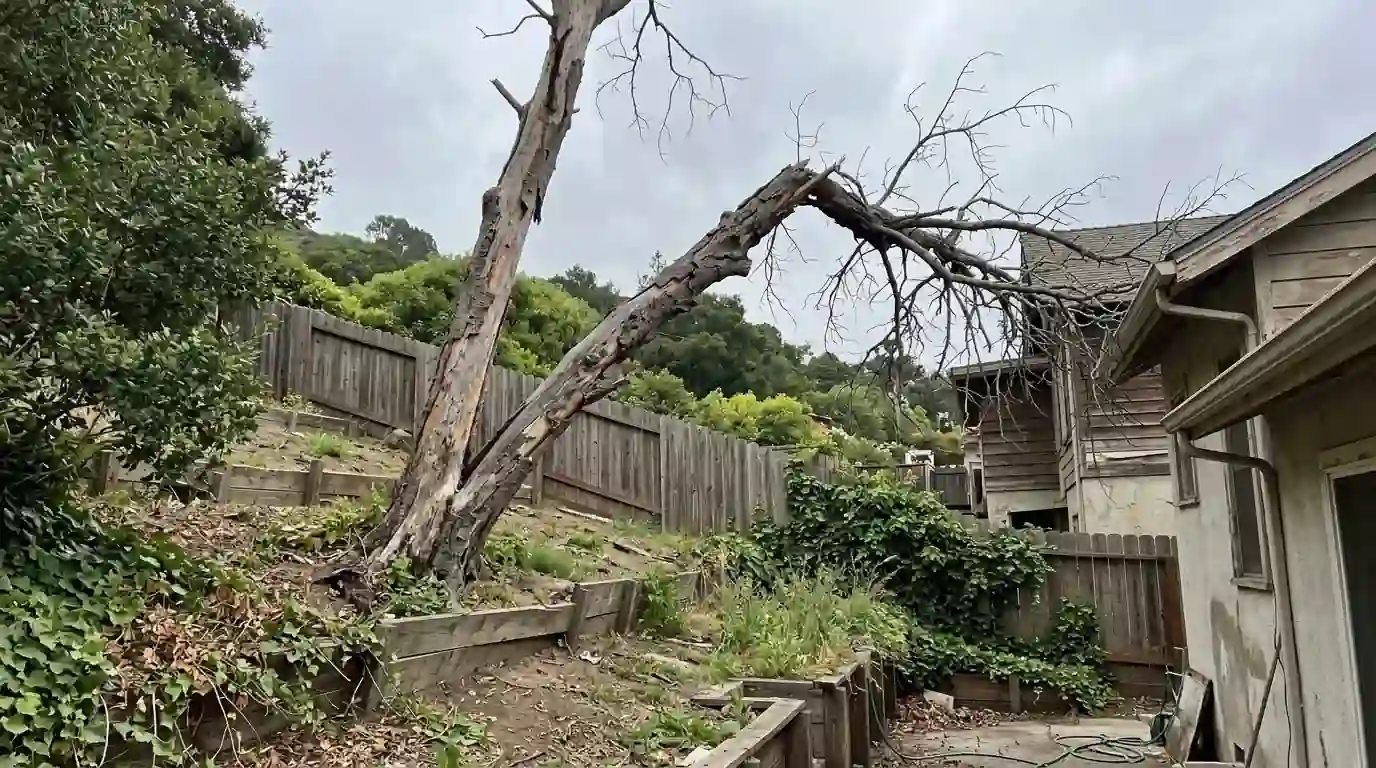
- A lean that is new, or one that has clearly gotten worse.
- Soil cracking, rising or mounding on the side away from the lean.
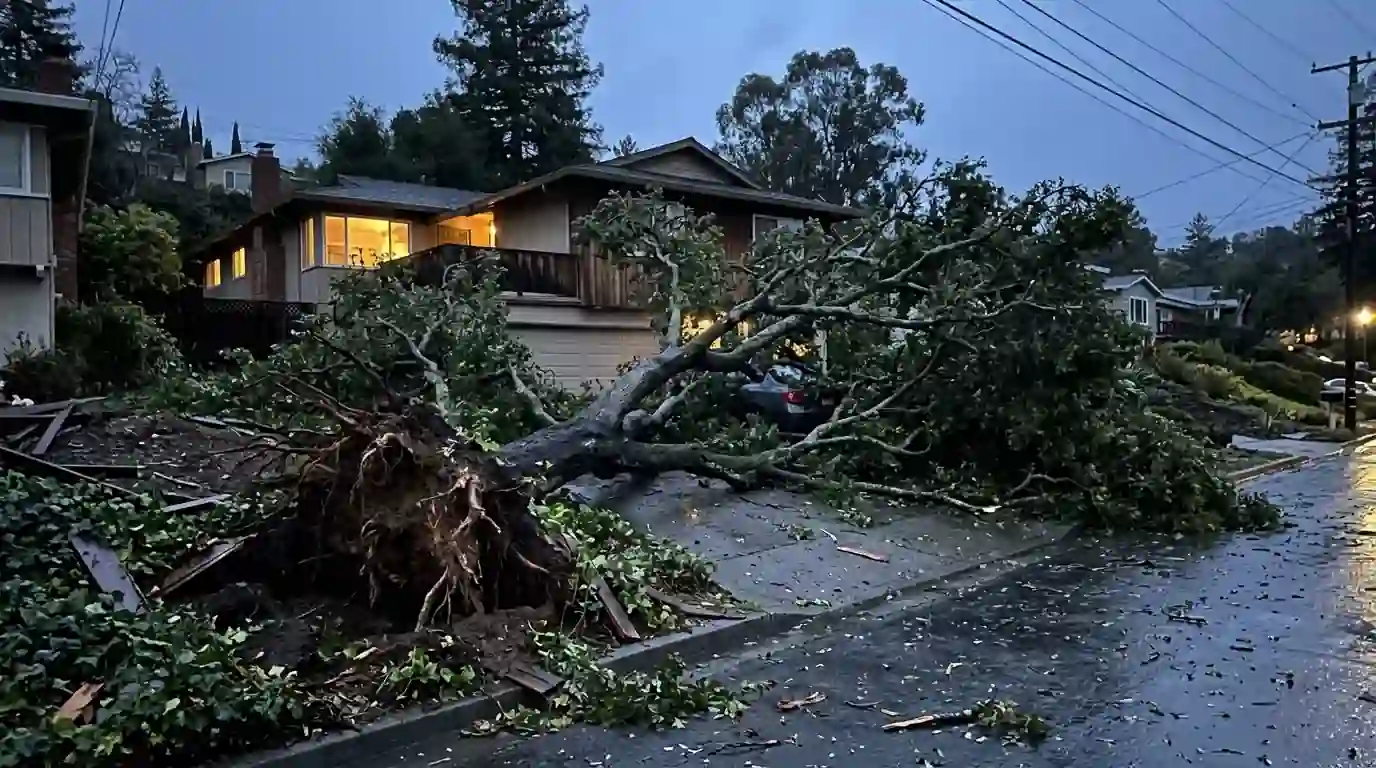
- Roots that snapped or lifted out of the ground after a storm.
A sudden lean with heaving soil is the most urgent sign on this page. It means the root plate is moving, and the tree may go over at any time, even without wind. Clear the area and call us right away.
Can construction hurt a tree that looks fine?
Yes, and the damage often shows up years later. Most of a tree's feeder roots live in the top foot or two of soil, spread well past the edge of the canopy. Trenching for a sewer line, regrading for a patio, pouring a new driveway or parking machines over the roots can kill a large share of them.
The tree may look normal for a season or two, then thin out, drop branches and start dying back from the top. Oakland's code counts regrading around a protected tree as a form of removal, so the city takes this seriously. If you are planning work near a big tree, protecting the root zone costs far less than dealing with a failing tree later.
What should you do when you spot a warning sign?
Start by stepping back. Don't climb the tree, prune near the defect yourself, or park under it while you think about it. Then work through a short list:
- Take photos from a few angles, and add a reference like a fence post to track any lean.
- Keep people, pets and cars out of the area the tree could reach if it fell.
- If a line is involved, stay away from it and call PG&E.
- Call us for a look, and mention what you saw so we know how quickly to come.
For signs that are worrying but stable, a tree risk check sorts out what needs action now and what can be watched. Sometimes the fix is pruning, cabling or removing one limb rather than the whole tree.
When is it time to call us 24/7?
Call any hour if a tree is cracking, leaning more than it did yesterday, lifting the ground at its base, or resting on a roof, car or fence. Our phone is answered 24/7, and nights and weekends are when many of these calls come in.
If the tree is in Oakland and protected, the city can waive the removal permit when a tree is an immediate threat to safety or property. The removal then has to be reported to the city on the first business day after. We handle that step so you don't have to sort out paperwork during an emergency.