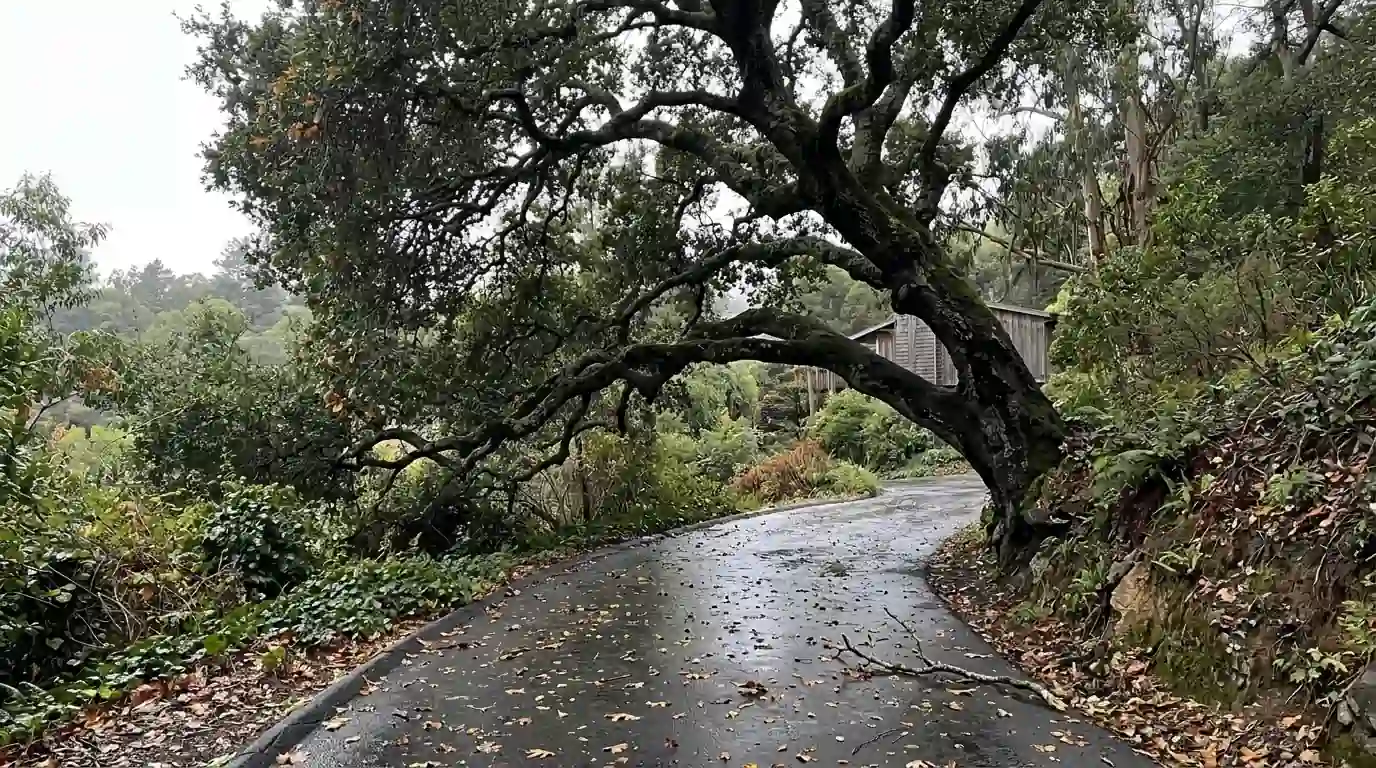
Why do East Bay trees fail during winter storms?
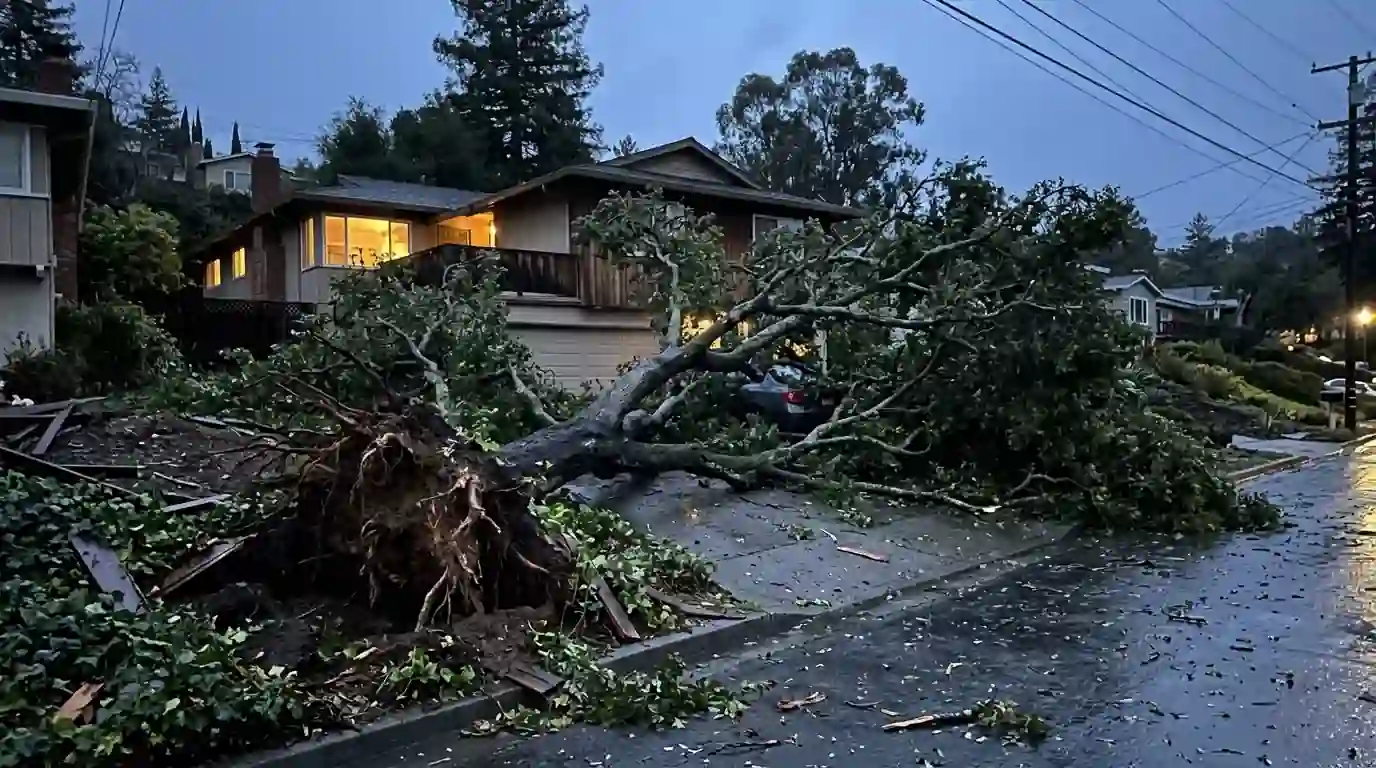
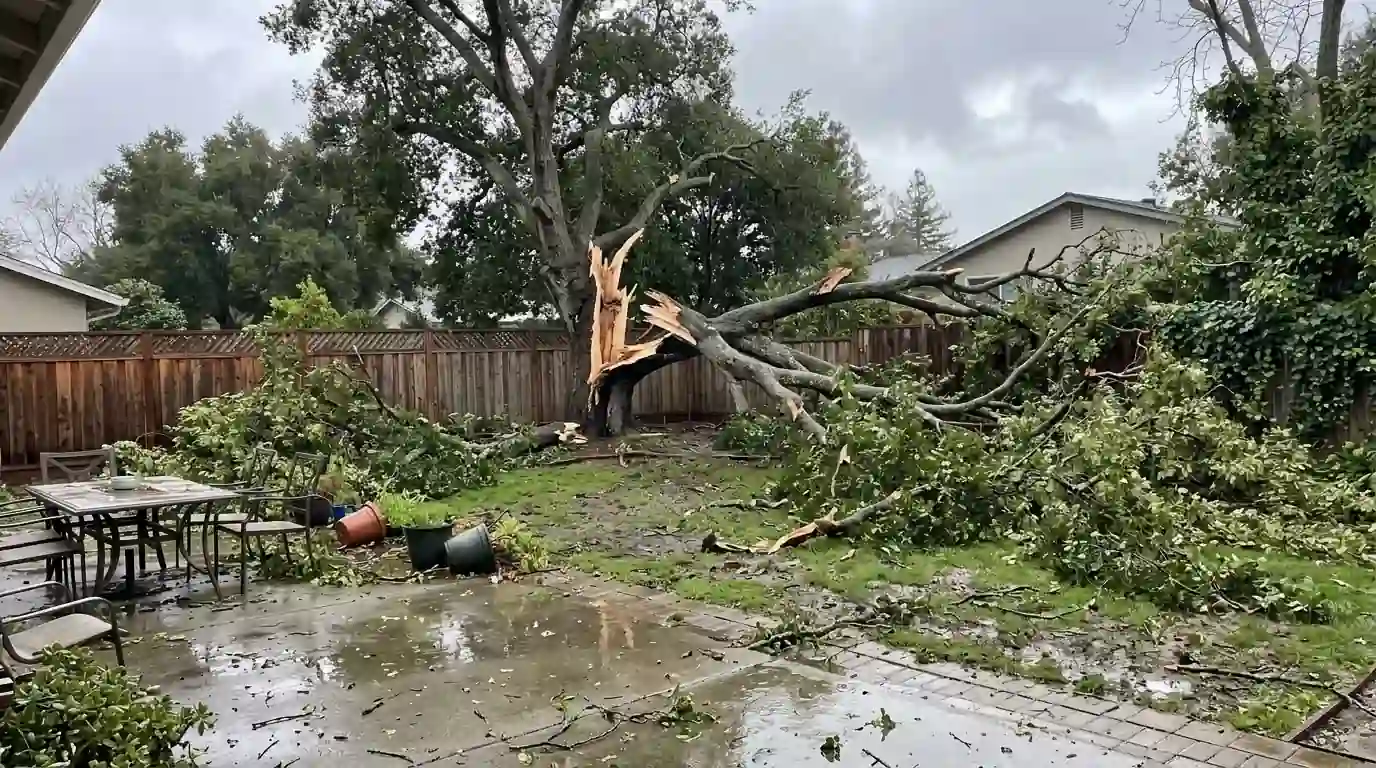
Our rain comes in bursts. Most of it falls between November and March, and a lot of it arrives as atmospheric rivers that park over the Bay Area for days. The late December 2022 to January 2023 storms are the clearest recent example. Trees came down across Oakland, Berkeley and the hill towns, and many of them were not obviously sick.
The pattern was the same on job after job. Soil got saturated, roots lost their grip, and then a gust caught a full canopy. Coast live oaks, eucalyptus, Monterey pines and redwoods keep their leaves all winter, so they carry a big sail into every storm. Heavy clay and shallow soil over rock, both common in the hills, make the problem worse.
The dry season, roughly May to October, matters too. A tree that went into fall stressed, with deadwood and a thin root system, has less margin when the first big storm lands on wet ground.
What should you check in October before the first big rain?
October is the best month for a walk around the yard. The ground is still dry, the light is good, and there is time to book work before the calendar fills with storm calls. Bring binoculars and look up as much as you look down.
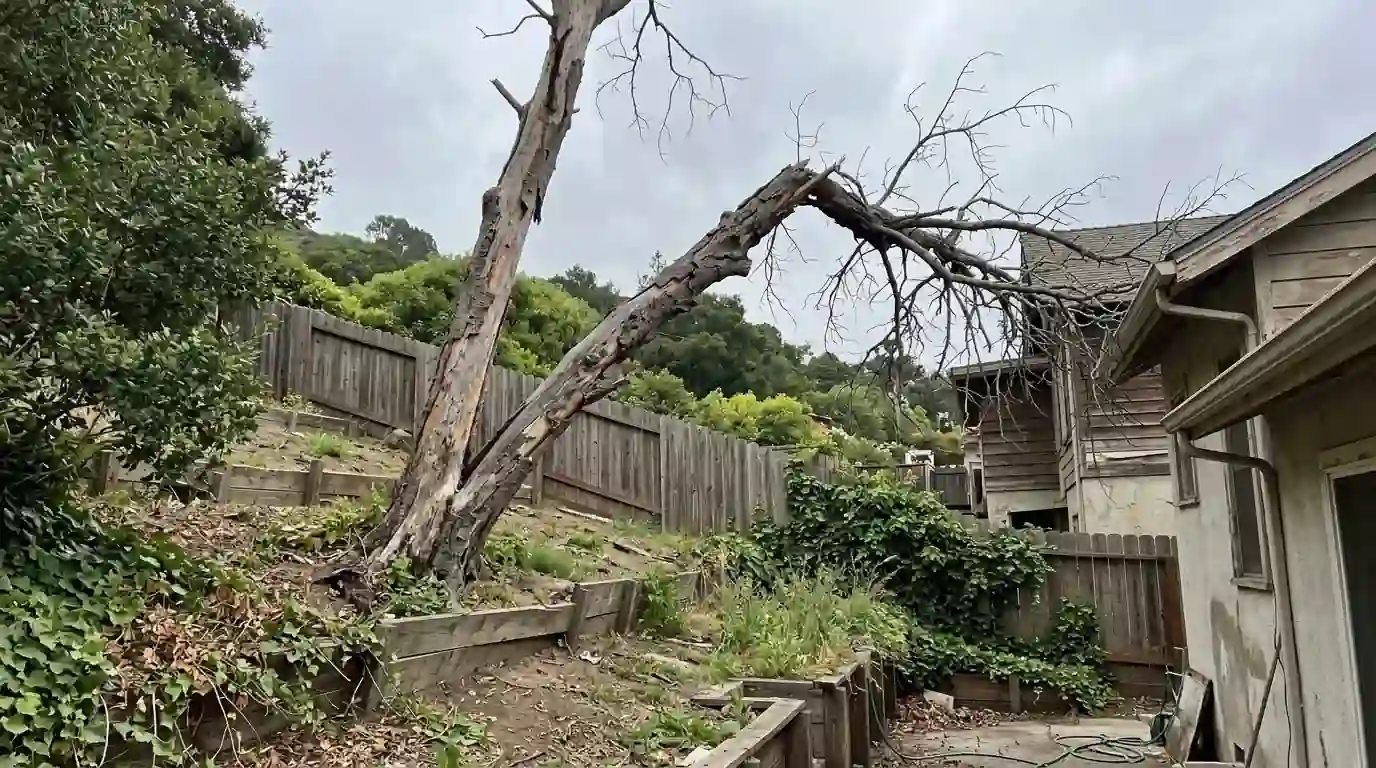
- Dead branches in the canopy, especially ones over the roof, driveway, deck or a neighbor's yard.
- Cracks in the trunk or at the point where two big stems split apart.
- Limbs resting on the roof or rubbing the gutters and chimney.
- Branches touching the service wire that runs from the pole to your house.
- Mushrooms, soft bark or hollow spots near the base of the trunk.
- Ivy climbing high into the tree, which hides defects and adds weight.
- Gutters and roof valleys packed with leaves and needles that will hold water.
If anything on that list shows up over a target people care about, have it looked at before November. A tree inspection in the fall is a far calmer visit than an emergency call in January.
Which leaning trees deserve a second look in November?
Plenty of trees lean and stay standing for decades. A tree that grew toward the light on a hillside usually builds extra wood on the side that needs it. That kind of lean is old, steady and often fine.
The lean that worries us is new. Compare the tree with a photo from last year, or with a fence post or corner of the house. Then look at the ground on the side away from the lean. Cracked soil, a raised mound, or a gap opening between the trunk and the earth means the root plate is moving.
Check again after the first soaking rain in November. Wet soil is when a slow lean turns into a fast one, and the change can show up within a single storm.
How do you spot hangers before they drop?
A hanger is a broken branch that snapped but never reached the ground. It sits wedged in the canopy, sometimes for months, until wind or rain shakes it loose. Arborists call them widow makers for a reason, and they are common after the first fall storm.
From the ground, look for leaves that have turned brown while the rest of the tree stays green, a branch hanging at an odd angle, or a broken stub with a fresh pale wound. Stand well back and use binoculars. Never stand under a hanger to get a better look.
Hangers over paths, play areas, parked cars or the street need to come down soon. We climb to them or reach them with a lift and lower them on a rope, so nothing free-falls onto what is below.
What are heaving soil and lifted roots telling you?
Heaving is the ground around the base of a tree rising or cracking as the root plate starts to tip. During a storm you may see the soil lift and settle as the tree rocks. After the storm you may find a ring of cracks, a ridge of soil, or roots that were buried yesterday now showing at the surface.
Treat this as urgent. A tree with a moving root plate can go over without another drop of rain. Keep people out of the fall zone, which is at least the height of the tree in every direction, and call us right away. Our phone is answered around the clock.
How do you stay safe in the first hours after a storm?
The hours right after a storm are when people get hurt. Branches are still shifting, ground is soft, and wires may be down under the debris. Slow down and work through these steps before touching anything.
- Assume every downed line is live, including cable and phone lines that may be tangled with power lines. Stay well away and call PG&E.
- Keep children and pets indoors until the yard has been checked.
- Do not climb a damaged tree or stand on a ladder near broken limbs.
- Leave chainsaw work on bent or pinned wood to someone trained for it. Spring-loaded limbs can snap back with enough force to break bones.
- Take photos of the damage from a safe distance before anything is moved.
- Look for new cracks in the soil around any tree that stayed standing.
If a tree is on the house, a car or a line, step back and make the calls. Cleanup can wait an hour. Nobody wants a second accident on top of the first.
Who clears trees near power lines?
PG&E keeps the top lines on the pole, the high-voltage primary lines, clear of trees at no cost to you. If a tree is in those lines or a line is down, that is PG&E's job, and we never work on or near primary lines.
The service drop, the wire running from the pole to your house, is different. Keeping trees off it is the owner's job, along with phone and cable lines. PG&E advises calling them before work near a service drop, and they can disconnect it for a short time so the pruning can be done safely. Fall is a good time to get that scheduled.
When should you call us during storm season?
Call us any time a tree or big limb has fallen on a structure, is blocking a driveway, or is leaning harder than it was before the rain. We answer the phone 24/7, and our emergency tree crews work through the storm season. For broken limbs scattered across a yard, our storm cleanup gets the debris cut, chipped and hauled.
Oakland's protected tree rules still apply in an emergency, with one key difference. If a protected tree is an immediate threat to safety or property, the city can waive the permit, and the removal has to be reported to the city on the first business day after. We handle that report as part of the job, so you can focus on the house.