What is the difference between grinding and removal?
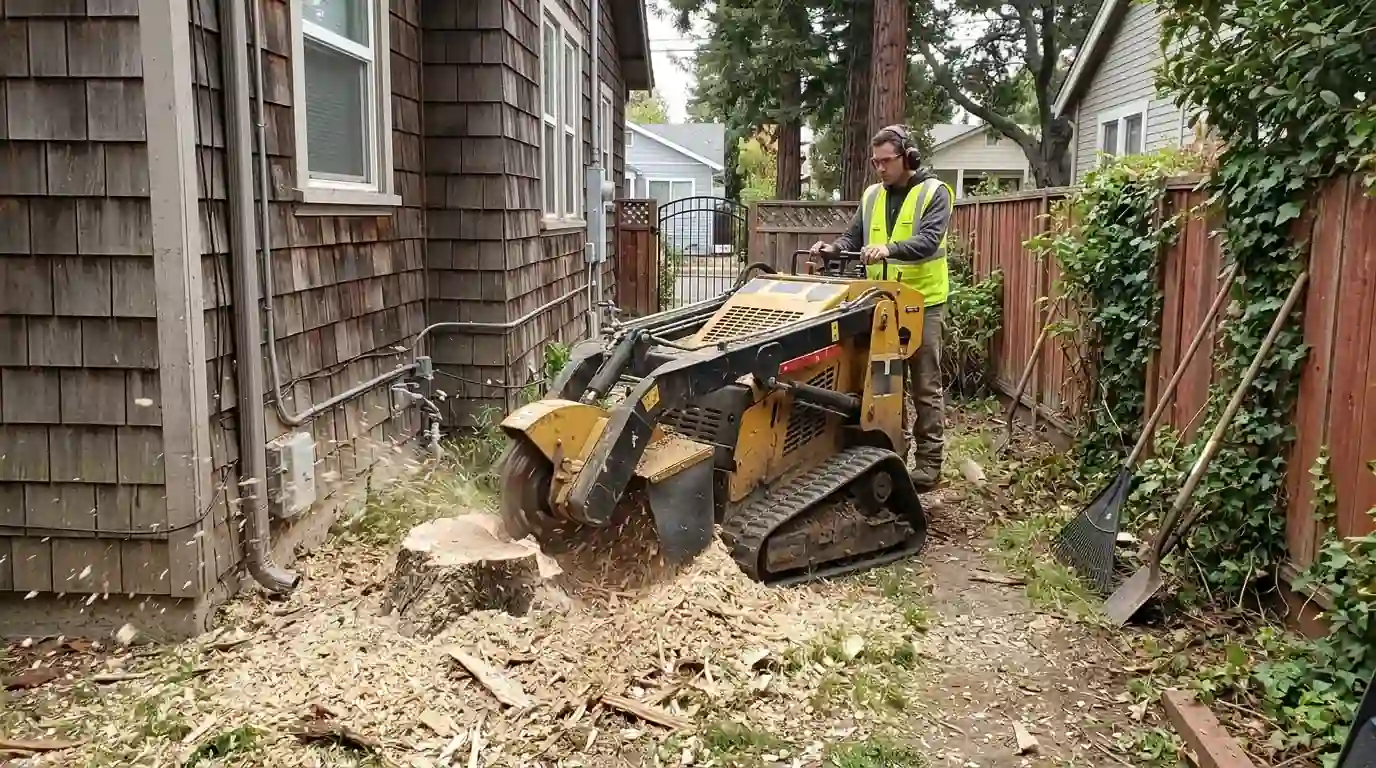
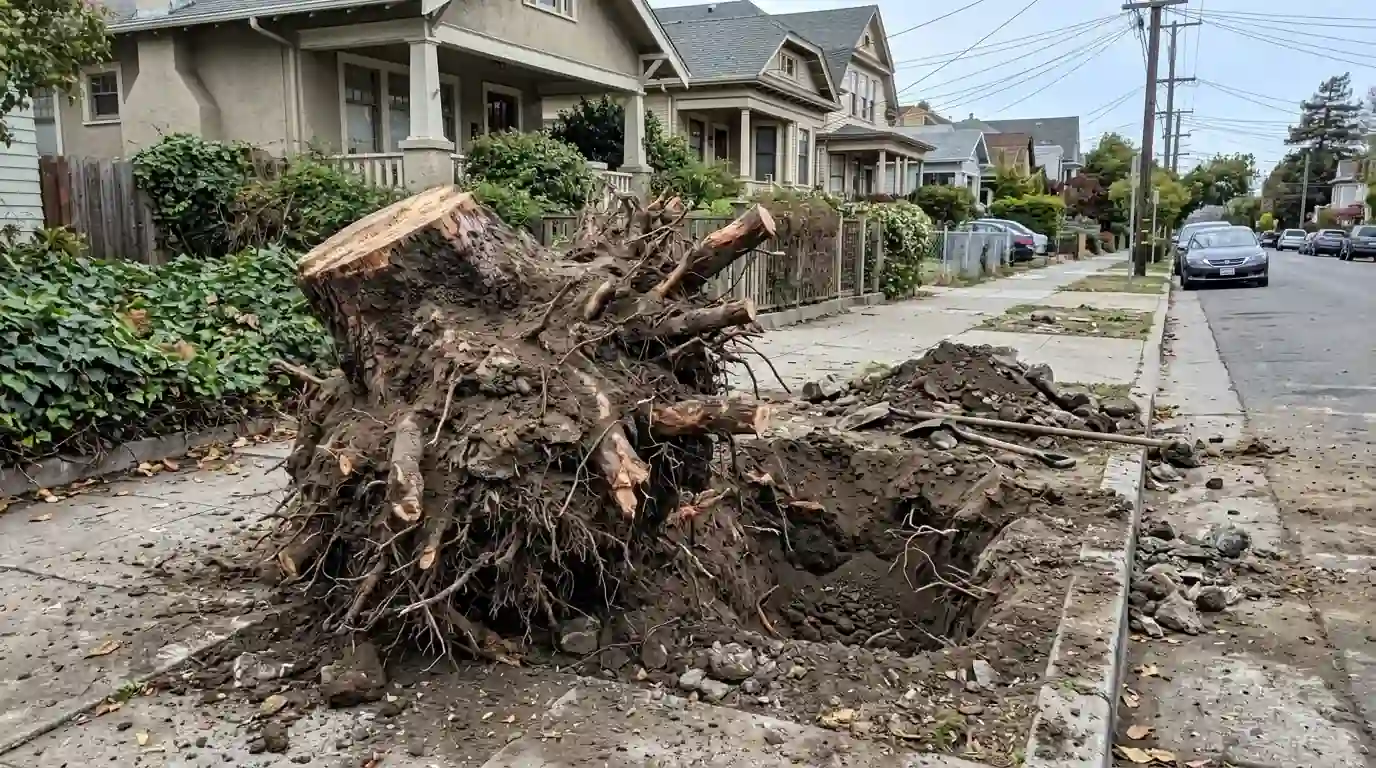
Stump grinding uses a machine with a spinning cutter wheel to chew the stump into chips below ground level. The roots stay in the ground and break down over time. Stump removal pulls the stump out, along with the main root ball, by digging and cutting around it.
Grinding is the more common choice in East Bay yards. It is faster, makes less of a mess, and leaves the surrounding lawn, beds and hardscape mostly undisturbed. Full removal is the right call when you need the ground clear of large wood for a foundation, a slab, a new tree in the same spot or deep digging.
How deep does stump grinding go?
Most residential grinding takes the stump several inches below the soil surface. That is enough to cover with topsoil and seed or sod, or to hide under mulch in a planting bed. We can go deeper where you plan to plant or lay pavers, within the reach of the machine and the roots in the way.
We also grind the surface roots that run out from the stump, the ones that trip people and catch mower blades. Roots deeper down and farther out stay in place. They don't sprout on most species, and they decay slowly underground.
What happens to the chips and the hole?
Grinding a big stump produces a surprising pile of chips mixed with soil. You have a few options for them:
- Leave them in the hole and mounded on top, where they settle over the following months.
- Rake them into nearby beds as mulch, kept away from the house in fire zones.
- Have us haul them, then backfill the hole with topsoil.
- Use part of the pile to fill the hole and spread or haul the rest.
Fresh chips are not a good base for new lawn or a new tree right away, because wood ties up nitrogen as it breaks down. If you want to plant soon, it is worth removing the chips and bringing in soil.
What does the yard look like the day after each option?
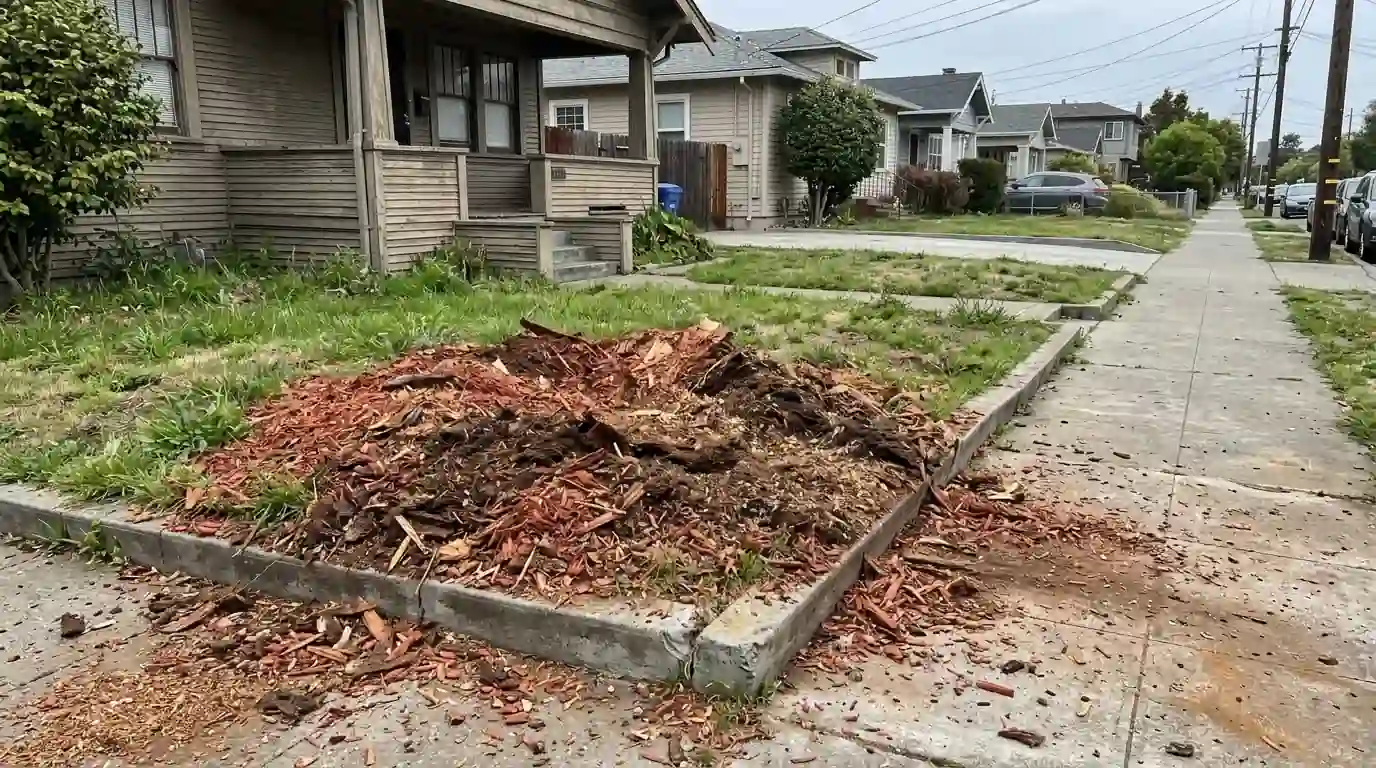
After grinding, you have a shallow bowl filled with chips and soil, a mound on top, and a few tracks where the machine rolled in. Lawn and beds a few feet away are usually untouched. The spot settles over a few months as the chips break down, so a top-up of soil in spring is normal.
After full removal, you have a real hole, often wider than the stump itself, plus the root ball to haul away. Nearby lawn and edging get disturbed by digging. We backfill and tamp the hole, but the ground still needs time and water to settle before it is ready for sod or pavers.
Grinding also fits through tighter spaces. Many narrow side yards in older Oakland neighborhoods only take a compact grinder, and those yards rarely have room for the digging that full removal needs.
Which trees sprout back from the stump?
Some species just won't quit. Blue gum eucalyptus is the classic East Bay example. Cut one down, and the stump can throw up a ring of new shoots within months. Coast redwood often does the same, sending up a circle of sprouts around the old trunk. Acacia, privet, bamboo and some plums and other fruit trees also push sprouts from the stump or roots.
Grinding below grade removes the bark layer that sprouts grow from, which takes care of a lot of regrowth. On eucalyptus, we grind deep and wide, and we tell owners to watch the spot through the next growing season. Any new shoots that show up should be cut off as soon as they appear, before they can feed the roots. On stubborn running bamboo, digging out the rhizomes is the only real fix, because grinding alone leaves the network alive.
When is full stump removal the better choice?
Full removal is more work and leaves a bigger hole. It earns its place in a few situations:
- A new driveway, patio, slab or foundation is going over the spot, and buried wood would rot and settle under it.
- You want to plant a new tree in the exact same location.
- The stump is small enough to dig out by hand without tearing up the yard.
- A sewer line, retaining wall or utility trench needs the ground clear of a large root mass.
For those jobs we use full stump removal, digging around the root plate, cutting the main roots and lifting the stump out. The hole is then backfilled and compacted so the surface won't sink later.
What should you know about replanting and paving?
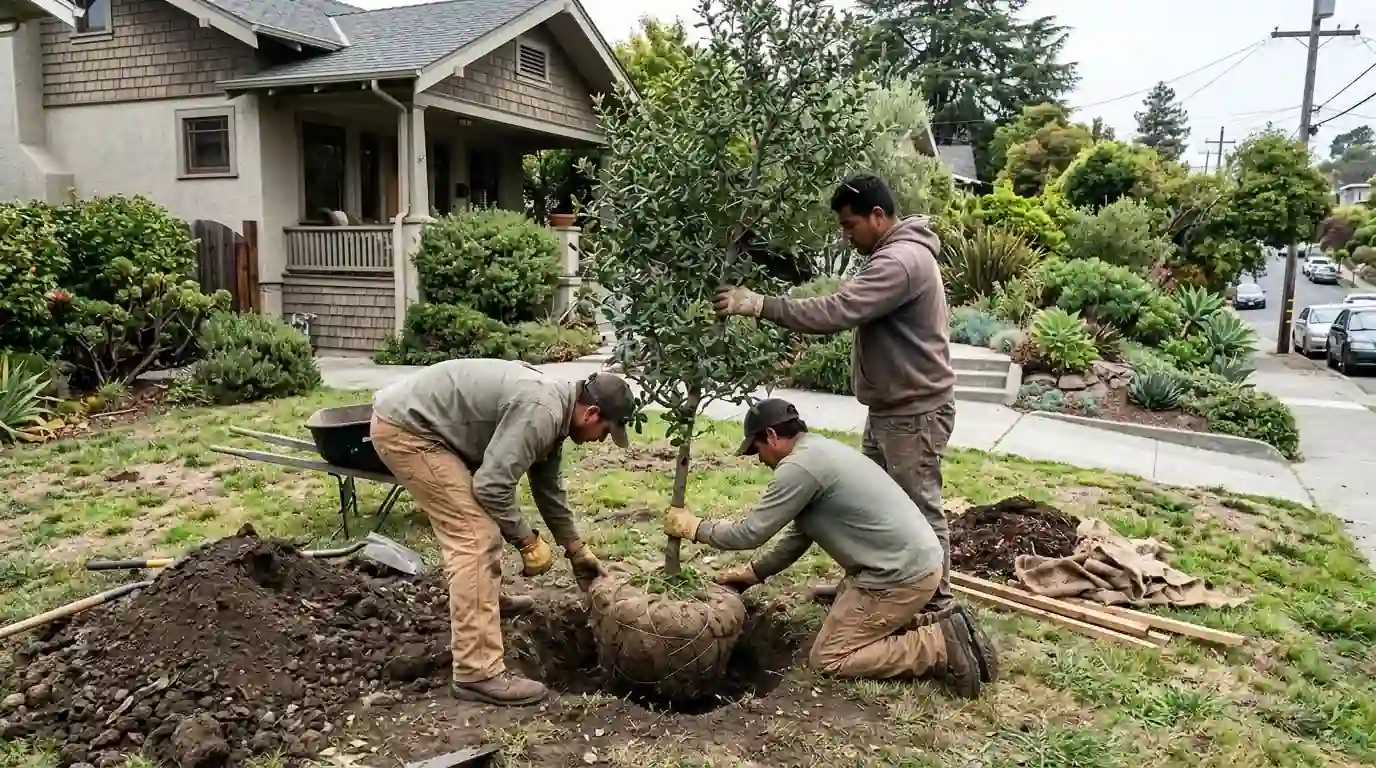
If you plan to replant, think about the new tree first. Planting right on top of an old ground stump means the new roots spend their early years pushing through decaying wood and chips. Shifting the new tree a few feet away, into clean soil, usually gives it a better start.
In Oakland, a protected tree removal may come with replacement trees named in the code, such as coast redwood, coast live oak, madrone, California buckeye or California bay laurel. That makes the stump decision part of the plan. For paving, ask the contractor how much clear depth they need before you choose between grinding and full removal.
Why do you call 811 before any stump work?
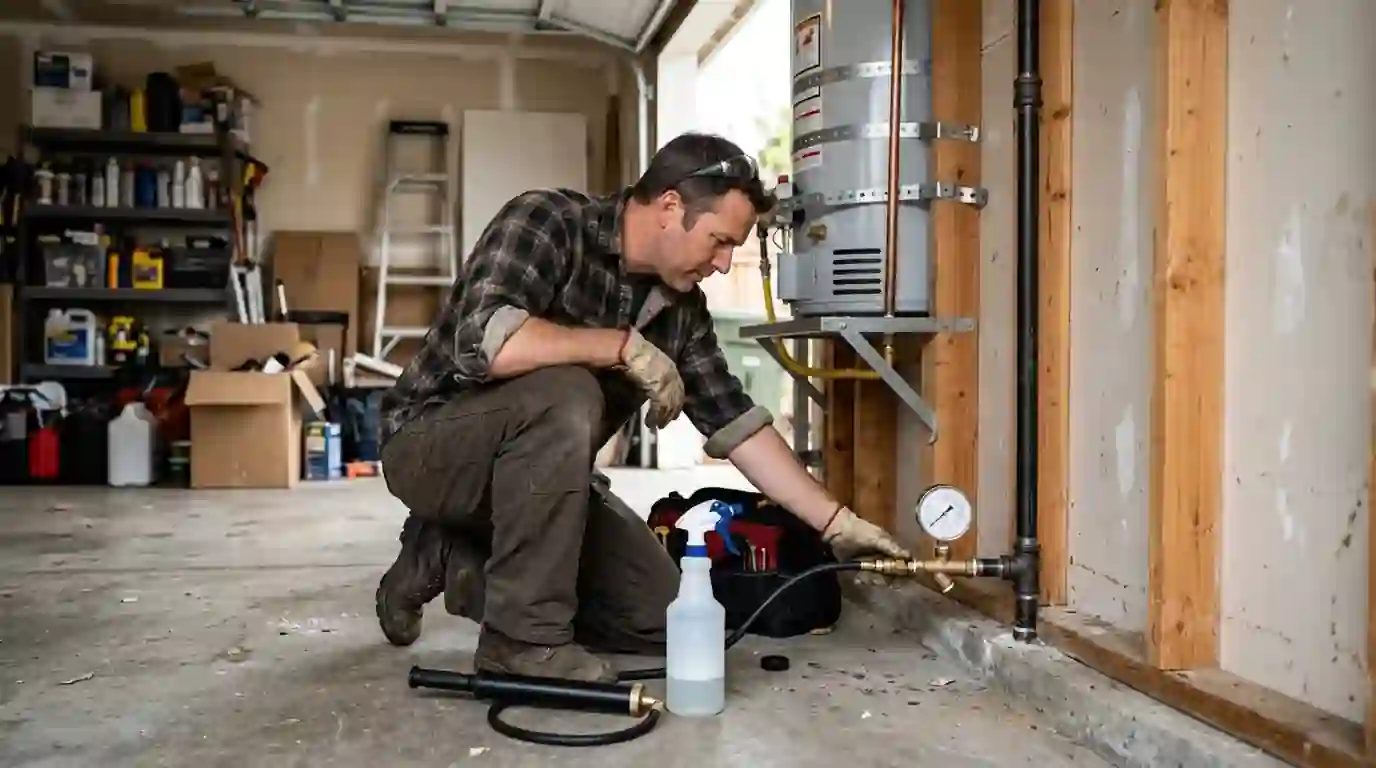
Stumps sit right where utilities like to run. Gas lines, water lines, sewer laterals and buried electric and communication lines often pass near old trees, especially in front yards and planting strips. A stump grinder cuts below grade and a stump removal digs even deeper, so knowing what's underground matters.
California requires a call to 811 before digging. The service has the utility owners mark their lines, so we know where they run before the cutter wheel goes in. We set this up before we grind or dig. Private lines, like a sprinkler system or a lighting circuit you added yourself, aren't marked by 811, so tell us about those when we arrive.