What sudden oak death is
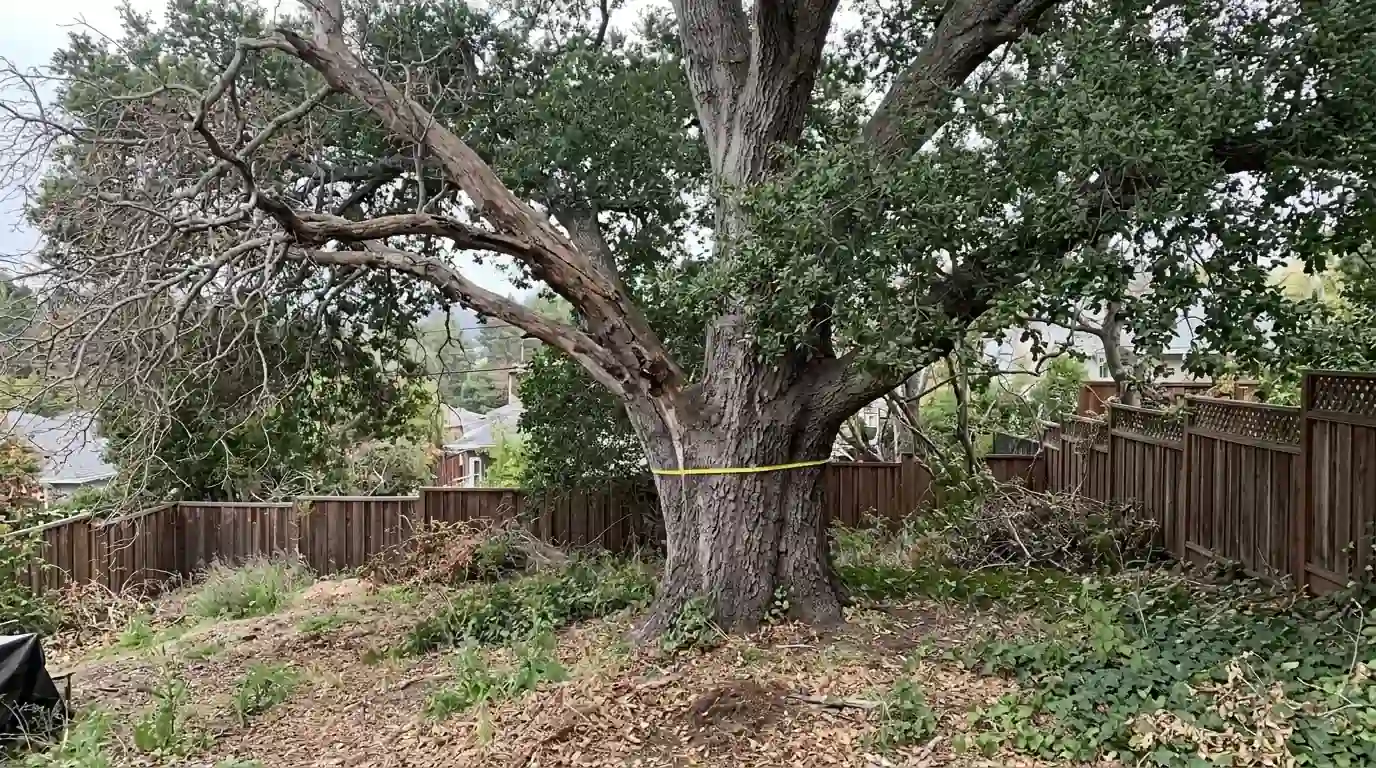
Sudden oak death is a disease caused by Phytophthora ramorum, a water mold that behaves much like a fungus. In our area it kills coast live oaks and tanoaks, two trees that shade a lot of East Bay yards.
The name oversells the speed. Infection usually builds for a long time before the canopy shows it. The sudden part is how fast the leaves can brown once the trunk is badly damaged. By then, the tree has often been infected for years.
Alameda and Contra Costa counties are both inside California's regulated area for the disease. If you have oaks in Oakland, Berkeley, Orinda or Walnut Creek, it is worth knowing what to look for.
Bleeding cankers are the sign to look for
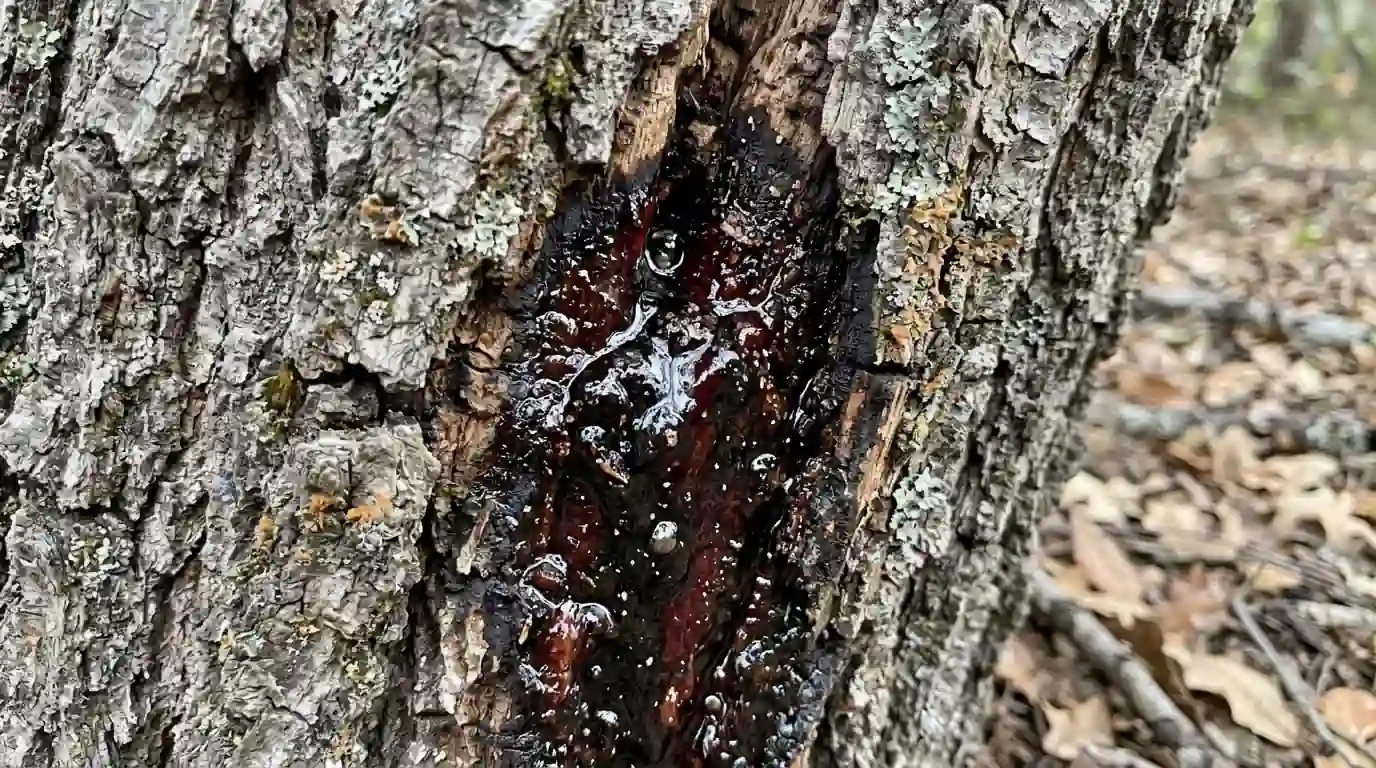
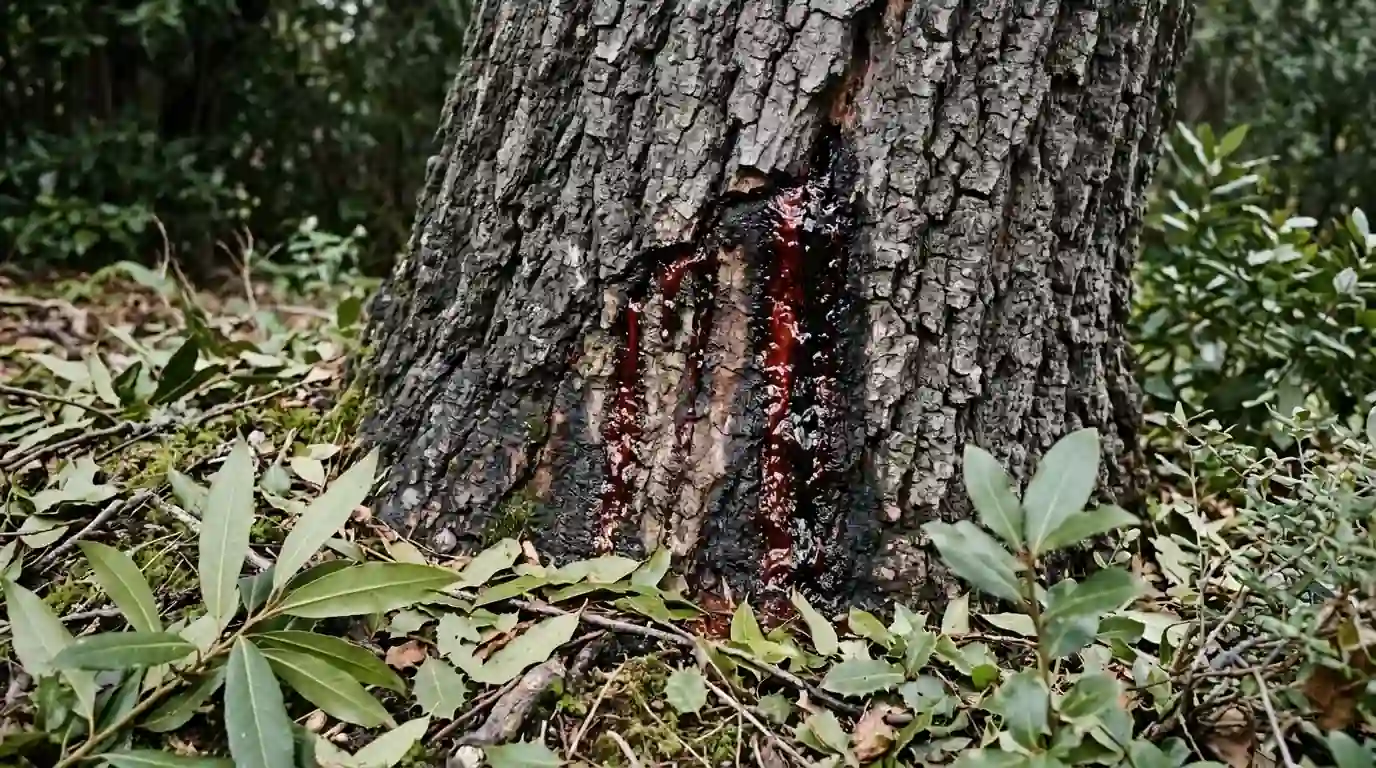
The main sign on a coast live oak is a bleeding canker on the lower trunk. It looks like dark reddish sap seeping from the bark, often in a patch or a run that stains the bark below.
Most cankers show up within the first several feet of the ground. Walk around the whole trunk, since the side facing a fence or a slope is easy to miss.
- Dark reddish to black sap seeping from intact bark on the lower trunk.
- Stained bark below the seep, sometimes dried into a crust.
- Several bleeding spots on one trunk rather than a single wound.
- Thinning or browning canopy on an oak that also has trunk bleeding.
- Fine sawdust or small holes near the cankers, from beetles that move into weakened trees.
Not every dark stain is sudden oak death. Old pruning wounds, mechanical damage and other problems can bleed too. A lab test is the only way to confirm it, so treat what you see as a reason to look closer.
Look at the bark itself as well. On a canker, the seep usually comes through bark that looks whole, with no saw cut or impact scar above it.
Why bay laurel matters so much
California bay laurel is the quiet part of the story. Its leaves carry and spread the spores without the bay dying. The bay may show dark spots on its leaves, but it stays green and keeps producing spores.
Rain and drip from bay leaves carry spores down onto oak trunks below. An oak growing under or beside a bay canopy sits in that drip zone every wet season. That is why oaks near bays tend to have more trouble.
Bays are common across the hills, along creeks and in older yards. If you have both trees, look at where the bay canopy hangs relative to the oak trunk.
A bay with branches spreading over the lower trunk of an oak is the setup that worries us most. A bay twenty yards downhill, with no canopy over the oak, matters much less. Distance and overhang are what count.
Wet springs drive the spread
The wettest springs drive the spread of sudden oak death. Rain late in the season, when temperatures warm, gives spores the moisture they need to multiply on bay leaves and move to oak bark.
Most East Bay rain falls November to March. A wet spring after a wet winter is the setup to watch. New cankers from that year may not be visible for a while, so check oaks again the following year.
The dry season, roughly May to October, is when spread slows. That is also when we prefer to prune oaks, since fresh cuts face fewer spores.
Tanoak and coast live oak are not the same case
Tanoak is hit hard. It is less common in yards than in wildlands, but some hillside properties have it, and infected tanoaks often decline quickly.
Coast live oak is the tree most East Bay homeowners deal with. It can carry an infection for a long time, and the trunk damage builds while the canopy still looks fine. Watching the lower trunk matters more than watching the leaves.
Make a habit of a slow walk around each oak once or twice a year, ideally in late spring after the rains. Look at the bark from the soil line up to about head height. A phone photo from the same spot each year makes changes easy to see.
What to do if you find a bleeding canker
Finding one does not mean the tree must come out next week. It means the oak needs a closer look and a plan.
- Photograph the canker and note where it is on the trunk.
- Check other oaks on the property for similar bleeding.
- Look at nearby bay laurels and where their canopies hang.
- Keep sprinklers and drip lines off the oak trunk.
- Keep oak and bay wood local rather than hauling it to another area.
- Have the tree looked at for structure, not only disease.
Our tree disease work starts with that inspection. Preventive bark treatments can help some oaks that are not yet infected, but they do not cure an infected tree. Where bays drip onto a prized oak, thinning or removing the bay can lower future exposure.
When an infected oak becomes a hazard
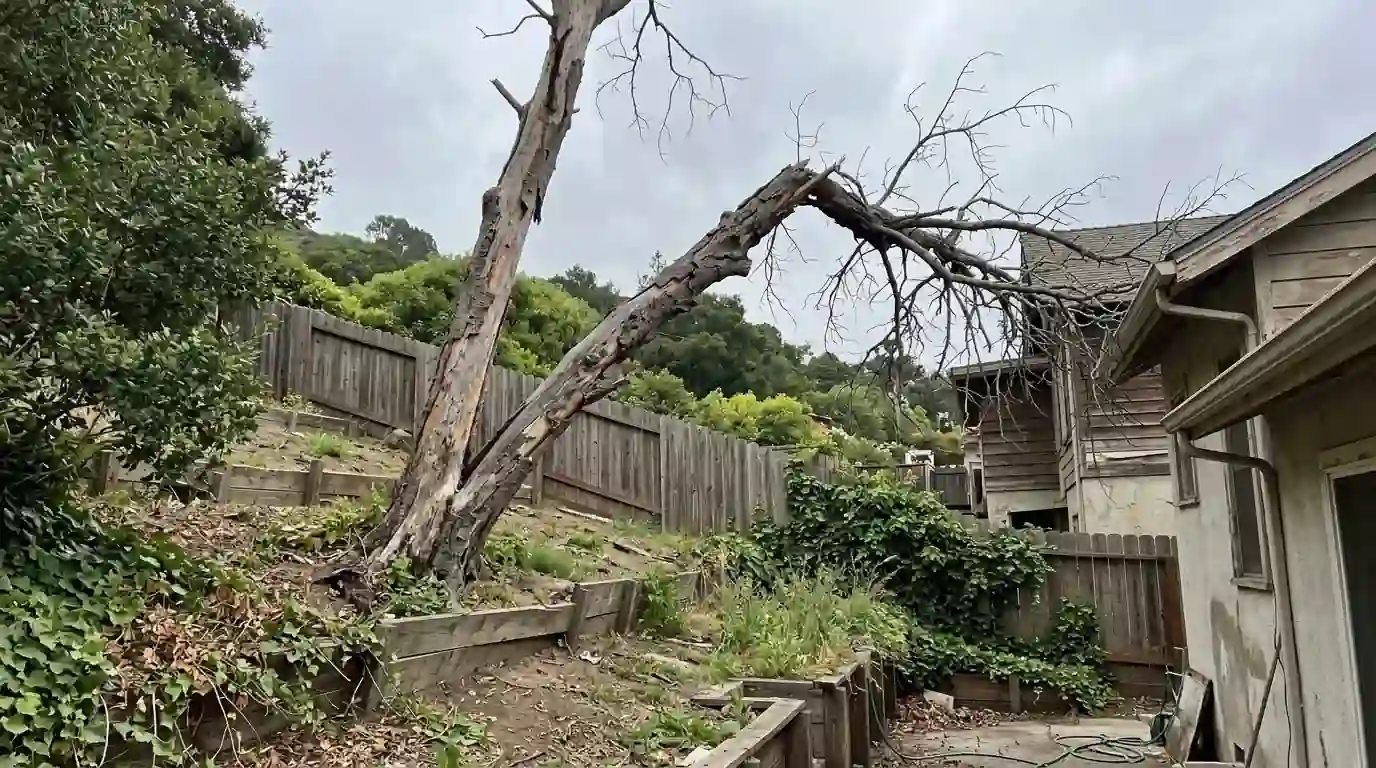
The disease kills the bark and the wood underneath. Decay fungi and beetles follow. Over time, the trunk loses strength from the inside, often near the base where the cankers sit.
An oak in that state can fail at the trunk, sometimes while the canopy still has leaves. It can also drop large dead limbs. Over a house, driveway, path or play area, that is a real risk.
We look for decay pockets, fruiting bodies of fungi, cracks and dead limbs. A tree risk assessment weighs that against what sits under the tree.
If the oak has to go, Oakland still protects coast live oaks at 4 inches in diameter or larger, so a removal permit is needed. If the tree is an immediate threat, the city can waive the permit, and the removal must be reported on the first business day after.