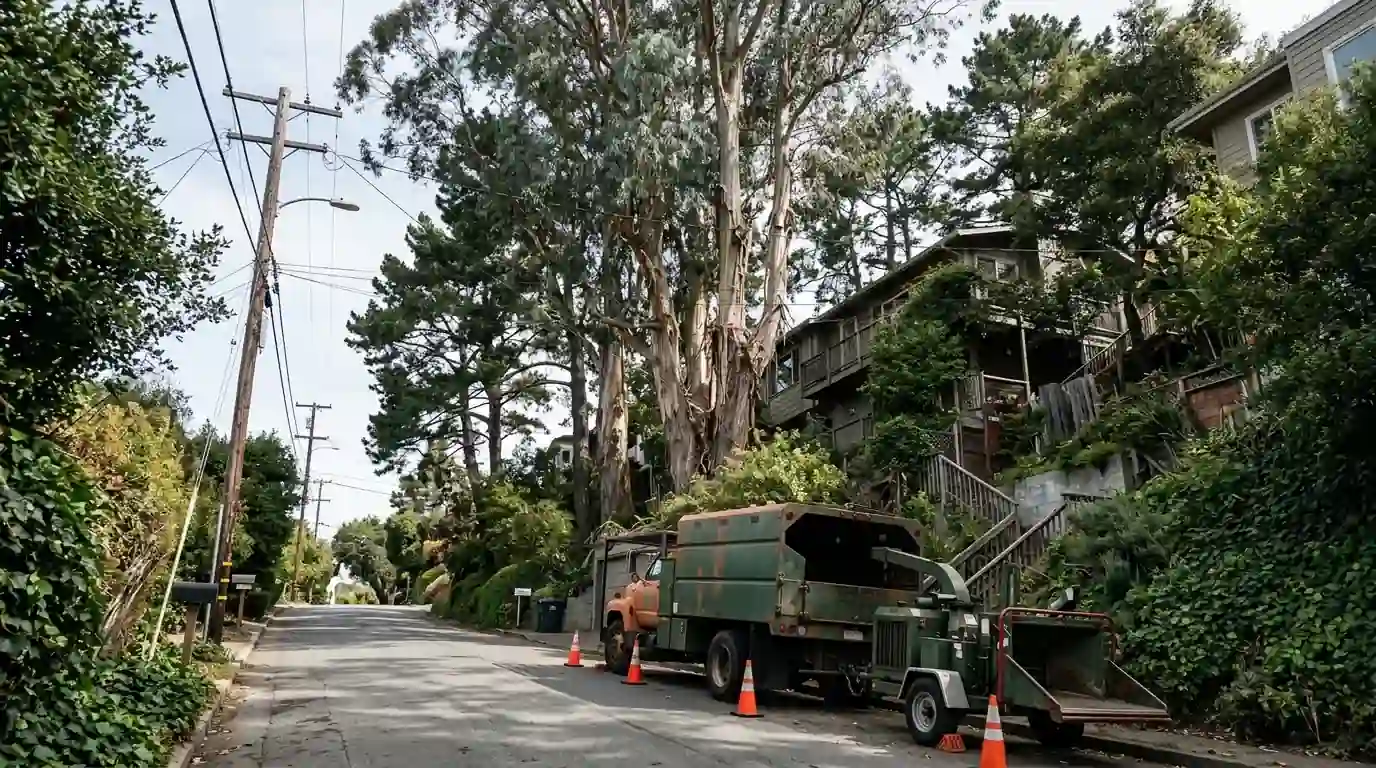
Why can't anyone price a tree over the phone?
People often call and ask what it costs to take down a forty foot tree. It is a fair question, and we wish there were a one line answer. The honest truth is that height is only one piece. What sits under the tree, how we get to it, and what the wood is like all matter as much as how tall it is.
That is why we look at the tree in person before we give a number. A walk around the yard tells us how the tree will come down, what gear it needs and how long the crew will be there. Time on site and equipment are what drive the price, and every factor below feeds into one or both.
How do height, trunk size and canopy spread change the work?
Bigger trees take more cuts, more rigging and more trips to the chipper. A tall tree with a narrow crown can be quicker than a shorter one with a huge, spreading canopy, because every limb in that spread has to be cut and lowered or dropped somewhere safe.
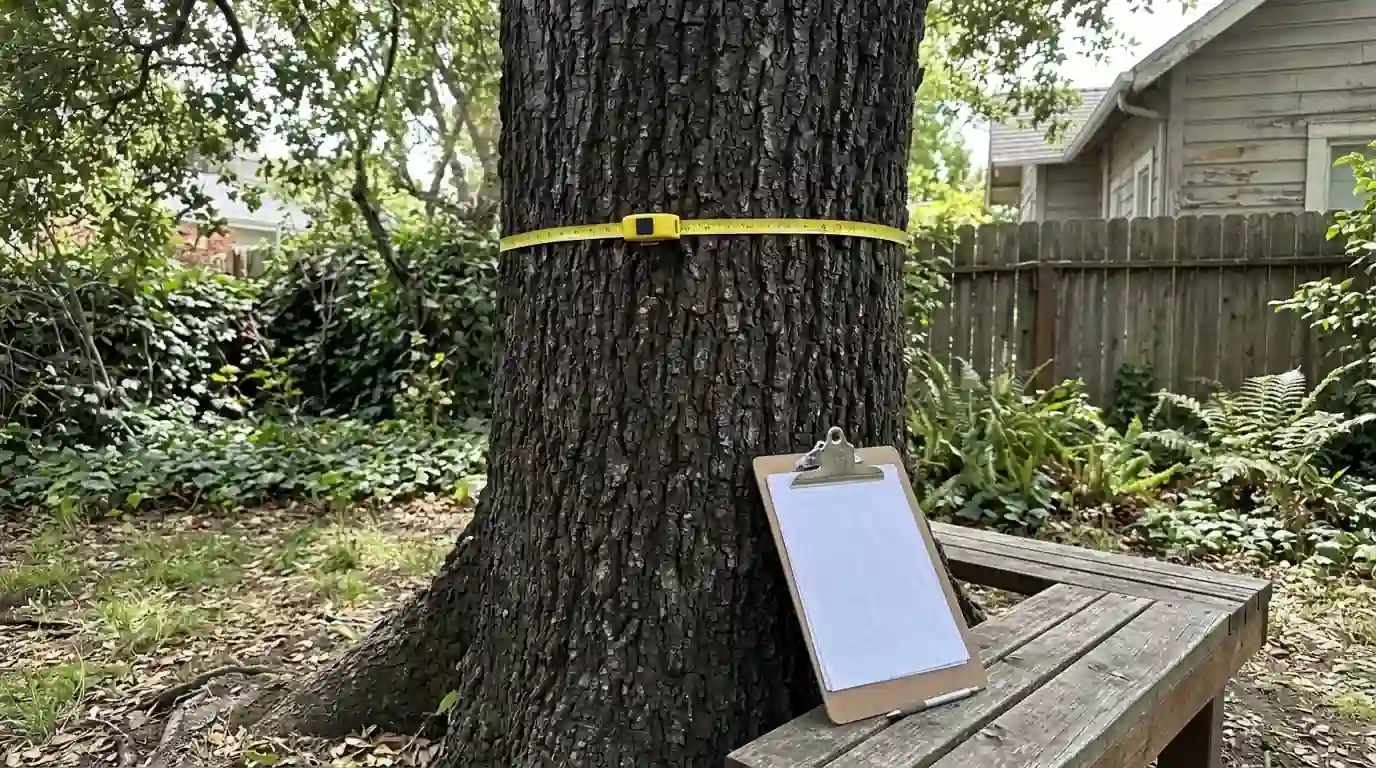
Trunk diameter matters at the end. Big rounds are heavy, slow to cut into pieces you can move, and hard on equipment. A large coast live oak or valley oak may have more wood in its lower trunk than a much taller pine.
Does the species really make a difference?
It does, because each species behaves differently in the saw and on the rope. Here is what we see most often around the East Bay:
- Blue gum eucalyptus grows fast and tall, sheds bark strips and drops limbs without much warning, and its heavy, stringy wood is tough to cut and chip.
- Monterey pine is often soft and full of pitch, and big ones may have rot or bark beetle damage that changes how we can climb them.
- Coast live oak has dense, heavy wood and long horizontal limbs that need careful lowering over yards and roofs.
- Palms need a different approach, since the trunk is fibrous and the crown holds old fronds and seed stalks.
- Dead trees of any species can be brittle, which often means a lift or crane instead of a climber.
Our eucalyptus removals are a good example. The same height in a liquidambar would be a shorter, simpler day.
How do lean and what's underneath raise the stakes?
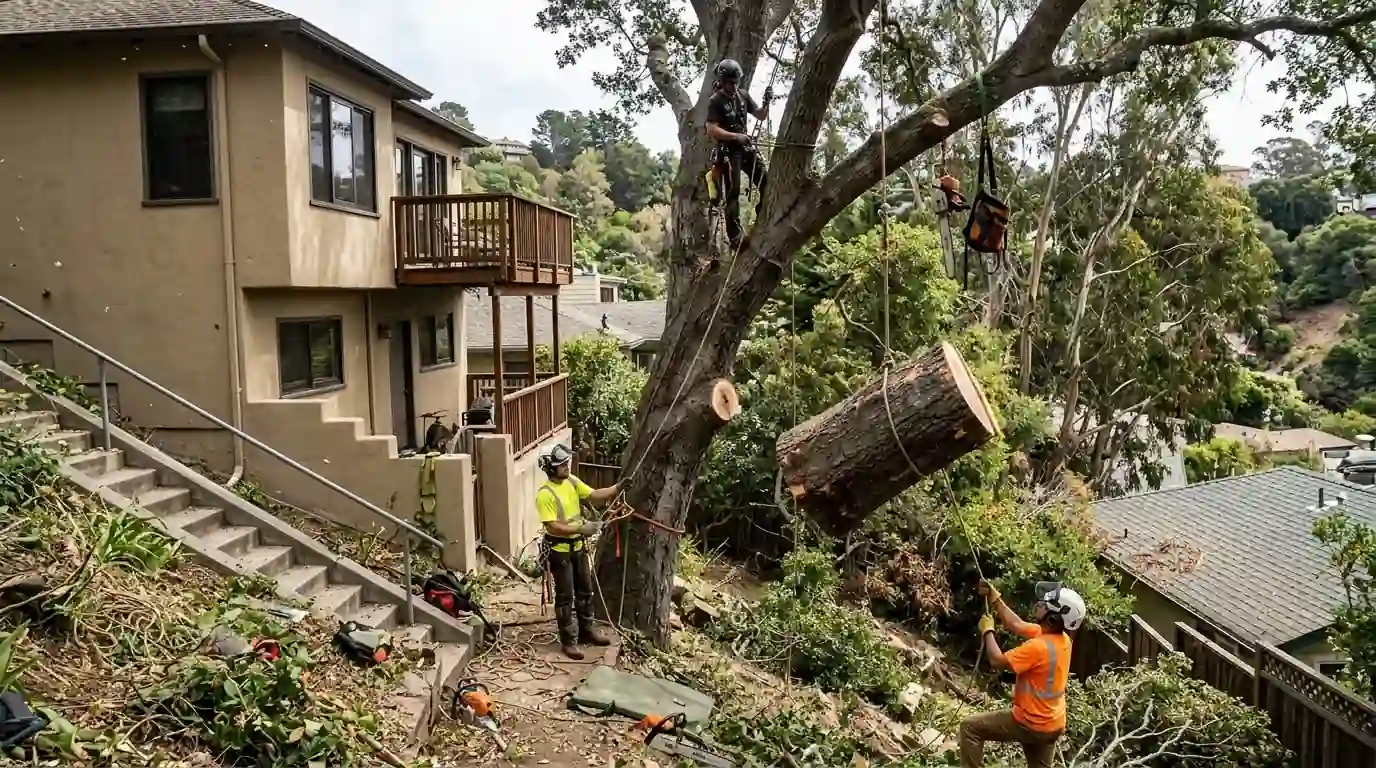
An open tree in an empty field can sometimes be felled in one piece. Almost no trees in Oakland stand like that. Most have targets under them: a roof, a deck, a fence, a neighbor's garage, a street, a service wire. Every target means the tree comes down in small, controlled pieces lowered on ropes instead of dropped.
Lean adds to it. A tree leaning over the house loads its weight toward the very thing we need to protect. We rig the top so each piece swings away from the structure, and that takes more time and more setup than a straight tree in the same spot.
Why does access on hillside lots matter so much?
The Oakland and Berkeley hills, and towns like Orinda and Lafayette, are full of lots where the tree sits below the street, behind the house or at the bottom of a long stair. If we can't get a chipper or a truck near the tree, every branch and every round has to be carried, rolled or winched out by hand.
- Steep slopes slow every step and need extra rigging to keep wood from rolling.
- Narrow streets limit where the truck and chipper can park, and sometimes call for traffic control.
- Long carries from a backyard to the street add hours to cleanup.
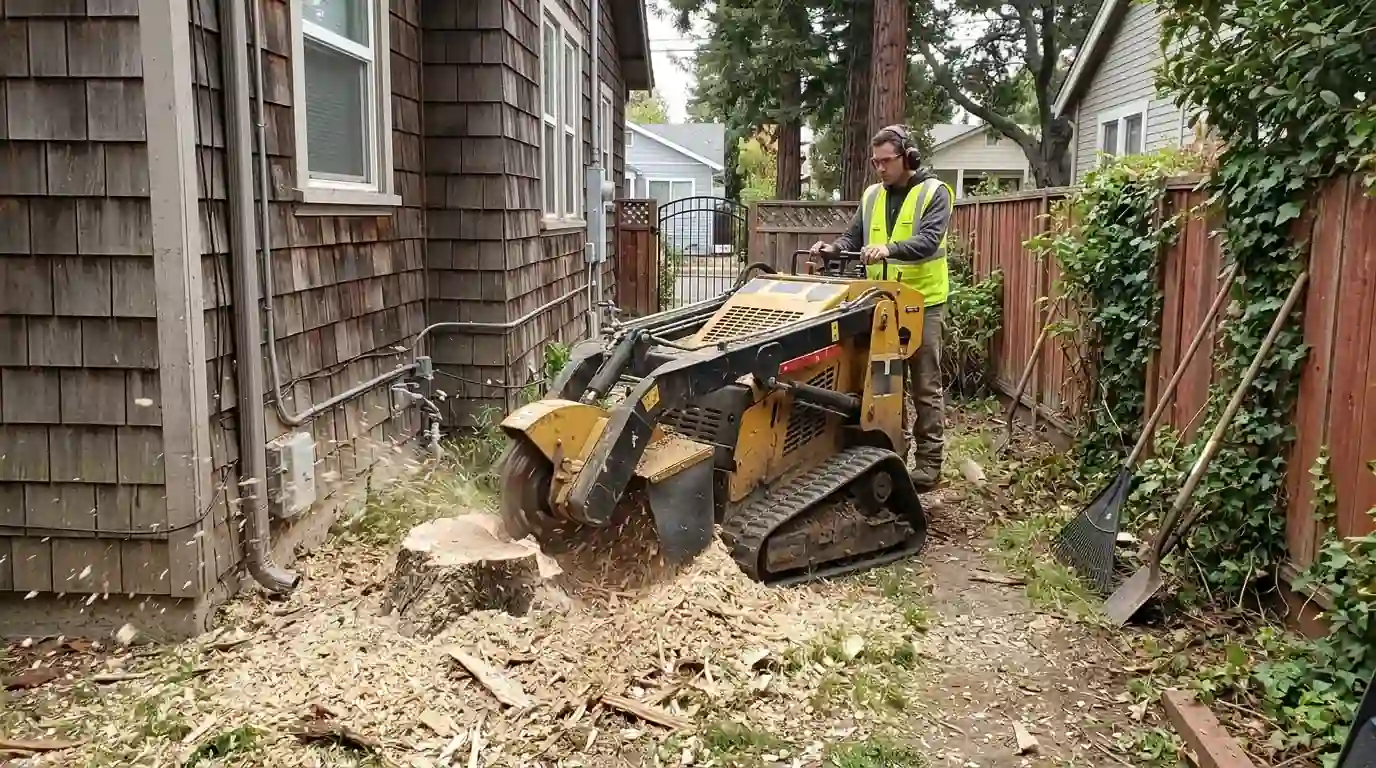
- Gates narrower than a stump grinder or loader mean smaller machines or more handwork.
- Soft lawns, patios and septic areas may need ground protection mats.
On the flats in Temescal or Alameda, a front yard tree with an open driveway is a very different job from the same tree behind a house on a Montclair slope.
When does a crane make sense?
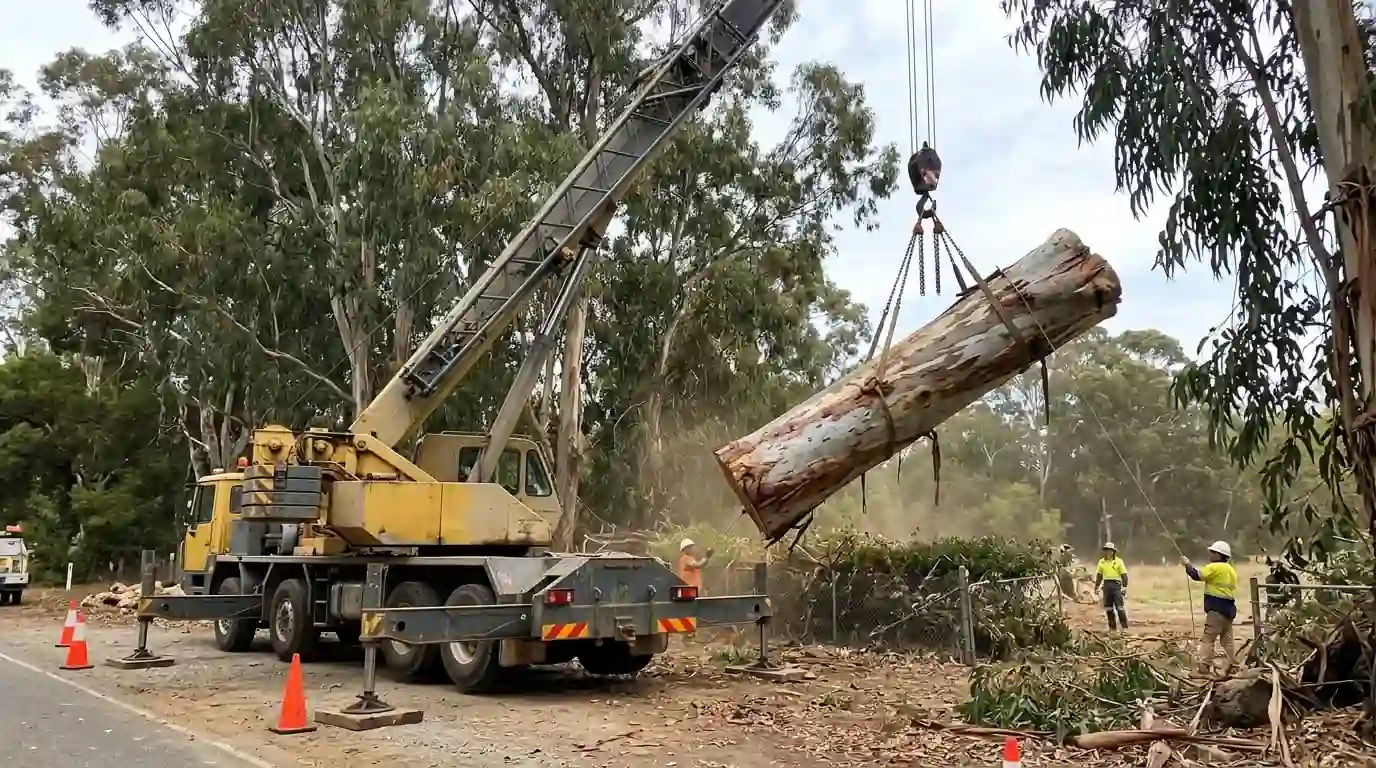
A crane is a big piece of equipment with its own day rate, setup time and street permit needs. It sounds like it would always add cost. On the right job, it saves time and risk. When a large tree stands over a house with no safe drop zone, a crane can lift each section straight up and over the roof instead of lowering it piece by piece through the canopy.
We suggest a crane day when the tree is too dead to climb, too heavy to rig safely, or so boxed in by structures that a climber would spend days on it. In the hills, crane placement on a narrow, sloped street is part of the planning, and some sites simply can't take one.
Do permits and paperwork affect the cost?
Sometimes, yes. In Oakland, a coast live oak at 4 inches DBH or larger and most other trees at 9 inches DBH or larger are protected, and a protected tree needs a removal permit. Replacement trees may be required. Eucalyptus and Monterey pine aren't protected by the chapter, but a Monterey pine on private land still needs posting and written notice to Parks and Recreation before removal.
Berkeley and Walnut Creek have their own thresholds, and other cities have their own rules that we check before cutting. Permit work takes time to measure, photograph and file, and some permits add a wait before the tree can come down. We go over that at the first visit.
What about stumps, wood and storm calls?
Cleanup choices change the scope of the job. Some owners want every chip and log gone. Others want rounds left for firewood or chips spread in the garden beds. Each choice changes how much hauling we do.
- Stump grinding is usually priced on its own, based on stump width, roots at the surface and access for the grinder.
- Hauling all the wood takes truck trips. Leaving rounds stacked on site takes fewer.
- Chips can often stay on site as mulch if you want them.
- Emergency calls after a storm mean work at night, in the rain, or with the tree already resting on a structure, which is harder and slower than a planned removal.
If you're planning ahead, adding stump grinding to the same visit saves a second trip. For a planned removal, booking in the dry season also tends to mean easier access and fewer weather delays.